

Small Details You Missed In Monarch: Legacy Of Monsters Season 2
Contains spoilers for "Monarch: Legacy of Monsters" Season 2
Apple TV's "Monarch: Legacy of Monsters" has continued its run as one of the most delightfully perplexing shows on television. The MonsterVerse tie-in is a carefully crafted meditation on family legacies, infidelity, millennial doomerism, and generational trauma. It's a show rich with details; there's the Easter eggs you'd expect from a franchise streaming series, but also subtler layers playing into the show's overriding themes.
"Monarch: Legacy of Monsters" Season 2 admittedly drags a bit at times, like it's waiting around for the next big story beat on the writers' room whiteboard to arrive. But by the end, it delivers a compelling second entry in the story while setting up some exciting threads for Season 3. From time paradoxes and '90s Godzilla homages to ruminations on our morally bankrupt big-tech overlords, let's run down some small details you may have missed in "Monarch: Legacy of Monsters" Season 2.
Godzilla's Heisei Era is all over Monarch Season 2
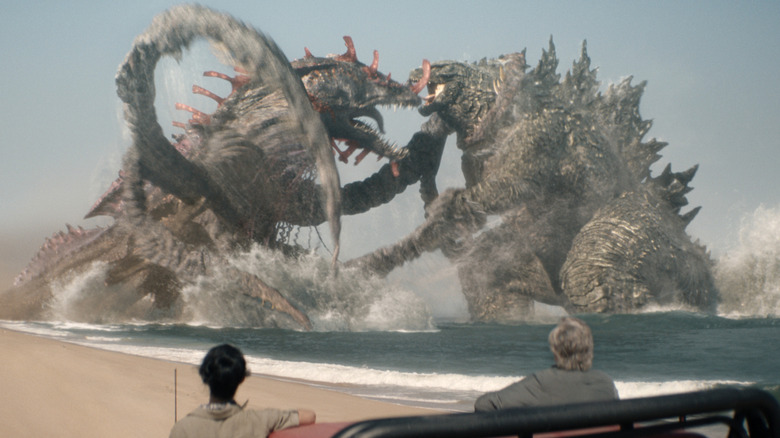
The Heisei Era is one of the most beloved periods in the history of the Godzilla franchise, beginning with 1984's "The Return of Godzilla" and ending with 1995's "Godzilla vs. Destoroyah" — often considered the best in the entire series. If you're familiar with that particular era of films, you may recognize some similar DNA across "Monarch: Legacy of Monsters" Season 2. While the final design of Titan X was based on deep-sea creatures from the Southern Hemisphere, it definitely evokes two different Heisei kaiju: the aforementioned Destoroyah, and Biollante from 1989's "Godzilla vs. Biollante."
Like Titan X, Destoroyah is a deep-sea creature whose body plays host to a veritable army of smaller, crustacean-like creatures (though the two creatures' origins are very different). Biollante resembles Titan X more in form, specifically when the latter kaiju is on land, where its long, serpentine body sits atop a mass of tentacles. Additionally, Cate's (Anna Sawai) unique connection to Titan X evokes the character Miki Saegusa (Megumi Odaka) from the Heisei Godzilla films — a psychic who communes at different points with Godzilla and other kaiju.
Triangles, triangles, triangles
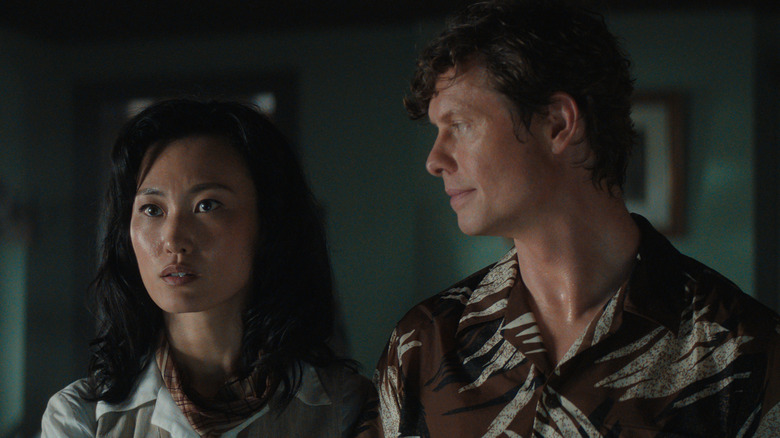
If "Monarch: Legacy of Monsters" loves one thing, other than giant monsters, it's love triangles. The entire story is built on a huge one from the flashback timeline — the complicated relationships between Keiko Miura (Mari Yamamoto), Bill Randa (Anders Holm), and Lee Shaw (Kurt and Wyatt Russell). With Hiroshi Randa (Takehiro Hira) getting more screen time in Season 2 (at least, the first half...), the show gets to layer that story more directly onto Hiro's dual-family deception.
"How do you love two people at the same time?" Cate asks her father at the end of Season 2, Episode 1. Hiroshi responds simply, and earnestly: "It's not something you decide to do." On his line, the scene immediately cuts to a shot of Keiko standing between Lee and Bill in a flashback, tethering the different generations of complicated romances together.
Even Cate and Kentaro (Ren Watabe) aren't free from the theme entirely, as May (Kiersey Clemons) begins the series with romantic history with Kentaro then seems to drift closer romantically to Cate before the events of Season 2 put that thread on hold. Even beyond the relationship storylines, "Monarch" seems fascinated by the premise of placing characters in front of impossible choices. Much of the drama comes from the results of those choices, but even more comes from the aftermath when characters refuse to choose at all.
Godzilla and Lovecraft
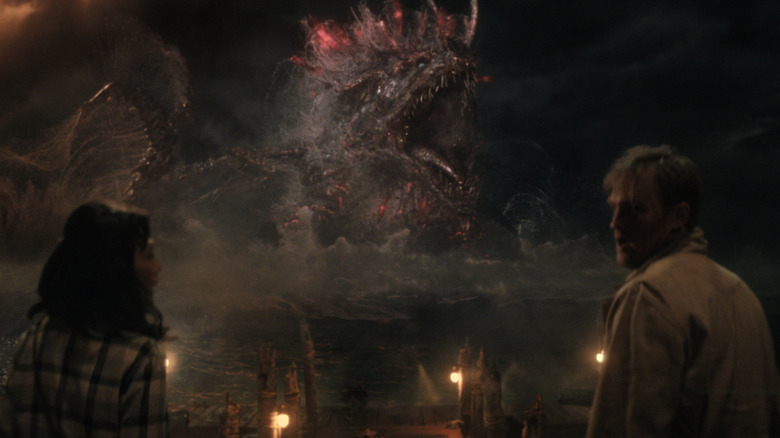
While there's obviously a lot of kaiju cinema influence on "Monarch: Legacy of Monsters" Season 2, there's also a heavy amount of Lovecraftian horror driving the story of new kaiju Titan X. The deep-sea, tentacled design evokes classic tails of krakens and sea serpents, and the show plays into that in a number of ways. Episode 4 opens with a classic sea monster shot, watching from above as a flurry of tentacles wraps around a ship to pull it down into the deep. Cate's emotional connection to Titan X, while different than a true psychic link, is also evocative of eldritch sea monster stories, where the human characters are often pulled into a sort of thrall.
There's also the flashback sequences on Santa Soledad, which show the inhabitants of a local fishing village worshiping the Titan as a kind of god, even throwing a psychedelic-fueled festival in its honor. The whole "coastal village cult worshipping a giant ancient squid" thing traces all the way back to Lovecraft stories like "The Call of Cthulhu," and variations on this have been done numerous times since then across different forms of media. By the end of "Monarch" Season 2, it's pretty clear that Titan X is far from the eldritch villain it might have seemed like at the start, but the genre nods are still fun, helping to set Titan X apart from other MonsterVerse kaiju.
Keiko is the real main character
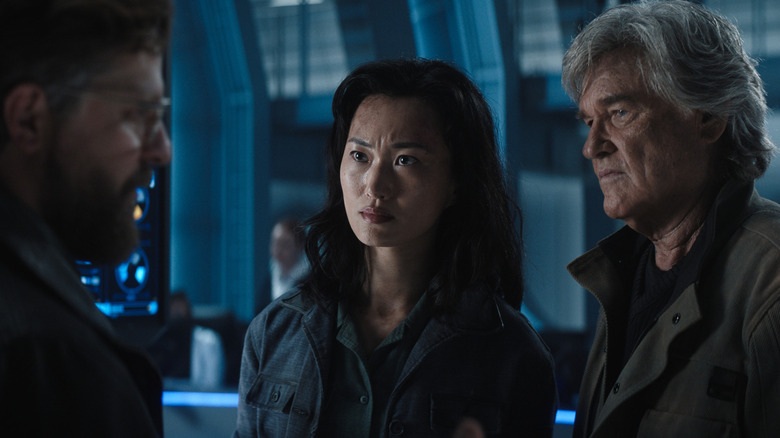
Cate Randa remains the central protagonist in "Monarch: Legacy of Monsters" Season 2, becoming the one person who can truly understand and commune with Titan X by the end. It's an effective arc, and Anna Sawai does great work, navigating the complicated mess of guilt, shame, rage, selfishness, and eventual devotion that is Cate's story. But while Sawai retains top billing, there's a case to be made that Keiko is the real main character of the sophomore season, being the person around whom all of the plot and major themes of "Monarch" circle.
"Monarch" is a tale about time and the way it changes people. Its multi-timeline structure emphasizes that focus, and Keiko is the one character who transcends it, passing from the past into the present at the end "Monarch: Legacy of Monsters" Season 1. The most powerful moments in Season 2 belong to her, thanks in no small part to Mari Yamamoto handling the character masterfully across a wide range of emotional zones. She's the one always speaking out against nuclear violence — an original kaiju genre theme that "Monarch" retains — and she's the one who must process all the ways, both personal and global, that the world has changed.
When Tim (Joe Tippett) calls Keiko "Dr. Randa" in the first episode of Season 2, she takes a beat to process it. "My whole life was a battle to get people to call me 'Doctor,'" she finally responds, adding, "Maybe the world has changed for the better." It's appropriate that "Monarch" ultimately positions Cate as an extension of Keiko. Their victory at the end of Season 2 — getting Titan X home — is a family victory, affirming a legacy beyond the tragedy they have both endured.
Horrible bosses and big tech
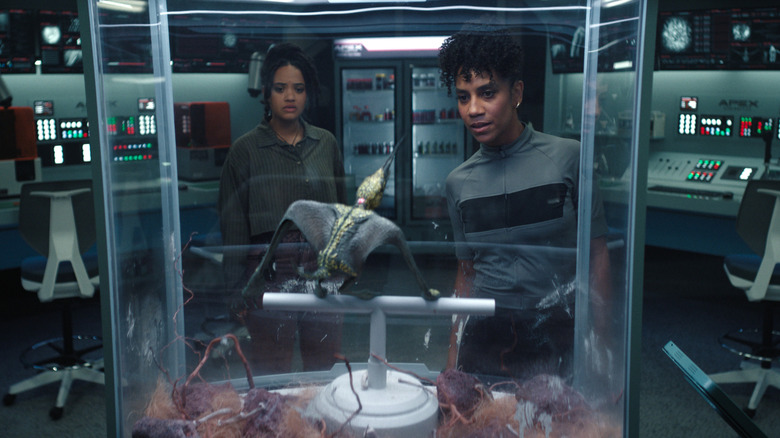
The world of "Monarch: Legacy of Monsters" may be very different from our own, but it mirrors reality in at least one major way, and that's the bottomless, morally vacuous void of big tech, corporate oligarchy, and start-up culture. On a certain level, "Monarch" is a show about the Millennial work experience — a job market dominated by morally questionable companies with open floorplans, great benefits, and a mission statement that is killing the planet in no uncertain terms. And while Apex Cybernetics showed plenty of that in Season 1, the show calls attention to it more overtly in Season 2 on multiple occasions.
The Apex scenes are stuffed with phrases like "Move fast, break things," "This is business: risk versus reward," and "We needed a problem so we could be the solution." May and Kentaro are courted by companies that they know have vile practices, but with promises of utopian futures. And then there's the corporate backstabbing, like when Apex's Jason Trissop (Cliff Curtis) steals Titan implant gear in Episode 5, which he later delivers to Isabel Simmons (Amber Midthunder) and her splinter start-up. Talking to Kentaro, Isabel promises that her path is different than that of Apex, but her language is similarly grandiose and hollow. She refers to the Skull Island base ambitiously as "our Cape Canaveral," and then she hits Cate with the VC pitch: "What if you could visit the future?" It makes you cringe because it's so spot-on.
2014's Godzilla looms large
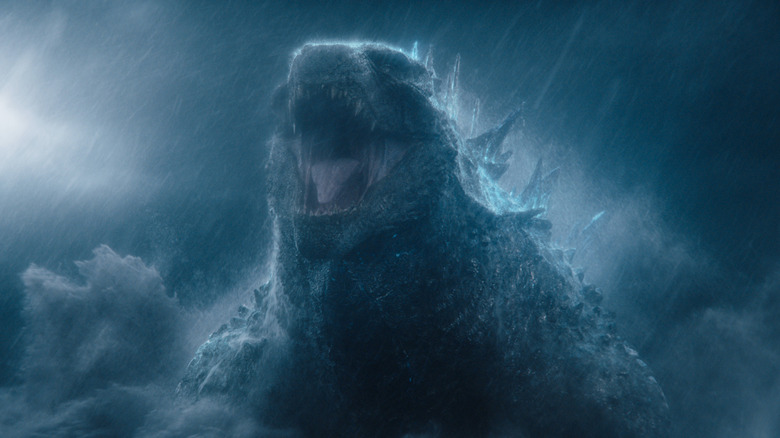
The MonsterVerse has gotten a lot bigger since Gareth Edwards' "Godzilla" got the ball rolling in 2014, but that film still has a big influence on the lore, and it comes up repeatedly in "Monarch: Legacy of Monsters" Season 2 in ways you may have missed. The most obvious one, other than all of the continued G-Day references (the Golden Gate Bridge is still under construction this season, as we see through Cate's POV), involves what's arguably the most infamous line in the whole franchise: "Let them fight." Spoken by Dr. Ichiro Serizawa (Ken Watanabe) right before Godzilla goes into battle against the MUTOs in the 2014 film, it's become something of a joke line given that the human MonsterVerse strategy always seems to be bringing in Godzilla and letting him do his thing.
In "Monarch" Season 2, Episode 4, Tim and Jason have a whole conversation about the line and its underlying philosophy. "Do we just let these monsters fight it out amongst themselves?" Jason asks, pushing for a more active Apex role, to which Tim fires back, "Serizawa was right!" Another reference to the 2014 "Godzilla" film comes during a flashback scene in Episode 5, where Tim calls Hiroshi after discovering a batch of Bill Randa's old work. The scene takes place in 2014, and it's clearly right before the movie, as Tim refers to "readings coming out of Janjira" and the importance of learning all that they can. Janjira is the fictional Japanese city where the MUTOs emerge in "Godzilla," meaning that the readings Tim is referring to are tied to the impending Titan attack.
Skull Island is still Vietnam in the MonsterVerse
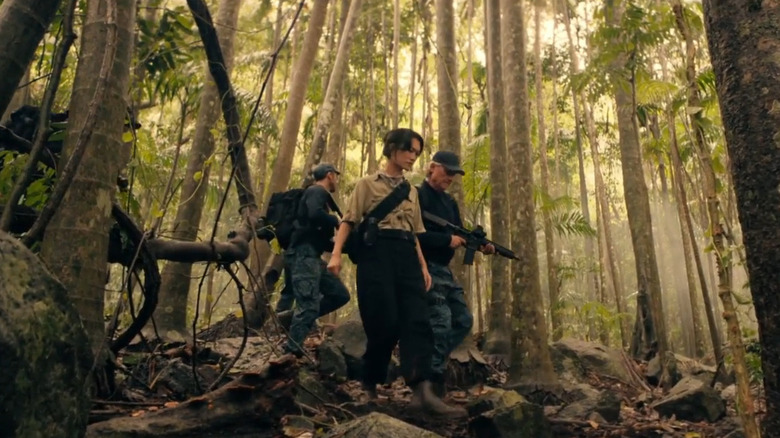
We are nearly a decade removed from "Kong: Skull Island," and for whatever reason, the MonsterVerse has been unable or unwilling to break the heavyhanded "Skull Island as Vietnam stand-in" metaphor that began in that film. Director Jordan Vogt-Roberts was clearly trying to evoke films like "Apocalypse Now," to questionable effect. As a result, we now have to deal with another "Fortunate Son" equivalent level of winking and nodding every time the island plays a role in the MonsterVerse story, and "Monarch" Season 2 continues that trend, for better or worse.
Even ignoring the eye-rolling "Godzilla don't surf" line spoken earlier in the season (by an actual pair of surfers at the beginning of Episode 4), the rest is just as on-the-nose. We get the obligatory armed squad moving quietly through the jungle scene, complete with frantic ambush. We get a quasi "Get it together, marine!" from Tim. And, of course, the helicopter used to lure Titan X to the island is, as Lee points out, "an old Chinook" — a Vietnam model, despite the show taking place in the late 2010s. Perhaps one day we'll move past the "Monster jungle is Vietnam" thing, but we're not there yet.
Isabel, Maia, and Walter Simmons
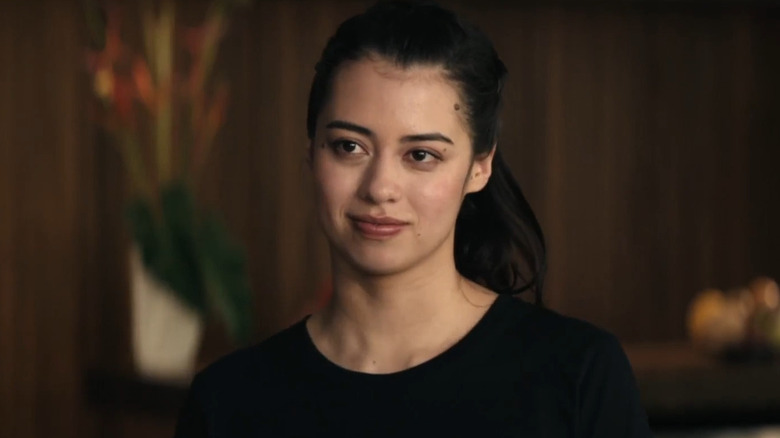
"Prey" star Amber Midthunder enters "Monarch: Legacy of Monsters" midway through Season 2 as Isabel Simmons, adopted daughter of Apex Cybernetics CEO Walter Simmons. While Isabel is a new character, her father and sister, Maia, both appear in "Godzilla vs. Kong." Walter Simmons is played by Demián Bichir and Maia is played by Eiza González.
Both characters die in "Godzilla vs. Kong" after attempting to turn the Titan world to their own corporate ends. Maia is crushed to death by Kong himself, while her father is killed by Mechagodzilla — the creature created through the Titan implant project May works on for Apex in "Monarch."
The fate of Isabel at that point in the timeline is, of course, unknown. She claims that her father largely ignored her after the birth of Maia, who is his biological daughter, so maybe she's able to avoid the family's biggest mistakes. Given her angling in "Monarch" Season 2, however, it seems more likely that she will meet a separate but similarly doomed fate.
Welcome to Jurassic Park
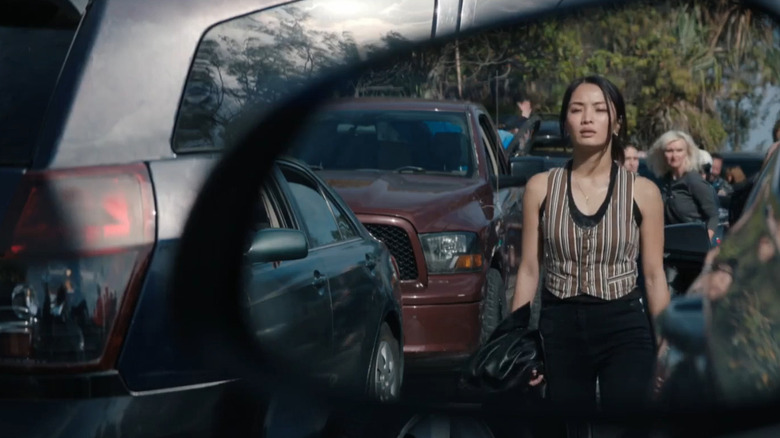
There are always bound to be some "Jurassic Park" parallels when you have genetic corporations messing with megafauna, and there are plenty of allusions, both direct and indirect, in "Monarch: Legacy of Monsters" Season 2. Apex's grand plan to control Titans using implants is especially close to the InGen vision of domination over the dinosaurs in the "Jurassic Park" films, and that echo only gets louder when Isabel Simmons enters the story, hitting us with juicy quotes like, "Who's to say nature's always right?" Dr. Ian Malcolm, for one, but that's beside the point.
"Monarch" Season 2, Episode 4 features a version of the famous "Jurassic park" rearview mirror shot that seems too explicit to not be an intentional reference, only in this case, the subject in the mirror is Cate, walking through a frozen gridlock of cars as people struggle to escape San Francisco during a Titan alert. Positioning her in the spot of the monster is an interesting choice, given where her character arc is at this point and the amount of guilt she's carrying.
Beyond that, the final two episodes of Season 2 on Skull Island feel especially evocative of "The Lost World," with the island giving off strong Isla Sorna vibes. Monarch and Isabel's Apex splinter group fighting to either control or free the Titans of the island is nearly a direct map of the plot of the second "Jurassic" film, and it works well here. After all, shows like "Monarch" are, at their core, adventure stories — the characters' in-show group chat is even called "Goonies 2."
Lee's scar and time travel hijinks
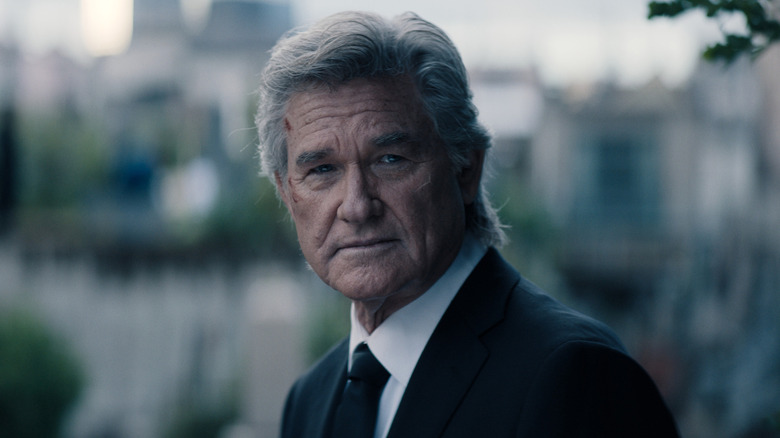
Time gets weird in "Monarch: Legacy of Monsters" Season 2 — even weirder than in the first season. And yet, somehow, the show manages to keep things in order pretty cleanly. The big leap this season comes in Episode 7, when the present-day Lee accidentally contacts his younger self in Axis Mundi during an experiment with Dr. Suzuki (Leo Ashizawa).
It's a fun and at times touching conversation, with the younger Lee slowly figuring out who he's really speaking to. As his older self takes him off his preordained path to plant a tracker on Titan X, signs of his temporal meddling begin to reveal themselves. When the younger Lee gets a cut on his cheek in Axis Mundi, it appears as a scar in the present day. Later, when Keiko asks him how he managed to plant the tracking device on Titan X, he says, "I didn't remember myself until just recently." It's a way to avoid the time-call conversation with Keiko, but it also reveals the ways messing with the timeline works in "Monarch."
For Lee, performing that act is now part of his past, so he has a new memory of doing it where there wasn't one before — not just a memory of talking to his younger self about it, but of actually doing it. This premise plays into a big emotional beat in the Season 2 finale, when the young Lee appears through the Skull Island Rift to bid farewell to Keiko. When she can't hear his words, she turns to the older Lee next to her to explain, and she shares the message, which he knows because he can now remember having spoken it. Retroactively, they both get the closure they've been lacking. It's a beautiful, effective, and surprisingly cohesive bit of time-travel storytelling.
Skull Island tourist spots and the Loch Ness Monster
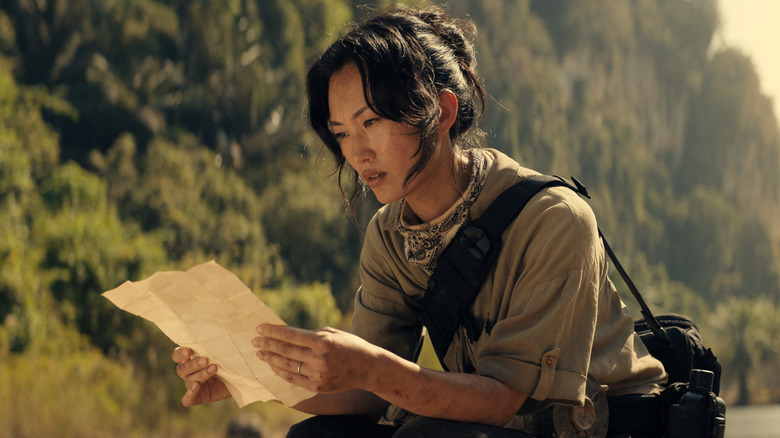
The final two episodes of "Monarch: Legacy of Monsters" Season 2 take place on Skull Island, and they retrace Bill Randa's steps from "Kong: Skull Island" pretty well. Keiko and Lee eventually wind up walking through the Titan boneyard where, in the film, Billy is killed by a Skullcrawler. They find his camera — the same model used by the character in the movie (played there by John Goodman) — and share a moment of mourning. Later, they realize that the "Grand Central" rift on Skull Island is beneath a lake, where they find all of the different capsules Billy dropped through other rifts in his efforts to chart their subterranean network.
Fans of the film will recognize that this seems to be the same lake from which the Skull Devil emerges for its showdown with Kong at the end of "Kong: Skull Island," suggesting that the creature may not have just been waiting beneath the island, but in Axis Mundi, waiting to attack. As a fun extra wink and nod, Keiko mentions Loch Ness as another spot Billy visited to drop capsules, identifying it as a rift point connected to the larger network. In other words, in the world of the MonsterVerse, the Loch Ness Monster is absolutely real.
Rodan has crossed the pacific ocean
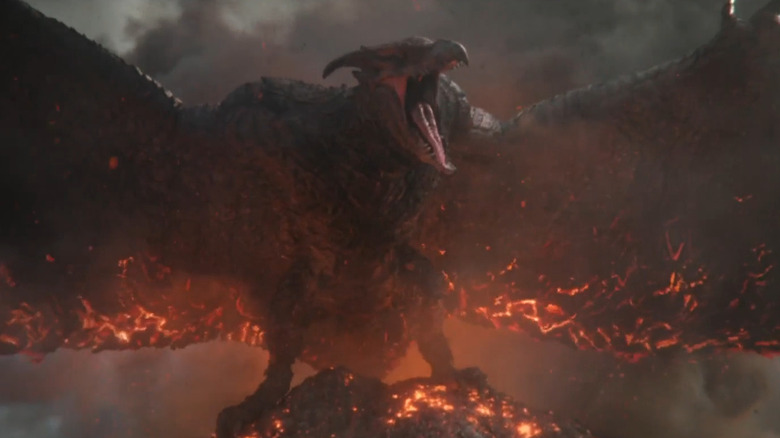
The final tag at the end of "Monarch: Legacy of Monsters" Season 2 sees Lee traveling to an undisclosed location on the trail of Isabel and Kentaro, who seem to be seeking a new Titan in an attempt to open another rift to Axis Mundi. That Titan turns out to be Rodan, one of the oldest Toho kaiju and a longstanding friend/foe of Godzilla. Rodan already appeared in the MonsterVerse as one of the main Titan stars of 2019's "Godzilla: King of the Monsters." Now, it seems, the creature will play a large role in "Monarch" Season 3.
What's interesting is that Lee appears to be somewhere in South East Asia, which fits with Isabel's home base being in Thailand. In "King of the Monsters," though, as well as elsewhere in the MonsterVerse lore, Rodan lives in a volcano on Isla de Mara, an island off the coast of Mexico, so the Titan popping up on the other side of the Pacific is certainly intriguing. Perhaps this previously uncharted migration comes from Billy's journals, or it could be explained another way in "Monarch" Season 3. Either way, it's great to have another classic kaiju entering the show.