

10 Western Movies Everyone Needs To Watch At Least Once
Since 1903's "The Great Train Robbery," Westerns have been a big part of the motion picture industry. Westerns have risen and fallen in popularity over the years, achieving significant growth in the mid-20th century. The genre began to fade somewhat as time passed and science fiction became more prominent, but it never went away, and many modern Western movies continue to entertain the movie-going masses.
As with any genre, there are plenty of exceptional films that many people know about thanks to their reputations, prominent casts, and directors. The American Film Institute (AFI) has recognized plenty of great Western movies, and there are many outstanding ones to choose from. Still, while there are certainly some entertaining movies like "Young Guns" and "Silverado," they're not exactly the kinds of films that everyone needs to watch at least once in their lives. For a Western to meet that high bar of distinction, it needs to be truly special.
Westerns that everyone should see are those that define the genre — they are archetypal of what a Western movie is. These films demonstrate what the genre is and what it can become, and each Western is an easy pick for movies everyone needs to see. This is especially true for anyone unfamiliar with the genre, but it's also true for those who don't particularly like Westerns, as each one is a classic that brings something different to the genre and deserves attention.
Stagecoach
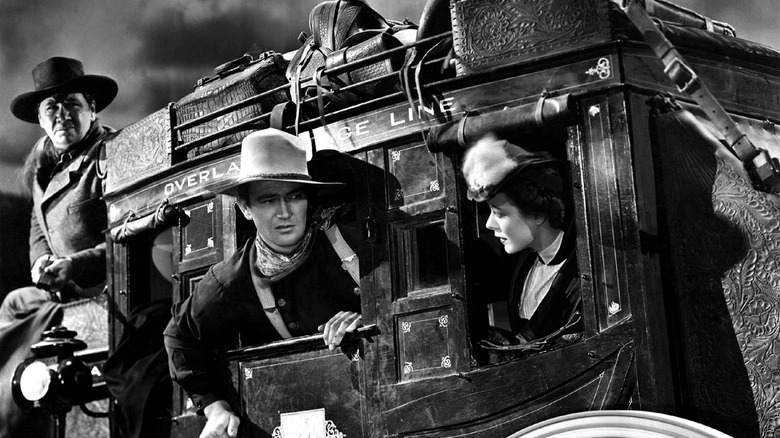
Director John Ford is well known for his Western films, and one of his most important came in 1939 with "Stagecoach," starring John Wayne. When people think of a modern Western movie, they have "Stagecoach" to thank, as it's the archetypal Western film, establishing many of the tropes common in the genre throughout the 20th century. Ford had already directed dozens of silent shorts and talkies before "Stagecoach," and by the time he shot the film, Westerns were on the decline.
Instead of being a final nail in the Western genre's coffin, "Stagecoach" completely reinvented the genre, reinvigorating filmmakers around the world in ways no previous Western had done before. Wayne was relatively young at the time, playing Henry, the "Ringo Kid," and "Stagecoach" helped put him on the path of superstardom. Ford shot the movie in Monument Valley along the Arizona-Utah border, which would become a staple of Western backdrops from that point forward.
"Stagecoach" sees a small group of travelers band together to ride a stagecoach through Apache territory, facing numerous obstacles and dangers along the way. It features some gorgeous wide shots of Monument Valley, achieving exceptional cinematography as Ford's camera sweeps across the American Southwest. "Stagecoach" has long been recognized as one of only a handful of near-perfect Westerns, and it has been highly influential on filmmakers for nearly a century. Orson Welles screened it 40 times before shooting "Citizen Kane," and you can see Ford's influence in most Westerns that followed.
High Noon
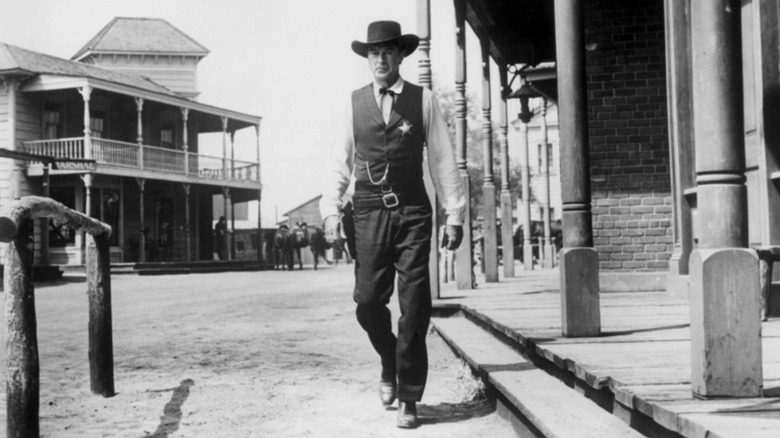
In 1952, audiences who sat down to watch "High Noon" got something they weren't expecting because the film was unlike the Westerns they were accustomed to. The film's plot centers around Marshall Will Kane (Gary Cooper), a newly married man who must choose to remain in town and face off against a gang of killers or leave town with his new wife. What's so fascinating about the film is that it takes place in real time, giving the movie a real sense of tension that's rarely seen in feature films.
While the real-time aspect of the movie was novel at the time, what made "High Noon" different was its focus on morality and the Marshall's ongoing emotional conflict surrounding his duty to his wife and to his job. Most Westerns up to that point were about shooting the bad guys and saving the day, but "High Noon" injected a sense of morality that was lacking, elevating the Western genre into one that could focus on more thought-provoking stories.
The film tells the tale of a man who does what's right against incredible odds, and its legacy goes far beyond influencing film. As Cooper's daughter once explained, Marshall Kane became representative of standing up for what's right around the world. "High Noon" is an idealistic movie that targeted McCarthyism when doing so was dangerous, and it was mired in controversy. Regardless, the film was made, and it remains as allegorically topical today as it was in 1952.
Shane
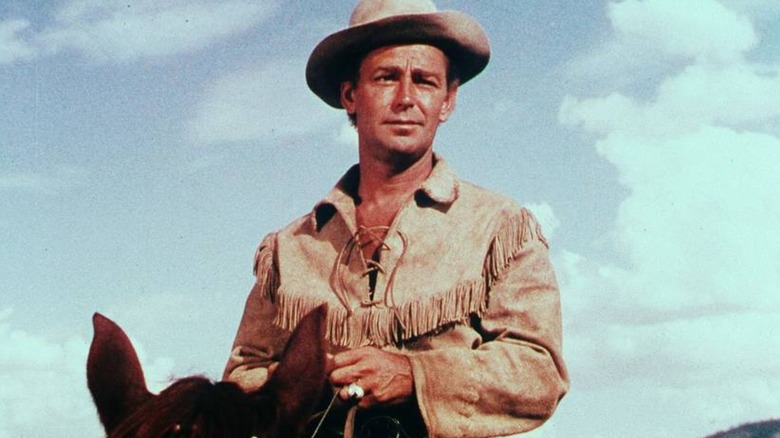
A common trope in Westerns is the mysterious stranger — the man who drifts into town and, through a series of events, finds himself engaged in a longstanding conflict as the only person who can settle it. That's the framework of 1953's "Shane," which is based on Jack Schaefer's 1949 novel of the same name. The film is set in 1889 in the Wyoming territory, where a drifter named Shane (Alan Ladd) finds himself in the middle of a conflict between wealthy ranchers and downtrodden homesteaders.
Fortunately for the homesteaders, Shane just so happens to be a gunfighter. This kind of story became incredibly common in Westerns, and it's familiar to Samurai movies as well, with the likes of 1961's "Yojimbo" and others following a similar structure. A more modern film that was heavily influenced by "Shane" is 2017's "Logan," which mirrors the classic Western's structure, characters, and overall narrative in as many ways as possible, showing how the Western's influence continued more than 64 years after its premiere.
Of course, "Shane's" influence can be seen in a plethora of great Western movies throughout the 20th century, as the drifter would become a common trope. Many excellent films starring Clint Eastwood embraced this concept, but "Shane" did it better than the rest. The film's ending is iconic, as is the last conversation, which imparts the movie's theme as succinctly as possible. It's unforgettable, and "Shane" is easily one of the most important Westerns of the 1950s.
The Searchers
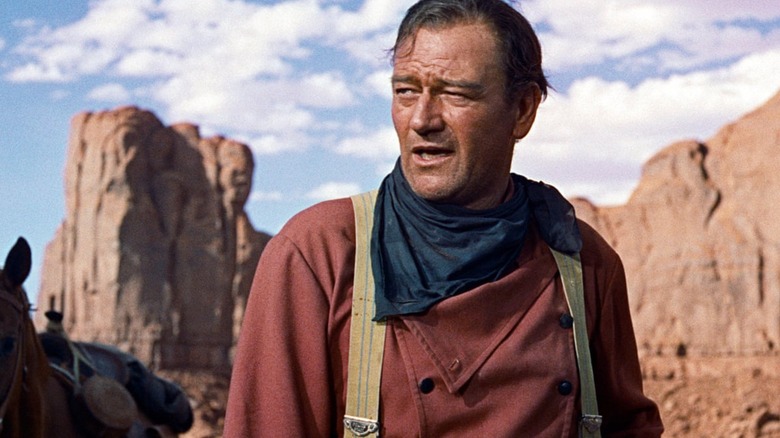
Of all of John Ford's movies, and there were a lot, "The Searchers" is often cited as the director's best. The 1956 epic Western is based on Alan Le May's 1954 novel of the same name, and is centered around Ethan Edwards (John Wayne), a Civil War veteran searching for his niece during the Texas-Indian wars. This is the film that stands out among everything else Wayne filmed, as it features his greatest performance in what many have called one of the best movies ever made.
The AFI named "The Searchers" the greatest American Western ever made, and that's hardly the only organization to offer such significant praise. The film is more than its base premise — it's deeply psychological and features a lead who is morally controversial; not the type of lead you'd expect in a Western of the period. In addition to the brilliantly written characters by Ford's longtime collaborator, screenwriter Frank S. Nugent, Ford's shots are as beautiful as ever, capturing the American West in ways only he could.
Ford's work has inspired many great filmmakers of the 20th century, and "The Searchers" is no exception. Famed director Martin Scorsese has never been shy about his love of "The Searchers" and how it influenced his life and work, explaining in an op-ed for The Hollywood Reporter, "I go back to 'The Searchers' all the time," describing Ford as a great artist for how he structured and ended his movie, which Scorsese describes as an American classic.
The Good, the Bad and the Ugly
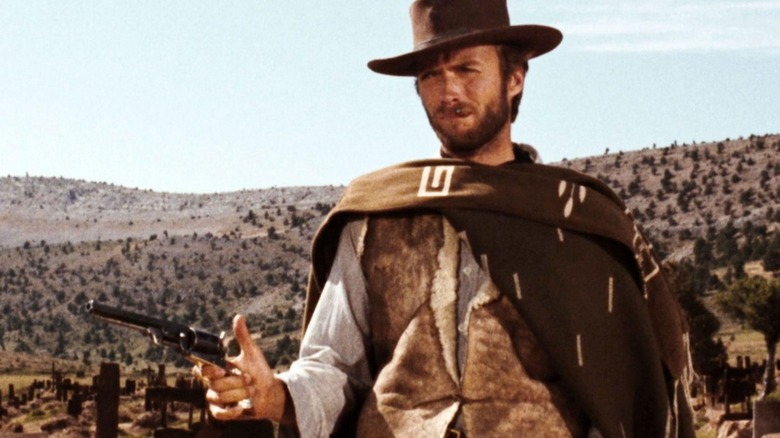
The 1960s ushered in the period of spaghetti Westerns, which were produced and shot primarily in Italy. Some of the best Westerns of the 1960s and '70s were shot overseas, but because they starred leads from the States, this wasn't apparent. Regardless, spaghetti Westerns contrasted with their American counterparts via morally ambiguous characters and included more violence on screen, thanks to lax standards in contrast to Hollywood.
Two prominent names arose from the spaghetti Western sub-genre: director Sergio Leone and Clint Eastwood, who would go on to direct himself. Together, they shot three films that are called the Dollars Trilogy. While they're all excellent Westerns, the one that everyone should see at least once is the last, "The Good, the Bad and the Ugly." The film is one of the most iconic of the 1960s, but more than that, it's a masterpiece of great storytelling, perfect casting, and contains one of the most important 150 seconds of film in history.
The film concludes with a standoff, where nobody says a word for nearly two-and-a-half minutes, conveying every emotion, intent, and thought with eyes alone. It takes a lot of talent, in front of and behind the lens, to make that work, and it all came together perfectly in "The Good, the Bad and the Ugly." This is the kind of film you show someone who says they don't like Westerns, having never really sat down to watch one, as it's hard to hate.
Butch Cassidy and the Sundance Kid
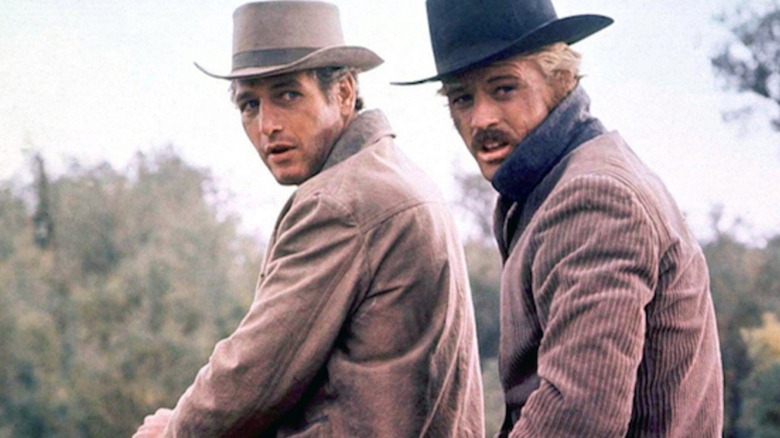
One of the greatest on-screen duos of the 20th century involved Robert Redford and Paul Newman. They starred in two outstanding films together: 1973's "The Sting" and 1969's "Butch Cassidy and the Sundance Kid." The latter is a Western buddy film starring Redford as Harry Longabaugh, the "Sundance Kid," and Newman as Robert LeRoy Parker, "Butch Cassidy." The two outlaws have a penchant for robbing trains, which sees them run afoul of a posse intent on killing them, so they flee to Bolivia.
Despite getting to another country, the posse doesn't relent, but neither do they, becoming bank robbers in Bolivia known as Los Bandidos Yanquis (The Yankee Bandits). It all comes to an immaculate end that stands as one of the best final shots in cinematic history. "Butch Cassidy and the Sundance Kid" did well upon release, earning several accolades, including four Academy Awards.
In the years since, it's been seen as a cultural achievement in cinematic storytelling. It's also based on a true story, though it's a loose approximation of real events. Ultimately, "Butch Cassidy and the Sundance Kid" is a great buddy film about two outlaws against unbeatable odds who go out in a blaze of glory that has inspired filmmakers to embrace revisionism and irreverence in their storytelling for decades. You can see the film's influence in everything from "Thelma & Louise" to 2001's "Ocean's Eleven." Frankly, it's a great film in and of itself, despite its Western setting.
Unforgiven
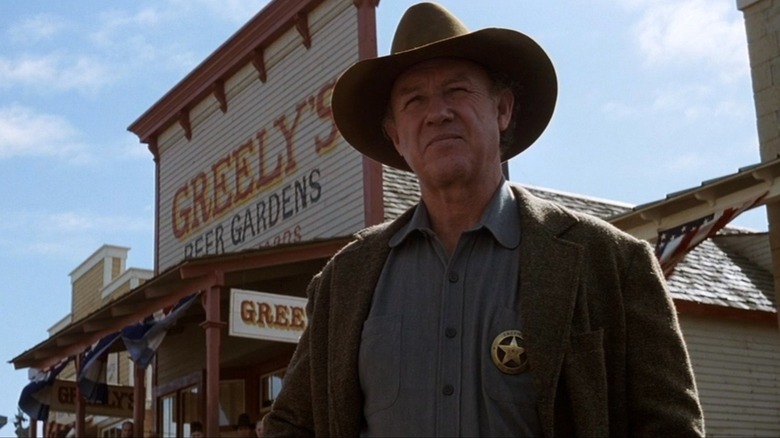
Westerns began to wane in the 1970s and '80s, with far fewer films released than in previous decades. Clint Eastwood, who'd starred in many during his heyday, took the directing chair and lead role in 1992's "Unforgiven" and not only showed the world that Westerns hadn't gone anywhere, but that there were plenty more stories to tell. Eastwood assembled an amazing ensemble cast for "Unforgiven," featuring Richard Harris, Morgan Freeman, Gene Hackman, and many others.
The story focuses on William Munny (Eastwood), a retired gunfighter who's pulled from retirement to collect a significant bounty, but runs afoul of local law enforcement. What follows is one of the most brutal, deadly, and violent revenge Westerns ever put to celluloid, and the film was widely celebrated for it. "Unforgiven" received nine Academy Awards, taking home the Oscar for best picture, while simultaneously ending the romanticized Westerns of old by confronting the genre's turn towards revisionism.
"Unforgiven" was also Eastwood's final Western movie — he delivered his magnum opus, closing the door on the genre, while continuing his career as both an actor and a director. As a genre-based swan song, you can't get much better, and for Eastwood's career, which has spanned more than 70 years, that's saying something. "Unforgiven" is an incredibly violent movie, so it's not necessarily great for those who prefer lighter fare. Still, if they want to see the apex of what a late-20th-century Western is in its best form, "Unforgiven" is a movie everyone should watch.
True Grit
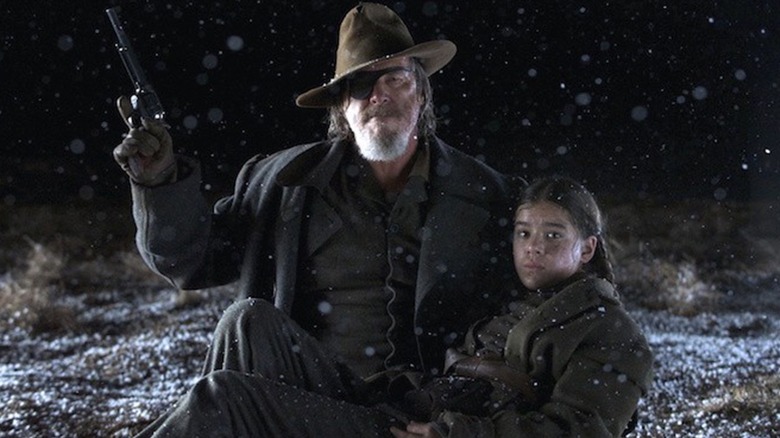
There are two films based on Charles Portis' 1968 novel of the same name, "True Grit," and both are excellent Westerns. While the first, starring John Wayne, is a classic, the version that deserves a watch from everyone at least once in their lives was released in 2010. The writing, producing, and directing duo of Joel and Ethan Coen came together to adapt Portis' novel, and their version of "True Grit" is an outstanding adaptation worthy of significant praise.
It features an all-star cast, including Hailee Steinfeld's feature film debut, alongside Matt Damon, Barry Pepper, and Josh Brolin. Jeff Bridges plays the same role as Wayne, Deputy U.S. Marshal Rooster Cogburn, a man hired by Mattie Ross (Steinfeld) to help her get justice against the men who killed her father. The 2010 version of "True Grit" differs from the 1969 version in that it focuses primarily on Mattie, whereas Cogburn was the central focus of Wayne's version.
This was more in line with the book, making the Coen brothers' work a more faithful adaptation, and their version was more gritty and violent as well. This aspect of the film is more appealing to modern viewers, and while everyone should definitely sit down for a viewing, it's not a bad idea to watch the OG "True Grit" as well. Unsurprisingly, "True Grit" earned numerous accolades, including 10 Academy Award nominations. Steinfeld received a nomination for her feature film debut at the age of 13, launching a successful career.
Django Unchained
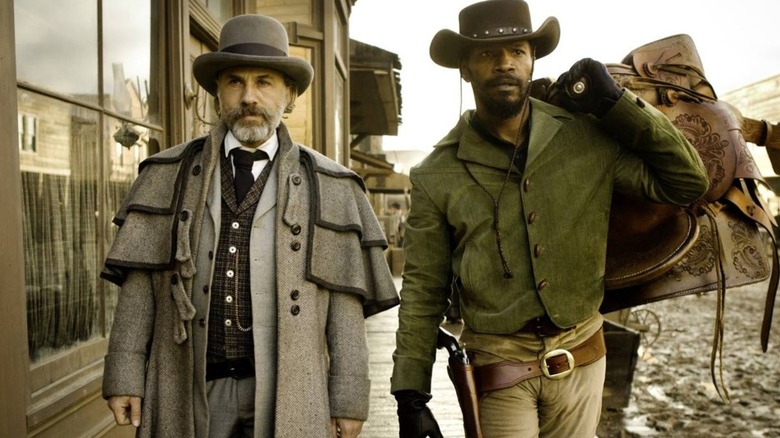
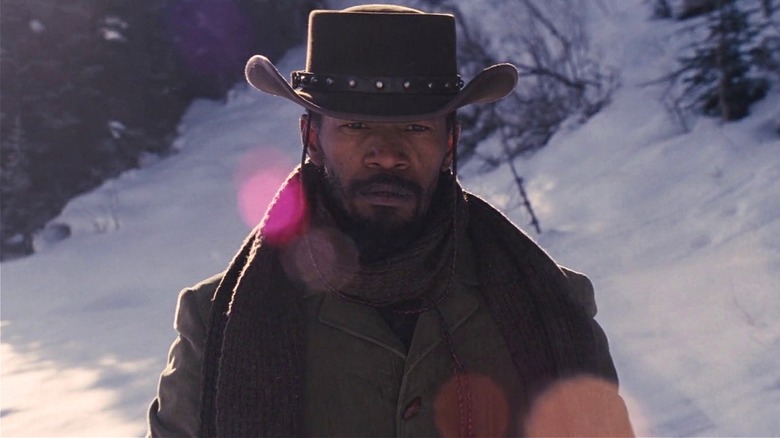
Many of the Westerns released in the 21st century have been revisionist, and one of the best filmmakers leading that charge has been Quentin Tarantino. In 2012, the writer-director released "Django Unchained," which is a clear homage to spaghetti Westerns with plenty of references to Sergio Leone's work as well as director Sergio Corbucci's 1966 film "Django." The movie is set in the 1850s in the Antebellum South, as well as several areas in the Old West, and is centered around a freed slave named Django (Jamie Foxx).
Django is freed by Dr. King Schultz (Christoph Waltz), a former dentist-turned-bounty hunter who needs Django's help in identifying his bounty. He trains and outfits Django, turning him into a bounty hunter who can take care of himself, and like all of Tarantino's films, there's plenty of ultra-violence and other hallmarks from his cinematic career. "Django Unchained" is not historically accurate, as it's entirely revisionist, but it does utilize some elements of historical accuracy for its setting and other elements.
Regardless, what makes "Django Unchained" a great Western that everyone should watch at least once isn't its adherence to history. It's the film's embrace of vengeance, its lack of reverence and appreciation for bloody frontier-style justice, and the incredible talent shown on screen whenever Waltz, Foxx, Walton Goggins, Kerry Washington, and Leonardo DiCaprio appear on screen. Tarantino's ability to amass a cast of brilliant actors is on full display in "Django Unchained," which is entertaining from start to finish.
The Hateful Eight
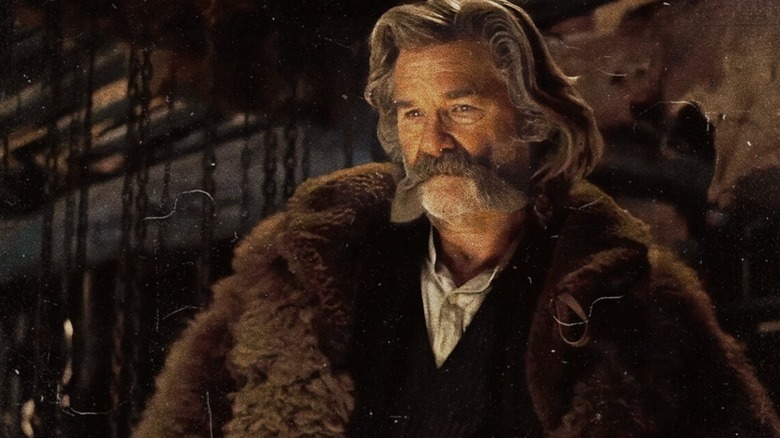
If "Django Unchained" was Quentin Tarantino's homage to spaghetti Westerns, then "The Hateful Eight" is his rebuttal of John Ford's work. Stylistically, the film shares much in common, as the cinematography features wide shots similar to those embraced by Ford in "The Searchers," which was shot on 70 mm film. Tarantino shot "The Hateful Eight" so it could be screened on 70 mm film, though not all theaters could accommodate this. Where Ford romanticized the Old West and the Confederacy, Tarantino does the opposite, taking an antithetical approach to the genre.
The film begins with a stagecoach stopping during a heavy blizzard, where eight strangers gather. They all have something to hide, and nothing is as it seems. "The Hateful Eight" plays out as a thriller and a mystery set within the backdrop of the Old West, taking place in the 1870s. Like any good Tarantino movie, it's filled with as much violence, profanity, and irreverent wit that could be crammed onto every millimeter of film the director had at his disposal.
Tarantino's dislike of Ford is well-known, as he's spoken about it many times over the years. "The Hateful Eight" seems like the director's answer to everything he didn't like about Ford's filmography, all packed into a single movie. The result is a fantastic Western that embraces the post-Civil War era of animosity exceptionally well. "The Hateful Eight" is slow, methodical, and engrossing, ensuring every viewer is fully captivated from beginning to end.