

5 Movies And TV Shows Based On Creepypasta
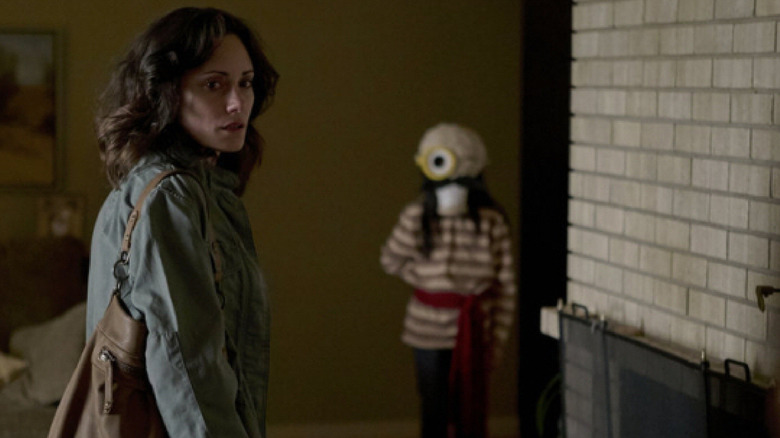
The internet presented a bold new medium for which people could try to scare the pants off of one another. The art of the scary story likely dates back to early humans telling primitive ghost stories around campfires, setting the stage for folklore to develop. Horror then permeated novels, films, and now, online message boards.
Creepypasta first began popping up in the 2000s. The name is a deviation of the term "copypasta," where people would copy and paste stories from one website to the next. But, of course, creepypasta has a much more sinister connotation. With stories like "Jeff the Killer" and "Smile Dog," people would create mythologies around urban legends or chilling images. The anonymous nature of the internet made it easy for people to tell such stories; and since readers didn't know anything about the user, it helped lend it a bit of credence. Many of these stories have evolved beyond the confines of 4chan and Reddit, to the point that they have taken hold of the zeitgeist at large.
It makes sense that Hollywood has begun adapting some of these stories. Creepypasta-based movies have provided new monsters to scare audiences or tap into new fears that younger generations have developed, like that of liminal spaces. And rarely, but not never, a simple online story can grow into something with real-world consequences.
Backrooms
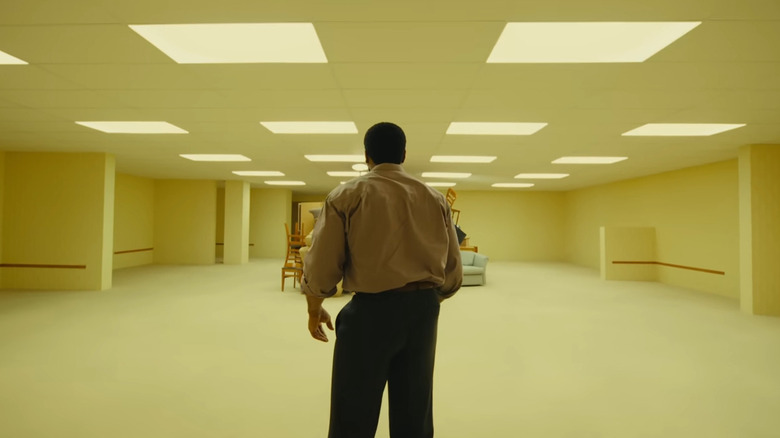
Throughout the 2010s, an image of an empty office space circulated online. It was simultaneously mundane yet otherworldly, encapsulating the idea of a "liminal space." The standard definition is a transitionary threshold devoid of human life, like what you find in a hotel hallway or an airport lobby late at night. It's a place one would assume features some kind of life but remains vacant. It's familiar yet somehow wrong.
It would take several years for a 4chan user to add lore to the image, referring to it as the "backrooms," where there may or may not be creatures lurking for anyone unfortunate enough to "noclip" into this reality. But what really took it to the next level was a series of videos uploaded to YouTube by Kane Parsons, otherwise known as Kane Pixels, who would eventually be hired by A24 to create a feature-length "Backrooms" movie. With "Backrooms" lore becoming so popular, it only makes sense to predict that the film will become one of many surprise box office hits in 2026.
What's amazing is that people have uncovered the actual Backrooms location from the photo that started it all. It used to be a furniture store that has since become a (now closed) shop called Hobbytown in Oshkosh, Wisconsin. The picture was taken when the space was being renovated, which is why it has such a barren look. But that aesthetic, along with the idea that something beyond comprehension could be lurking in such a mundane space, has now fundamentally altered the creepypasta landscape.
The Rake
Liminal spaces are scary because they invoke a feeling of uneasiness and the idea that you shouldn't be there for too long. But sometimes, to scare the masses, you just need a good, old-fashioned monster. That's where "The Rake" comes into play.
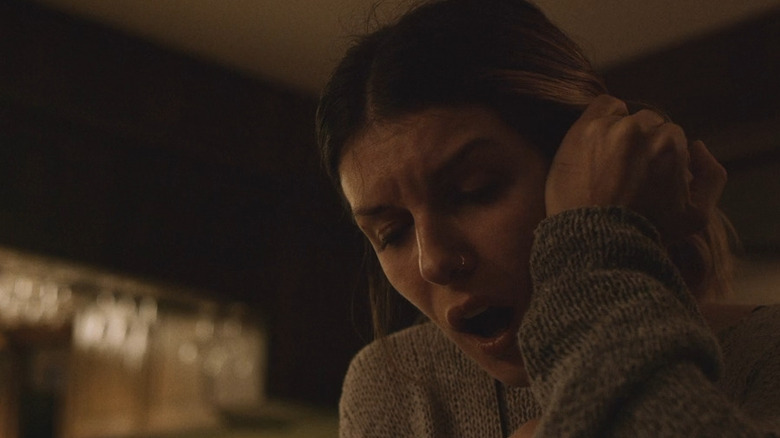
Introduced on 4chan in the mid-2000s, the Rake is typically described as a humanoid monster who will watch its prey sleep in their bedrooms. Any human can become paralyzed by fear, and if the Rake is approached, it'll attack its victims with its long, razor-like nails (hence its name). With such a distinctive look, the creature was adapted into the 2018 film, "The Rake." The story follows a brother and sister who reunite after many years following the deaths of their parents, which Ashley (Shenae Grimes-Beech) is convinced was caused by a monster rather than a standard human murderer.
But despite the creature's prevalence on message boards for over a decade, the movie failed to make an impression on viewers — made evident by its 11% audience score on Rotten Tomatoes. But it's a good case study of how creepypasta movies and TV shows should not be adapted. The Rake has an entire mythology surrounding it that could've been utilized, instead of bringing it down to another average movie monster. "The Rake" taps into the primal fear of feeling like you're being watched while asleep. It's that thing that goes bump in the night and, when you see it, it's already too late.
Beware the Slenderman
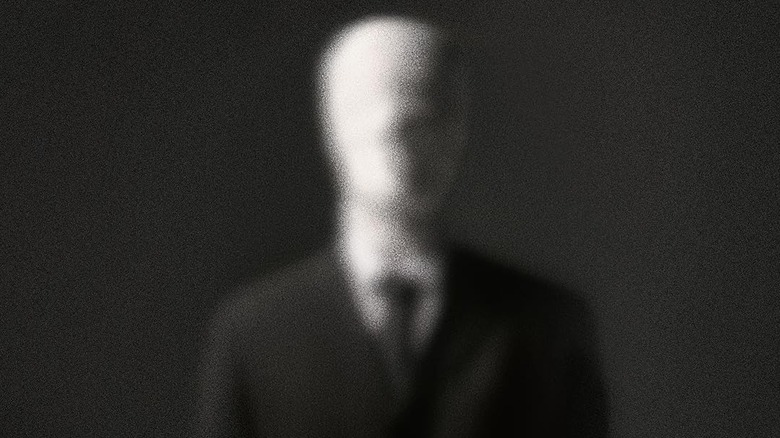
"Slender Man" is arguably the most famous creepypasta of all time. Even people who aren't chronically online have heard of it, and there was a 2018 horror movie surrounding the character that was lambasted heavily by critics. A major reason for this was that the "Slender Man" story inspired two 12-year-old girls to stab their friend in 2014, and a movie linked to the horrific event created one of the most controversial trailer moments of all time.
For a film that won't leave a bad taste in your mouth, watch the HBO documentary "Beware the Slenderman," which details the character's origin as well as its inspiration for a real-life attempted murder. Slender Man came from The Something Awful Forums in 2009, where users were encouraged to come up with their own new myth. Eric Knudsen (under the name Victor Surge) posted doctored photographs of a tall, lanky man wearing a suit with a featureless face; and from there, others created stories surrounding the mysterious nature of the so-called Slender Man.
In real life, those girls attempted to murder their friend to appease this fictitious Slender Man, believing they could become his proxies and spare their families from him. The story is a good reminder of how impressionable young minds can be and how they are shaped by unlimited access to the internet. It's good not to believe everything you read online — which is a moral everyone, regardless of age, would benefit from remembering.
Channel Zero
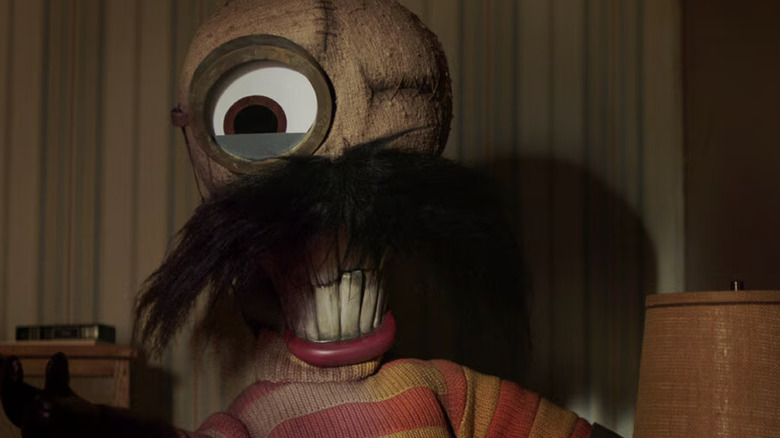
"Channel Zero" is required viewing for any creepypasta enthusiast. The untold truth of "Channel Zero" is that every season is based on a different creepypasta; and the first outing adapted "Candle Cove," which is about an internet user remembering a sinister children's TV program and asking other forum users if they can recall any details. From there, every subsequent season adapted other online horror stories, including "No-End House," "Butcher's Block," and "The Dream Door."
Each season featured its own unique director, ensuring a cohesive narrative and aesthetic across a limited run of episodes. The fact that "Channel Zero" was a TV series also allowed each creepypasta to take its time. There was a slow-burn quality to the proceedings that you can't get in a 90-minute movie. Each season taps into different fears and subgenres. For example, "Candle Cove" is about a piece of lost media — a children's TV show about pirates only some people seem to remember. However, the show is far more twisted and demented than individuals remember, which is a horror subgenre that has become increasingly popular in recent years with films like "Mr. Crocket" and "Buddy."
Sadly, "Channel Zero" ended after just four seasons. It's a horror show that should've never been canceled because there was so much potential for it to go on for so much longer. Each new season could've given another budding filmmaker a terrifying creepypasta to adapt. There's certainly no shortage with how many have been written over the years.
We're All Going to the World's Fair
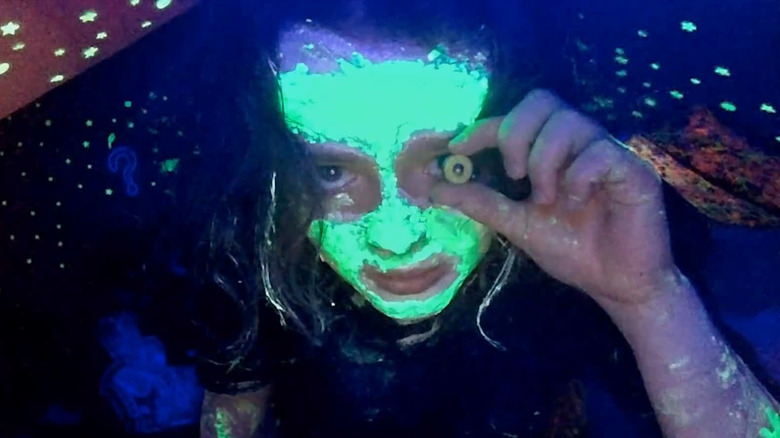
Many creepypasta movies and TV shows merely adapt an existing online story into another medium. However, "We're All Going to the World's Fair" differs by being about the very idea of creepypasta and online communities in general. The film, which is one of the best psychological horror movies of all time, follows a young girl, Casey (Anna Cobb), who partakes in the World's Fair challenge. Participants engage in a ritual and then document the physical and mental changes, which we see manifest in Casey, raising the question as to whether this is a quirky internet game or something far more sinister.
Other films simply take creepypasta monsters and have them kill people. "World's Fair" examines how being perpetually glued to a screen can have negative and positive effects on creating community. Casey documents herself, developing an online community and following of individuals who want to see how she changes through all of this. But the need to perform and create content may worsen Casey's mental health. Even by the end, it's unclear if Casey actually experienced the World's Fair or if it was all a performance.
Director Jane Schoenbrun would later make "I Saw the TV Glow," a teen horror masterpiece that examines how identity can be formed through the TV shows we watch. In both cases, there's the idea that media can form communities for individuals who may not have it otherwise. But it can also have real-world consequences, as we see Casey get too deep into her obsession. Without other sources of joy and comfort, it's easy for an impressionable mind to make an online story their entire world.