

10 Worst Movies Over Three Hours Long, Ranked
Great works of art sometimes need expansive canvases to truly thrive. While many amazing movies can be told in 80 minutes or less, there's also nothing wrong with a motion picture that makes inspired use of a lengthier, 180+ minute runtime. "The Godfather: Part II," "Seven Samurai," "Jeanne Dielman, 23, quai du Commerce, 1080 Bruxelles" — there's no end to the timeless masterpieces that perfectly utilize a mammoth runtime. Modern gems like "Babylon," "Drive My Car," and "RRR" have continued this tradition and emphasized the joys of immense cinematic experiences.
But that doesn't mean every single movie with a runtime exceeding 180 minutes is an automatic masterpiece. On the contrary, there are several films out there that couldn't deliver a quality artistic experience even with so many minutes of storytelling at their disposal. The 10 worst movies over three hours long (ranked below from "least worst" to the very worst) reflect how being an epic motion picture doesn't automatically give your project significant depth.
There are countless reasons these projects went so horribly awry. Some were plagued by low-key storytelling problems or hallmark flaws of their respective genres. Others were too derivative of other movies, or were a sharp step down from the prior works of their filmmakers. Still others were just inherently flawed creative visions that would've been unbearable at any length. Whatever informed their artistic shortcomings, these movies are the flipside to all the 180+ minute masterpieces out there. Do not challenge your attention span with these 10 movies — life's too short.
10. Gandhi
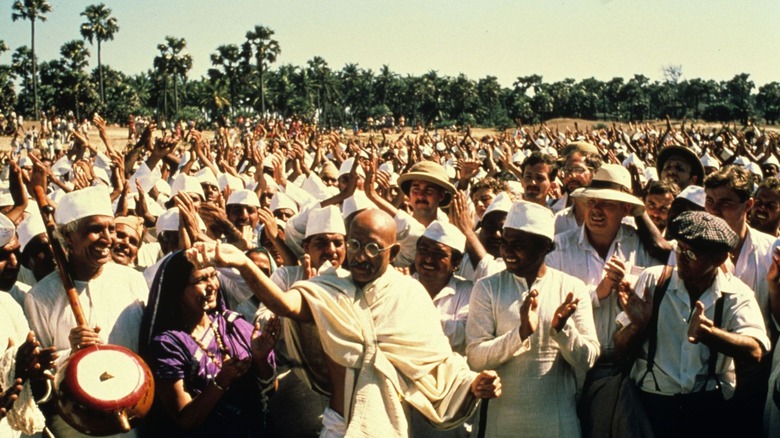
Richard Attenborough's 1982 feature "Gandhi," a biopic chronicling the life of Mahatma Gandhi (Ben Kingsley), was given several Oscar wins (including a best picture trophy) and generally positive reviews from western critics. However, even at the time of its release, intense grievances were expressed towards the project. Academic Akhil Gupta was one of many who was frustrated with the feature's surface-level nature as well as its unwillingness to shatter cinematic conventions.
Other criticisms levelled at the film was how it erased Gandhi's political activism, presumably to make the project more palatable to non-Indian audience members. Garnering further criticism was the heavy presence of white actors in the cast (including Candice Bergen, Martin Sheen, and Nigel Hawthorne). All of these and other grievances were impossible to avoid given the project's 191-minute runtime. Conceptually a way to ensure "Gandhi" covered as many facets of the titular man's life as possible, it also gave viewers more time to recognize the project's shortcomings.
Attenborough's dry, straightforward approach to this story didn't sustain itself for a runtime exceeding three hours. If you've seen one cradle-to-the-grave historical biopic, chances are you've seen many of the visual and narrative beats "Gandhi" hits. These faults don't erase "Gandhi's" more acclaimed elements, including Ben Kingsley's impressive lead turn and an emphasis on positive components of humanity. However, "Gandhi" wasn't nearly as rule-shattering as the historical figure it was depicting. That reality made its runtime more of a chore than an exhilarating experience one never forgets.
9. Wyatt Earp
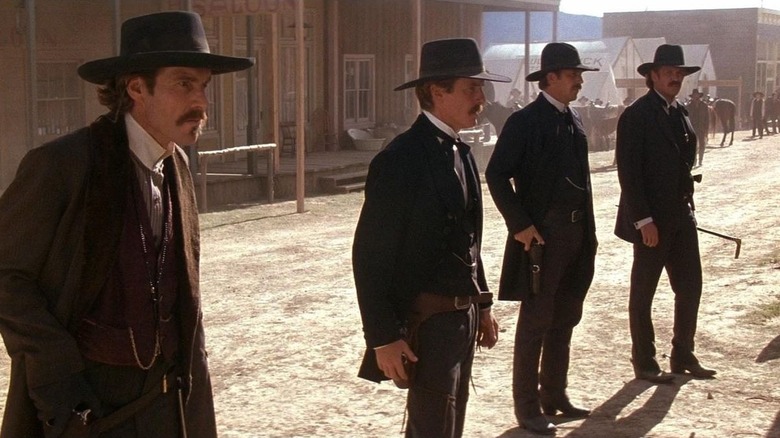
The '90s were a different time in many ways. One of this era's unique facets was that movie theaters were overrun with lengthy Kevin Costner epics. This leading man came out of the gate swinging at the decade's dawn with "Dances with Wolves," which established a precedent for Costner anchoring massive epics like "The Postman" and "Waterworld." Also a member of this cinematic class was "Wyatt Earp," which ran 190 minutes and saw Costner playing the title character. A slew of Old West historical figures made up the supporting cast, with actors like Dennis Quaid, Gene Hackman, and Jeff Fahey inhabiting these roles.
Costner's "Dances with Wolves" scored him a best picture Oscar win and immense financial success. "Wyatt Earp," meanwhile, was a non-starter with critics, who found it impossible to latch onto emotionally. The scope of the project was grand. However, it didn't have any believable human beings to invest in. Its surface-level approach to these historical figures kept audiences away. Director Lawrence Kasdan's handling of the larger set pieces did garner some praise, but mostly, critics were unengaged with "Wyatt Earp's" straightforward handling of its titular character.
Not even Costner's performance garnered enthusiasm, either positively or negatively. Like so much of this project, it was just received with a shrug. Despite offering so many actors and storytelling digressions across 190 minutes, "Wyatt Earp" reaffirmed the truth that not every '90s Costner epic is the next "Dances with Wolves."
8. Avatar: Fire and Ash

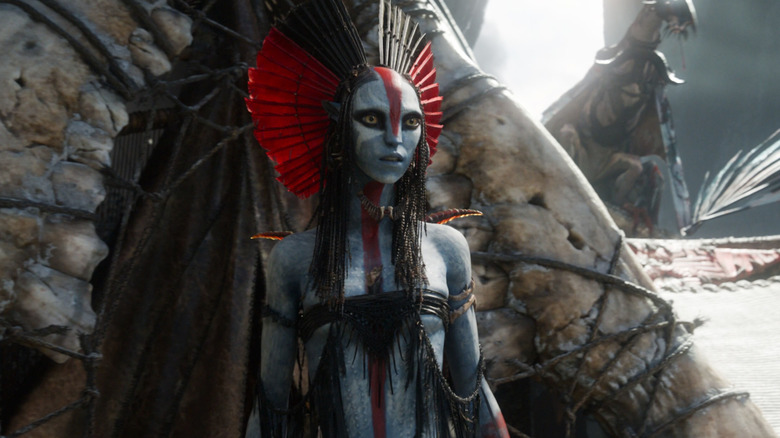
After two previous ventures into Pandora, writer/director James Cameron massively stumbled with "Avatar: Fire and Ash." This outing, which sees Jake Sully (Sam Worthington) and his alien family contend with Pandora's fire-fixated Ash People, is an exorbitantly long retread of its two superior predecessors. The third act especially dovetails into a series of sequences recreating crowdpleaser beats from the finales of the first two "Avatar" installments. Not even "Avatar: Fire and Ash's" most confusing moments were as insulting as these derivative elements.
Even the visual spectacle of "Fire and Ash" didn't come close to matching up to the "Avatar" standard, and not just because 3D presentations were shown in the janky 48 frames per second format. Few new creatures or dazzling new environments were introduced in this saga. Even the Ash People just ride around on slightly more menacing looking Banshees. If nothing else, an "Avatar" movie should provide plenty of interesting critters and cool backdrops. "Fire and Ash" struggled in that department mightily, as well as failing to deliver with raw emotional scenes that hinge on the acting powers of Worthington and Jake Champion.
The longest entry in this franchise by far, "Avatar: Fire and Ash" had several moments that upset fans – and for good reason. This installment is bloated and hollow where the other "Avatar" adventures were grandiose and endearingly sincere. Not even the villainous Varang's outsized wickedness could save "Fire and Ash" from its worst impulses.
7. Cleopatra
What's amazing about the best movies that run for 180+ minutes is that they really let audiences marinate in specific characters and environments while showing how, in real life, people and things change gradually. Filmmaker Ryusuke Hamaguchi is a master of this technique. Other directors, like the late Bela Tarr, use elongated features to capture how suffocating everyday existence can be. Titles like "Satantango" and "Werckmeister Harmonies" make ominous moods and worlds as inescapable for the viewer as they are for the fictional characters.
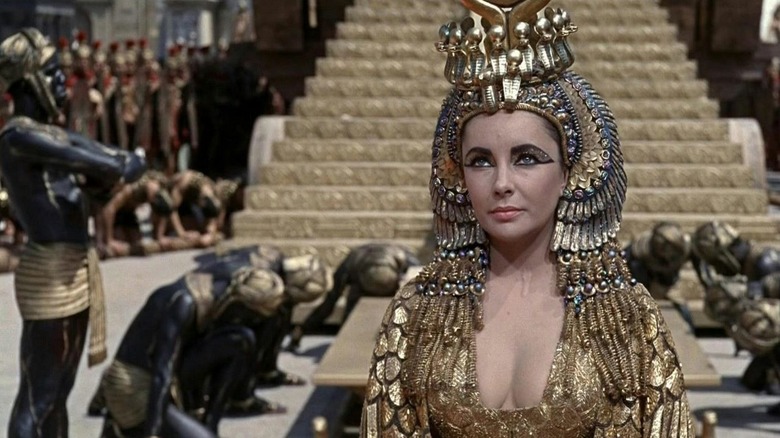
There are countless ways to make masterpieces that run for multiple hours. One problem with many mid-20th century epic films, unfortunately, is that more cynical reasons underpinned their unwieldy lengths. Specifically, they were long because of past box office hits that ran over 180 minutes, and studios hoped to make money off of "roadshow screenings." These were the impulses that drove "Cleopatra" into existence, an infamous 1963 boondoggle that went through all kinds of production turmoil.
Stories of how hard it was to bring "Cleopatra" to life have far overshadowed the film itself, which has mostly become known as a slog that's hard to sit through. An excessively "respectable" project, "Cleopatra" is far too buttoned-up to register as either campy entertainment or straightforward epic cinema. Running just over four hours, "Cleopatra" really weighs down viewers as it plods along. There are endless masterful ways to deliver a 180+ minute movie. Unfortunately, none of those maneuvers showed up to save "Cleopatra" from tedium.
6. Zack Snyder's Justice League
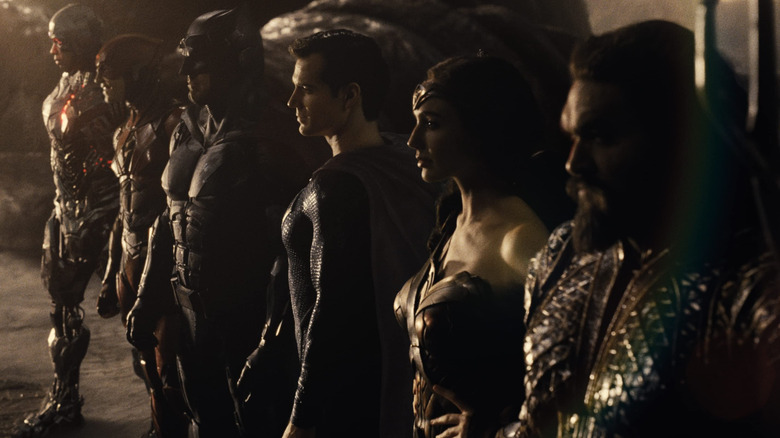
In hindsight, nothing better exemplifies the financial excesses of the peak TV streaming era than "Zack Snyder's Justice League." $70 million spent on an alternate cut of a movie that was sent straight to streaming is a wild proposition, but back in 2021, when HBO Max needed programming, WarnerMedia executives decided to bring this cinematic vision to fruition. Warner Bros. reportedly regrets releasing "Zack Snyder's Justice League," which isn't surprising given that the final product was still a mess (albeit less of a mess than the theatrical cut).
The six best and six worst scenes in "Zack Snyder's Justice League" reflect that this production had its entertaining moments. Certainly, getting to see Kiersey Clemons and Willem Dafoe automatically makes this cut the superior "Justice League" movie. Mostly, though, it greatly overstayed its welcome with a 242-minute runtime. Throwing everything at the wall led to several awkwardly-paced scenes that desperately needed trims, not to mention characters like Wonder Woman and Superman getting lost amidst all the superhero chaos. Key elements like Tom Holkenborg's shrug-worthy score and the often dimly-lit cinematography remained frustratingly generic.
Most disappointingly, despite having a sprawling four-hour canvas to work with, "Zack Snyder's Justice League" still resorts to hitting familiar superhero movie beats. It's ultimately a plus-sized variation of a typical two-hour blockbuster. An artifact of a different media era, "Zack Snyder's Justice League" proved more isn't always better.
5. Gods and Generals
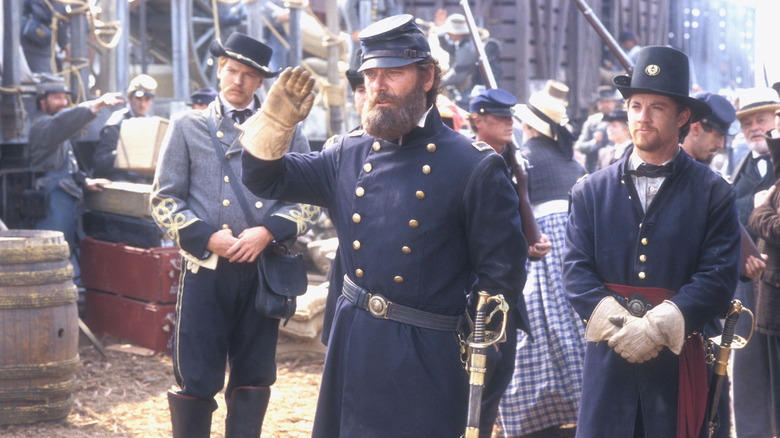
Get ready to see lots of historical epics on this list. This genre has often housed 180+ minute long movies, as filmmakers attempt to cover every nook and cranny of major historical events. Plus, the precedent of this genre delivering lengthy motion pictures has inspired modern imitators to deliver their own 200+ minute projects. "Gods and Generals" is one of the modern instances of this phenomenon with its massive 219-minute runtime (and the director's cut runs even longer). It follows Confederate general Stonewall Jackson (Stephen Lang) during the American Civil War, with other pivotal Southern figures like Robert E. Lee (Robert Duvall) playing key roles.
Sometimes, it takes decades after a historical epic's release for criticisms to begin surfacing. Not so for "Gods and Generals." It was critically derided from the moment it debuted. Critics were astonished at how little meat was on the bones of its central characters, as well as its reverential approach to the Confederacy. Writer and director Ronald F. Maxwell, meanwhile, failed to give the project the sort of sweeping scope one would expect from a typical historical epic. The whole thing was just a gigantic mess that never got any better during its trying runtime.
The only folks who'll get anything from "Gods and Generals" are those who enjoy watching Ted Turner's money go up in smoke. Otherwise, this is a motion picture that's easy to skip.
4. Gone with the Wind
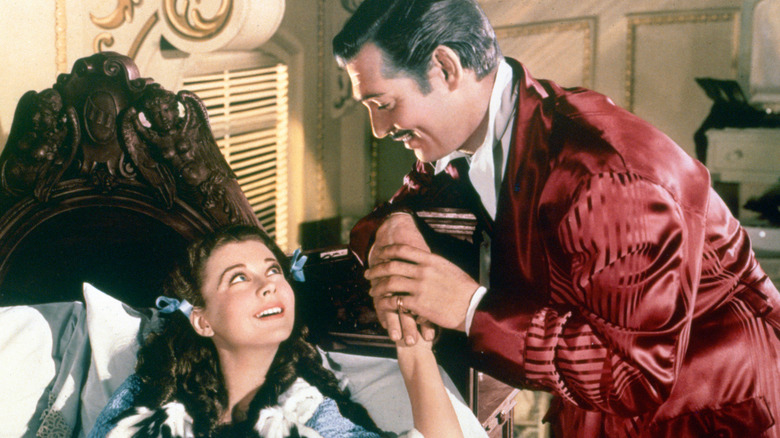
"Gone with the Wind's" practical effects in its biggest sequences remain incredibly impressive. Unfortunately, some cool set pieces do not a great movie make. Director Victor Fleming's 221-minute adaptation of Margaret Mitchell's novel is a trying misfire with an aesthetic that inherently works against audience investment. Main characters Scarlett O'Hara (Vivien Leigh) and Rhett Butler (Clark Gable) exist in an idyllic vision of Antebellum-era Georgia far removed from anything resembling reality.
These rose-colored visions of yesteryear are tough to get invested in. Inhabiting these spaces are stock characters who fail to garner much depth or compelling foibles throughout the monstrous runtime. Leigh and Gable can only do so much to prop up fictional individuals this emotionally aloof. Then there's its approach to race, an element that garnered controversy and protests from Black audience members all the way back in its initial 1939 release.
"Gone with the Wind" depicting obscenely insensitive material (including a "heroic" moment where Scarlett slaps one of her Black servants) with nary an air of conciousness speaks to the entire film's off-putting aura. This is a motion picture caught up in its own fantasy world miles away from reality. Over 234 minutes, Fleming never makes that world either inviting or one you'd want to engage with. For superior pre-1940 epics, check out the works of Abel Gance and Erich von Stroheim. Leave "Gone with the Wind" behind.
3. Pearl Harbor
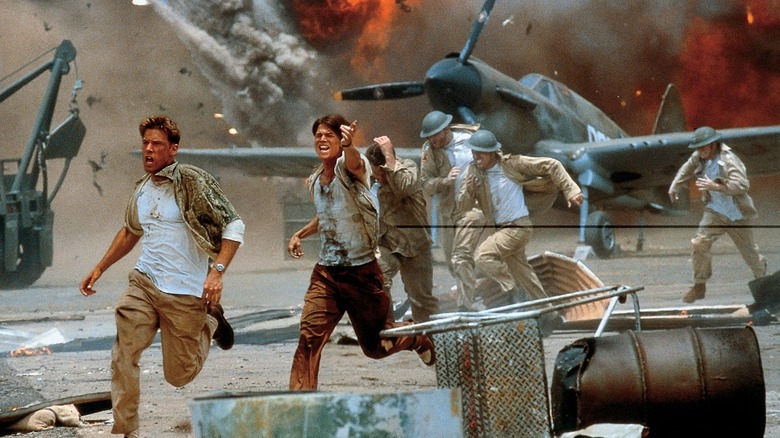
Nearly every Michael Bay movie has come under fire for delivering excessive runtimes. Despite Bay specializing in films about robots turning into cars or Will Smith and Martin Lawrence trading quips, his works also tend to exceed 140 or even 160 minutes. No Bay film, though, epitomizes the director's love for lengthy works like his 2001 foray into historical epics, "Pearl Harbor." This wasn't just another summer blockbuster for Bay. In delivering a saga about both a love triangle and the Pearl Harbor attack, Bay was attempting to make a classical romantic epic in the vein of "Doctor Zhivago" or "Titanic."
The results of this endeavor were some terrific sound design work, a handful of impressive visual effects, and otherwise total cinematic torture. Buttoned-up Michael Bay (tampering down his worst tendencies in the name of "respectability") is even more of a bore than his worst "Transformers" sequels. Bay's heart just isn't in executing sentimental scenes about young people torn between dueling personal allegiances. The cynical streak in all his other works makes one believe all of "Pearl Harbor's" romantic blabber will get interrupted by a snarky explosion at any moment.
None of the actors involved in this production, like Ben Affleck or Josh Hartnett, leave much of an impression, either — a problem, given how heavily "Pearl Harbor" is leaning on audience investment in its central characters. Even with 184 minutes of screentime, Michael Bay couldn't make his audacious "Pearl Harbor" vision something beyond a snooze-inducing bore.
2. Exodus
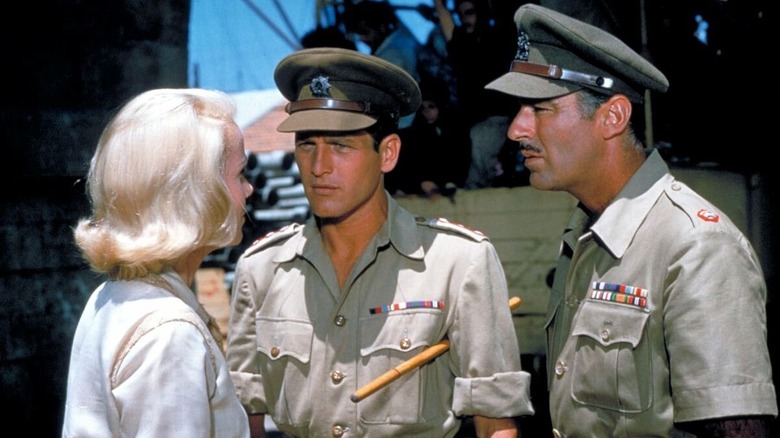
Not even a master filmmaker like Otto Preminger gets it right every time. The man behind masterpieces like "Anatomy of a Fall" struggled to imbue any sense of energy or life into 1960's "Exodus," a 208-minute long project (based on a 1958 Leon Uris novel of the same name) that focuses on the founding of Israel in 1948. Critical breakdowns of the project have largely centered on the film's inability to juggle so many plotlines and characters despite its length. Everything in "Exodus" still remains vaguely defined even with a massive canvas at its disposal.
Further criticism has also been centered on how leading man Paul Newman didn't get to engage his more compelling gifts as a performer since he was saddled with such a rigid character, as well as the feature's off-putting pacing problems. Most frustratingly of all, though, is a recurring sentiment across negative "Exodus" reviews that even Preminger's craftsmanship was being phoned in on this production. Preminger had made other projects in his filmography like "Laura" and "Bunny Lake is Missing" riveting, yet he struggled mightily to work within the confines of a traditional historical epic.
Clearly, a lot of effort went into realizing "Exodus," yet it was all in the service of one of Dalton Trumbo's weaker scripts and an atmosphere that just wasn't very engaging. Only within the confines of "Exodus" could 208 minutes of Otto Preminger cinema become an endurance test.
1. The Birth of a Nation
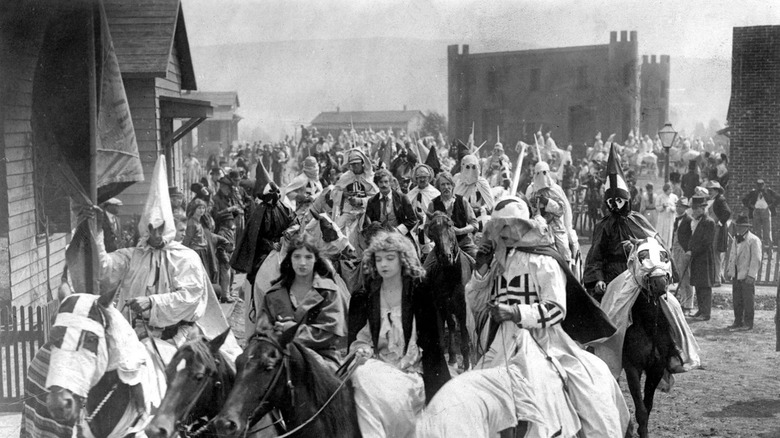
D.W. Griffith's "The Birth of a Nation," which the NAACP protested when it first hit theaters in 1915, is a vile movie. Its heroic portrayal of the Klu Klux Klan, hateful view of Black people, and warped worldview alone is enough to make it one of the worst movies ever made. However, this 189-minute catastrophe is also just not very interesting as a piece of filmmaking. While directors like Mario Ronocoroni and Charlie Chaplin were making acclaimed works the same year that were full of heart, whimsy, and inventive visual storytelling, Griffith delivered a historical epic that couldn't give viewers a single interesting character in its entire bloated runtime.
While fellow 1915 film "After Death" has remained acclaimed for its intimate scope and dreamy aesthetic, "The Birth of a Nation" is a flat, straightforward exercise full of imagery that's tedious when it's not appallingly racist. Crummy editing (even by mid-1910s standards) abounds, and the plot never gets any more engrossing no matter how long one dwells on this motion picture. Even the tinier details infuriate, like Griffith scattering his initials multiple times on any text cards. Viewers won't forget who made this disaster, but it's doubtful they'll remember any of the human beings on-screen.
An ode to both racism and inert dramatic filmmaking, D.W. Griffith's "The Birth of a Nation" is a torturous experience on countless levels. There are infinitely better ways to spend 189 minutes of your life than watching this artistic calamity.