

10 Classic '90s Sci-Fi Movies That Are Even Better Now
The '90s was an era of big swings in science fiction — genre-defining epics, mass-spectacle brought on by revolutionary special effects, and the return of beloved franchises from the previous two decades. Due to growing pains and the distinct cultural vibe that defined the era, not all of those movies are quite as strong now as they may have been at the time. But rather than highlighting '90s movies that didn't age so well, we'd like to shine a spotlight on the films that have done the opposite.
Yes, even with CGI being as young as it was, the overly starry visions of the future, and the wild hair styles that didn't last, there's still a lot of science fiction cinema from the '90s that's aged like fine wine. Whether they accurately predicted elements of our present day, or because in retrospect, we can appreciate how good we had it, these movies are always a delight to revisit.
The Matrix
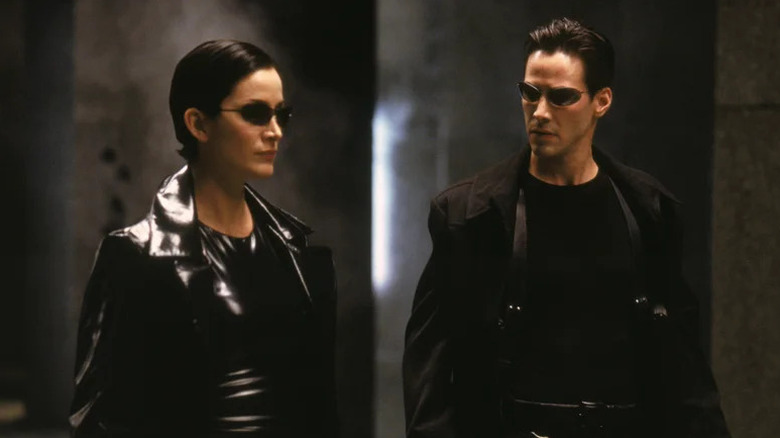
"The Matrix" is one of those movies that marks a clear before and after in the history of cinema. From the slow-motion martial arts sequences and ballistic gunfights to the heavy leather, green cyber aesthetic, it all combined to form a very specific look and feel that certain segments of science fiction still try recapturing today.
That lasting influence is part of why it has aged so gracefully, but it isn't the only reason. In a decade full of special effects doomed to wither in hindsight, "The Matrix" doesn't look that dated, thanks to its hyper-stylized approach and cybernetic world that is canonically stuck in the '90s. Keanu Reeves, Laurence Fishburne, Carrie-Anne Moss, and Hugo Weaving are all spectacular, delivering something between Shakespeare and high-concept anime from which the Wachowskis took such overt inspiration.
Then there's the whole transhumanist aspect. Neither Lilly nor Lana Wachowski had transitioned publicly when the film came out, but in more recent years, they've discussed "The Matrix" as explicit transgender allegory, as well as it being a larger look at identity and perception in the modern and post-modern age. "That was the original intention," Lily Wachowski said in a 2020 BBC interview, "but the world wasn't quite ready." At the end of the day, there's never a bad time to rewatch "The Matrix."
Jurassic Park
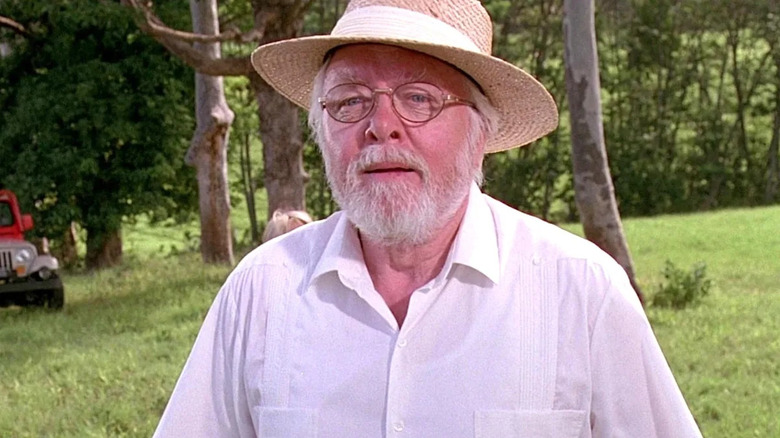
It's hard to argue that "Jurassic Park" wasn't always as good as it is now. Audiences in 1993 certainly seemed to get the message, with the film raking in over $900 million in its initial release, making it the highest-grossing movie ever at the time. It was a global sensation — an example of Steven Spielberg one-upping himself once again and continuing to redefine the blockbuster, years after doing the same with "Jaws" and "E.T. the Extra-Terrestrial."
And yet, somehow, "Jurassic Park" has only gotten better with age. Part of that is the huge pile of massively successful, creatively bankrupt sequels that have spawned in its wake. While the "Jurassic World" films have raked in the cash, spawning a massive media franchise and even the "Jurassic World" Live stage show, they've fallen woefully short of the true magic of that first picture. Those subsequent movies lacked the firm thematic foundation of Michael Crichton's original novel, but it's the flawless execution from Spielberg and the effects team that makes "Jurassic Park" so outstanding.
It's incredible that the dinosaurs in "Jurassic Park" still look this good. The blend of practical animatronic effects and (sparingly-used) early CGI resulted in a timeless look — appropriate for a story about things that should be extinct but can't help but take your breath away. In the 33 years since the film came out, rarely has another blockbuster hit its marks so gloriously, or with such precision.
Gattaca
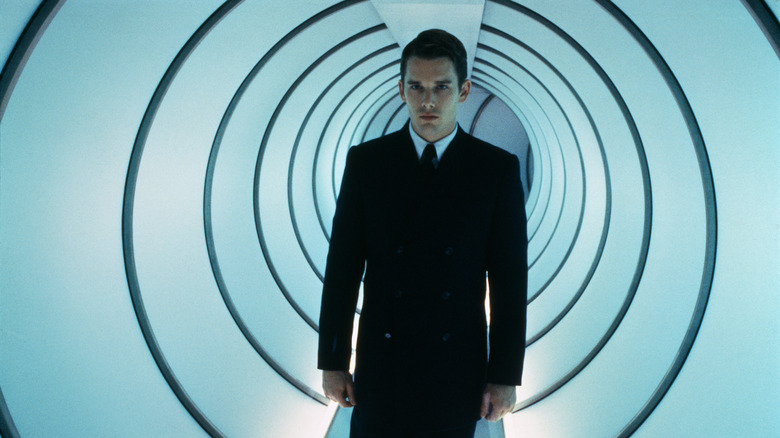
Stepping away from the blockbuster field for a minute, we have "Gattaca," the 1997 dystopian drama starring Ethan Hawke, Uma Thurman, and Jude Law. That trio alone have made this film's stock rise over time, as all three have been cemented as all-time greats with incredible careers. But it's the subject matter of "Gattaca," and the ways that, unfortunately, it's only become more relevant, that's made the film age so well.
"Gattaca" takes place in a near future where eugenics has essentially become a social norm. Pre-birth genetic modifications are typical for the wealthy, leading to a hard class stratification between those born of "good" genes and those born the old-fashioned way. The film follows someone from the latter background, played by Hawke, whose aspirations to become an astronaut run counter to the way society views his genetic "inferiority."
The movie has a lot to say about the concept of disability being so frequently used as a tool of authoritarian regimes. It frequently pokes holes in the idea that some sort of superiority can be achieved by manipulating genes, and lambasts the "scientific" perspectives that claim disability is a plague to be purged. Anchored by a strong script and a series of excellent performances, "Gattaca" is as relevant now as it ever was.
Johnny Mnemonic
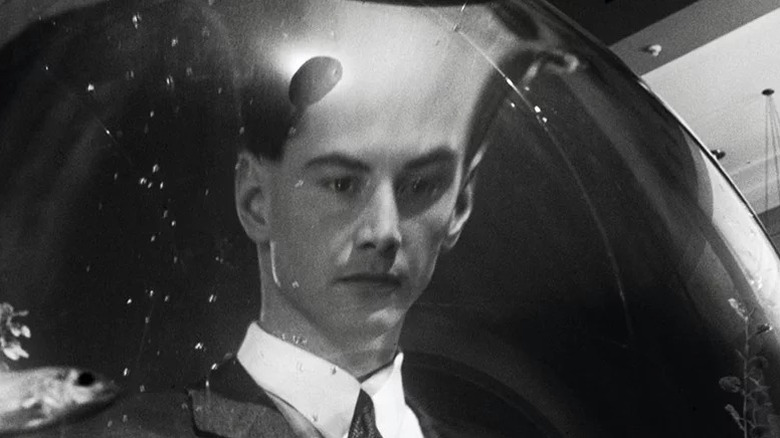
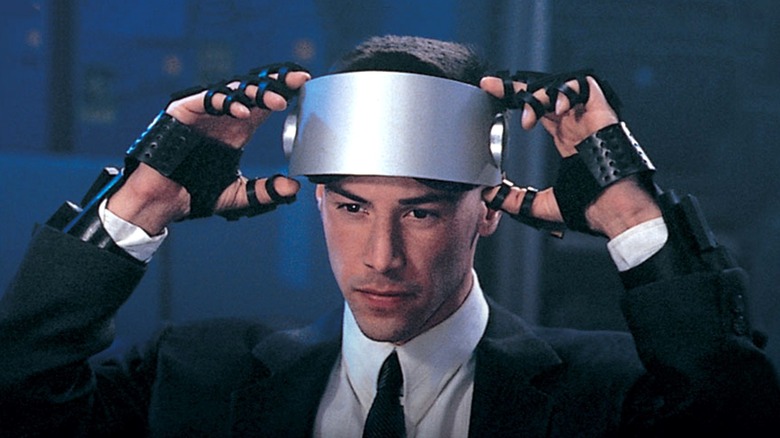
Before "The Matrix," the '90s got another pairing of cyberpunk and Keanu Reeves in Robert Longo's "Johnny Mnemonic." This isn't just a cyberpunk movie: It's a film written by the godfather of the genre, William Gibson, based on the 1981 short story of the same name later published in his seminal 1986 collection "Burning Chrome." Set in the same grim techno-future as Gibson's "Neuromancer" and his following "Sprawl" novels, the film embraces many of those genre signifiers, from the crowded neural interfaces to the dingy megacity streets.
What lands the film a spot on this list is twofold. First and foremost, cyberpunk is having a bit of a moment right now. A proper "Neuromancer" adaptation is on the way at Apple TV, and the prominence of the "Cyberpunk 2077" video game has spawned renewed interest. At the same time, the overall aesthetics of cyberpunk have remained largely the same since the '90s, so "Johnny Mnemonic" holds up quite well.
Adding to its appeal, a black-and-white cut, which was how Longo initially envisioned it, was released in 2022. This version received widespread acclaim, as opposed to the more negative reception that met the film in 1995.
Predator 2
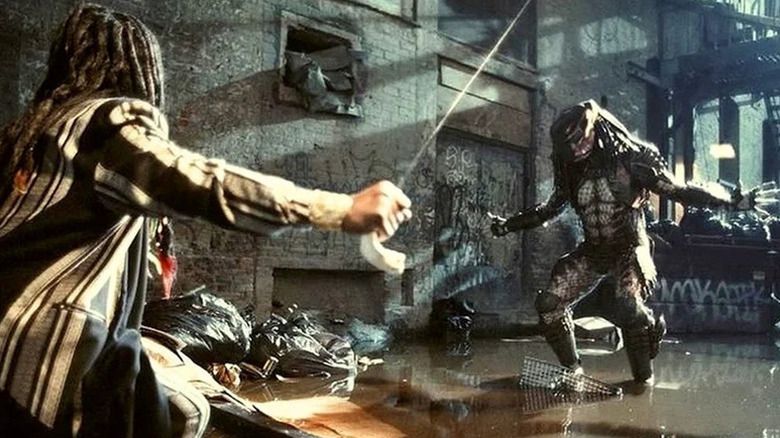
For years, "Predator 2" was a pariah, held up as a prime example of a genre sequel done bad. It was too goofy, too scattered, and too different from the film that preceded it, which was full of classic Arnold Schwarzenegger action and the tight direction of John McTiernan.
"Predator 2" was, in fairness to those critics, something totally different. Set in a heat-ridden Los Angeles torn apart by an escalating drug war, it's a far cry from the jungle commando escapade of the first film. But as time has gone on, some fans have given the sequel a favorable reappraisal, and more should follow suit. Just beware that the drug war storyline and the racist depiction of capital-C "Crime" is, uh, still not great.
The "Predator" franchise is probably in the best shape it's ever been in, quite honestly. With Dan Trachtenberg now serving as a steward over the series, there's been a run of fantastic outings, including "Prey," "Predator: Killer of Killers" and "Predator: Badlands." People are embracing the "Predator" lore and mythos, and it's only fair to give credit where it's due. Most of that larger world-building began not in the original film, but in "Predator 2." We just couldn't see back then where it would eventually lead.
Add on an expectedly great leading performance from Danny Glover, and you have a perfectly fun monster-cop-thriller that's well worth a rewatch.
Alien 3
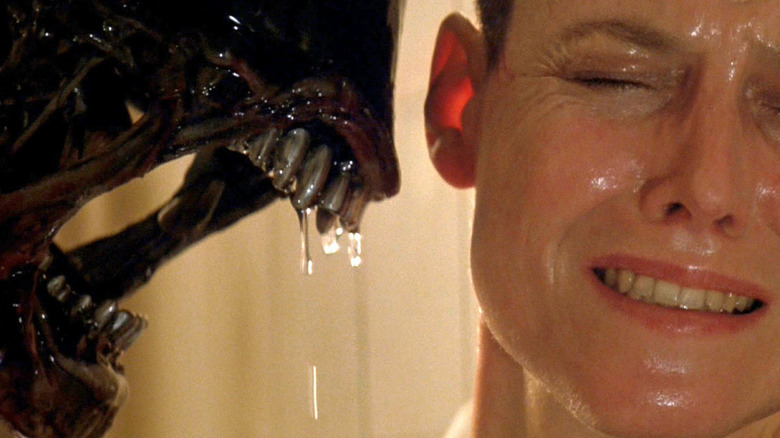
Similar to "Predator 2," "Alien 3" was rebuffed by many fans in its day due to tonal shifts from the prior films. While James Cameron's "Aliens" took a decidedly different approach from Ridley Scott's slow-burn original, neither had the philosophical ambition or pervasively dark tone that David Fincher brought to "Alien 3." Of course, Fincher himself would be the first to tell you to disregard the movie — something he's repeated over the years, disavowing it due to studio meddling in the finished product.
Despite what the director says, "Alien 3" reads better nowadays. Part of that is due to the state of the franchise, which has embraced an anthology model in recent years. In addition, the extended "Assembly Cut," first released in 2003 and given another coat of paint in 2010, helped fill in some holes and is generally viewed as the superior edit.
As to the former point, the one-off nature of recent "Alien" films like "Covenant" and "Romulus" makes the original issues many fans took with "Alien 3" — namely, the way it treated the events of "Aliens" and set up questionable material for future entries — a lot easier to swallow. Viewed as a single franchise entry that's connected more by aesthetics than story, it's easier to have a better time with "Alien 3."
The Rocketeer
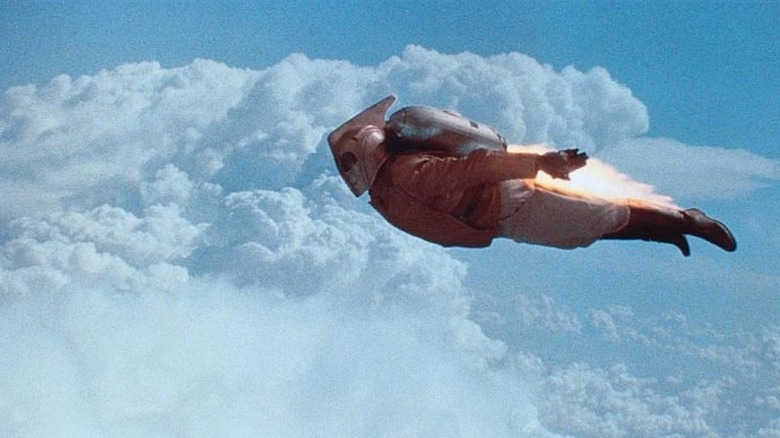
If you randomly caught "The Rocketeer" midway through TV one night, you'd probably guess it came out a decade earlier than its 1991 release date. The retro-styled Disney superhero film, based on the '80s comic book series from Dave Stevens, has all the hallmarks of that nostalgic adventure formula that George Lucas popularized in the late '70s. That distinct aesthetic — so removed from genre fare of the '90s — is a big part of why "The Rocketeer" has aged so well.
It all makes sense when you realize it was directed by Joe Johnston, who cut his teeth as a visual effects artist on the original Star Wars trilogy. "The Rocketeer" is exactly what it looks like — an homage to old adventure serials that embraces practical effects in an era when CGI was rapidly becoming the new favorite toy. There are Nazi spies, scenery-chewing mobsters, and a heroic score from the late James Horner that ties it all together.
When stunt pilot Cliff Secord (Billy Campbell) stumbles into possession of an experimental jetpack in 1938, he's pulled into a high-stakes odyssey that pits him against the American mob and the Nazis trying to reproduce the device for their own evil ends. With a fantastic supporting cast that includes Alan Arkin, Jennifer Connelly, and Timothy Dalton, "The Rocketeer" is the sort of movie magic that arguably shines even brighter today, and it's a shame that Disney never made that "Rocketeer" sequel.
Starship Troopers
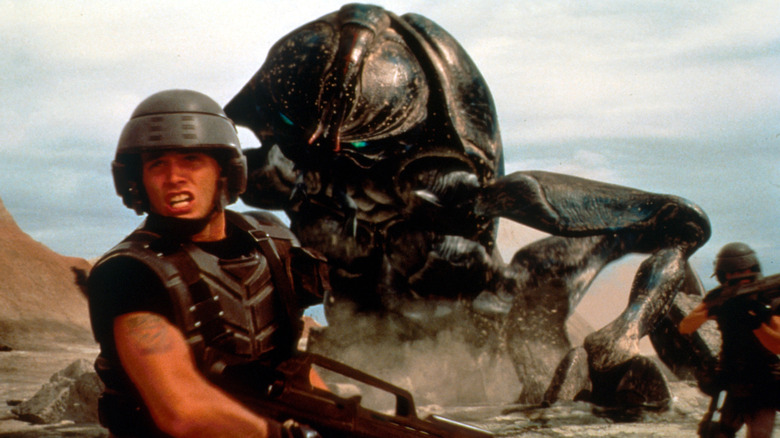
Few directors have ever had as strong a decade of sci-fi work as Paul Verhoeven did between 1987 and 1997, starting with "RoboCop" and ending with "Starship Troopers," an adaption of the novel by Robert A. Heinlein. The latter is, to our collective chagrin, even more relevant now in its sharp military-fascist satire.
Verhoeven's politics and biting commentary are louder than ever in "Starship Troopers," a film about a future human society where basic rights are earned through military service, Nazi iconography is everywhere, and all are urged to aid in the mass-colonization of the galaxy, to their own peril. Misunderstood in its day, retrospective assessments have turned the film into a cult classic.
"I decided to make a movie about fascists who aren't aware of their fascism," Verhoeven told The Guardian in 2018. "This was about American politics. As a European it seemed to me that certain aspects of US society could become fascistic." While the intention is plain to see now, it was widely missed at the time. "With a title like 'Starship Troopers,' people were expecting a new 'Star Wars.' They got that, but not really: It stuck in your throat," the director continued. "It said, "Here are your heroes and your heroines, but by the way — they're fascists."
Total Recall
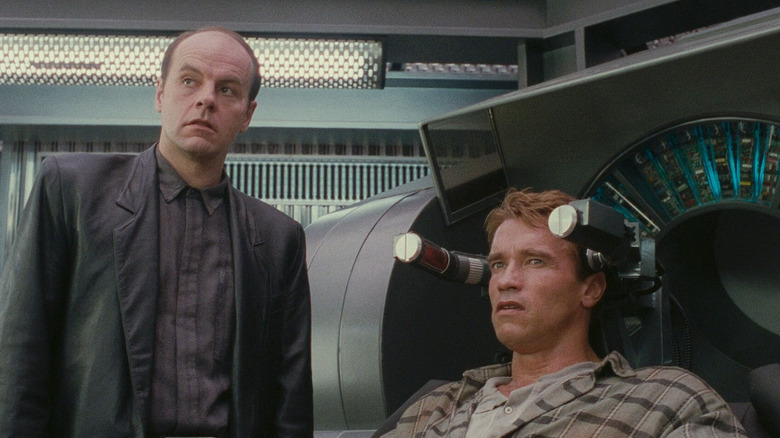
Seven years before "Starship Troopers," Paul Verhoeven directed another '90s sci-fi gem that's only gotten better. On top of being one of the best Arnold Schwarzenegger action movies, "Total Recall" is a funny, inventive, and occasionally poignant thriller about memory and corporate oppression.
There's an argument to be made that after the first two "Terminator" films and "Predator," this is Arnie's defining movie. Verhoeven's vision of the future is, as usual, grim and full of dehumanizing commercialized media, while corporate power brutally subjugates the denizens of Mars.
It's a mind trip full of zany mutant prosthetics, fictional sci-fi advertisements, and over-the-top Verhoeven action. The result is a movie so of itself that it hardly deserves to be relegated to a single time and place, helping it hold up incredibly well.
Then, of course, there's the impressive technicality at play. "When we did the chase sequence in the car, where we're going from one city to the next through the tunnels, these tunnels actually connected the two sets," actor Michael Ironside told the British Film Institute in 2020. "Paul wanted the possibility of doing it all in one shot." The result was a sci-fi world that was both incredibly complex mechanically and deeply engrossing to watch.
The Phantom Menace
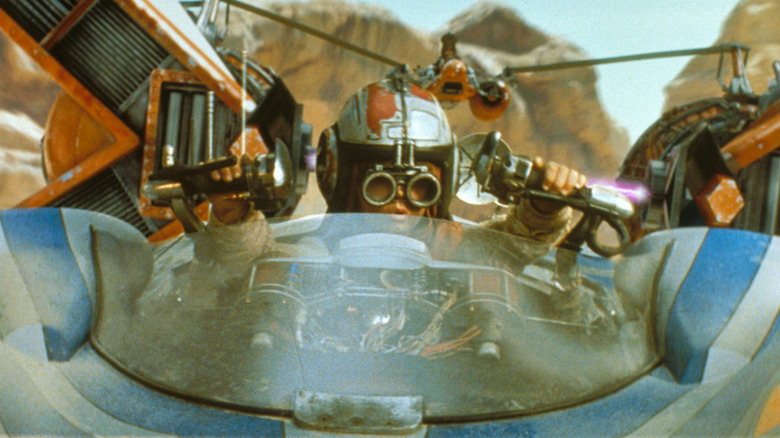
"Star Wars: Episode I — The Phantom Menace" was a landmark cultural moment. At first, it signaled the return of the biggest blockbuster franchise to that point after more than 15 years of silence, only to become the decade's most controversial sci-fi movie upon its release.
The hate-push against "The Phantom Menace" was more than fans reacting to a disappointing movie. In the early Internet era, it became one of the first major examples of what we'd now call online reaction culture. If there had been YouTube in 1999, the most annoying people on it would have talked about how the pod race made no sense and critiqued Qui-Gon Jinn (Liam Neeson) for holding back in the two-vs-one against Darth Maul (Ray Park).
These days, though, angry people have new Star Wars movies to complain about, and the prequels have been cast in a more favorable light. While "The Phantom Menace" is far from a perfect movie, it's easier to appreciate all that George Lucas was trying to accomplish. Yes, the acting is stiff and stilted, and the pacing is all over the place. But the grand scale, the Romanesque social order, the groundbreaking CGI — it all forms a compelling, if at times, flawed whole. John Williams' score does some heavy lifting, but this movie has an aesthetic that, while initially controversial, has stood the test of time. The costuming is incredible, the action hits, and Jake Lloyd is better than you remember.