

Project Hail Mary: 5 Biggest Changes Between The Book And The Movie
Contains spoilers for "Project Hail Mary"
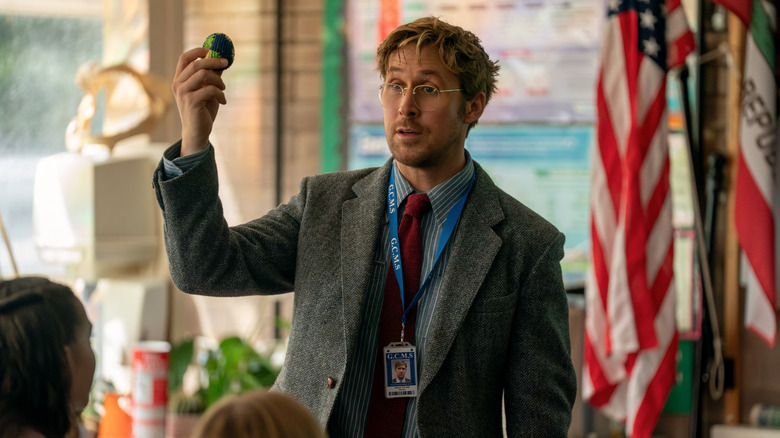
There's a lot of buzz around Ryan Gosling's new movie "Project Hail Mary." Phil Lord and Christopher Miller's adaptation of Andy Weir's popular sci-fi book has attracted a slew of positive first reactions. It has garnered attention as an early best film candidate for 2026, with "Project Hail Mary" leaving critics stunned across the board.
Part of what makes the movie so impressive is how it balances the light-hearted nature of the relationship between Ryland Grace (Gosling) and his alien companion Rocky (James Ortiz) with an impending apocalypse caused by an alien microbe that's dimming the sun. It moves through the original book very well, too, staying faithful to all of the major beats and only making a few minor tweaks here and there.
If you're curious where some of those deviations from the source material took place, we've gathered up some of the most significant ones. Here are five of the biggest changes between the "Project Hail Mary" book and movie.
The Hail Mary is much bigger in the movie
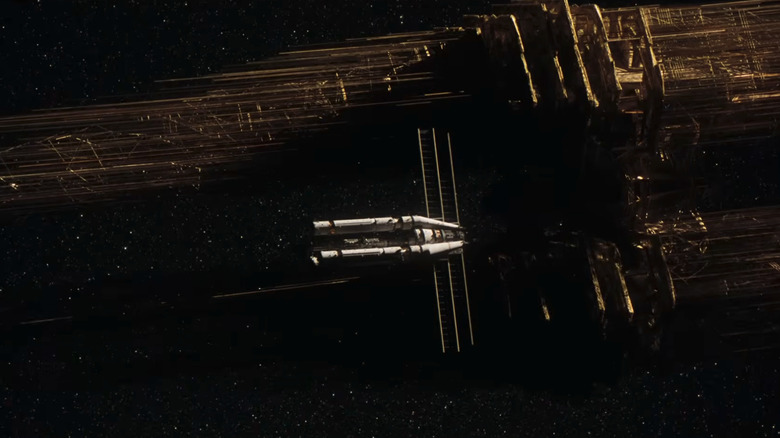
Author Andy Weir is happy with the adaptation of his popular book. Part of that probably comes from the fact that he was heavily involved in the production: He was on set, helping smooth the transition from book to screen. That means the filmmakers had his blessing when it came to changing the size of the Hail Mary ship. Weir is very specific about the ship's cramped, aerodynamic build in the book. He even provides a clear, multi-image diagram of how the ship is divided up in the early pages of the novel. But in the movie, that tiny cabin wasn't going to make filming easy.
"They had to make it bigger than what's depicted in the book, because in the book it's very cramped," Weir told Space.com in July 2025. "In the movie, you need space for characters to move around and do things, so they just scaled up the whole Hail Mary." While this takes away some of the claustrophobic feel of the early parts of the book, it doesn't change the overall story much. An added bonus is that it makes it easier for Rocky to move around once he builds his xenonite travel ball and rolls over to inspect his new human friend's abode.
Lots of internal dialogue is missing from the film
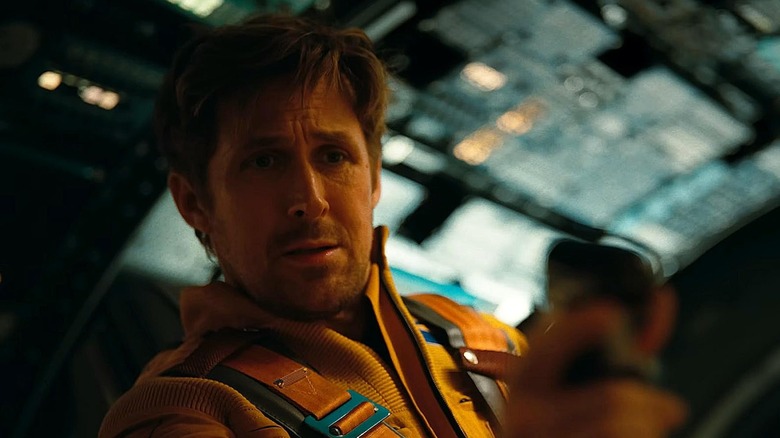
One of the important things to understand about the "Project Hail Mary" book is that it's written from a first-person perspective, which doesn't always bode well when it comes to movie adaptations. "Mickey 7," one of the biggest box office bombs of 2025, is written in that style. Fortunately, screenwriter Drew Goddard and directors Phil Lord and Christopher Miller were confident enough in their adaptive skills to let the audience figure out certain things on their own while providing just enough context to move through the story at an acceptable pace. The only real casualty of that approach? Ryland Grace's inner dialogue.
Particularly early on in the book, when Grace is alone in space, we get a lot of internal conversations. These slowly walk through his situation when he wakes up alone on the Hail Mary. They share personal feelings and insights, and they help shape the exciting and terrifying moments when he makes first contact with aliens. All in all, this helps slow down and round out the story. When that dialogue was necessarily pared down for the on-screen adaptation, it took away some of the depth of the storytelling and sped up the narrative.
Grace never visits Rocky's ship in the book
"Project Hail Mary" rarely goes beyond the already significant imagination of the original story. One of the biggest additions in that area comes toward the end of the movie when Grace asks if he can visit Rocky's ship, the Blip-A. The Eridian agrees, and we see a montage of shots where Grace walks through the tunnel connecting their ships. He's decked out in a xenonite outfit that looks more like armor than a space suit. This is needed because Rocky's ammonia-filled environment is over 400 degrees Fahrenheit, which would wreak havoc on Grace's human-made space suit, not to mention his fragile skin and bones.
Going inside Rocky's ship is fun and visually gorgeous, but these moments are not true to the book. Grace never pays a visit to Rocky's ship. Instead, he lets the clever Eridian engineer visit him in his ammonia travel orb. Later on, he lets Rocky build tunnels right into the Hail Mary so they can cohabitate the space. But Grace never even tries to set foot in Rocky's much more hostile environment. This makes sense in the context of the novel, though it would have been a shame not to show Rocky's vessel on the big screen.
Stratt doesn't sing in the novel
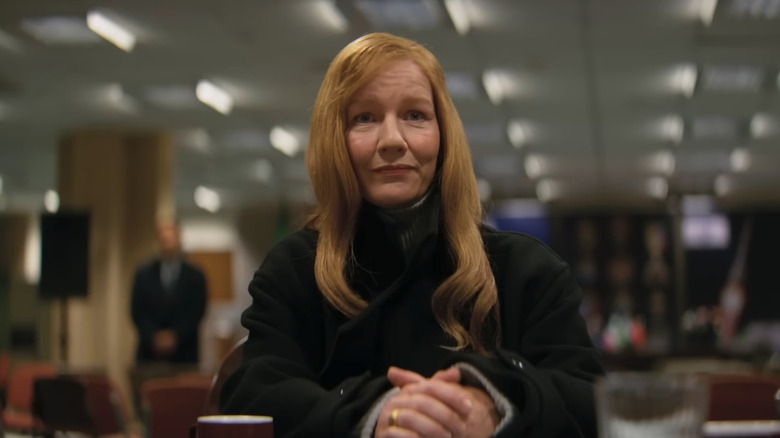
During an appearance on "The Tonight Show Starring Jimmy Fallon," Ryan Gosling shared that he thought the flashback where Eva Stratt (played by Sandra Hüller) sings some improvised karaoke was one of his favorite scenes in the movie. Hüller's significant singing talent is on full display as she belts out part of "Sign of the Times" by Harry Styles. It turns out this wasn't originally part of the plan: The karaoke was supposed to be in the background, but Gosling had heard his co-star singing in her dressing room and encouraged her to sing in the movie.
Hüller suggested that specific Harry Styles song, which created a rights issue, but for Hüller, it was that or nothing. Once they got permission to use the song, she knocked it out of the park, and, in Gosling's words, "It became the anthem of the film, and it has become this heartbeat of the movie." It's a great moment, but it doesn't happen in the book. Nothing even close. Grace spends time on the aircraft carrier, but Stratt singing to boost the morale of the crew is an addition to the adaptation.
The sample collection takes much longer in the book
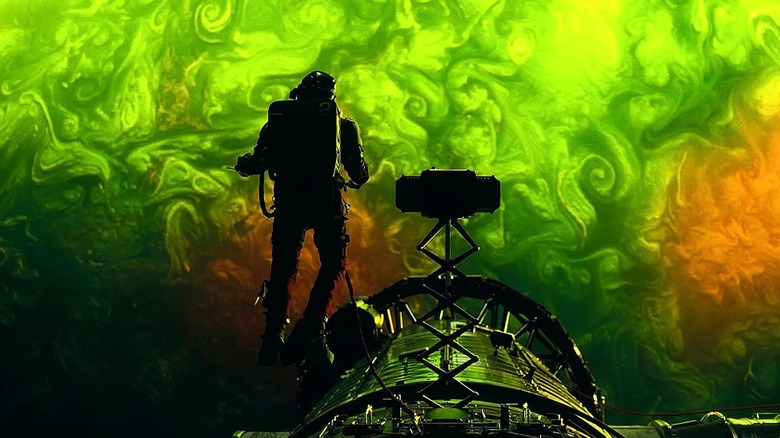
The expedition into the upper atmosphere of the exoplanet Adrian is dramatic in both the book and the movie. The basic beats are the same, too. Grace and Rocky drop a sample-collecting device via a lengthy xenonite chain that is miles long. Once it reaches a certain altitude, the sample is collected, and then Grace climbs outside the ship (in the planet's gravity) to oversee hauling the chain up.
In the movie, this takes place in the space of a minute or so, leading to a dramatic sequence where Grace almost loses the sample more than once as the ship starts to come apart at the seams. In the book, the sequence is much longer and. Grace literally comments on the time factor as the chain steadily climbs back up to the ship, saying, "I squint into the distance, ever vigilant. Boredom is a real problem here. I know it will take quite a while to pull up this whole chain, but I have to be ready for the sampler."
While Grace may have to battle boredom during this scene, the stress of the wait he (and, by extension, the reader) endures is actually much more dramatic. But in a movie that is dripping with drama and already two and a half hours long, the decision to speed it up and shift to other events makes sense. This tense passage from the source material is just one reason why fans of the movie should also check out the book.