

All 7 Times The Oscars Ended In A Tie
Even at the Oscars, there's not always a clear and defined winner. Sometimes, professionals find themselves splitting one of filmdom's highest honors due to voter indecisiveness — which can result in moments both memorable and ludicrous. But it's always lovely when a field contains so many wonderful options that the voting body can't just pick one.
Whether it's a powerful live-action short bumping up against one that's visually stunning, or two winning performances that arrested voters into honoring them both, or even a pair of design choices that left audiences thrilled; that's a rare moment in action. But whenever it occurs, it usually makes for great headlines — and leaves the viewer delightedly clapping for two winners.
There have been seven examples of this happening throughout Oscar history, and each time it's been an occasion for wonderment and celebration. Here's a short list of every time two nominees split the vote, and what the circumstances were that lay behind that not-so-grand divide.
Fredric March and Wallace Beery
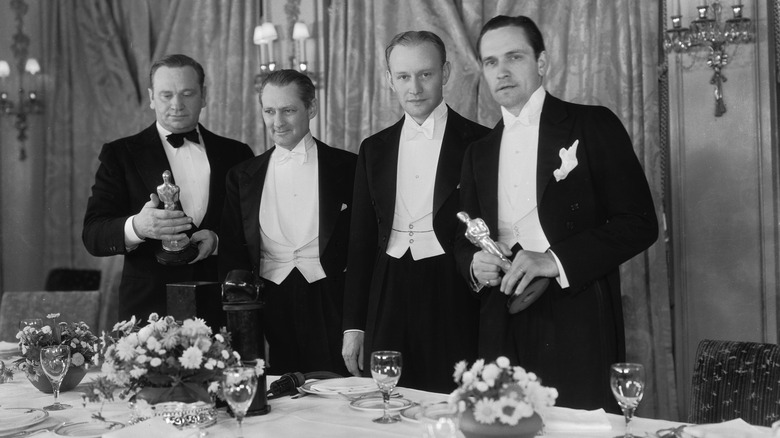
The 1931-1932 Oscar ceremony was the first to sport a tie — though it wasn't technically a true meeting of the votes. Best actor Fredric March was honored for his dual role in the classic horror picture "Dr. Jekyll and Mr. Hyde," while fellow winner Wallace Beery took home his prize for the tear-jerking 1931 version of the boxing drama "The Champ."
Only one vote separated the two memorable displays of acting acumen, and a rule that mandated any performances that came within three votes of the top vote getter would be honored. Thus, two Oscars for two movies and two actors. March, incidentally, had the duke on Beery by a single vote.
The category that year only sported three nominated actors. Who was the unfortunate thespian whose performance didn't make the cut? Alfred Lunt, who was teamed with fellow acting legend Lynn Fontanne in the now-forgotten romantic comedy "The Guardsman." The rule ended up being changed after that night, requiring that the votes be evenly split to trigger a tie.
A Chance to Live and So Much for So Little
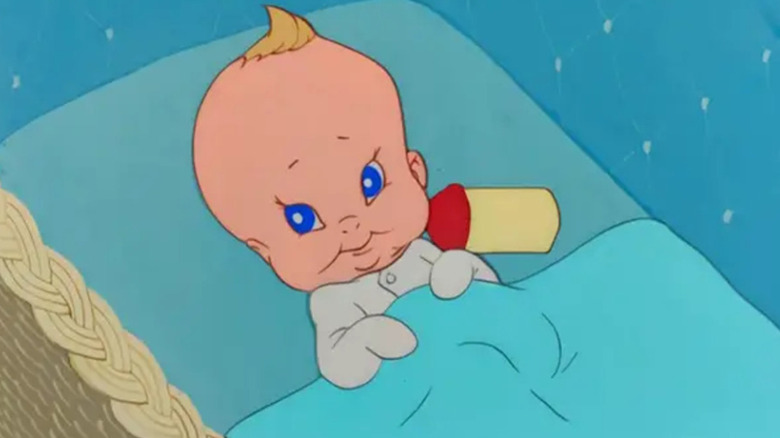
The best documentary short subject category is usually a straightforward affair but, at the 22nd Academy Awards, two projects were awarded for their work. "So Much for So Little" is an animated educational film that tries to explain the importance of public health care. "A Chance to Live," meanwhile, is about an Irish Catholic priest, Monsignor John Patrick Carroll-Abbing, who runs an Italian orphanage for young men displaced when their parents died in World War II.
If the style of animation looks familiar in "So Much for So Little," there's a reason for that. The Warner Bros. film was commissioned by the United States government. It closely resembles a Looney Tune because many members of the animation studio's staff worked on the short, including Friz Freleng and Chuck Jones. The duo wrote the outing with Jones both directing and contributing his inimitable animation style. Legendary performer Mel Blanc voices several characters, as well.
Katharine Hepburn and Barbra Streisand

"Hello, gorgeous." With those words, Barbra Streisand became a part of the public lexicon, turning into a major screen star after already conquering Broadway and the record industry. But when she took home the best actress Oscar at the 41st Oscars for playing vaudeville comic Fannie Brice in "Funny Girl" — in which she's now the only main living actor – she wasn't alone. Katharine Hepburn, the actor with the most Oscars as of this writing, also snagged an award for her memorably witty take on Eleanor of Aquitaine in the historical drama "The Lion in Winter."
Hepburn didn't show up to the ceremony — she would only attend one Oscar function in her lifetime, presenting producer Lawrence Weingarten with the Irving G. Thalberg Memorial Award in 1974. And Streisand's inclusion in the Academy of Motion Picture Arts and Sciences became a controversial one, as Academy rules typically demand that any voting actor appear in three films or have won or been nominated for a competitive Oscar before joining.
Gregory Peck — then president of the AMPAS, who invited Streisand to become a part of the organization in spite of the fact that "Funny Girl" was her big-screen debut — was accused of allowing Streisand to jump the velvet rope due to studio politics, which he vehemently denied.
Artie Shaw: Time Is All You've Got and Down and Out in America
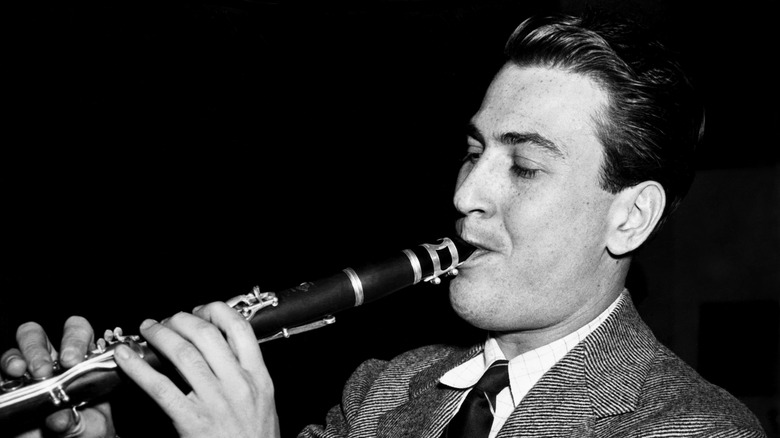
Best feature documentary during the 59th Oscars was split between two entirely different kinds of motion pictures. "Artie Shaw: Time is All You've Got" takes a look at the titular bandleader and clarinetist who left behind a long string of famous wives, including Lana Turner. Shaw faces the camera himself and sums his life up in the flick, hitting all of the sweet and sour notes he experienced before his 2004 death.
The other winner was "Down and Out in America," about the impact of a mid-decade recession on people from all walks of society and all over the country. The film was directed by Oscar-winning actress Lee Grant, who got her start behind the camera in 1983 and ended up helming documentaries and television films as well as features like "Staying Together." Grant also headed 48 episodes of the Lifetime docuseries "Intimate Portrait."
Franz Kafka's It's a Wonderful Life and Trevor
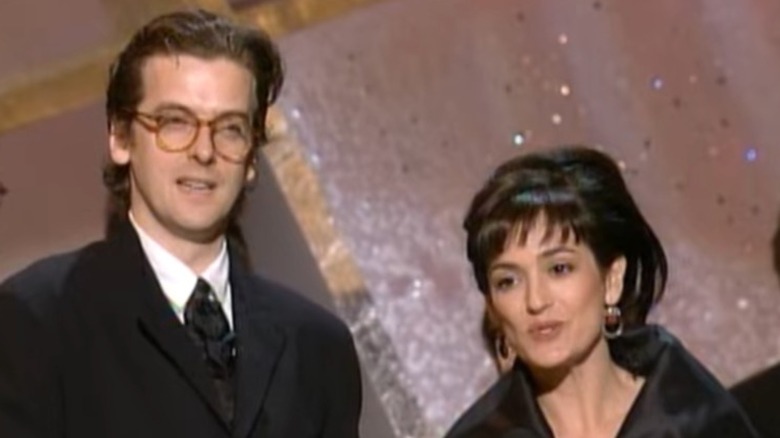
The short film live action category split at the 67th ceremony, with one award going to "Franz Kafka's It's a Wonderful Life" and the other to "Trevor." The former film — a blackly comedic look at Franz Kafka's (Richard E. Grant) attempts to write the opening of his novella "The Metamorphosis" — was directed and written by a man who's famous for an entirely different reason, actor Pete Capaldi. In spite of his Oscar Capaldi, naturally, is best known for "Doctor Who" and "The Thick Of It."
The other winner, "Trevor," is just as memorable for a completely different reason. Featuring a 13-year-old's coming out journey — which is stifled by his school playmates and his parents, but nurtured by an understanding nurse after he attempts suicide — its very existence resulted in the founding of The Trevor Project. The Trevor Project still serves LGBTQ folks in crisis who need suicide intervention services and crisis intervention support.
If you or someone you know is struggling or in crisis, help is available. Call or text 988 or chat 988lifeline.org
Skyfall and Zero Dark Thirty

The only tie that's ever occurred in the best sound editing category went down at the 85th Oscars, where the complicated Daniel Craig James Bond film "Skyfall," and the Iraq war drama "Zero Dark Thirty" (which got several things wrong about the true story), split the vote. Mark Wahlberg announced the dual winners by crying "no B.S.! We have a tie!" as he opened the envelope.
Per Hallberg and Karen Baker Landers won for "Skyfall," which was the 23rd Bond flick. It sends him on a globetrotting quest when M (Judi Dench) is falsely accused of exposing the identity of thousands of agents. Halberg has edited sound on films as varied as "Morbius" and "Fences," while Baker Landers has an equally disparate resume, putting in work on "Maxxxine" and "God's Not Dead: In God We Trust."
Paul N. J. Ottosson accepted for the "Zero Dark Thirty" crew. He's worked as a sound designer for "Madam Web," and as a re-recording mixer and sound editor on "The Boss Baby," "Willy's Wonderland" and "Stonewall."
The Singers and Two People Exchanging Saliva
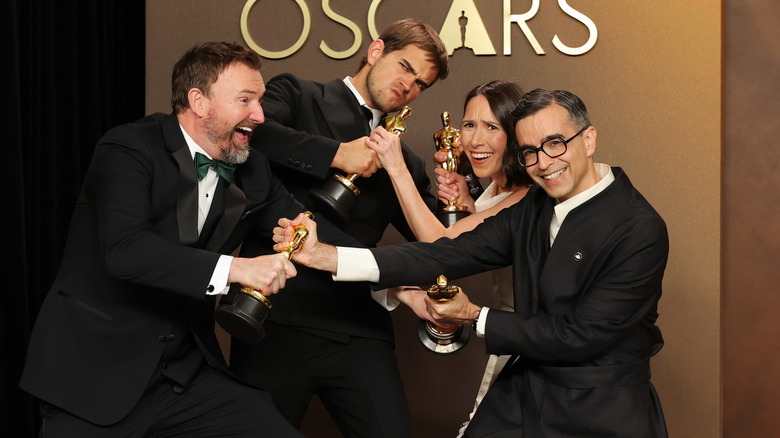
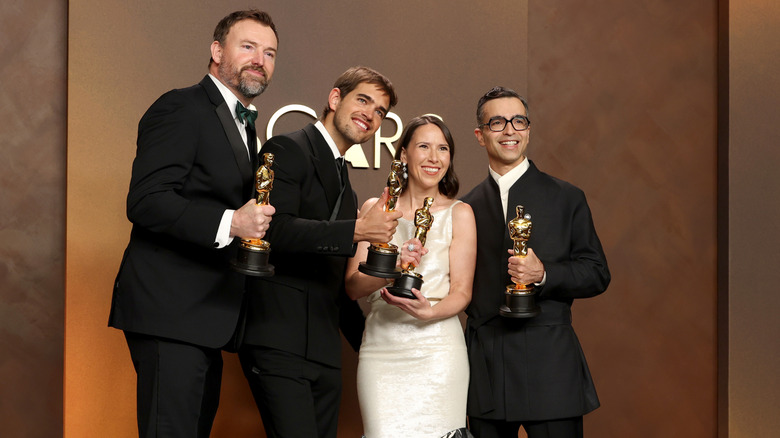
The latest winners to meet in a tie are another pair of live action short film creators, and who both became Oscar winners in 2026. "The Singers" is about a group of workaday folks who engage in a singing contest in their local bar. But instead of turning into a fierce battle, person by person and secret talent by talent, their skills blend together to make a moving concoction.
"Two People Exchanging Saliva" is a heartbreaking French language romance about two women falling in love in a society where kissing is now punishable by death. Even more interesting, commerce is conducted via slapping someone across the face. A clerk at a department store (Zar Amir Ebrahimi) and a housewife (Luàna Bajrami) develop an attraction to one another in spite of the looming danger surrounding them.
Producer Jack Piatt and producer Sam A. Davis accepted for "The Singers," and producer Natalie Musteata, and director Alexandre Singh accepted for "Two People Exchanging Saliva." Piatt is a director of music videos and short films. He also worked in the art department for "Hail, Caesar!" and the production department for "Gone Girl."
Director Davis is a producer and director of multiple short films and music videos. Musteata has produced only one other short film, "The Appointment," and Singh directed and wrote both "The Appointment" and "Two People."