

10 Sci-Fi Box Office Bombs That Were Too Ambitious For Their Own Good

In the realm of science fiction, anything is possible, and the best sci-fi movies of all time embody such tremendous ambition. Sci-fi cinema can look like anything your imagination conjures up and sometimes, that level of gusto is enough to create a gargantuan financial hit. However, other times that enthusiasm isn't enough to inspire a hearty box office run.
Some sci-fi motion pictures pursue visual aesthetics, storytelling choices, or source material that is too obscure or unorthodox to connect with audiences. In other words, they were too ambitious for their own good, which doesn't make these titles inherently lost causes creatively. Several of them are sci-fi box office bombs that are actually worth watching whose audacity is remarkable and commendable.
Strictly in financial terms, though, all ten of these movies were hampered by their unique qualities. From embracing alienating somber tones to reveling in an old-school aesthetic modern moviegoers found jarring, there's no end to how the aspirations of these films curtailed their financial reach. Sci-fi cinema is a domain rich with possibilities, as evidenced by these flops that couldn't pair their idiosyncrasies with lucrative theatrical showings.
Sky Captain and the World of Tomorrow

"Sky Captain and the World of Tomorrow's" verbose title made it clear what era influenced its creation. This homage to old-school adventure serials and pulp sci-fi yarns of old was realized through artificial, CG sets meant to accentuate the distance between this story and the then-modern world. Big-name actors like Jude Law, Angelina Jolie, and Gwyneth Paltrow all signed on for "World of Tomorrow" and the feature even assembled a lofty $70 million budget to realize its grandiose vision.
Even though "Sky Captain and the World of Tomorrow" had tons of ray-guns and robots, this project was always going to be a tough sell to general audiences. Retro-action blockbusters like "The Rocketeer" have a mixed box office track record, often struggling to look more entertaining than older fare that viewers can watch at home. It was immediately clear in "World of Tomorrow's" box office run that this project would not be a "Raiders of the Lost Ark-"sized exception to that rule.
Worldwide, this genre pastiche only grossed $49.73 million, including only $11.97 million internationally. An uber-faithful recreation of yesteryear sci-fi spectacle just wasn't very interesting for general audiences, especially in an era where beloved characters like Spider-Man and Gandalf were dominating with their live-action film debuts. These unprecedented tentpoles only accentuated how antiquated "Sky Captain and the World of Tomorrow" looked and felt.
Chappie
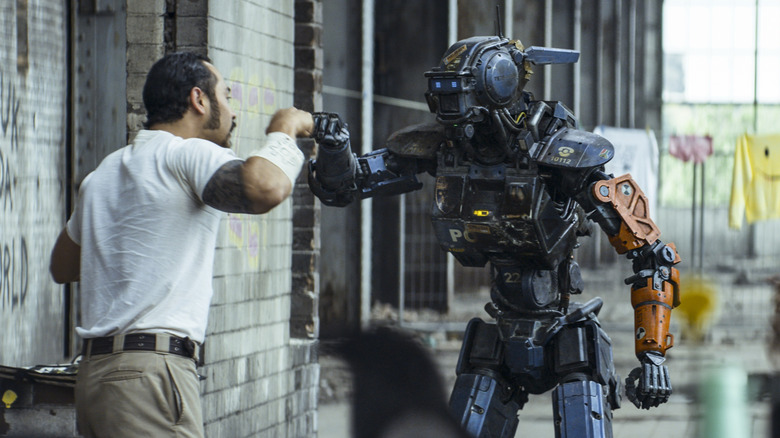
In 2009, director Neil Blomkamp exploded onto the scene with his original sci-fi film "District 9." The grimy, allegorical R-rated action flick was a smash hit that immediately put eyeballs on whatever Blomkamp did next. Six years later, Blomkamp helmed "Chappie," which focused on the titular robot navigating what it means to be "human." "District 9" leading man Sharlto Copley portrayed Chappie, while Dev Patel and Hugh Jackman played notable supporting human players.
To say "Chappie" was an incredibly weird project was an understatement. While past Blomkamp movies were full of high-octane chase scenes, "Chappie," though not devoid of skirmishes, channeled a more tender, contemplative atmosphere. The plot also made detours into dark comedy as the childlike Chappie learned what it was like to be "a gangsta" from a pair of characters played by South African rap duo Die Antwoord. The whole thing was a bizarre tonal mix that also leaned heavily on stunt casting (namely in the use of Antwoord and Jackman).
Ideally, these out-of-the-box choices would've produced an unexpected gem. However, whereas "District 9" was a bolt-out-of-the-blue, "Chappie's" cast and atmosphere proved too derivative for audiences. The film barely crawled past $100 million worldwide with only a meager $31.56 million made domestically. A more soft-hearted (albeit still R-rated and violent) version of Blomkamp's sci-fi aesthetic was a bold maneuver, but not one that remotely paid off at the box office.
Valerian and the City of a Thousand Planets
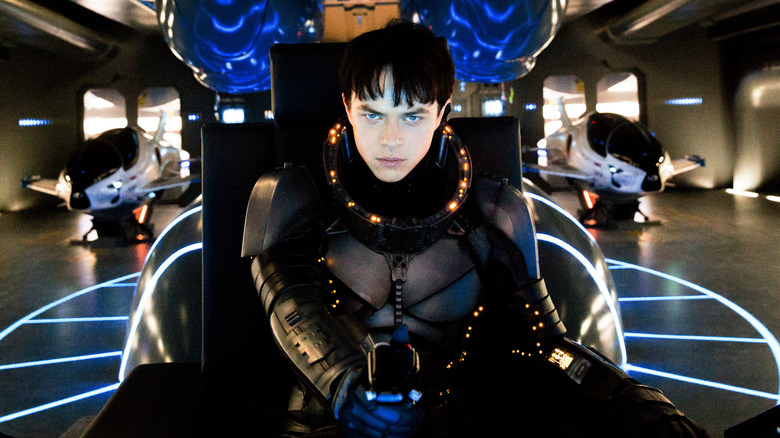
Decades after his first foray into sci-fi cinema with "The Fifth Element," French filmmaker Luc Besson returned to this realm in 2017 with "Valerian and the City of a Thousand Planets." This time, Besson adapted the comic book series "Valerian and Lureline" from writer Pierre Christin and artist Jean-Claude Mézières, making this project a risky bet. Though highly popular in France and influential among certain sci-fi circles, the source material wasn't nearly as globally famous as Spider-Man or Batman comics.
The film's eschewing of movie stars (Dane DeHaan and Cara Delevingne played Valerian and Laureline, respectively) was also a massive gamble, especially given its $180 million budget. As a result, this costly exercise didn't come close to paying off theatrically. Domestically, "Valerian" only grossed $40.47 million, an abysmal sum for a summertime blockbuster. Overseas numbers were better, only managed to bring it to a $215.09 million global cume.
The fallout from this project was significant, with Besson's production company and "Valerian" co-financier EuropaCorp writing down a tremendous loss. Placing so many chips on a mammoth French comic adaptation just didn't pay off worldwide, especially with mixed reviews keeping newcomers far away. Competition from fellow late July 2017 title "Dunkirk" didn't help either. Grand aspirations couldn't save "Valerian and the City of a Thousand Planets" financially.
Downsizing
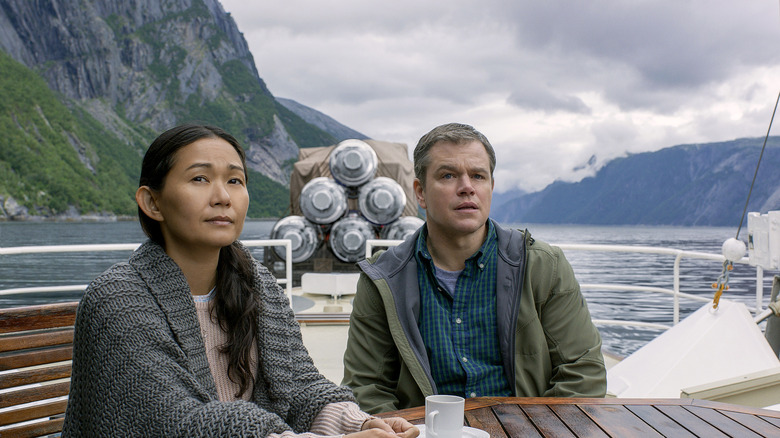
Director Alexander Payne's career is defined by tender, modestly budgeted movies such as "Nebraska" and "The Holdovers." In a notable departure for Payne, he undertook the 2017 sci-fi comedy "Downsizing," which starred Matt Damon as an ordinary man who takes part in a new, irreversible phenomenon where people are shrunk down to a few inches tall.
The possibilities of such a high-concept premise are seemingly endless. Juxtaposing the world of "shrunken" people with Payne's down-to-Earth writing style could've made for a grounded sci-fi experience like no other. The film's financiers were also hoping that it would get past the $100+ million mark worldwide like past Payne efforts such as "About Schmidt," "Sideways," and "The Descendants." This mixture, though, failed to yield remotely profitable results.
Released over Christmas 2017, "Downsizing" only made $24.4 million domestically, only $7 million more than what the significantly cheaper "Nebraska" made in this territory. With only $54.4 million worldwide, the $68 million budgeted affair was a total bust. "Downsizing" didn't quite work for any type of audience. Neither heady enough for the arthouse crowd, nor amusing enough for mainstream viewers, it was stuck in box office limbo. Props to Payne for trying something new, but expanding his storytelling scope with "Downsizing" ultimately didn't work out.
Ad Astra
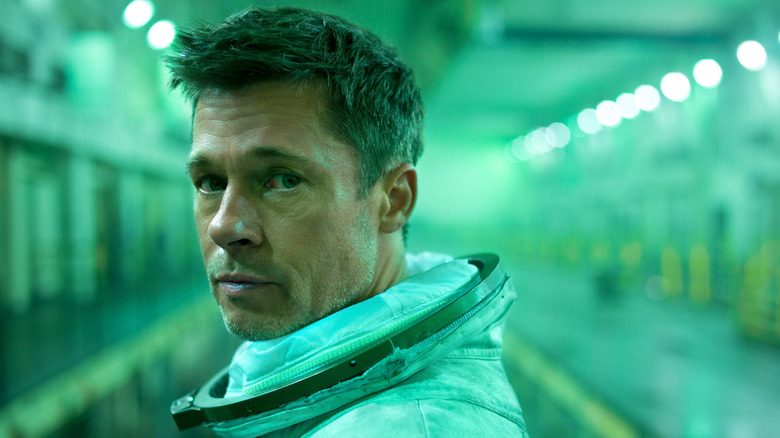
Many of the films on this list made an effort to register as conventional crowdpleasers patterned off of past successes like "The Fifth Element" or "District 9." But while it's easy to see how a studio executive could imagine "Valerian" or "Chappie" scoring hefty box office returns, it's difficult to imagine there ever being a scenario where James Gray's 2019 "Ad Astra" turned a profit theatrically.
Even while with a big budget, a cosmic backdrop, and leading man Brad Pitt, Gray didn't dial down the moody, contemplative atmosphere of his prior works such as "The Immigrant" and "The Lost City of Z." He instead translated those qualities to a deeply artsy, melancholy voyage across the stars only occasionally interrupted by action-packed moments.
This was a massive swing for Gray, but in the end, this $80 million enterprise couldn't quite reach liftoff at the box office. Grossing only $135.15 million worldwide ($50.18 million of which came from North America), "Ad Astra" inevitably came up short with the broader public. How could it not? By refusing to tone down his idiosyncratic tendencies, Gray's bold vision was an inherently challenged box office performer.
The Creator

After back-to-back franchise pictures "Godzilla" and "Rogue One," filmmaker Gareth Edwards returned to original sci-fi for 2023's "The Creator." In a world where humans and robots are at war with each other, one disgruntled flesh-and-blood person, Joshua Taylor (John David Washington), is tasked with protecting a robotic youngster (Madeleine Yuna Voyles) that holds the key to the future. The script from Edwards and Chris Weitz features traditional big action sequences, but also more contemplative digressions, such as a third-act segment where Taylor waxes poetic on robotic lives like he's in a Terrence Malick movie.
A morose tone permeates the film, as well as a willingness to evoke real-world imperialistic horrors in how humans treat and annihilate robots. Edwards loves sci-fi yarns about lived-in worlds where the unthinkable is just another part of the everyday tapestry. That fondness was front-and-center in "The Creator," but it wasn't something audiences gravitated towards.
"The Creator" bombed at the box office with only $104.2 million worldwide on an $80 million budget. This was for several reasons, including the then-ongoing SAG-AFTRA strike, a dark ad campaign, and the inherent difficulties in launching original sci-fi tentpoles in the 2020s. "The Creator's" B+ CinemaScore also suggested it didn't inspire widespread audience approval. Still, despite its underwhelming box office numbers, at least Edwards put out something original before diving back into the franchise realm with "Jurassic World Rebirth."
Midnight Special
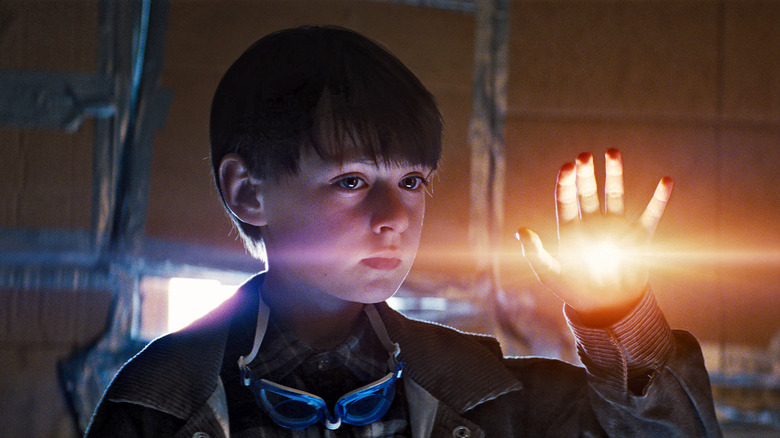
"Midnight Special" is a masterpiece. Writer/director Jeff Nichols crafted his greatest achievement with this tale about father Roy Tomlin (Michael Shannon) on the run with his super-powered son, Alton (Jaeden Martell), from a cult aiming to exploit the youngster. What follows is a moving parable about how the world treats people who are different and parents wanting a better life for their children. It's also an extraordinary showcase for Shannon, who portrays a sincerely supportive father in contrast to the antagonistic characters he usually plays.
Deeply moving and firmly rooted in both the intimate gaze and rural American backdrops that define Nichols' movies, "Midnight Special" is a sublime artistic accomplishment. Sadly, it flopped at the box office with only $7.68 million worldwide on an $18 million budget. That was partially because distributor Warner Bros. Pictures never gave "Midnight Special" a wide release in North America.
Given that, most of Jeff Nichols' movies have never scored big at the box office, Warner Bros. seemingly felt mixing his aesthetic with sci-fi material was a lost cause. To boot, the more melancholy atmosphere may have been a turn off to audiences who did show up. Its financial shortcomings are apparent, but "Midnight Special's" artistry is even more obvious. This ambitiously empathetic sci-fi story is a must-watch.
The Box
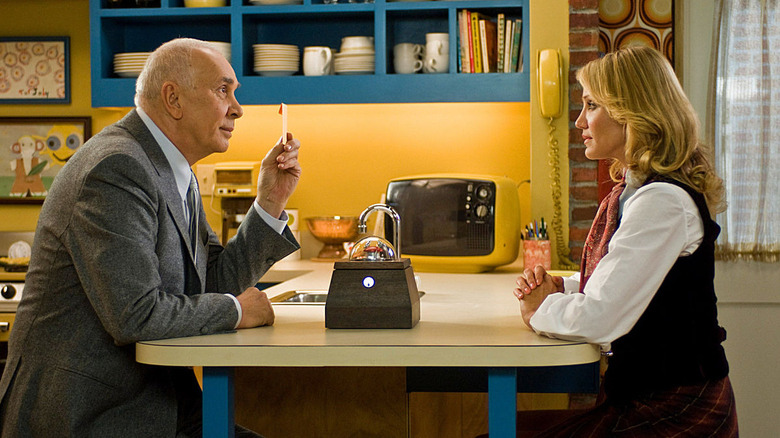
Director Richard Kelly established his career with oddball sci-fi indies like "Donnie Darko" and "Southland Tales." While neither were showcases for an architect of major studio projects, that's just where Kelly wound up in 2009 with "The Box," which starred Cameron Diaz and James Marsden as a couple who will get endless riches if they press a button that kills some random stranger. It's a storyline straight out of the "Twilight Zone," though Kelly's love for labyrinthine lore and wild conspiracies means the premise eventually spirals into absurd madness.
"The Box," though, was another ambitious sci-fi movie that didn't please potential moviegoers. Being a major studio feature, Kelly had to oblige Warner Bros. brass by eschewing the most out-there elements of his earlier work. However, the proceedings were still too bizarre for general audiences seeking something breezy, exemplified by its F CinemaScore grade indicating that moviegoers didn't take to its bravura swings.
Unsurprisingly, "The Box" only mustered a worldwide gross of just $34.35 million on a $25 million budget. It's no shock to hear that Kelly didn't pursue further major studio gigs after "The Box," though it is puzzling that he's been completely absent from the scene since. One financial misfire shouldn't torpedo such a distinct creative voice.
John Carter
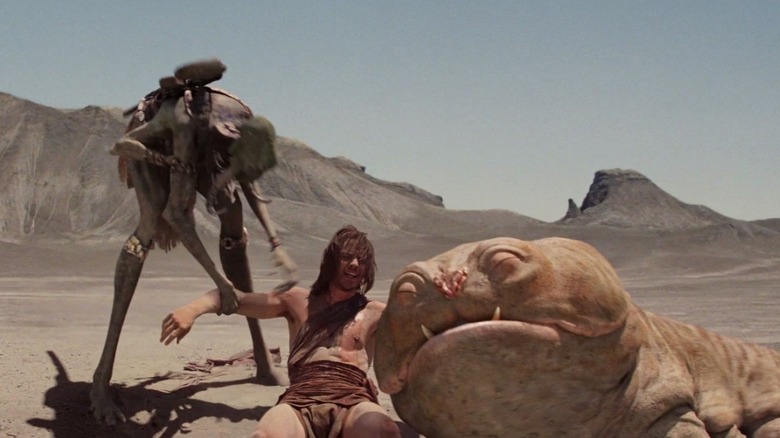
For his first live-action film, Pixar veteran Andrew Stanton didn't choose something easy. Instead, he pursued a live-action adaptation of the Edgar Rice Burrough "John Carter of Mars" books, which were first written at the dawn of the 20th century. Since their publication, countless filmmakers tried and failed to get the world of Barsoom (A.K.A. Mars) off the ground. Stanton finally brought this project to fruition, albeit after countless other blockbusters like "Star Wars" and "Avatar" already picked apart the "John Carter" texts for creative inspiration.
Everything about this tentpole was a massive gamble. The film that would be released as "John Carter" had no movie stars (Taylor Kitsch was the lead), a barrage of drab, desert backdrops, and was based on a source material that was far from a household name in the 21st century. If it worked, Stanton would have conquered a new storytelling medium.
Unfortunately, as is infamous by now, that didn't happen. "John Carter" really flopped at the box office with only $282.77 million worldwide on a $263.7 million budget. Spending so much on an obscure property was a massive risk that didn't pay off. Instead, audiences perceived "John Carter" as a knock-off of the movies its source material inspired. What a tragic outcome for the very first (and last) "John Carter of Mars" film adaptation.
Cloud Atlas
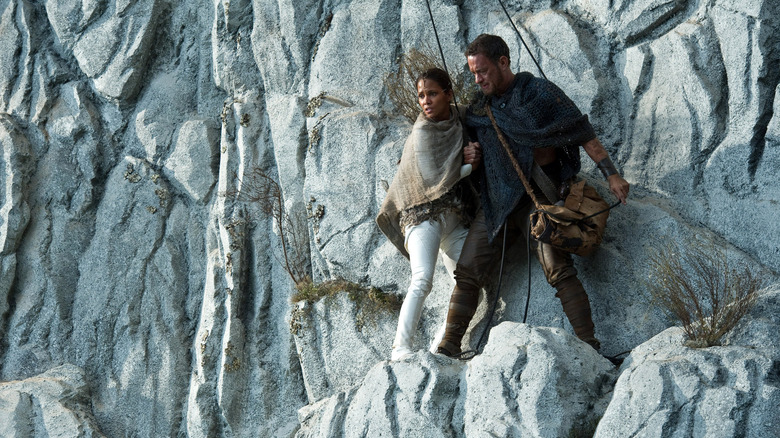
Filmmakers Lilly and Lana Wachowski have never shied away from throwing everything at the wall, as can be seen by the various projects that the Wachowski's never made. Arguably the pinnacle of their towering filmmaking pursuits is 2012's "Cloud Atlas," a sprawling adaptation of the David Mitchell book of the same name. This feature takes place in six different time periods, with the central ensemble cast consisting of Tom Hanks, Halle Berry, Jim Sturgess, and Hugh Grant playing different characters in each story.
"Cloud Atlas" focuses on souls, capitalistic horrors, and the better parts of humanity enduring across the ages. It's a massive endeavor alternating wildly between grand sci-fi action epic, British farce, apocalyptic drama, and everything in between. The immense creativity and artistry on display is admirable, even being among the unexpected sci-fi movies Roger Ebert gave a perfect score to.
Trying to sell the general public on something so gargantuan and unusual, though, was always going to be challenging. It's unsurprising, then, that "Cloud Atlas" only grossed $130.67 million worldwide (only $27.1 million of that came from North American audiences) on a $102 million budget. Technically a financial wipeout, "Cloud Atlas" is far more than its lack of theatrical profitability. Among its accomplishments, the film is a stirring testament to the Wachowski's willingness to push the boundaries of sci-fi cinema.