

5 Sci-Fi Shows That Take Place In A Future That Has Already Passed
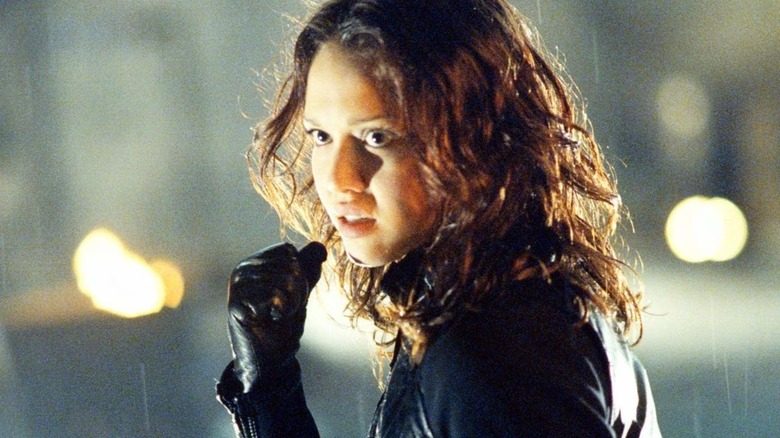
While some sci-fi goes a different route — for instance, "Star Wars" famously declaring itself to have actually taken place a long time ago — the genre tends to be focused on the future. That's what often gives writers the excuse to play with the "fiction" part of science fiction, imagining events and technologies that aren't real ... yet. As such, the majority of sci-fi takes place in the future. It's just a matter of how far ahead the story goes.
A lot of sci-fi swings for the fences to choose a time hundreds (if not thousands), of years ahead of the current date. Doing so ensures that a writer will be long dead before facing the risk of their vision of the future being proven completely wrong. But some sci-fi fast forwards the clock by mere decades, which has resulted in a growing list of sci-fi movies that take place in a future that has already passed.
Small screen sci-fi, too, has examples of being set in a "future" that that we've already seen come and go. To make things more interesting, we didn't choose shows that took place just a few years ahead of when they were released. All of these shows are set at least 15 years ahead of when the series first debuted.
Lost in Space
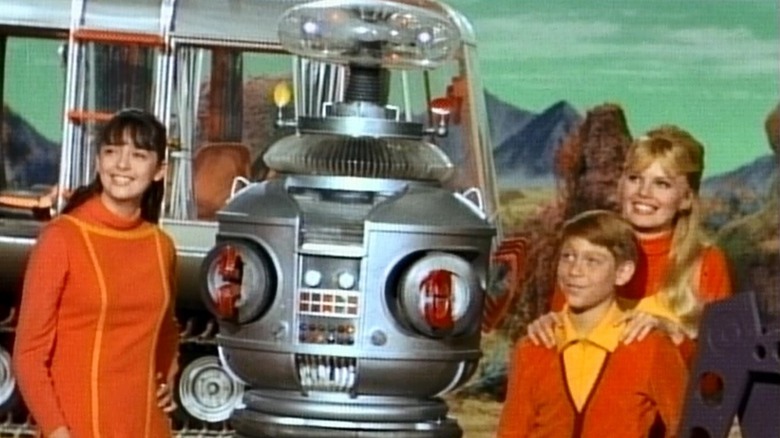
A futuristic twist on the novel "The Swiss Family Robinson" — down to using the same name for its family of protagonists — the 1965 series "Lost in Space" is among the old school sci-fi TV shows that should be required viewing. Taking place in 1997, it follows an astrophysicist named John Robinson (Guy Williams) who takes his family away to live on a distant planet after Earth had become overpopulated. But someone sabotages the ship that was to bring the Robinson family to their new home, causing them to crash land on an uncharted alien world.
Needless to say, the show's view of the '90s looks a lot like how most '60s sci-fi imagined any point in the future. That meant a lot of colorful one-piece jumpsuits and chunky metallic robots. We are now roughly as far beyond the setting of "Lost in Space" as the show's future was when it first aired. The 1998 "Lost in Space" move put its future setting at much more distant 2058, while the 2018 "Lost in Space" reboot series takes place in the slightly sooner 2046. All of them remain fun but unlikely predictors.
SeaQuest DSV
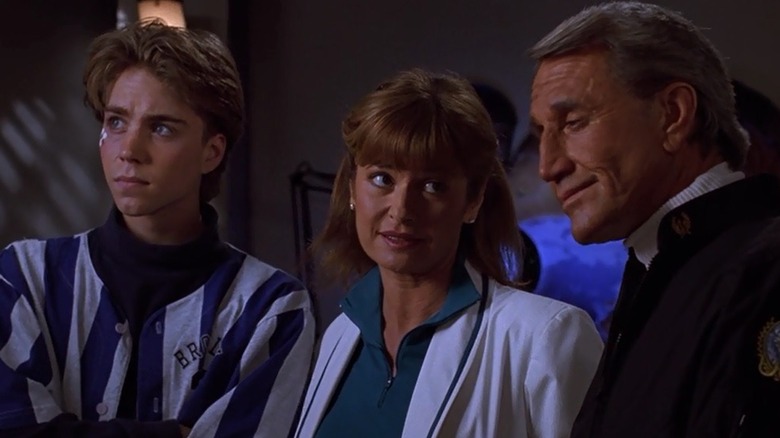
A common thread running through a lot of future-focused sci-fi is that humanity has sucked the Earth dry of its natural resources, forcing people to get creative with how to live on as a species. In the case of "SeaQuest DSV" — retitled as "SeaQuest 2032" in its third and final season — that solution is to establish human colonies on the ocean floor. It's the last place on Earth that still has resources to provide. More specifically, it's about the titular submarine that is tasked with protecting those colonies from invaders.
As the renamed Season 3 title suggests, the timeline of "SeaQuest" had pushed into the 2030s by the end of the show's run. We obviously haven't quite reached that far yet. But that choice of decades came as the result of a 10-year time skip, with the first two seasons taking place between 2018 and 2022. So for Season 1 and Season 2, when the show was still called "SeaQuest DSV," the setting was firmly in a waterlogged version of our past.
Dark Angel
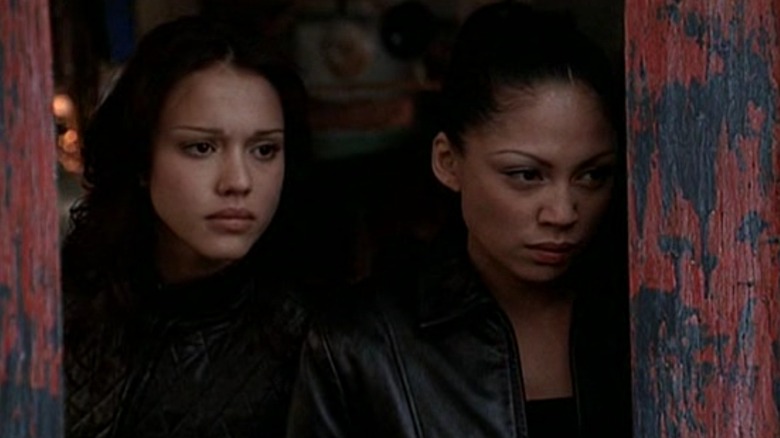
Other than serving as an executive producer on the 2002 remake of "Solaris," James Cameron's filmmaking output went dark between "Titanic" in 1997 and "Avatar" in 2009. Obviously, a lot of that time was spent preparing for "Avatar," essentially inventing all of the technologies he required to realize his dream. But that isn't all Cameron was up to. During that stretch, he also took his creativity to the small screen for the first time by co-creating the 2000 sci-fi series "Dark Angel."
In what would be her first star vehicle, Jessica Alba leads "Dark Angel" as a genetically modified super soldier in the year 2019. Interestingly, the show points out that Max first escaped the institution that created her in 2009, when she was 9 years old. That means that she was born in 2000, the same year "Dark Angel" debuted. Unfortunately, the show's vision of 2019 being a year of social strife and economic strain wasn't far off — though we sadly didn't wear quite as much leather and latex as the show assumed.
Space: 1999
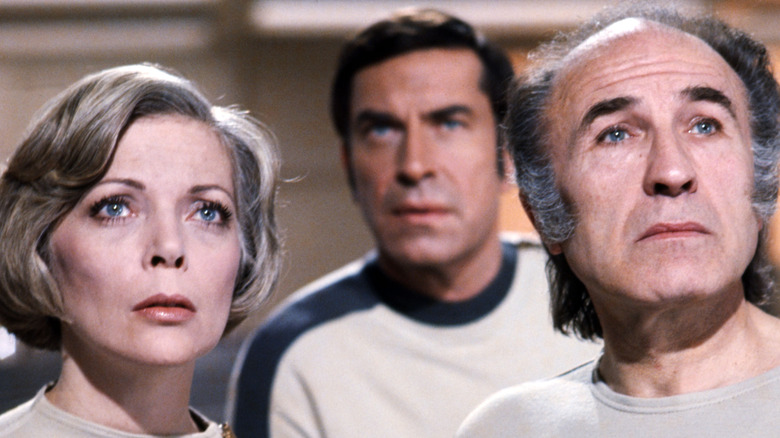
Up until the turn of the millennium came and went in real life, sci-fi — and fiction in general, really — had been obsessed with the prospects of what might happen at that unique time. There was just something inherently mystical about the years 1999, 2000, and 2001, and writers couldn't resist setting stories in and around them. That's to say nothing about how many stories (shout-out to Stanley Kubrick) included one of those years in their titles.
One example on TV was "Space: 1999," the 1975 British series set in the eponymous year. More specifically, that was the year in which (as the show posits) the nuclear waste that humanity had been disposing of on the moon exploded, sending our natural satellite flying off into space.
While this was obviously bad news for everyone, it was particularly troubling for the 300+ researchers who had been working on a lunar colony. They now had to figure out how to steer the moon to a place where they could return to some sort of normal life.
Land of the Giants
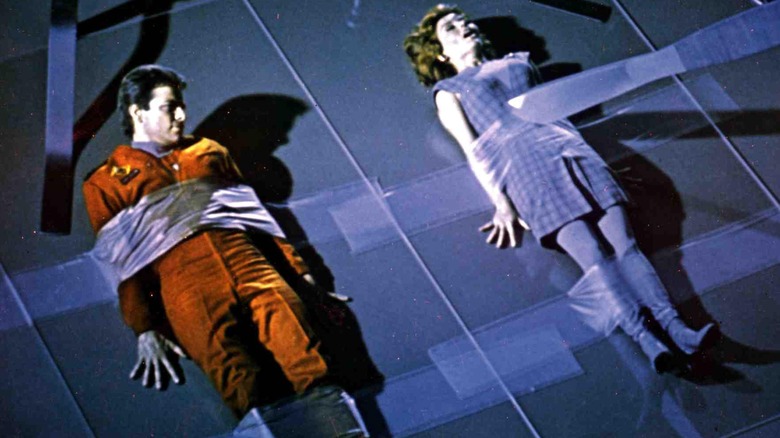
Disaster master Irwin Allen was one of the most important figures in the history of small screen sci-fi, having created not only "Lost in Space" but also "Voyage to the Bottom of the Sea," "The Time Tunnel," and "Land of the Giants." In fact, one thing that all of Allen's shows have in common is that they took place in the future at the time of their release — and in all four cases, it's a future that our timeline has long since left in the past.
We chose to spotlight "Lost in Space" earlier because it took place the furthest in the future, and now we'll briefly talk about "Land of the Giants" because it's the least-known of Irwin's quartet of sci-fi shows.
It premiered in 1968 and was set in 1983, following a crew whose spacecraft is pulled off course and winds up on a planet that initially seems a lot like Earth — except that everyone and everything is over 10 times the size of the crew. Or is the crew 10 times smaller? Either way, it took a then record-breaking budget of $250,000 per episode to achieve the series' impressive effects. The results are an Allen classic, regardless of its retro ideas about the future.