

10 Popular '60s TV Shows That Everyone Forgot About
There was a time when it was easy to be aware of, if not actually watch, pretty much every show on television. Back in the days of the monoculture, there were only three networks — and those networks didn't run for 24 hours a day. Things got a lot more difficult with the addition of more networks, more hours of programming, and the advent of cable. When factoring in streaming services and those eventually having original shows as well, it was no longer realistic to "keep up" with television, as it were.
Unfortunately, one of the biggest side effects to that flood of small screen content is that many older shows have gotten lost to time. While there is still a fair amount of nostalgia for television from the '90s, '80s, and to a lesser extent, the '70s, memories of anything older than that have grown incredibly hazy.
Outside of outliers like "The Andy Griffith Show," "Batman," "The Addams Family," and "Gilligan's Island" — which have managed to maintain a spot in the pop culture conversation to this day — the majority of TV shows from the '60s are all but forgotten. This is even true of shows that were undeniably popular in their day, some even more so than the aforementioned examples. These 10 are exemplars of that lost phenomena, so let's take a look.
Danger Man/Secret Agent
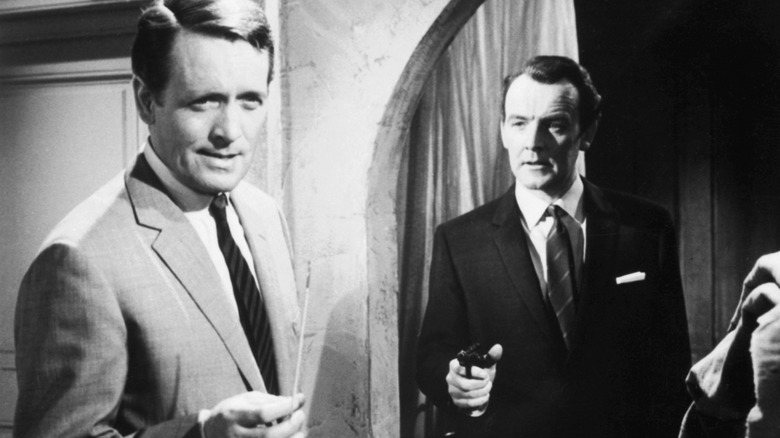
The 1960s were certainly not lacking in spy fiction on screens big or small. As a result, if you weren't James Bond, Maxwell Smart, or The Avengers — not the Marvel ones, the ones from the British "Avengers" TV series — then there's a good chance the world doesn't remember you anymore. And that includes the BBC series "Danger Man," which first ran from 1960 to 1962 and was later revived for a second run between 1964 and 1968. That second run is when the show became a global hit, being retitled as "Secret Agent" for its U.S. release — and given the iconic theme song "Secret Agent Man."
The show centers around John Drake (Patrick McGoohan), the so-called Danger Man described in the title. Like all characters of his ilk, Drake often rebels against his superiors and makes morally questionable decisions in the name of fulfilling his duties, but tends to get the job done one way or another. Despite being popular enough to essentially be un-canceled, and also subsequently spawning several book tie ins and a comic book series, "Secret Agent" was quickly overshadowed by most of his contemporaries in terms of any enduring legacy.
In fact, even when the aforementioned theme song would occasionally pop up in things like "Austin Powers," its roots as a theme song to a TV show were already long forgotten. Most people just think it was some novelty song that wasn't connected to anything else — and certainly not something already overshadowed by McGoohan's underrated cult classic "The Prisoner."
Hazel
Sitcoms have been a mainstay of television since television has existed. One of the earliest (but not the first) was "I Love Lucy" which, along with "The Honeymooners," laid the groundwork for scripted television comedy for decades to come. In fact, both remain among the old-school sitcoms that still hold up today. Going into the 1960s, sitcoms became a very crowded genre, and only a select few would endure in reruns for generations to come.
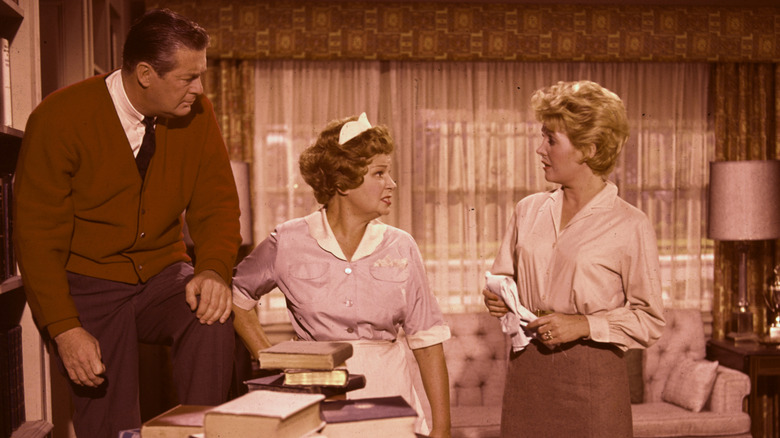
For whatever reason, "Hazel" wasn't one of those. Following the titular maid (Shirley Booth) — as she both served and sassed her employer family, the Baxters — "Hazel" was a hit in its day, lasting for five seasons between 1961 and 1966. It was nominated for five Primetime Emmys across its run, with Booth winning two for her portrayal of Hazel.
But "Hazel" wasn't a pioneer like the aforementioned shows; it didn't have a fun hook that appealed to rerun-watching kids of future generations like an "I Dream of Jeannie" or "The Munsters;" and it wouldn't be able to compete with the hipper, more edgy sitcoms that would follow in the '70s. So, like so much dust on the Baxters' dining room table, "Hazel" was brushed away into the dustbin of sitcom obscurity.
Route 66
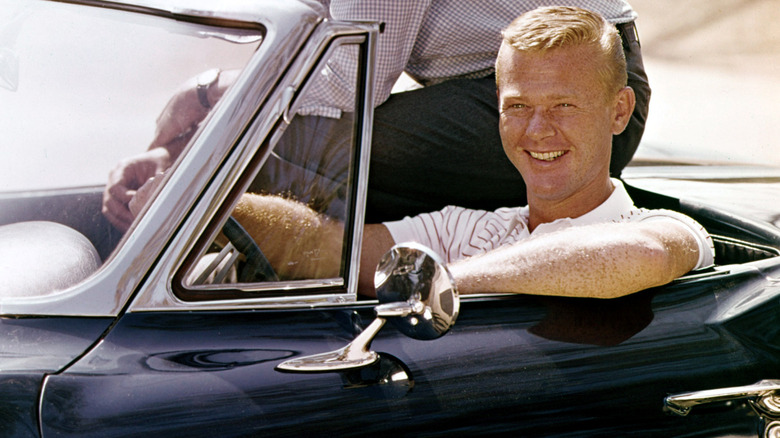
The premise of the 1960 CBS series "Route 66" was that two guys were driving across country and having random adventures in whatever city they ended up in for a given episode. Each episode also tended to have a notable guest star who either played themselves or a fictional character, and that guest star ended up being the centerpiece of their episode. While this made "Route 66" popular at the time, it hasn't done it any favors in giving it a lasting impact.
Sure, guest stars like William Shatner, Robert Redford, and James Caan are still well known to modern audiences. It's also neat to see old Hollywood legends like Buster Keaton and Boris Karloff show up. But the vast majority of the guest stars on "Route 66" are lost on younger generations, and many were already seen as old timers even for those who might have tuned into reruns of the show even a decade later.
A sequel series, also called "Route 66," debuted in 1993. Rather than being a complete reboot, it featured a character playing the son of one of the original stars. It only lasted four episodes before being cancelled — and thus any hopes of the "Route 66" brand being revitalized for future generations were dashed.
The Wild Wild West
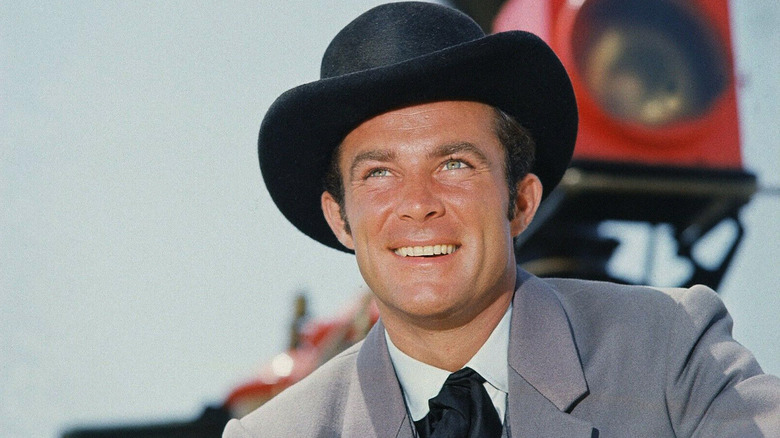
When the 1999 Will Smith/Kevin Kline action comedy "Wild Wild West" was being promoted, the fact that it was based on a hit 1965 TV series of the same name wasn't given much attention in the marketing. That information was largely relegated to "did you know?" trivia tidbits about the movie rather than being a major selling point. In other words, even by then, the legacy of the original show didn't have much of a foothold in modern pop culture.
Had the movie been a huge hit — or even just been good — the "Wild Wild West" brand might have been reinvigorated. Maybe people wouldn't have gone back to actually watch the original show, which didn't happen with "Mission: Impossible" or "The Fugitive," either. But it would have at least been remembered. But the film was neither good, nor was it a hit.
"Wild Wild West" not only ended Smith's hot streak as one of the most consistent blockbuster deliverers of the '90s, it all but guaranteed that its namesake TV show would only ever be remembered by those that were actually alive to have watched it when it first aired.
Petticoat Junction
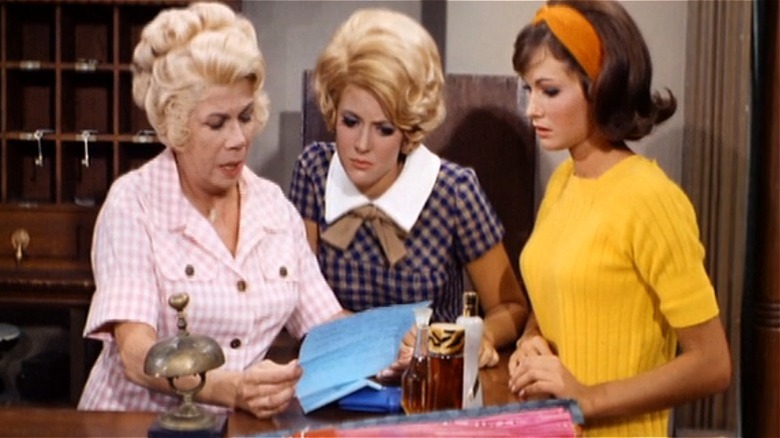
Sitcoms that were set in major cities and focused on edgier, more modern jokes and storylines exploded in popularity as the '60s rolled over into the '70s. So CBS enacted what is now commonly referred to as the "rural purge," which saw the network cancel a number of previous hits that were centered around small town, Southern, old-fashioned sensibilities. On the chopping block were "Green Acres," "The Beverly Hillbillies," "Hee Haw," "Petticoat Junction," and multiple concurrent "Andy Griffith Show" sequels and spin-offs.
A few of those shows would find a new audience in the next generation thanks to reruns, especially "Green Acres" and "The Beverly Hillbillies." But "Petticoat Junction" wasn't so lucky, despite the fact that it shares a connected universe with those two shows. Following the lovably goofy staff of a small town hotel and its passenger train service, "Petticoat Junction" was easily the most old fashioned of the trio of shows. That didn't do it any favors in establishing a legacy.
"Green Acres" would come to delight subsequent generations because of how silly and surreal it was willing to get, such as having a pig whose squeals and grunts were somehow understood by all the humans on the show. And "Beverly Hillbillies" had the whole fish out of water thing going for it, starring old-fashioned characters but putting them in an urban setting. "Petticoat Junction" was a more straightforward sitcom, and those can have a lot of trouble enduring from one generation to the next.
The Joey Bishop Show
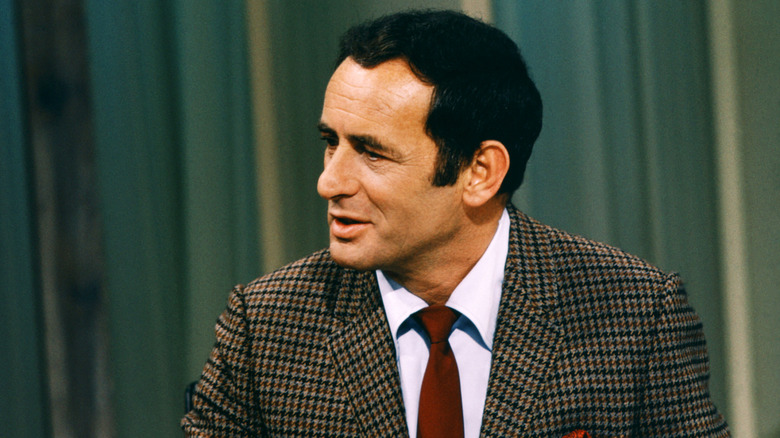
A spinoff of "The Danny Thomas Show," and co-created by Thomas specifically to be a vehicle for its namesake, "The Joey Bishop Show" did initially struggle in the ratings when it debuted in 1961. The premise, which saw Bishop play a fictional version of himself as a PR guy, just didn't click with the TV-watching public. But a Season 2 retool, which saw the character become the host of his own "Tonight Show"-esque variety series — fitting, since audiences best knew Bishop from his 150+ episodes as guest host on the real "Tonight Show" — is where "The Joey Bishop Show" finally got the ratings it needed to carry itself to an eventual four seasons.
There are any number of reasons why a 1960s sitcom about a fictional talk show was fairly quickly forgotten. For one thing, the world hasn't been lacking in real late night talk shows over the last 40 years, so there isn't much reason to watch a fake one. Beyond that, HBO's basically flawless "The Larry Sanders Show" is the best example of a talk show within a show, and Joey Bishop certainly wasn't Larry Sanders.
Perhaps most crucially, Bishop himself didn't prove to be an enduring name the way, say, Dick Van Dyke, Mary Tyler Moore, or Andy Griffith were. Even "Joey Bishop Show" co-creator Danny Thomas, despite his massive popularity in his day, isn't a common household name anymore. He remains a beacon for kids, though, as the founder of St. Jude's Children's Research Hospital.
The Saint
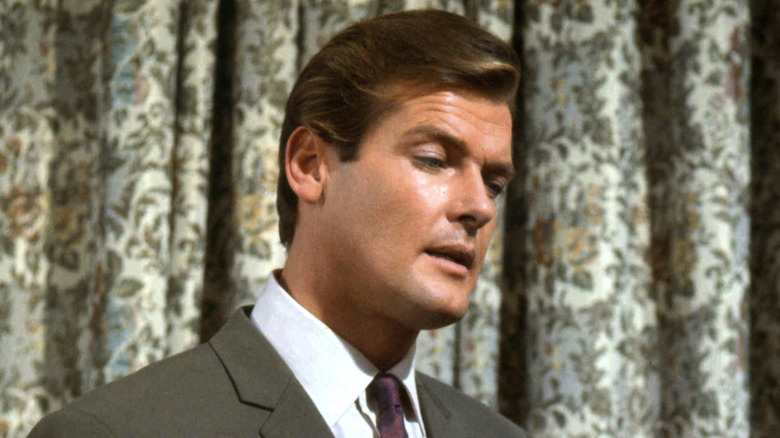
To be fair, as a franchise, "The Saint" has endured for nearly a century. From its short story origins and becoming a popular radio play, to eventually spawning a number of television and theatrical films, "The Saint" is an undeniably popular series. It even had a reboot movie as recently as 2017. However, that doesn't mean that its 1962-1969 TV show incarnation is particularly well remembered on its own — and ironically, that is due in part to how famous its lead actor is.
When ranking every James Bond movie worst to best, Roger Moore's entries loom small at the bottom of the list. Still, he also turned in several legitimately great outings as 007, and remains a fan favorite portrayer of the iconic British spy. It will also undoubtably be the character with which Moore is always most associated, which doesn't do his stint as Simon "The Saint" Templar any favors. Had "The Saint" TV show been Moore's most noteworthy project, and Templar his signature character, the series might have had more cultural staying power. But Moore's time as Bond overshadowed everything else he did, including not only his portrayal of Templar, but the show itself.
Beyond that, younger generations got their first exposure to the character and brand either through Val Kilmer's 1997 film, or the aforementioned 2017 reboot — and neither were popular enough to have anyone digging back into the history of "The Saint" to eventually find their way to the TV show.
That Girl
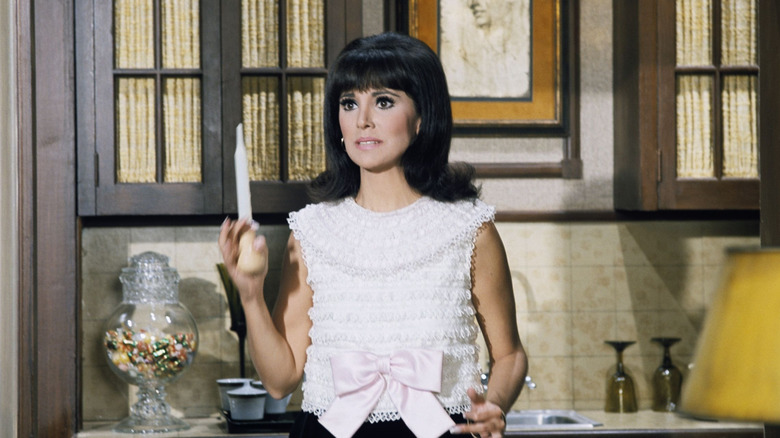
Perhaps more so than any other type of series, sitcoms are often products of their time, with the jokes, themes, and plot lines failing to resonate with viewers beyond the ones that were around when the show first aired. Even shows that are typically viewed as more timeless than the rest can fall victim to this — for instance, the common complaint that many "Seinfeld" conflicts would have been easily fixed with the mere existence of cell phones, or the casual homophobia that was constant joke fodder on "Friends."
Speaking of "Friends," decades before Marlo Thomas made a few memorable appearances on that show as Rachel's (Jennifer Aniston) mom, she was the lead of the 1966 sitcom "That Girl." Thomas played a small town girl trying to make it in the big city while working to become an actress. It being centered around an unmarried woman made it a trailblazer in its time, and laid the groundwork for shows like "The Mary Tyler Moore Show" and other series that depicted independent women that put career and personal ambition ahead of settling down and becoming housewives.
Speaking of "The Mary Tyler Moore Show," that would go on to become one of the most rewatchable shows of all time – and in the process, overshadowed "That Girl." Unfortunately, that is often the way with these types of things.
The Virginian
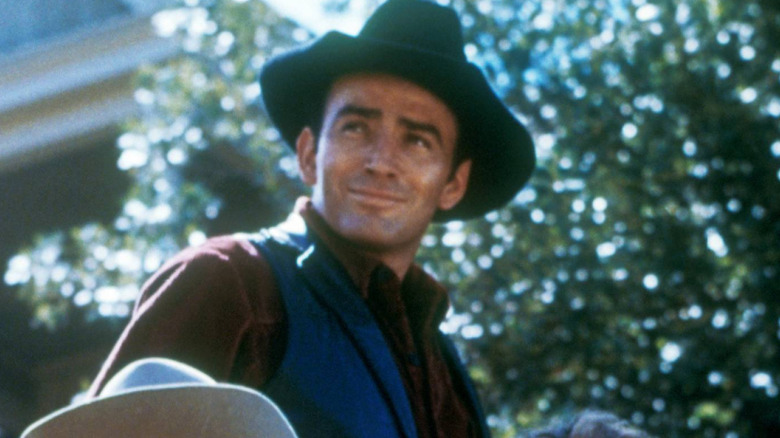
One of the most obvious things that makes the nine-season Western series "The Virginian" difficult to rerun is its length. Each episode of the show was 90 minutes long with commercial breaks, the first of its kind for the genre — and a rarity for network television shows in general.
While audiences at the time delighted in what was essentially an entire Western film for free on their televisions each week, 90 minutes is a large chunk of time to carve from a block of classic television reruns. It's a better prospect to be able to brag about three different 30-minute classic shows airing in that same timeframe (or the more popular and similarly lengthy installments of "Columbo") than a single episode of "The Virginian."
Of course, modern cable and streaming shows play fast and loose with traditional episode lengths. The final season of "Stranger Things" was hyped up as each episode being the length of a movie, for instance. But there are also fewer episodes of "Stranger Things" than there are of "The Virginian" — 42 for the former versus 249 for the latter. That's apparently more than most streaming services want to keep on their servers. As of this writing, Philo is the only service that carries it, and even then it's only two of the show's nine seasons. And if nobody can stream it, nobody can watch it — which means nobody can rediscover it.
Family Affair
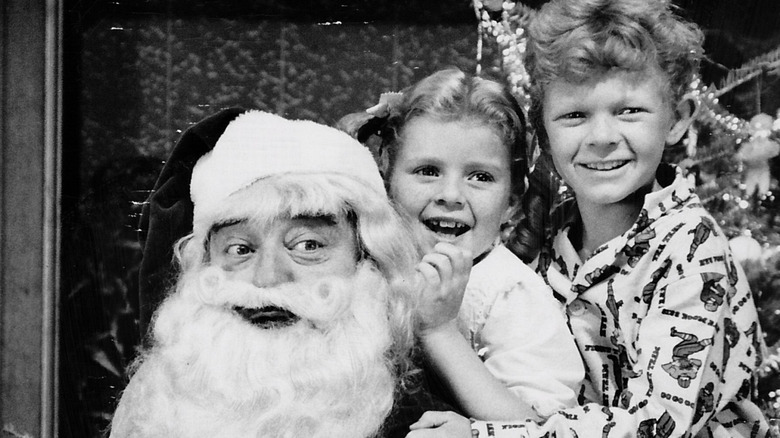
"Family Affair," which debuted in 1966 and ran for five seasons, followed a carefree bachelor who suddenly found himself needing to raise his nephew and two nieces after their parents died in a car accident. It was a slightly different approach to the typical family sitcom of the era, and allowed for a lot of storylines and scenarios that broke from the well-worn cliches that had been dragging the genre down by that point.
The show was extremely popular in its day, even spawning a comic book series. It seems like the kind of show that was ripe for decades of reruns alongside the likes of "The Brady Bunch" and "Eight is Enough." As for why that didn't happen, the most obvious theory is that "Family Affair" would soon come to be more closely associated with the darkness surrounding it than anything else.
Two of the show's cast members were dead within five years of the show's final season. Anissa Jones had a fatal drug overdose — at only 18 years old — followed by Sebastian Cabot's death from a stroke just one year later. Then, in 1997, Bryan Keith took his own life. The New York Post would later include "Family Affair" on a list of most cursed shows of all time alongside "Glee," "Diff'rent Strokes," "The Adventures of Superman," and "The Little Rascals." Sometimes leaving things in the past may be better, after all.