

Every Starship Enterprise In Star Trek, Ranked
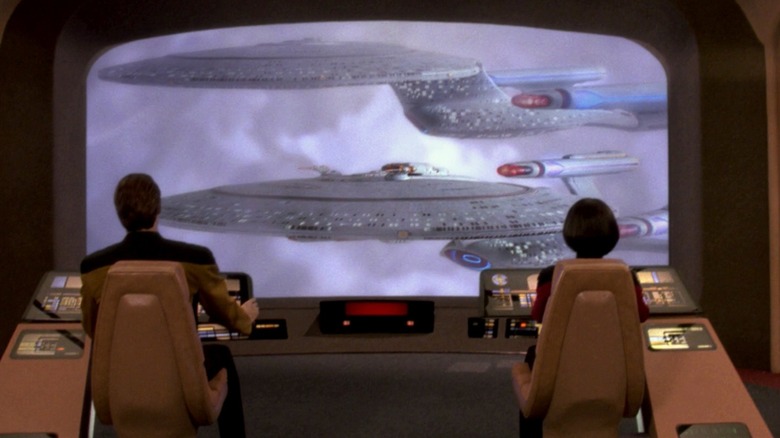
Science fiction is filled with tons of classic ships, from the Battlestar Galactica and the Millennium Falcon to the TARDIS and Serenity. While each has its historic significance, the one vessel that is perhaps most important in the annals of popular culture is the Federation starship USS Enterprise. The iconic starship made its first appearance in 1966 and has remained a staple of the "Star Trek" franchise ever since.
"Star Trek" creator Gene Roddenberry named the ship after the USS Enterprise (CV-6) and its nuclear-powered successor, the CVN-65. The name "Enterprise" holds a great deal of honor for the United States Navy, and it's the same in "Star Trek." NASA even named its first orbiter the Space Shuttle Enterprise (OV-101) in honor of the famous starship. As the franchise continued going where no man had gone before, it did so often aboard the USS Enterprise, or one of its many versions.
The ship people saw in the 1960s series isn't the same used throughout the franchise, as the 23rd-century starship found its way into the 24th, and it didn't stop there. There are many versions of the Enterprise in "Star Trek," and we've ranked them based on their popularity and overall use in the franchise.
11. USS Enterprise NCC-1701-J
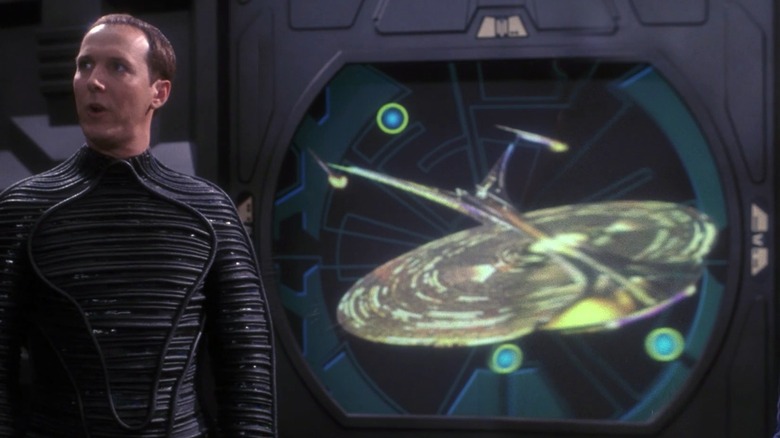
Of the many vessels to bear the name "Enterprise," the least known is the Enterprise-J. The vessel appears on a screen behind Agent Daniels (Matt Winston) in the "Star Trek: Enterprise" episode "Azati Prime." The 26th-century starship was operated by Starfleet, and was integral during the Battle of Procyon V, where the Federation defeated the Sphere-Builders, a recurring humanoid race in "Enterprise," and sent them back to their home dimension.
In the episode, Capt. Jonathan Archer (Scott Bakula), commander of the Enterprise NX-01, traveled to the future with temporal Agent Daniels, who originated from the 31st century. He takes Archer to one of the Enterprise-J's observation decks to convince him to abandon his mission to take out a Xindi weapon. Instead, he pushes Archer to make peace with the Xindi, while also sharing with him his importance in the founding of the Federation.
Daniels fails to convince Archer, who demands to be taken back to his own time, but before he does, Daniels reveals that there are Xindi serving aboard the Enterprise-J. From the image, the vessel appears to feature a classic saucer design with two warp nacelles. This is pretty much all that's known about the starship. Because "Star Trek: Discovery" skipped the 26th century entirely, the Enterprise-J's nature and whether or not it was utilized in the 26th century remains unclear.
10. USS Enterprise NCC-1701-F
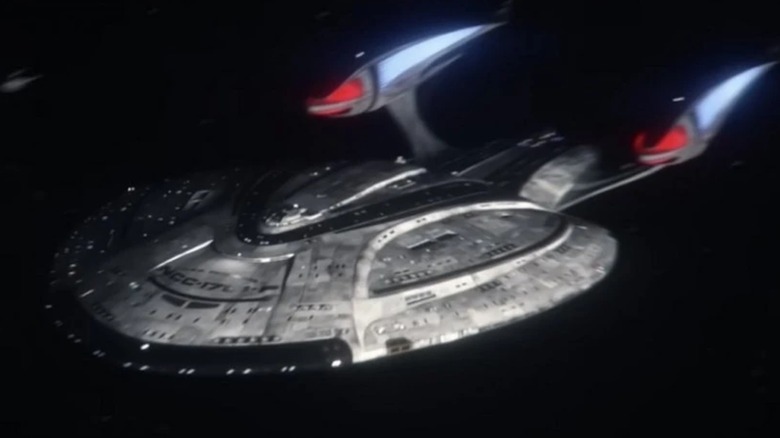
When "Star Trek: Picard" introduced the Enterprise-F, it was under temporary command by Fleet Adm. Elizabeth Shelby (Elizabeth Dennehy), though it was slated for early decommissioning. That changed following a terrorist attack, and the starship was shown in a few scenes throughout the series that explored the later life of retired Adm. Jean-Luc Picard (Patrick Stewart). Unfortunately, there was little of the ship to see, as most of the action in Season 3 happened elsewhere.
The Enterprise-F is the seventh vessel to bear the name, and was in operation alongside the USS Voyager-B and other starships in the fleet. The bridge of the Enterprise is seen shortly in the show's final season. This occurs as the Changeling and Borg operation comes to fruition, assimilating everyone under the age of 25. This was accomplished over a long period of time via transporters, and the insidious plot initiated with the killing of Adm. Shelby.
After Picard and company stop the Borg Queen (Annie Wersching), saving Starfleet (again), Starfleet decommissioned the Enterprise-F as planned in 2402. The Enterprise-F was an Odyssey-class starship and, according to its specifications, was a beast. The starship featured 19 phaser arrays, four torpedo launchers, two phaser cannon turrets, and two heavy phaser cannon mounts. It measured over 1,061 meters (3,481 feet), was operated by a crew of 1,610 personnel, and featured a design reminiscent of the USS Voyager.
9. USS Enterprise NCC-1701-G
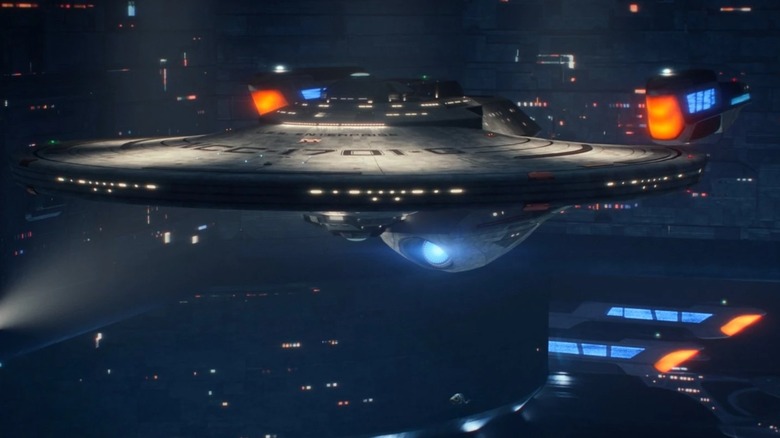
The Enterprise-G is unique for starships bearing that name, as the vessel wasn't originally commissioned that way. Initially, the starship was the USS Titan (NCC-80102-A), the fourth to be named as such. It was first seen in "Star Trek: Picard" under the command of Capt. Liam Shaw (Todd Stashwick). Picard and Capt. William Riker (Jonathan Frakes) boarded the ship under false pretenses, running afoul of the captain in so doing.
The Titan became instrumental in stopping the Borg and Changeling plot to take over Starfleet, though the events of "Picard" Season 3 resulted in the death of Capt. Liam. When the near-destruction of the Federation was averted, the Titan required repair and refits. Seven of Nine (Jeri Ryan) took command under the ship's new name, rechristening it in 2402 as the USS Enterprise-G, in honor of Picard. The Enterprise-G was a Constitution III-class starship, measuring somewhat shorter than the Enterprise-D.
It is the smallest of any ship named Enterprise since the Enterprise-C, but was nonetheless a highly capable vessel loaded with as much technology as Starfleet could cram. While a remarkable ship, it was more of a transport with a different name for much of its time on screen, explaining its position here. At the end of the series, Seven of Nine was joined by Raffaela "Raffi" Musiker (Michelle Hurd) as her second-in-command, alongside Ensign Jack Crusher (Ed Speleers).
8. USS Enterprise NCC-1701 & NCC-1701-A
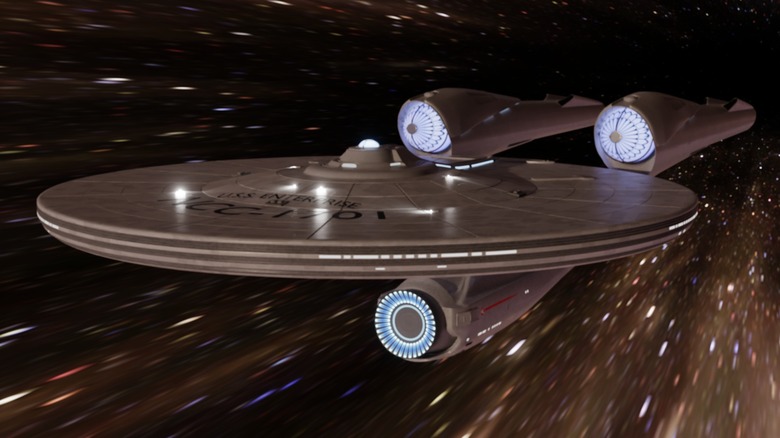
When the "Star Trek" film franchise rebooted in 2009, it did so with a shiny, new USS Enterprise. The starship is, in a way, the same used throughout the original series, but because of the timeline changes, it's not quite the same ship. The Constitution-class starship is the first to bear the name "Enterprise" in the Kelvin Timeline, and is the flagship of the Federation, so there are many similarities between the two timelines.
The vessel features various modifications, including proportional alterations to the hull, the warp nacelles are placed further apart, and their pylons are swept back as well. This gives the Enterprise a more streamlined form than the one used in the 1960s. The ship's outer coloration is closer to white, while its internal areas are fully-lit, not to mention its abundance of lens flares.
Its additional armaments include exterior turrets that its forerunner lacked. The Enterprise was destroyed in the final act of "Star Trek: Beyond," but that wasn't the end of the trilogy's use of the famous name. The film ends with the introduction of the Enterprise-A, which incorporates some design changes to overcome the vulnerabilities of its predecessor. While they look similar, there are nuanced visual changes to the overall shape of the Enterprise-A, making it a distinct starship all its own.
7. USS Enterprise NCC-1701-C
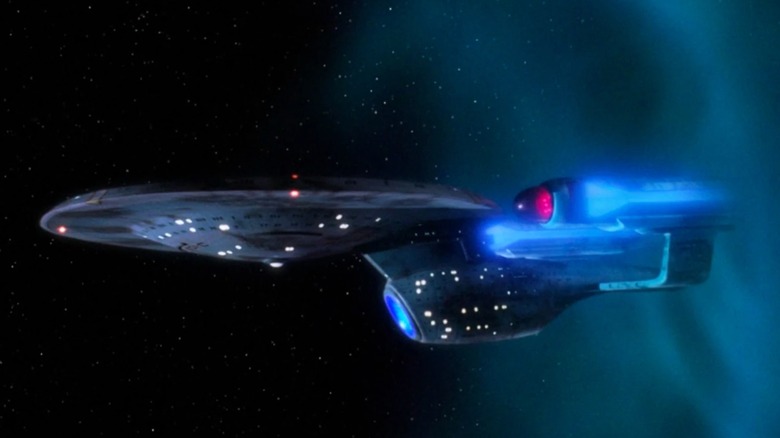
When "Star Trek: The Next Generation" kicked off in 1987, it did so with the Enterprise-D, leaving fans to wonder what happened to the Enterprise-C. It seemed that the question would never be answered, but Season 3's "Yesterday's Enterprise" offered an explanation and a glimpse of the ship. One of "Star Trek's" greatest time travel stories, it explores what happens when a doomed ship skips through time, arriving 22 years in the future.
The Enterprise-C emerges from a rift in spacetime in front of the Enterprise-D, where it's revealed that the ship was lost, but its arrival alters history. Everything aboard the Enterprise-D changes in an instant, leaving Guinan (Whoopi Goldberg) to instruct Capt. Picard on helping the vessel return to the past. It is shown in a state of near-fatal damage, requiring a great deal of work to bring back into operation.
The Enterprise-C was an Ambassador-class starship, and the fourth to bear the name. While not much is known about its capabilities when fully operational, a plaque in "Star Trek Encyclopedia" reveals that it was built at the Utopia Planitia Fleet Yards, the same place that constructed the Enterprise-D. It was commissioned in 2332 at Earth Station McKinley, where Capt. Rachel Garrett (Tricia O'Neil) took command, remaining in that capacity until her death in "Yesterday's Enterprise."
6. USS Enterprise NCC-1701-B
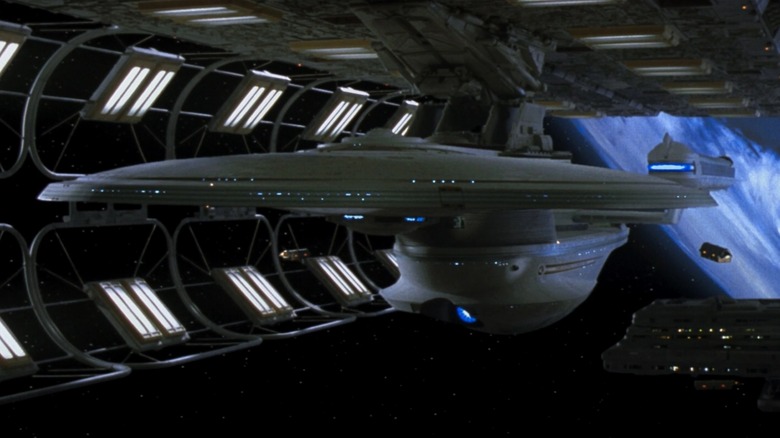
The Enterprise-B was an Excelsior-class starship, and the third vessel to carry the name. Commissioned on stardate 9715.5 and incorporating a piece of the Enterprise-A in its design, the Enterprise-B's maiden voyage in "Star Trek: Generations" saw it only carry a handful of personnel onboard and even fewer installed systems. Capt. John Harriman (Alan Ruck) commanded the starship on this momentous occasion.
Several members of the previous Enterprise's crew attended, including Commander Pavel Chekov (Walter Koenig), Captains Montgomery Scott (James Doohan), and James T. Kirk (William Shatner). When everything goes awry during an impromptu rescue mission, these three save the ship from total destruction while successfully rescuing as many El-Aurians as they could. When the Enterprise-B is damaged, Kirk is seemingly lost through a large opening in the outer hull.
This is the only time that the Enterprise-B is shown on film, as the rest of the movie features the Enterprise-D. The ship's design was taken straight from "Star Trek III: The Search for Spock," using the same studio miniature model of the USS Excelsior with only minor alterations. Some exterior shots were rendered in CG, though most used the old miniature with new paint, some added elements permanently glued into place, and other small improvements. The model was later used in an episode of "Star Trek: Deep Space Nine" as the USS Lakota.
5. USS Enterprise NCC-1701-E
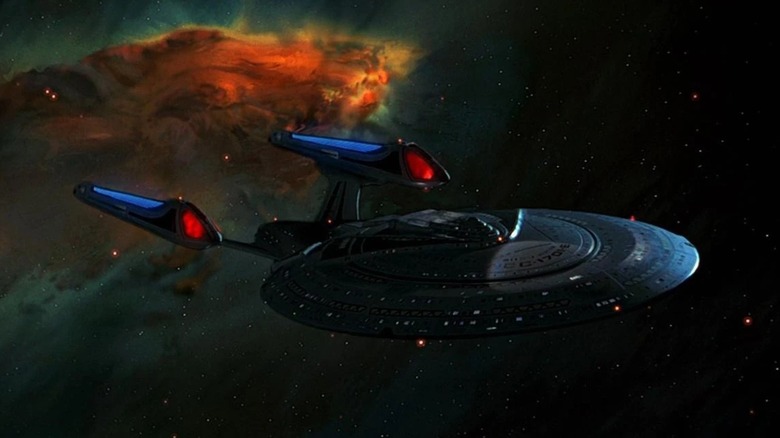
After the destruction of the Enterprise-D at the end of "Star Trek: Generations," the crew was given a new ship, the Enterprise-E. The vessel first appears in "Star Trek: First Contact," where it's mentioned that it's been a year out of spacedock when the Borg attack Sector 001, otherwise known as the Sol System. The sixth Federation starship named Enterprise was a Sovereign-class ship, and featured fewer accommodations, as families weren't onboard as they were on the Enterprise-D.
The starship was smaller, more streamlined, and better prepared for combat. This was due to the ever-growing threat of the Borg, and Starfleet recognized the need to prepare for the invasion that ultimately came in "First Contact," a film Patrick Stewart has special fondness for. It was armed with newly-developed quantum torpedoes, which successfully destroyed a Borg sphere.
The Enterprise-E continued operating for several years, including throughout the events of "Star Trek: Insurrection" and "Star Trek: Nemesis." In the final film, the Enterprise-E collides with the Romulan vessel Scimitar, crippling itself in the process. When the threat was dealt with, the Enterprise-E limped back to Earth, where it was repaired in a spacedock. It was later seen in flashbacks in "Star Trek: Picard," as the Enterprise-E was Capt. Picard's final starship command before being promoted to the rank of admiral in 2381.
4. USS Enterprise NCC-1701-A
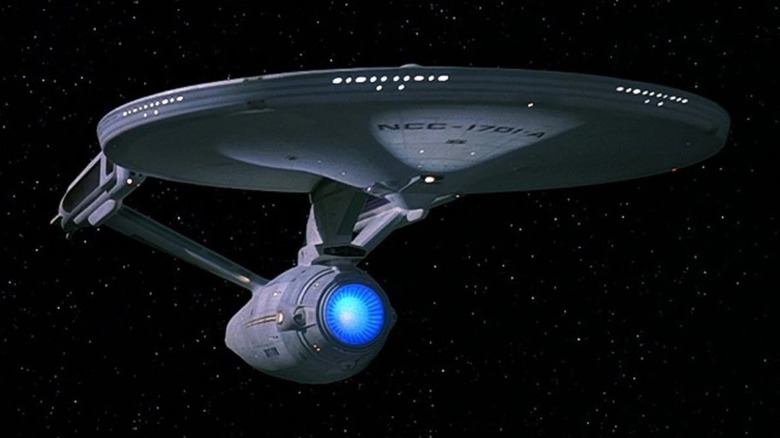
The second Enterprise vessel, the Enterprise-A, was a Constitution II-class starship given to Capt. Kirk, following his demotion from Admiral, which he didn't mind in the least. It first appeared at the end of "Star Trek IV: The Voyage Home," and remained through the subsequent two films. The Enterprise-A was a bit unusual, as it was commanded by Kirk, but both Mr. Spock (Leonard Nimoy) and Scotty held the same rank of captain.
Regardless, they got the band back together for three more movies, which fans didn't mind, and they had a shiny, new version of their favorite starship to do it. Initially a planned refit of the Constitution-class Enterprise, Starfleet ultimately decided that the upgrades warranted the creation of an entirely new class. Scotty was instrumental in its design, which saw nearly every system replaced before it entered service under Kirk's command.
After the Khitomer Conference at the end of "Star Trek VI: The Undiscovered Country," the Enterprise was decommissioned after seven years of active service, which its crew and officers didn't much appreciate. The starship, which was notable for its participation in the initial movement that led to the peace treaty between the Klingon Empire and the Federation, was kept as an exhibit at the Fleet Museum, where it is briefly visible in "Star Trek: Picard" Season 3.
3. Enterprise NX-01
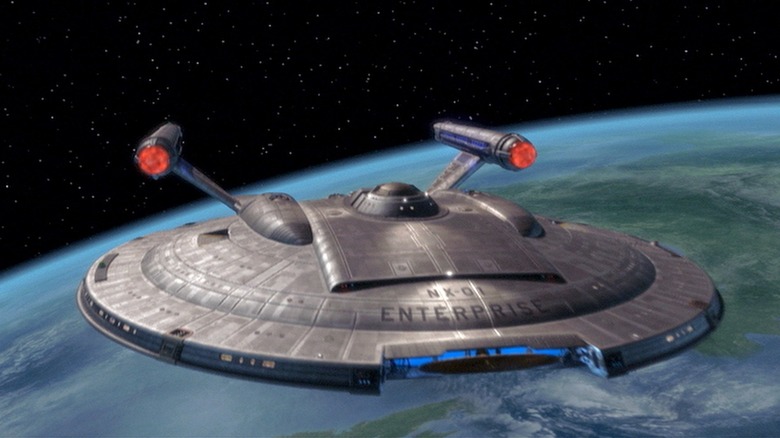
The Enterprise NX-01 is one of the most important starships in the history of Starfleet, though its existence predates that organization. It was launched in 2151 in what was then known as the United Earth Starfleet, so while it's the first Terran starship named Enterprise, it's technically not the first Federation ship to bear the name. Regardless, it all started with the NX-01, the first warp-5-capable starship created by humanity, making humans a legitimate player in the galaxy.
The NX-01 is also the first starship with a transporter system that was capable of hauling biological organisms. It malfunctioned, as to be expected in "Star Trek," and other systems were nascent or developing as the series progressed. Shortly after the NX-01 takes to the stars, the ship's captain and crew are thrust into interstellar affairs, a war with an interdimensional enemy, and a future that doesn't align with pre-established lore.
This made the series more dynamic, introducing and answering questions that fans didn't even think to ask. The ship, while technologically inferior to those that would follow, is nonetheless iconic, as it is the technological leap forward that took humanity into the stars. Like many other significant vessels from the franchise, the Enterprise NX-01 is displayed at the Fleet Museum in "Star Trek: Picard," marking its significance to the history of Starfleet and the Federation.
2. USS Enterprise NCC-1701-D
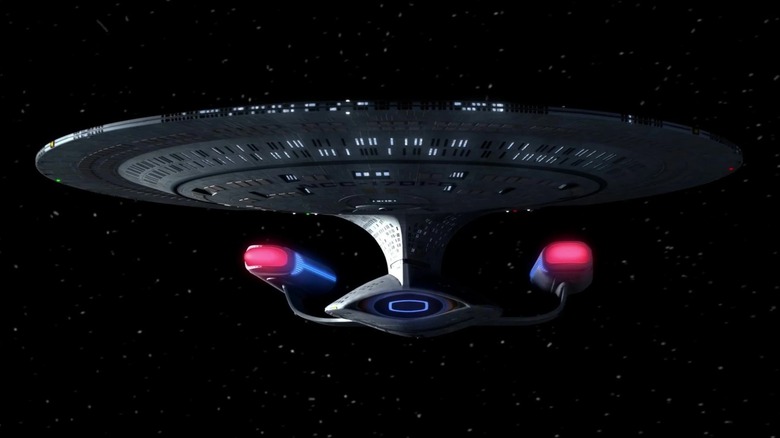
Of all the starships named Enterprise, the one with the most screentime is undoubtedly the Enterprise-D. This is due to "Star Trek: The Next Generation's" 178 episode run, and it being featured in "Star Trek: Generations." For fans who entered the franchise in the 1980s and beyond, the Enterprise-D is the most iconic. The Galaxy-class starship is one of the largest, as it was built to house not only its crew but also their families, visiting dignitaries, and more.
Throughout its time on screen, the Enterprise-D faced off against a myriad of powerful enemies, including rogue Klingons, the Romulans, the Borg, the Ferengi, and others. It was also visited often by Q (John de Lancie), and served the Federation well for years. In "Star Trek: Generations," under the leadership of Cdr. Riker, the saucer section crashes onto Viridian III after a warp core breach forces his hand. This effectively destroys the Enterprise-D, or so the fandom thought.
In "Star Trek: Picard," the classic ship returns, having been rebuilt to working status as a museum ship. Once again, the vessel flies into the fight, facing off against the Borg. It survives the encounter and is returned to the Fleet Museum so its restoration work (and newly required repairs) could commence. These efforts were completed by 2402, and the Enterprise-D was placed on permanent display between the Enterprise-A and the USS Stargazer, per Picard's command.
1. USS Enterprise NCC-1701
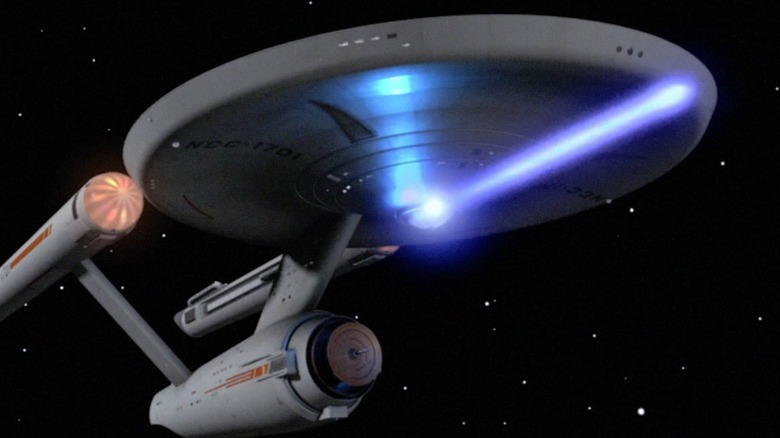
It may not be the most advanced starship, nor was it the most featured, but there's no denying that the USS Enterprise NCC-1701 is the lead ship of its name when compared to the many that followed. This was Starfleet's flagship that Captain Kirk commanded for much of his professional life, proving instrumental in many first contact scenarios over the course of a five-year mission to explore the galaxy beyond what was known.
The starship carried its iconic crew throughout all three seasons of the original series. It continued in animated form in "Star Trek: The Animated Series," found new life in "Star Trek: Strange New Worlds," and while it was refitted for the movies, there's no denying that the Enterprise's bones remained. The influence of the original Enterprise is widespread, making it one of the most important and influential space vessels in science fiction.
Its impact on the ongoing franchise is clear, as the design of nearly every Federation starship that followed featured a saucer, two warp nacelles, and a deflector dish. Every new starship designed in the aftermath of the OG was compared to it, and there really isn't any competition in ranking the USS Enterprise as the best starship to bear the name. It is, in effect, the archetype of Starfleet's ships, which is evident in "Star Trek: Discovery," which ends in the 32nd century.