

'70s Movies That Would Never Be Made Today
The following article includes mentions of sexual assault, child abuse, and torture.
In every decade, filmmakers from across the globe release all kinds of movies. Some are comedies, others are dramas, and many are provocative or controversial. Each decade has its standouts, and the 1970s are no exception. The '70s gave the world some of the greatest movies ever made, including "The Godfather," "The Sting," and "Star Wars," to name a few. Those films largely avoided controversy and are considered classics of their respective genres.
Other movies of the '70s, many of which are considered classics, are the kinds of films we collectively agree wouldn't be made today. As society moves ever forward in accepting minority communities, and as our understanding grows surrounding various issues, the films that are made reflect that. Still, something that was incredibly funny in 1974 could be seen as offensive, racist, or misogynistic today. That's not to say they didn't fit those words back then, but the culture was different.
The 1970s were filled with some of the best movies ever made that would absolutely never get out of the pitching stage today. Many of the films that fit this description include highly offensive humor when seen through a modern lens. Others take on sexual topics that eked by the censors in the '70s, but would be ruined through today's so-called "cancel culture." These movies from the 1970s, organized in chronological order of release, are all notable for numerous reasons, and they'd never be made today.
Sweet Sweetback's Baadasssss Song
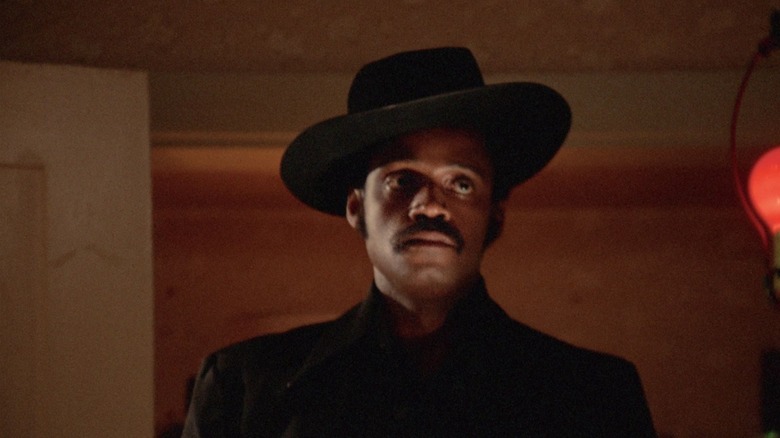
"Sweet Sweetback's Baadasssss Song" is an absolute classic of Black cinema, and one of the first blaxploitation movies of the 1970s. Melvin Van Peebles directed the film, which he couldn't get approved by any studio, so he financed it himself. Before he was done shooting it, he took a loan from Bill Cosby for $50,000 to complete the movie. Van Peebles plays the lead character, Sweetback, who quarrels with white LAPD Officers, leading to the overall story of him taking on "The Man."
While "Sweet Sweetback's Baadasssss Song" helped launch the blaxploitation genre, it isn't a racially exploitative movie. Instead, it's a culturally significant examination of the Black community's collective resistance against stereotypes, overt brutality administered by authority figures, and the fight against systemic racism. These issues have never truly gone away, and while the culture has improved in several areas where racial disparity is concerned, it's nonetheless as hot-button an issue now as it was in 1971.
There are several reasons why "Sweet Sweetback's Baadasssss Song" wouldn't be made today, including its purported unsimulated sex scenes and how Sweetback is ultimately able to elude authority despite beating two cops unconscious. Some modern filmmakers could conceivably make a similar film, and icons like Spike Lee have certainly come close. Still, "Sweet Sweetback's Baadasssss Song" was primarily a product of its era, and while it had a lasting impact on generations of Black filmmakers, it wouldn't be received in the same way today.
A Clockwork Orange
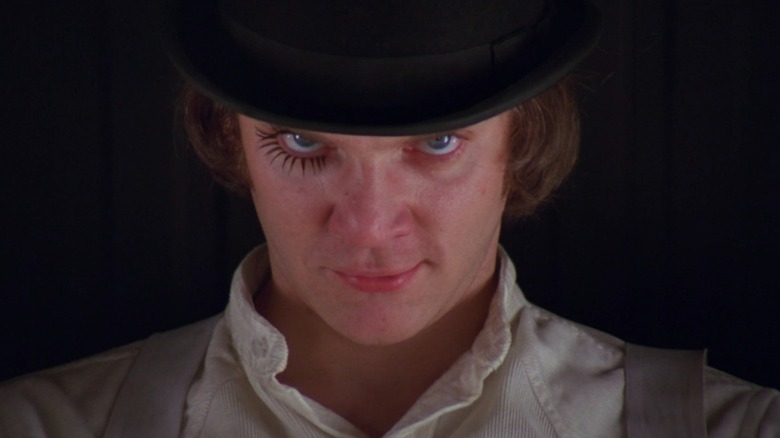
Director Stanley Kubrick's 1971 adaptation of Anthony Burgess' 1962 novel "A Clockwork Orange" is one of the best sci-fi movies of the decade. It's also the first science fiction film to be nominated for best picture at the Academy Awards, and remains a culturally significant cult classic to this day. The movie was as controversial in the '70s as it remains today, as its depictions of rape, wanton thuggery, and so-called "ultra-violence" breach the barrier of what is considered to be non-exploitative entertainment.
Kubrick's take on the source material includes scenes of sexual assault, violence against women, and overt acts of brutality meted out against random, often downtrodden victims. In one scene, the film's protagonist, Alex (Malcolm McDowell), brutally beats a man and rapes his wife in front of him while joyously singing "Singin' in the Rain," marking the director's penchant for complex duality in his representations of violence on film.
It's not that there aren't violent and sexually aggressive movies made today, but it's unlikely something like "A Clockwork Orange" could be made now. Certainly, few directors could achieve the same level of brilliant perfection demanded by Kubrick; but beyond that, just as it was controversial in 1971, "A Clockwork Orange" would be received poorly were it made now.
If you or anyone you know has been a victim of sexual assault, help is available. Visit the Rape, Abuse & Incest National Network website or contact RAINN's National Helpline at 1-800-656-HOPE (4673).
Last Tango in Paris
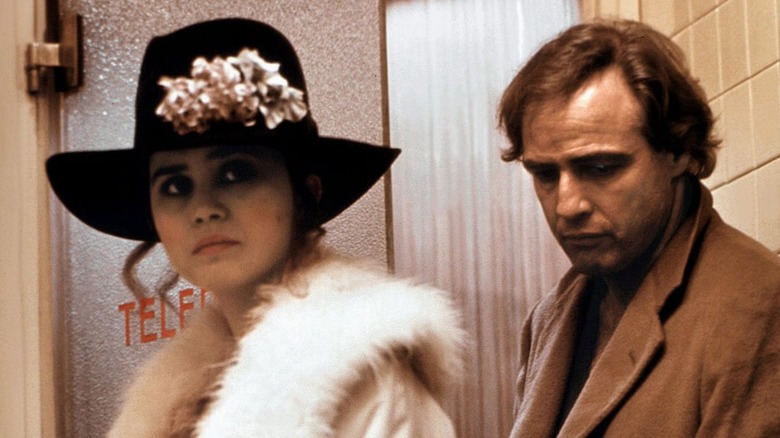
A lot has been written about director Bernardo Bertolucci's "Last Tango in Paris" over the years, and much of it deals with the film's handling of a single scene of sexual violence. The scene in question is a nude scene that many feel ruined the film – not because of what it depicts, but because of what happened behind the scenes. The movie is about a widowed American, Paul (Marlon Brando), who embarks on a torrid love affair with a Parisian woman named Jeanne (Maria Schneider).
The questionable scene doesn't depict tender lovemaking; it's a forced sodomy scene, where Paul abuses Jeanne. To do so, he grabs some butter for lubrication and engages in the brutal act. The now infamous "butter scene" set "Last Tango in Paris" apart from its overarching narrative, as Schneider has spoken out about how she felt humiliated and abused, as the use of butter wasn't in the script.
"During the scene, even though what Marlon was doing wasn't real, I was crying real tears. I felt humiliated and, to be honest, I felt a little raped, both by Marlon and by Bertolucci," Schneider told the Daily Mail in 2007. This kind of filmmaking, where a young actor is taken advantage of, is one of the reasons that today's movies employ intimacy coordinators. Their job is to ensure the safety of everyone involved; unfortunately, Schneider didn't have that option.
Fritz the Cat
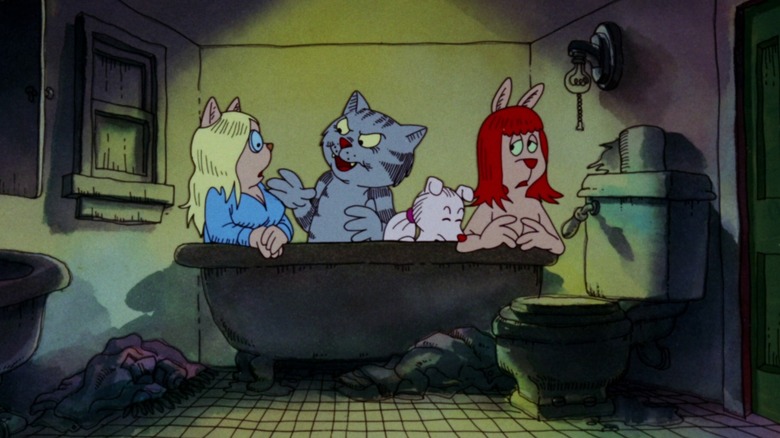
There are plenty of adult-themed animated films that deal with sexualization, but films like 2016's "Sausage Party" do so largely through innuendo... for the most part. That's not how "Fritz the Cat" handled sex at all, as it was so over the line of what was considered okay — in either a live-action movie or cartoon — that it holds the distinction of being the first animated film with an X-rating. Needless to say, this isn't a movie you should ever watch in front of your kids, despite being about a cartoon cat.
The film is a product of its time, depicting social commentary through nihilistic sexual acts seeped in the counterculture of the 1960s. "Fritz the Cat" is based on Robert Crumb's comic of the same name, though the artist hated it so much that he killed the character soon after its release. The movie is set in the mid-to-late '60s, where Fritz drops out of college, accidentally launches a race riot, and becomes a far-left revolutionary icon. It's a satire, but it's not something that would be made today.
Ralph Bakshi wrote and directed "Fritz the Cat," and if you know anything about the legendary animator, you know that he constantly embraced counterculture and controversial topics. While adult-themed animated films are still around, the level of sexuality on display in "Fritz the Cat" is tantamount to pornography, which isn't something you'd see funded or released in this day and age.
Pink Flamingos
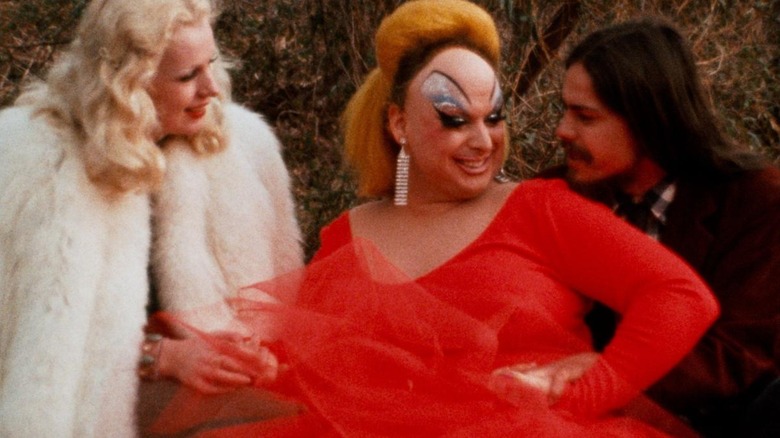
Of all the counterculture films of the 1970s, the one that offended the most people is director John Waters' black comedy "Pink Flamingos." This is a movie that's often called one of the most disgusting ever made, and that's not without good reason. Everything about the film is pushed to the nth degree, depicting sexual assault, incest, cannibalism, and coprophagy (the eating of feces). "Pink Flamingos" is about Divine, a drag queen criminal who takes pride in being called "the filthiest person alive."
The movie progresses through a series of one-upmanship, where Divine's competition tries to outdo her disgusting nature with more horrific acts. These include depictions of sex and violence beyond what's considered acceptable. There are scenes of rape, a mother fellates her son, and a real-life chicken is crushed to death between a man and woman, as he rapes her. The fecal icing on the proverbial cake comes at the end when Divine eats real dog poo, set to "(How Much Is) That Doggie in the Window?"
Everything about "Pink Flamingo" is about reaching for an increasingly repulsive level of depravity and disturbing imagery, and the movie is famous for it. It's now considered a cult classic, but there's not a filmmaker today who would dare to make anything remotely as visually and aurally horrifying as "Pink Flamingos." When the controversial movie was released, it was censored, banned, and decried across the world, garnering X ratings and an eventual NC-17 rating via its 1997 re-release.
Blazing Saddles
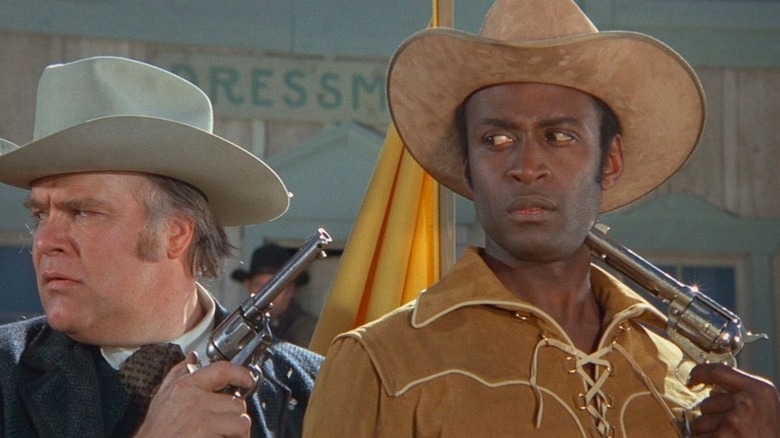
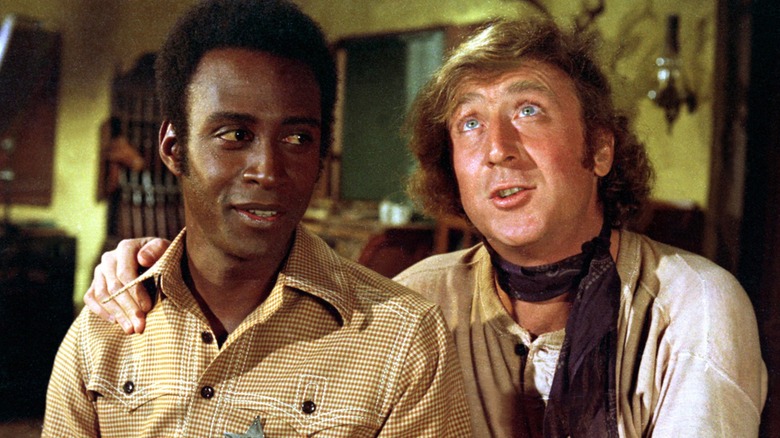
If you were to ask a random person to name a '70s movie that would never be made today, there's a good chance they'd say "Blazing Saddles." The Mel Brooks satire is filled with racist jokes, sexual innuendo, pejorative words, and some of the best fourth wall breaks of the era. Brooks co-wrote the movie with Richard Pryor, whom he credits with paving the way for the film's use of the N-word in more than 30 instances.
"[Pryor] said, 'You gotta' tell the truth. ... It's used; sometimes it's used sweetly by brothers, and sometimes it's just a vicious, terrible curse, which breaks your heart,'" Brooks told Entertainment Weekly. Brooks subsequently credited Pryor with helping to lampoon racism without holding back, and the film certainly does that with aplomb. It's funny in all the right places while simultaneously coming off as one of the most overtly offensive movies ever made.
Like most of the controversial movies of the 1970s, "Blazing Saddles" is a product of its time. The film traverses controversy through comedy in a way that only Brooks and Pryor could manage. Thanks to the brilliant delivery of its leads — Cleavon Little, Gene Wilder, and Slim Pickens — it's a timeless classic that could never be reproduced in the same level of quality that existed in 1974. It's also unlikely that any white director could get away with this sort of film — though it's fair to say that Quentin Tarantino comes close, albeit not in comedic ways.
Salò, or the 120 Days of Sodom
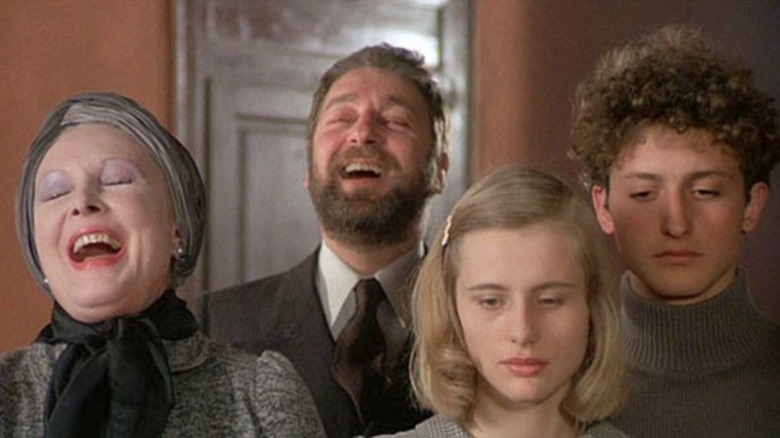
"Salò, or the 120 Days of Sodom" is probably the most controversial movie of the 20th century, and it's definitely not something that could be made today. The film is a political horror that is loosely based on Marquis de Sade's 1785 novel "The 120 Days of Sodom," though presented in the early 1940s. It's centered around four Italian fascists who kidnap 18 teenagers and subject them to sexual, physical, and psychological torture.
The film is broken up into four segments: "Ante Inferno," "Circle of Manias," "Circle of S**t," and "Circle of Blood." That alone should inform any prospective viewer that they're in for something disturbing, and in this capacity, "Salò, or the 120 Days of Sodom" doesn't disappoint. Without going into too much detail, the film includes forced rape, coprophilia, matricide, genital mutilation, branding, scalping, vivisection, mutilation, and every other horrific thing that could be contrived.
Not only would "Salò, or the 120 Days of Sodom" not be made today by any filmmaker with a sense of reason in their head, but it shouldn't have been put to celluloid in 1975, either. While it clearly has socio-historical and political commentary seething from each depiction of sexual brutality, it's the type of movie that stays with you, whether you want it to or not. The lasting impression it leaves is unappreciated and horrific, leaving many viewers utterly disturbed by its lasting mental exploitation.
Manhattan
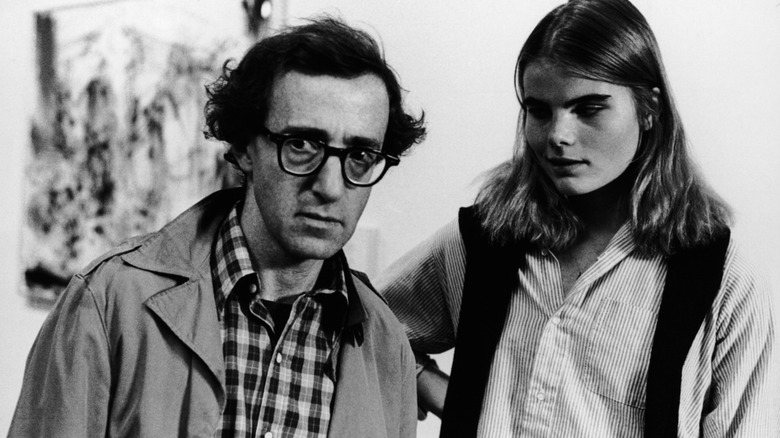
Woody Allen is one of his generation's greatest filmmakers, but there's no denying that he's a controversial figure. Allen famously married his girlfriend's adopted daughter, Soon-Yi Previn, and has been accused by Mia Farrow of sexually assaulting their adopted daughter, Dylan. While he's an exceptional writer and director, this hasn't always worked in his favor, and "Manhattan" is a perfect example of this. The film is about a divorced 42-year-old man (Allen) who dates a 17-year-old girl (Mariel Hemingway).
Subsequently, he falls in love with his best friend's mistress, played by Diane Keaton, so "Manhattan" fits within the romcom and dramedy genres. It was controversial upon release for what should be obvious reasons, but in hindsight, given the accusations made against Allen, its controversial nature has grown exponentially. The movie was released in 1979, though Allen who tried to stop that from happening. His reasoning was that he didn't like the finished product and had nothing to do with its content.
There have been many movies, some of which are excellent, which include relationships between young women and older men. Still, they don't often depict children, which is what a 17-year-old is. Were Allen to make "Manhattan" now, there's little chance the film would see the light of day, especially after the release of the 2021 documentary "Allen v. Farrow," which details the allegations of sexual abuse made against the director.
If you or someone you know may be the victim of child abuse, please contact the Childhelp National Child Abuse Hotline at 1-800-4-A-Child (1-800-422-4453) or contact their live chat services.
Monty Python's Life of Brian
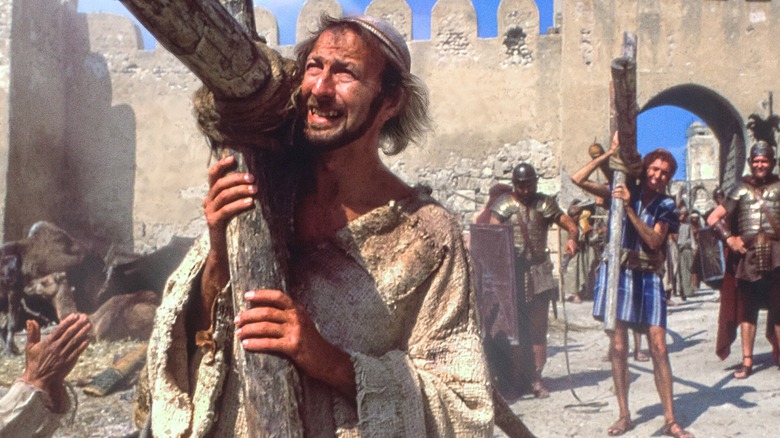
Comedies often cover controversial topics, but when one targets the largest religion on the planet, you know there will be people who take offense. Enter "Monty Python's Life of Brian," which has been called the most blasphemous film ever made. It's also the first comedy about the Messiah, though it's fair to say that there aren't many feature films in its company. The movie came about after "Holy Grail," which dealt with several Catholic dogmas.
Instead of detailing the life of Jesus in any way, the film focuses on Brian (Graham Chapman), a man who is declared the Messiah (which he continuously denies). This doesn't save him from crucifixion, where, at the end of the film, he finds himself beside a man (Eric Idle) who sings the now-famous tune, "Always Look on the Bright Side of Life." The movie drew the religious right's ire, especially in the United States, where it became subject to bans and overt condemnation.
Of course, this had the opposite intended effect, as it drove more people to see the film. It's now seen for what it is, a biblical black comedy that's irreverently hilarious. The reason it wouldn't be made today is due to the religious right's culture wars that have resulted in films like "The Passion of the Christ" and other biblical dramas of a much more serious nature.
Caligula
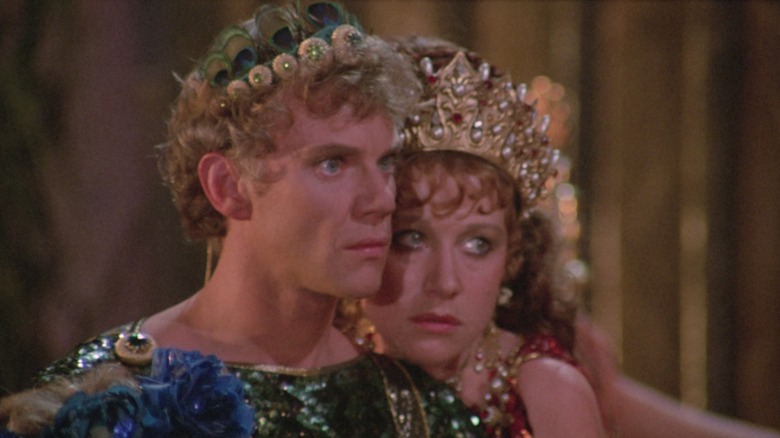
When you cast the likes of Malcolm McDowell, Helen Mirren, and Peter O'Toole in a film written by Gore Vidal, the results should be Oscar-bait — but "Caligula" was not. The 1979 film about Roman Emperor Caligula (McDowell) is one of the most controversial of the decade, thanks to its exploration of Caligula's vast perversions and how they're depicted in the movie. While there is plenty of realistic violence to upset some, the unsimulated sex acts that were added in post-production went over the edge.
Bob Guccione, the founder of "Penthouse" magazine, co-produced and financed "Caligula." He included pornographic scenes, using adult film actors, in an effort to produce the first accurate depiction of Roman decadence and extravagance. He did this after filming wrapped, adding a full-blown orgy at the end of the movie. This drastically altered the film's tone, making it a pariah nobody wanted to touch, much less screen. "Caligula" faced legal problems and numerous issues in the U.S. and elsewhere, and it wasn't well-received by critics.
It's fair to say that "Caligula" isn't the type of movie you want to watch with your parents, but beyond that, it's a fascinating exploration of the coalescing of two methods of filmmaking. It combines big-name Hollywood actors in a big-budget setting with underground pornography. It's not something that would be made today (many argue it shouldn't have been made at all), though Lars von Trier's 2013 "Nymphomaniac" did something similar via digital compositing.