

10 Must-Watch Twilight Zone Episodes That Still Hit Just As Hard Today
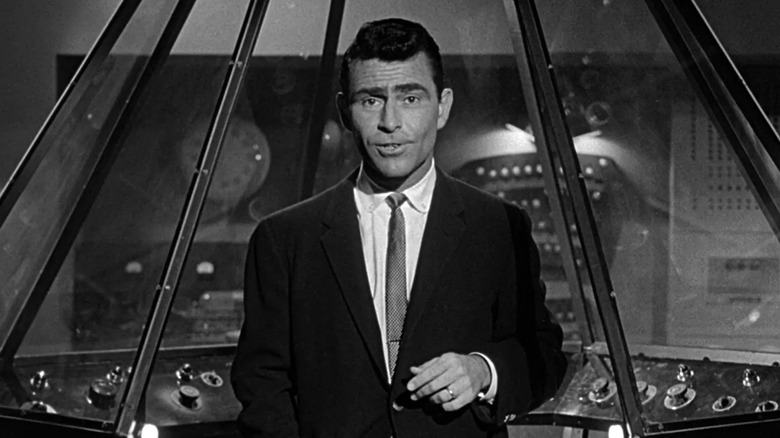
In 1959, CBS struck television gold when it took a chance on Rod Serling's "The Twilight Zone." To that point, there had never been an anthology series meditating on the weird, strange, and macabre. Blending genres from science fiction and horror to fantasy and even Western, it wasn't long before the pop culture phenomenon took the world by storm, securing three Primetime Emmys and cementing its place in television history. For five seasons, the show pushed boundaries, horrified and fascinated viewers, and gave Serling an outlet to express himself.
Although "The Twilight Zone" has since spawned three revivals and a feature film, nothing has lived up to those original 156 episodes. Sure, some have been better than others (most notably Jordan Peele's 2019 revival), but in the end, it's hard not to compare each new iteration — and even similar shows like "Outer Limits," "Tales from the Crypt," and "Black Mirror" — to what Rod Serling and his talented writing staff accomplished over 60 years ago.
But before diving into the most underrated episodes of "The Twilight Zone," don't sleep on these 10 essential chapters from the original CBS anthology. From acclaimed classics to fan-favorite entries, these are the tales that anyone even remotely interested in the series ought to start with. So, grab that key of imagination and unlock the door into another dimension, because you're about to enter "The Twilight Zone."
Living Doll (Season 5, Episode 6)
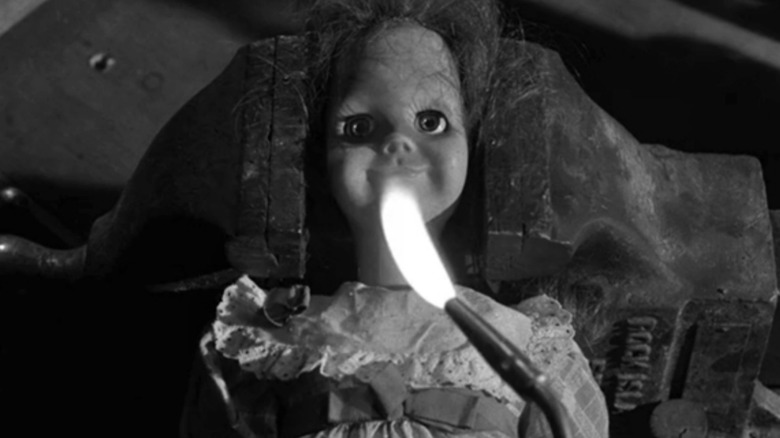
Long before "Child's Play" or "Annabelle," "The Twilight Zone" first introduced the murderous, possessed doll concept to audiences everywhere. "Living Doll" aired in the show's fifth and final season, and quickly became a relevant piece of pop culture. But while many of cinema's evil dolls look malevolent in appearance, what made "Talky Tina" (voiced by June Foray) so terrifying was that she appeared normal on the outside, a cover for the murderous inward appetite beneath.
When young Christie Streator (Tracy Stratford) receives a Talky Tina from her mother (Mary LaRoche), her stepfather Erich (Telly Savalas) soon becomes the unwitting target of the homicidal figure. "My name is Talky Tina, and I don't think I like you," it says, unsettling the audience as much as it does Erich. Of course, like all good "Twilight Zone" hours, "Living Doll" questions whether Talky Tina is really the villain at all, despite its actions against the Streator family.
Penned by Charles Beaumont and Jerry Sohl and directed by Richard C. Sarafian (in his only contribution to the series), "Living Doll" is a rare "Twilight Zone" classic not helmed by Rod Serling himself. Nevertheless, its cultural impact alone is impressive, as it continues to influence tales today, including "Toy Story 4," making it one of the most essential installments of the franchise.
To Serve Man (Season 3, Episode 24)
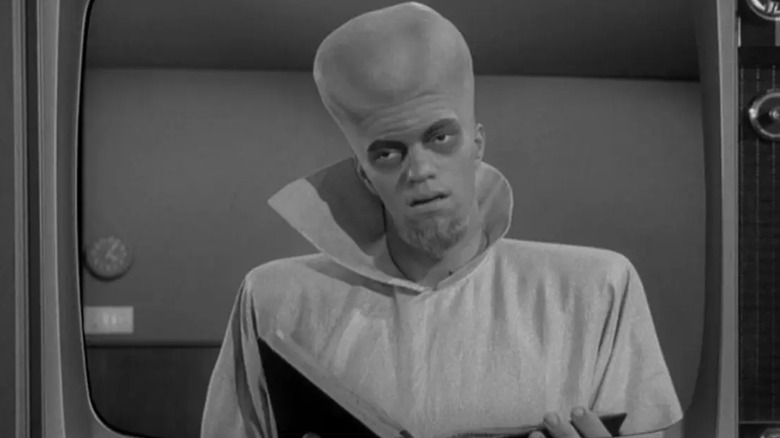
Based on a short story by Damon Knight, Rod Serling's take on "To Serve Man" is an engaging half-hour that examines the arrival of extra-terrestrial life on Earth. In many ways, it seems similar to Arthur C. Clarke's "Childhood's End," though offers its own unique perspective on alien life that will unsettle you by the end. The episode follows cryptographer Michael Chambers (Lloyd Bochner) who is tasked with deciphering a book left behind at the U.N. by one of the Kanamits (Richard Kiel) in question.
Of course, this is "The Twilight Zone," which means that things are not exactly as they seem. The episode initially presents the alien race as peaceful, only to uncover the full range of Chambers' understanding of these creatures, a masterful stroke that lulls the viewer into a false security. Offering one of the best "Twilight Zone" twist endings, "To Serve Man" is one you cannot miss.
If you find yourself asking what happens next, the 2019 revival produced a sequel of sorts by filmmaker Osgood Perkins titled "You Might Also Like." As the final episode of the short-lived two-season revival, it is certainly not as riveting as "To Serve Man" (it wasn't received terribly well either), but it expands upon the original premise in some inventive ways worth noting.
The Hitch-Hiker (Season 1, Episode 16)
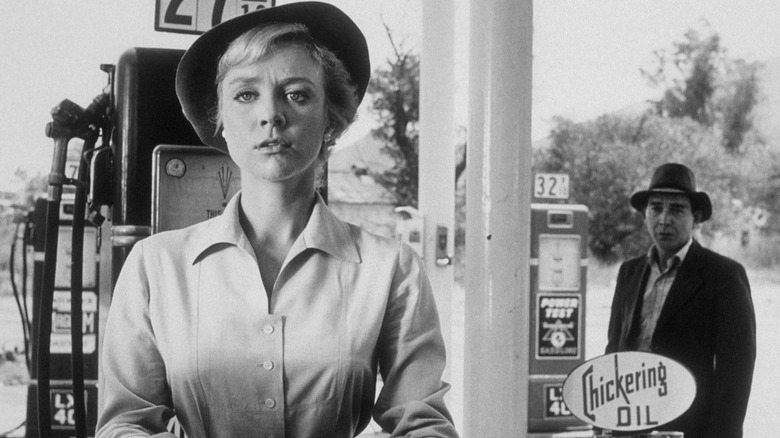
When it comes to "The Twilight Zone's" cultural impact, early episodes like "The Hitch-Hiker" stand out as understated classics that set the tone for the sorts of tales Rod Serling was hoping to tell. Based on the original radio play first penned by Lucille Fletcher, Serling reworked the material to better fit the screen. While the original called for a male lead, Serling opted instead to cast Inger Stevens in the leading role as Nan Adams, who is haunted by a mysterious man she cannot escape.
A master thespian, Stevens captures the penetrating fear and doubt existing in a woman traveling across the country on her own. As the titular Hitch-Hiker (played by the gloomy Leonard Strong) continues to appear to Nan from Pennsylvania to Arizona, she grows increasingly paranoid and afraid, unsure of the figure's intent. Only upon discovering the truth of his presence does she recognize the nature of her cross-country roadtrip.
Known best for its memorable twist that came out decades before such reveals were standard film practice (we won't spoil it here), "The Hitch-Hiker" is easily one of Serling's finest hours. More than that, it's one of the program's best adaptive works, made more dramatic by the series creator's divergent contributions.
The Night of the Meek (Season 2, Episode 11)
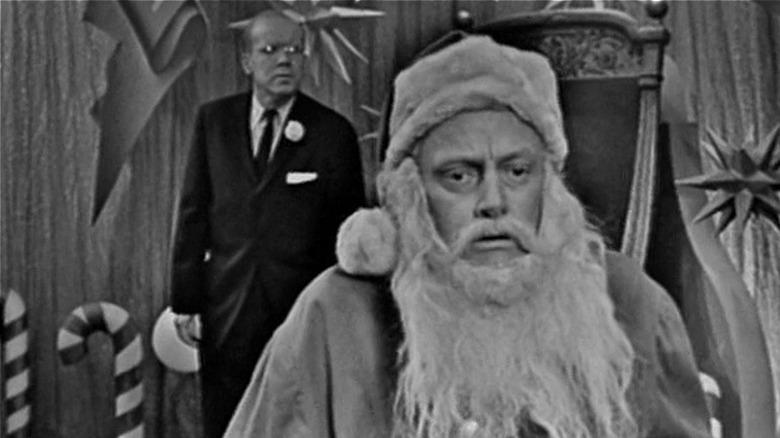
Even if you plan on watching "The Twilight Zone" outside of the Christmas season, "The Night of the Meek" is a Rod Serling-penned tale that deserves your attention. The Christmas episode that has since inspired countless holiday-themed hours of television, this Season 2 classic follows Henry Corwin (Art Carney), a man known in town for his alcoholism, as he wanders around in a Santa Claus outfit. Upon offering up a Christmas wish based on Matthew 5:5 (hoping that "the meek will inherit the earth"), everything changes.
As Corwin bumbles around town, his wish is granted as his bag is now full of gifts to spread goodwill and cheer. Carney is phenomenal, perfectly capturing the childlike wonder associated with the holiday avatar. It's an episode that uncharacteristically offers a hopeful look at the place and power of miracles, willing to go the extra mile to inspire audiences to seek the welfare of those around them.
Having originally aired the night before Christmas Eve, "The Night of the Meek" was a last-ditch effort by "The Twilight Zone" to spread some holiday cheer at the eleventh hour, as it was filmed only a few weeks before Christmas. Even more interesting is that this is one of only six installments filmed on video tape rather than the show's standard 35-millimeter format, giving the footage its strange visual quality.
The Invaders (Season 2, Episode 15)
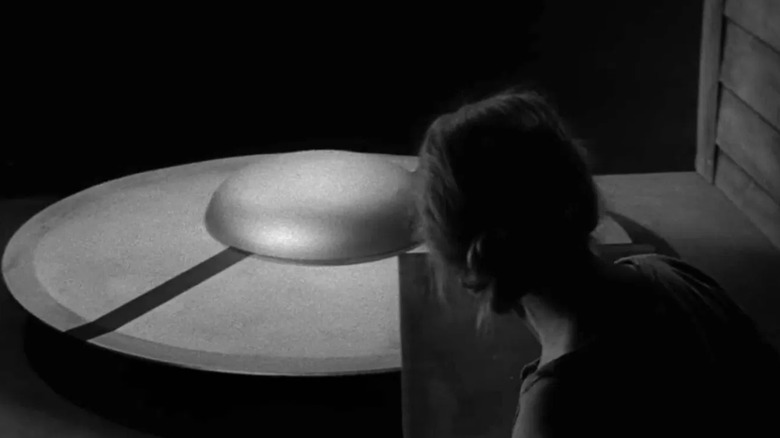
One of the things that "The Twilight Zone" did better than most science fiction programs was the concept of alien invaders. An original story by legendary horror author Richard Matheson, "The Invaders" was one such episode that flipped the script on the usual material, making it an instant classic. Most impressively, it does so with hardly any dialogue.
Here, Agnes Moorehead plays an unnamed woman who lives alone in a shabby farmhouse when she discovers that a miniature flying saucer — and its miniature passengers (voiced by the episode's director Douglas Heyes) — has landed on her roof. Frightened and alone, she wages war on the invading party, who uses their strange weapons to burn her before she kills them, destroying their ship in the process. It's here that we learn the horrible truth of their identity, though we won't give that away.
"The Invaders" may not be the first episode that comes to mind when thinking of aliens on "The Twilight Zone," but it ought to be up there. A standalone, straight-forward science fiction tale with a final twist that rivals "Planet of the Apes," this episode is a trademark representation of the creative force that Rod Serling had at his disposal. It's no wonder that Serling himself cited this episode as one of the show's two best hours in a 1970 interview, deeming it "pure science fiction with a very O. Henry-ish twist."
A Hundred Yards Over the Rim (Season 2, Episode 23)
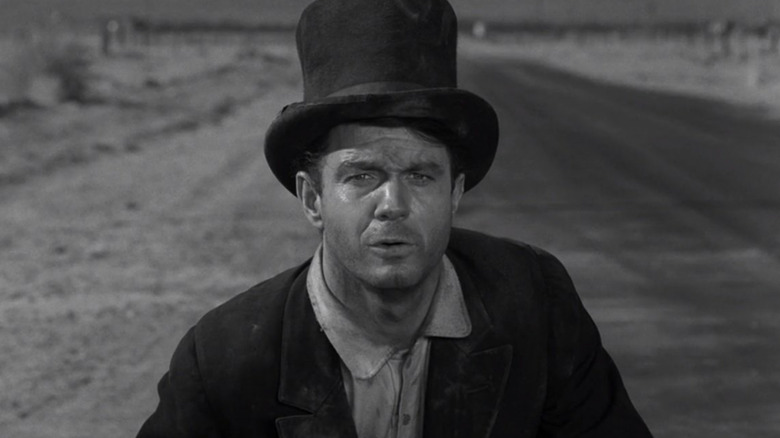
Over the course of five seasons, "The Twilight Zone" produced several episodes that ventured into the Western genre. Rod Serling himself penned many, including the often overlooked "A Hundred Yards Over the Rim." A time-warping take on the horse opera, this tale follows a wagon train that travels through New Mexico, only for its leader, Chris Horn (played by Cliff Robertson, famous for playing Uncle Ben in Sam Raimi's "Spider-Man"), to venture out into the desert on his own.
After Horn's son falls ill, the group refuses to move on. So, Horn sets out in search of a doctor or cure, stepping over a nearby hill to find himself instantly transported from 1847 to 1961. In this strange future, Horn struggles to convince the owners of a local filling station of his plight before securing the cure to his son's ailment in the form of penicillin. With no time to waste, he fights to avoid capture from the law and return to his family.
While there are plenty of great Western entries in "The Twilight Zone," this character-driven drama is elevated by the combination of Robertson's riveting performance and a fantastic script by Serling. In addition, Robertson fought for period-accurate wear for his Ohio-born, California-bound protagonist, bringing an attention to detail that helped the episode stand out from other Western-themed shows at the time.
The Monsters Are Due on Maple Street (Season 1, Episode 22)
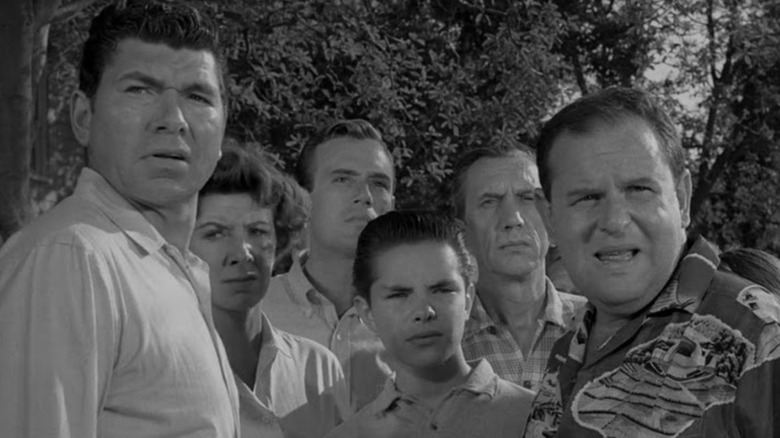
Few fans were aware that "The Twilight Zone" used its larger-than-life platform to deliver biting social commentary. From the beginning, Rod Serling used the CBS program as an outlet to express his own interests and meditations on humanity, and "The Monsters Are Due on Maple Street" is arguably one of the best examples. The plot follows the "good people" of Maple Street, U.S.A., who turn out to be anything but as they quickly turn on one another.
With a cast featuring Claude Akins, Barry Atwater, Jack Weston, and Burt Metcalfe, "The Monsters Are Due on Maple Street" is a horrifying picture of mob rule and the violent actions that spawn from fear of the unknown. As neighbor angrily works against neighbor, the whole street comes undone after a strange object appears in the sky followed by a loss of power. When young Tommy (Jan Handzlik) suggests that aliens may be involved, all hell breaks loose.
The episode has been long considered to be one of Serling's best, and was remade for the 2002 revival series. Under the title "The Monsters Are on Maple Street," the remake starred Andrew McCarthy and Titus Welliver in a more grounded 9/11-inspired take where terrorism rather than alien invaders is the fearful threat on everyone's minds. No matter which version you revisit, this is one venture into "The Twilight Zone" that deserves a rewatch.
Eye of the Beholder (Season 2, Episode 6)
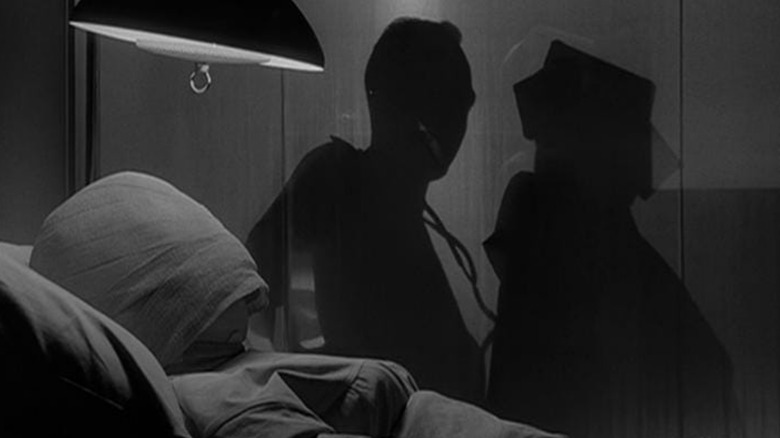
Another collaboration between Rod Serling and director Douglas Heyes, "Eye of the Beholder" is a hallmark episode of "The Twilight Zone" that is still remembered today for its bait-and-switch twist that thoroughly shocked audiences. After her eleventh and final surgery to appear beautiful, Janet Tyler rests in her recovery room with a fully bandaged face awaiting the results. Played by Maxine Stuart while covered and Donna Douglas when revealed, Janet only wishes to look normal — only, normal is something quite different around here.
"Eye of the Beholder" certainly lives up to the time-tested phrase. Although the episode itself leads us to believe one thing about Janet's strange reality, the removal of her bandages reveals something else entirely. In her attempts to be cured of her "disfigurement," she struggles to maintain sanity in a world marked by conformity and sameness. Here, there is no room for divergents, even those who wish to be like everyone else.
Serling was so taken by this premise that he recycled the same themes on his later NBC series "Night Gallery," reimagined under the title "The Different Ones." "Twilight Zone" fans consider this among the show's most memorable outings as well, so it's no wonder that it was also remade on the 2002 revival series, with Molly Sims in the Janet Tyler role.
Time Enough at Last (Season 1, Episode 8)
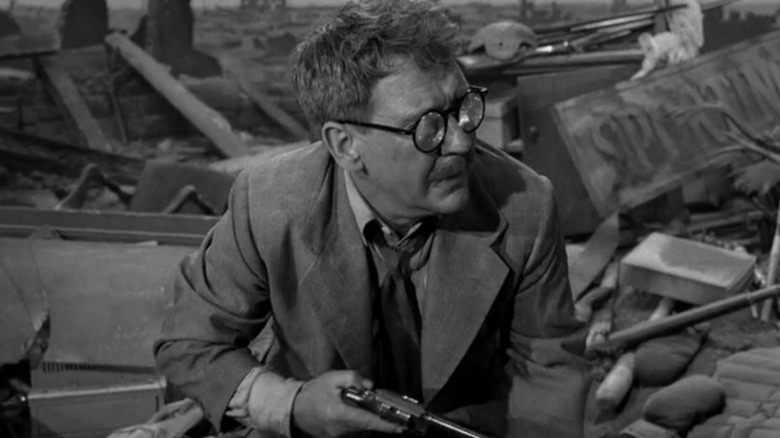
Many "Twilight Zone" episodes conclude with a tragic end that leaves the audience with a strange feeling. "Time Enough at Last" is one of these for a plethora of reasons, all of which become clear when the program ends. Based on a short story by Lynn Venable, this was one of the first depictions of a post-apocalyptic landscape on television, headlined by none other than "Batman" and "Rocky" star Burgess Meredith, who plays bookworm Henry Bemis.
After being chastised by the world around him for his love of books, Bemis locks himself in the bank vault at work one day to finish his latest read when his world is turned upside-down by a loud booming sound. Upon exiting the vault, he discovers that his is the sole survivor of an H-bomb that has destroyed not only the city, but perhaps all of humanity as well. Stumbling upon what's left of the local library saves Bemis' life at the eleventh hour, only to find his glasses broken in the process.
"Time Enough at Last" is considered among the most legendary "Twilight Zone" entries, even being discussed at length by Albert Brooks and Dan Aykroyd in the opening of "Twilight Zone: The Movie." It's no wonder, then, that Rod Serling deemed "Time Enough at Last" as the other best episode of the show in his aforementioned 1970 interview with author James E. Gunn. "[It] was sheer, pure, beautiful irony," he explained. We concur.
Nightmare at 20,000 Feet (Season 5, Episode 3)
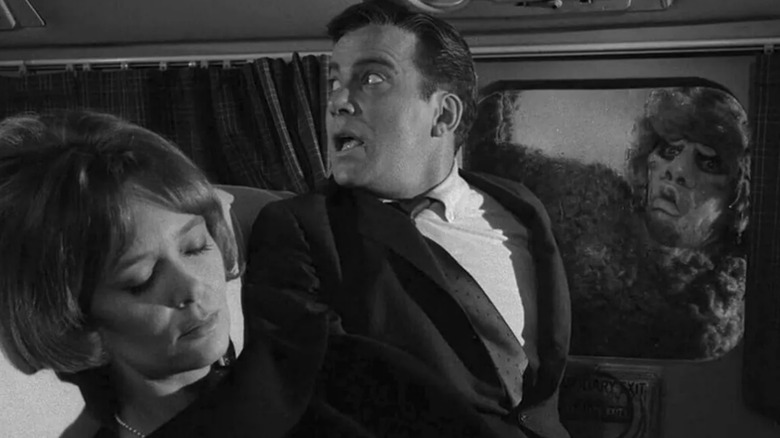
Perhaps the most famous episode of "The Twilight Zone," Season 5's "Nightmare at 20,000 Feet" is a masterclass in anthology storytelling. Directed by Richard Donner from a script by Richard Matheson (who also penned the original short story), the tale follows frightened flyer Robert Wilson (William Shatner) who is on the verge of a psychotic break after seeing a gremlin disrupting the plane. Talk about the perfect "Twilight Zone"-sized storm.
Shatner is unbelievable here, proving his capabilities as a serious performer. As Mr. Wilson tries to keep calm while simultaneously saving the other passengers, not even his wife is sure of his sanity. The tension is unbearable, and the gremlin's iconic appearance has gone down in pop culture infamy. No doubt, this is one of the best episodes of "The Twilight Zone" bar none, remaining so memorable that it has been adapted by the franchise twice more.
The first instance was in the ill-fated "Twilight Zone: The Movie" in a sequence starring John Lithgow and helmed by director George Miller. But it's the second attempt, however, that is particularly inspired. Retitled "Nightmare at 30,000 Feet," this reimagining follows the increasingly erratic Justin Sanderson (Adam Scott) as he listens to a seemingly prophetic true crime podcast about the flight's destruction. It may not be "20,000 Feet," but it's a fascinating watch after you've seen the original.