

5 Star Wars Characters Whose Power Levels Make No Sense
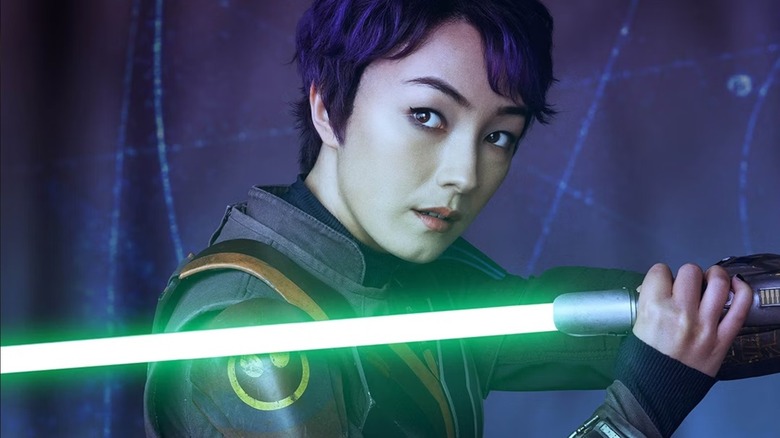
"Star Wars" is not "Dragon Ball Z." There aren't hard numbers to describe a character's power level and how it stacks up against others — except for midi-chlorian counts. And all of the light side/dark side power divisions in the video games. And the apparent advantage of the Skywalker bloodline. And the Palpatine bloodline. And Force Dyads, and vergences, and whatever the deal is with Yoda's species.
Maybe the issue isn't that there are no metrics to gauge a character's power level, but rather that there are too many. When a franchise goes through numerous decades, multiple canons, and different corporate ownership, the confusing mess that is the "Star Wars" power hierarchy may have been inevitable. If you were to ask George Lucas, he'd probably say that we aren't meant to care that much. Yes, he invented midi-chlorians, which have a direct influence on a Force user's individual strength, but the mystical worldbuilding of "Star Wars" is more about philosophy, and a fragile balance split between light and darkness, than it is about making tier lists.
For the most part, the vagueness helps keep things in order. We know generally what a Jedi can do, what they can't, and what allows one more power over another. But there are also times when that implicit order just doesn't work — characters whose powers levels are so inconsistent, or beyond the normal rules, that they break the illusion. These five picks are those characters.
Princess Leia
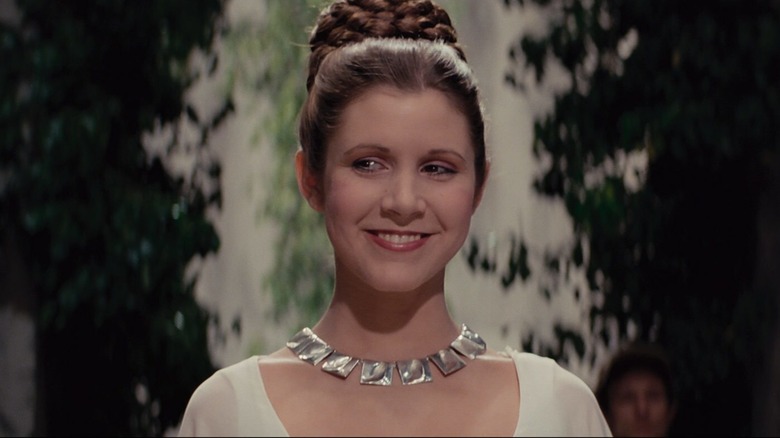
We all love Princess Leia. She's the quick-witted, sharp-tongued leader of the Rebellion, and later, the Resistance. At the same time, Leia has always been a little bit more and a little bit less than a complete character. Carrie Fisher's performance is so iconic that it kind of froze Leia in stone, with all later depictions — be they novels set after the original trilogy, or the young version of Leia played by Vivien Lyra Blair in "Obi-Wan Kenobi" — operating by the same rules. Leia is shrewd, cutting, and hyper-competent. She's also adept in wielding the Force. Sometimes.
Leia's inconsistency goes all the way back to the origins of "Star Wars." Many may not know that, when the first movie came out in 1977, Leia wasn't planned to be Luke's sister. When that became canon in "Return of the Jedi," it sparked a wave of retroactive Leia power-boosting — like when she resists dark side interrogation at age 10 in "Obi-Wan." Why does Vader not recognize her strength when she's captured in "A New Hope"? The unsatisfying answer is that, like her genealogy, she wasn't Force-sensitive yet. Why does "The Rise of Skywalker" show her to be every bit Luke's match, yet she rarely uses those powers? Well, Fisher was past the action sequence age when the sequels started filming.
Leia's restraint with the Force is explained through characterization — that she prefers to use her diplomatic talents. Except in the old Expanded Universe, of course, where she's a Jedi of incredible power. We can't sweat the differences between the timelines too much, or every "Star Wars" character would be on this list. Still, Leia has always been just a bit more perplexing than the rest.
Darth Plagueis
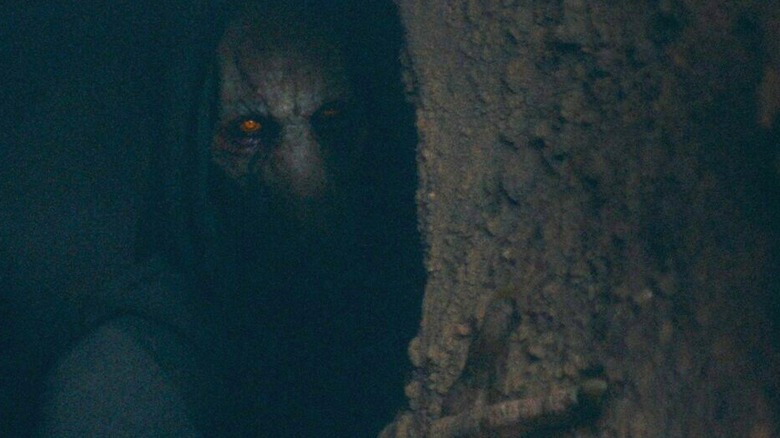
Have you ever heard the tragedy of a nonsense power level? It's not a plot hole the Jedi would tell you about. Rather, it's a common Sith problem, and while we could fill this slot with some ranting about the uselessness of Snoke or the randomness of Darth Nihilus, we're going to focus on the biggest, most mysterious Sith in canon.
As told by Palpatine in "Revenge of the Sith," Darth Plagueis found a way to influence the midi-chlorians, giving himself power to create life and stop death. But was this true? Or just a trick used by Palpatine to seduce Anakin to the dark side? In the no-longer-canon novel "Star Wars: Darth Plagueis" by James Luceno, these abilities are real. In the new canon, his abilities are less concrete, though his appearance in "The Acolyte" — set a century before "The Phantom Menace," and in which he appears to already be a powerful Sith Lord — suggests he at least has control over his own longevity.
There are already a lot of inconsistencies here, but it gets more confusing. Evil Force users are often able to sustain themselves through major injuries, as seen in the stories of both Darth Vader and Darth Maul. Plagueis' abilities are meant to exist beyond that, but they also play in spaces that are typically attached to the light side — notably, Force healing. Darth Sidious wields immense power through the "Star Wars" films, yet his own "immortality" as shown in the sequel trilogy is the result of extensive cloning experiments combined with sorcery, all of which still falls short of his goals. So how did Plagueis succeed where Sidious failed? Or did he succeed at all? Perhaps Darth Plagueis was more compelling when he was just a Sith legend.
The Mortis Gods
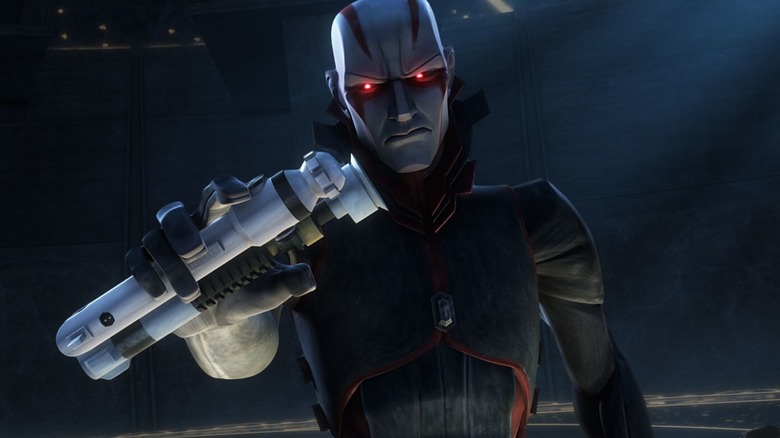
It might be unfair to include the Mortis Gods on this list. After all, their status — and the status of their magical planet — is still ill-defined in "Star Wars" canon. To the best of our knowledge, they are immortal deities who embody the essence of the Force: the light, the dark, and the balance between. But they are also sentient beings with desires and wills.
Take the Son, for instance, who represents the dark side. Immortal and capable of all manner of incredible powers, including infecting others with the lure of the dark side, the Son is nevertheless decently matched by Anakin Skywalker in "The Clone Wars." This is explained away as being due to Anakin's Chosen One status, but nowhere else does that title grant him unique abilities. Nor does that achievement stop Anakin from losing to Obi-Wan in "Revenge of the Sith," despite Obi-Wan's own inability to contend with the Son on Mortis.
Then the Son is made killable by a lightsaber after his father kills himself, suggesting that their abilities are more the result of some spell than cosmic ordainment. Are they the Force incarnate? Or aliens of an ancient, magical race who have immense influence over it? Dave Filoni is still exploring the Mortis Gods in the "Ahsoka" series on Disney+, so maybe we'll get a bit more consistency as to their power levels in the future.
Sabine Wren
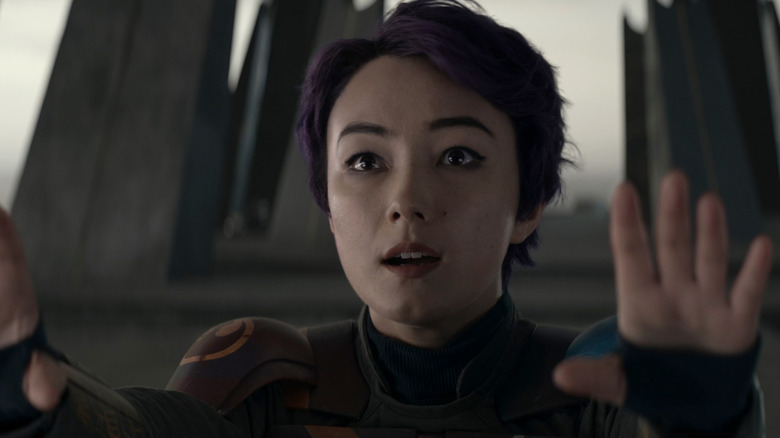
The idea that anyone — regardless of midi-chlorian count — can reach out and touch the Force with the right focus and training has long been a part of "Star Wars," albeit an inconsistent one. But it's the specific way in which Sabine Wren's powers come out in "Ahsoka" Season 1 that makes it so frustrating.
If you watched "Star Wars Rebels," you know that Sabine already received instruction in the lightsaber and larger Jedi arts by Kanan Jarrus. She also fought in numerous campaigns against the Empire and witnessed Ezra Bridger's Force growth firsthand. Then, in the space between "Rebels" and "Ahsoka," she trained under Ahsoka Tano but never managed to truly call upon the Force. Despite that, she holds her own in several lightsaber duels, all before finally calling upon the Force in a recognizable, active way at the end of "Ahsoka" Season 1.
While the long run-up is explained away as a result of Sabine's internal blocks, that doesn't exactly square. We've seen many Jedi conquer much stronger blocks at much younger ages. Maybe it has to do with the time Sabine spent with Ahsoka after the Great Purge of Mandalore — time that's implied to be crucial to her character in "Ahsoka" (which is wildly different from how she's portrayed in "Rebels"), but which we still haven't seen a second of on-screen. Add in the fact that Sabine was a perfectly competent character before getting any Force storylines, and it's hard not to see this twist as Dave Filoni awkwardly throwing together two of his favorite characters for the heck of it.
Galen Marek
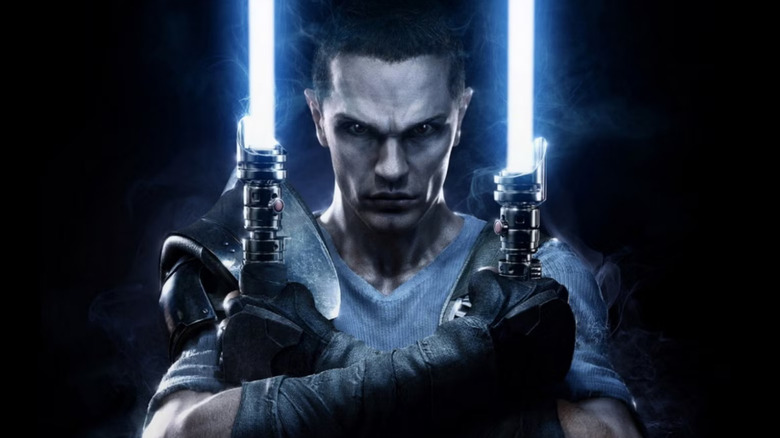
Expanded universe fans, we've got to talk. We all know that Galen "Starkiller" Marek, protagonist of the "Force Unleashed" video games, is very cool. He's got a swaggy backwards lightsaber grip, a scowl for the ages, and he's voiced by fan-favorite Sam Witwer, now better known as the actor behind Darth Maul in the "Star Wars" animated shows.
For all of those reasons, it's understandable that, every year, some fans call for Starkiller to be reinstated in the new "Star Wars" canon. His old story between the prequels and the original trilogy is obviously incompatible with the Disney-era "Star Wars" lore, but maybe there could be a new place for him. But here's the thing: It's never going to work. Marek never fit with the rest of "Star Wars," even back in the EU days. That's not a knock on his games — they're fun, classic, and the nostalgia goes hard these days. But conceptually, he was rarely much more than a Lucasfilm coat of paint on Kratos from "God of War," another game series that was immensely popular at the time.
Marek is the answer to a simple question: What if we could watch Kratos rip off Darth Vader's head? And rip Star Destroyers out of the sky? And decimate every other "Star Wars" character we can throw at him? It's all in good fun, but the out-of-whack powers wielded by Starkiller never made sense inside the larger franchise lore, then or now. So let's keep Galen Marek in the video games, where he belongs.