

12 Best 2025 Movies With Zero Oscar Nominations
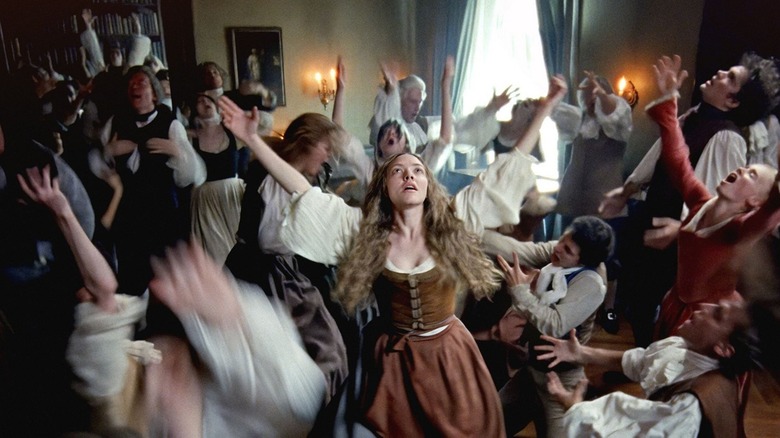
With the recent announcement of the 98th Academy Award nominations, another round of discourse has transpired regarding what movies did and didn't get recognized at this annual awards show. Ranking the best picture nominees at the 98th Academy Awards from worst to best alone vividly illustrates the varying degrees of artistry recognized at this production. These more controversial nominees can make it extra painful remembering which excellent films didn't get into the Oscars this year.
These movies now join the likes of "But I'm a Cheerleader," "Portrait of a Lady on Fire," and "Titane," among countless other motion pictures, in the pantheon of high-quality cinema that got entirely snubbed by the Academy Awards. For fans of these features, this development may be distressing. However, this frustrating outcome can also be an opportunity for joy.
Specifically, looking over 12 extraordinary films overlooked by the 98th Academy Awards is a chance to appreciate the finer intricacies of these artistic accomplishments. Just because they weren't nominated for Oscars doesn't mean their virtues suddenly vanish. Now is the time to holler from the rooftops about all the glorious motion pictures 2025 quietly delivered. Exploring what makes these movies special can illuminate why they didn't get any Oscar love, but more importantly, they reinforce immense creative achievements everyone should take notice of. Academy Award snubs are far from the end of the road for these 12 outstanding movies.
Sorry, Baby
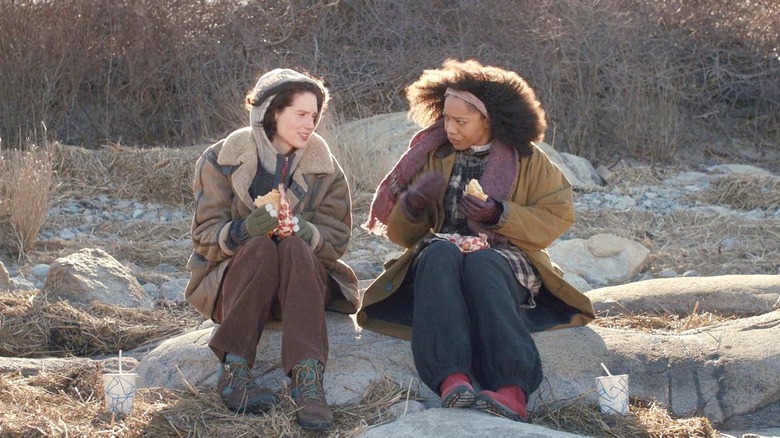
In recent years, a key category summertime indie movie hits can sometimes squeeze into is the best original screenplay territory. "The Lobster" and "Past Lives" are key examples of this phenomenon. Unfortunately, that didn't happen for Eva Victor's tremendous directorial debut, "Sorry, Baby." Still, a movie this good doesn't need Oscars to justify its immense artistic merit. A non-linear exploration of Agnes (Victor) navigating the aftermath of sexual assault, "Sorry, Baby" shows an impressive mastery of wringing immense depth out of the tiniest moments.
Sitting on a rock with your best friend, a sandwich shared by a stranger who's a good listener, awkward pauses during jury duty selection — these are the cornerstones of the film's exceedingly involving narrative. That attention to detail means Victor's writing also has a tremendous grasp on a complex tone. There are many humorous moments in "Sorry, Baby," but the quietly precise visual details of scenes like Agnes exiting her attacker's house shatter your heart.
Life, even after the unspeakable, contains multitudes. "Sorry, Baby" impeccably reflects that reality with finesse. Victor maintains their impressive artistry all the way through this feature's final scene, which might be the most emotionally affecting sequence in all of 2025 cinema. If any indie movie from this year deserved some Oscar love, it was the exquisite "Sorry, Baby."
The Testament of Ann Lee
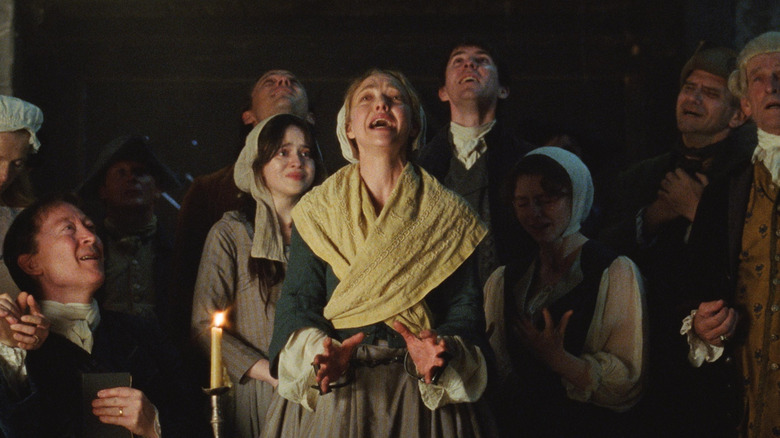
Chances are, most people haven't heard of Ann Lee. A real-life religious figure who led her own Shakers colony in the 18th century, Lee's relative historical obscurity works in favor of director Mona Fastvold's towering "The Testament of Ann Lee." This is not a feature burdened by obligations to live up to people's expectations of how an Ann Lee film should function. Instead, Fastvold follows her own creative rhythm in this daring and bittersweet musical odyssey.
The religious fervor and rebellious nature underpinning Lee's subversive, peace-oriented religious movement are perfectly echoed in "Testament of Ann Lee" being a musical. This genre allows the maximalist emotions of Lee and her followers to properly flourish. Amanda Seyfried, a veteran of tune-heavy movies, is also the perfect person to anchor these proceedings. To say she leaves everything on the floor in her bravura and captivating work is an understatement.
Seyfried is on another level of mastery here, whether it's in her haunting depiction of Ann Lee at her most anguish-ridden moments or in her jaw-dropping commitment to the immense physicality of the film's musical numbers. Thanks to her performance and the staggering craftsmanship on display (the costume and production design are especially remarkable), audiences previously oblivious to Ann Lee's existence will never forget her after watching "The Testament of Ann Lee."
Resurrection
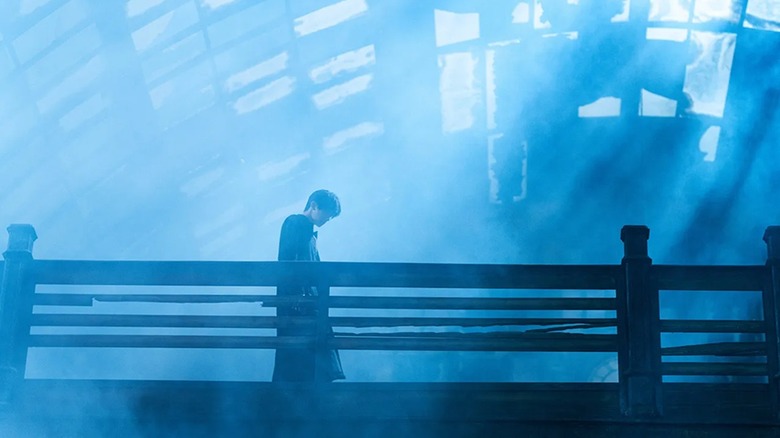
Bi Gan's "Resurrection" isn't just an homage to one era of cinema's past. Its various segments are each dedicated to assorted eons in the medium's history. From an opening storyline rooted firmly in silent cinema and especially F.W. Murnau's filmmaking (right down to the frame rate images are projected in) to later sequences rooted in noirs and heist features, "Resurrection" builds on yesteryear's artistry to make something profound and new.
Specifically, all these images of the past are utilized to create an expansive saga beckoning viewers to embrace and recognize how everything ends. No movie lasts forever. Every candle burns out. All existences are finite. Finality is constantly on the film's mind, and that theme is persistently reinforced through such evocative means.
That's especially true visually. Gan and cinematographer Dong Jingsong's sense of blocking and camera movement throughout every inch of "Resurrection" is staggering. It's understandable that this title couldn't make it into the best international feature film category at the 98th Academy Awards given how competitive that realm was this year. However, it's inconceivable that it didn't even make the group of 16 films shortlisted for best cinematography at that ceremony, let alone actually grab a slot amongst the five final nominees. The imagery in "Resurrection" is as potent as it is versatile. To say the least, it's more than worthy of Oscar adoration.
Hedda
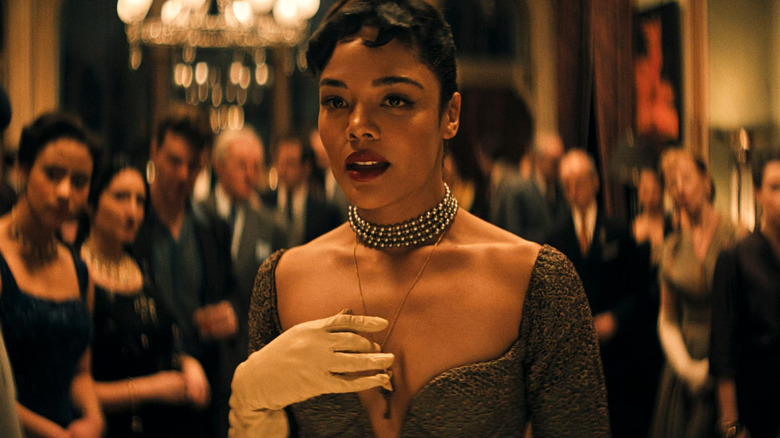
Henrik Ibsen's classic play "Hedda Gabler" comes to vibrant new life under the vision of writer-director Nia DaCosta with "Hedda." Here, DaCosta reunites with her "Little Woods" leading lady Tessa Thompson (who had a bigger role in "Creed" than you may think) for a new vision of the story that sees Hedda Gabler Tesman (Thompson) as a chaotic, queer gal desperate to hold on to her societal power and money during a fancy house party. These ambitions are complicated by the sudden return of her ex-lover, Eileen Lovborg (Nina Hoss).
Anyone expecting this to be a stuffy, reverent vision of Ibsen's writing will be happily surprised to discover "Hedda" has as much life and narrative propulsion as other winning DaCosta directorial efforts like "28 Years Later: The Bone Temple" and "Little Woods." Her approach to this story is rife with dark and sensual fun, particularly in the back-and-forth exchanges between Hedda and Eileen. The steamy and chaotic fuse together here to create an entrancing voyage you can't turn away from.
Hedda is also a richly complicated character that really lets Thompson's many gifts as an artist shine. There's plenty to love within "Hedda" (including the sumptuous cinematography and score), but Thompson really steals the show with her gusto work. She alone solidifies "Hedda" as another Nia DaCosta-helmed must-see.
On Becoming a Guinea Fowl
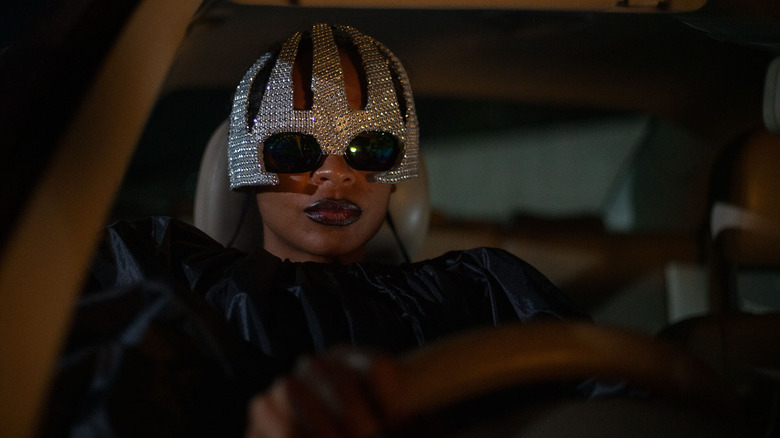
"On Becoming a Guinea Fowl" begins with Shula (Susan Chardy) discovering her Uncle Fred's corpse on a road. After this, everyone in her family converges for a funeral to celebrate his life. All her relatives, especially the men, can't stop boasting about what a remarkable man Fred was. Shula and other young women in the family, though, know the truth. Fred sexually abused them at a young age. They've had to bottle up so much trauma that's especially getting erased now as Fred gets transformed into a spotless saint in death.
Writer-director Rungano Nyoni's outstanding work here proves her directorial debut, "I Am Not a Witch," was no artistic fluke. She's an impressive filmmaker who deftly uses heightened visuals (such as floors flooded with water) or creative blocking (like Shula's head being obscured when she's on an important phone call with her mother) to convey the inner psyche of its tormented lead characters.
Susan Chardy's performance in the lead role is outstandingly aching, even in her most subdued moments, while Elizabeth Chisela is masterful in peeling back the tragic layers of Shula's boozy, giggle-prone cousin, Nsansa. There's so much going on under Nsansa's surface, which makes her a microcosm for how layered "On Becoming a Guinea Fowl" is as a whole movie.
She Rides Shotgun
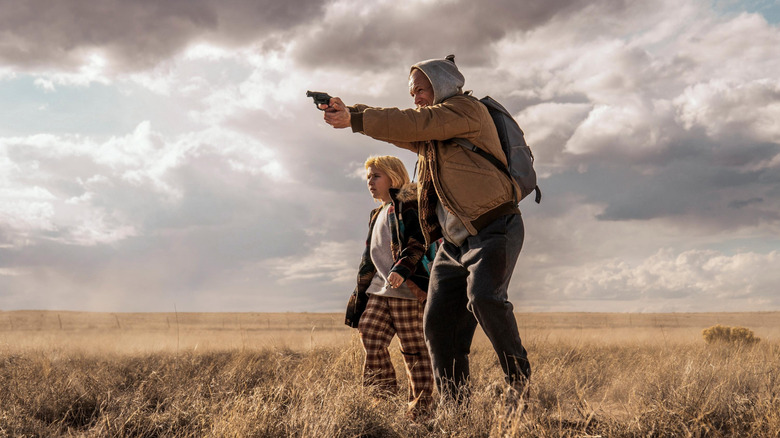
Lionsgate never reported any box office numbers for "She Rides Shotgun," a Taron Egerton crime thriller released into theaters over the first weekend of August 2025. Given that this distributor just dumped "Shotgun" into multiplexes, it's not surprising that the feature absolutely vanished from the radar of Oscar voters. Obscurity, though, shouldn't erase what a compelling feature "Shotgun" is, especially as a showcase for Egerton's leading man chops.
This adaptation of Jordan Harper's novel of the same name follows Polly Huff (Ana Sophia Heger) going on the run with her father, Nate (Egerton), who just got out of the slammer. With both of them in danger because of the white supremacy group Aryan Steel, this estranged father-daughter duo is now forced to work together.
Director Nick Rowland frames these interactions across an assortment of deeply specific everyday American backdrops (like a makeshift church at a truck stop) and with consistently tangible tension. Much of that suspense comes from the welcome level of moral complexity afforded Nate, whose various fascinating nuances are realized with potent believability by Egerton.
He and Ana Sophia Heger imbue this weighty story with a compelling, bittersweet soul. Turns out what Taron Egerton has been up to since "Kingsman" includes headlining a criminally underrated 2025 movie like "She Rides Shotgun."
April
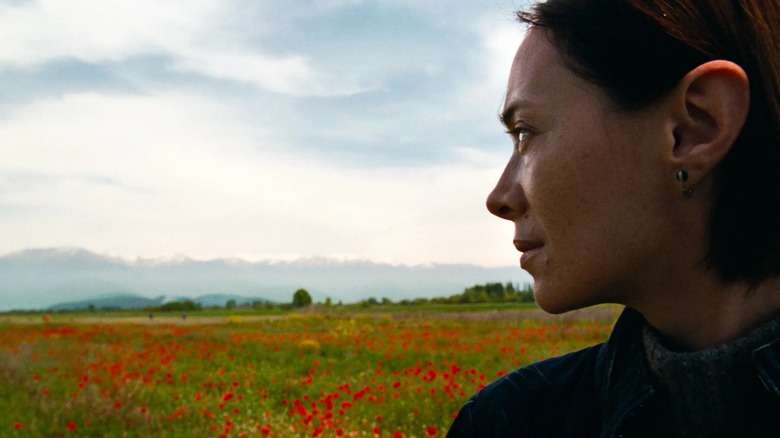
There is a quietness in "April" that's so masterfully maintained. Often, writer-director Dea Kulumbegashvili and cinematographer Arseni Khachaturan will keep the cameras rolling to frame unblinking images of storm clouds materializing or shots captured on the hood of a car driving into a remote village. These unhurried and expansive moments reinforce the larger world beyond lead character Nina (Ia Sukhitashvili) as well as the immense measures she undertakes to perform secret abortions.
With these unblinking images, "April" doesn't let viewers escape how long Nina has to drive to those in need or other uncomfortable facets of her existence. Both evocative on a surface level and profound in what it says about Nina, this "April" visual motif represents how audacious this project is. Its most stirring images magnificently reinforce a quietly haunting tone, which is accentuated by Sukhitashvili's performance.
Digressions into dreamlike imagery and the use of a 1.33:1 aspect ratio further heighten this production's imagery-based achievements. Few 2025 movies were as visually idiosyncratic as "April." It's a shame there was no room for it at the 98th Academy Awards, but hopefully its powerful ambiance keeps resonating with people long after this award ceremony has finished airing.
The Long Walk
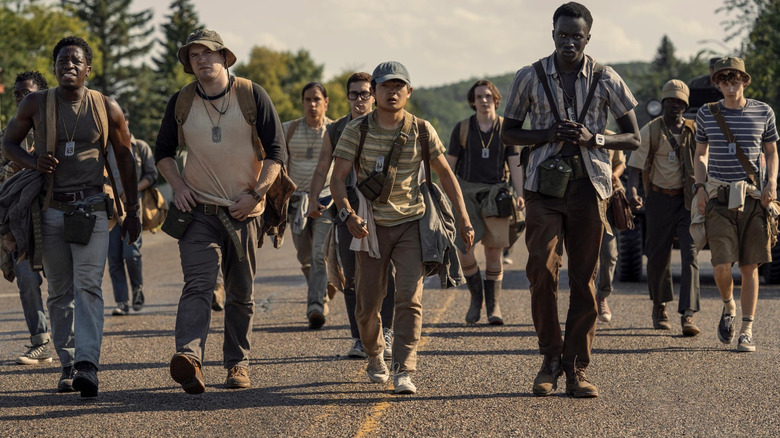
In case you were wondering if "The Long Walk" would pull any of its punches in being a movie about kids who must walk in an endless march or get killed, director Francis Lawrence delivers a stomach-churning demise of one vulnerable youngster just before the opening title card drops. This tosses down the gauntlet on what a brutal motion picture audiences are in for. "The Long Walk," which is drawn from a Stephen King story of the same name, already deserves props for its full-on commitment to such a bleak, dystopian saga.
Just as impressive, though, is the excellent casting, which ensured performers like Cooper Hoffman, David Jonsson, Ben Wang, and others have tremendous chemistry together. It's easy to buy their eventual bonds thanks to how effortlessly well these actors bounce off one another. To boot, the laughs or camaraderie they share have a potent, bittersweet quality while guns and tanks are constantly pointed at their heads. These performers brilliantly realize the humanity that a fascist, violence-driven government wants to stamp out.
Easily among the 15 best Stephen King movies, "The Long Walk" goes above and beyond in so many ways, including in its remarkable sound design and the camerawork used to execute its most harrowing scenes. It would've been more than appropriate for Oscar categories like best sound to make some room for the grisly boldness within "The Long Walk."
Eephus
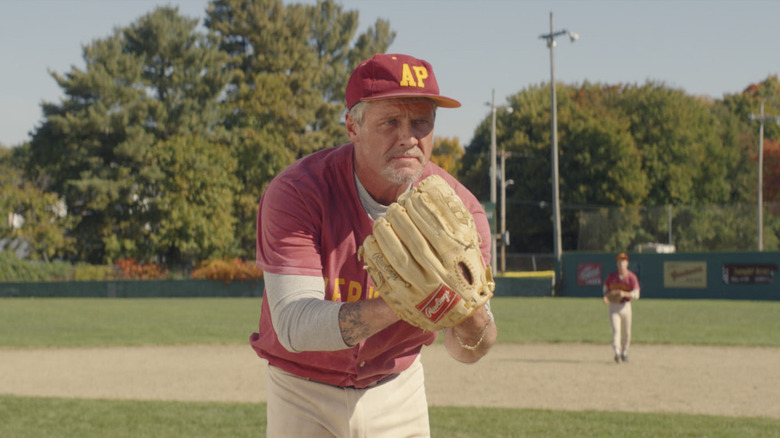
For most, that crummy little baseball diamond is pretty disposable. No wonder it's getting bulldozed soon for a middle school. For the mostly middle-aged and older players of the Adler's Paint baseball team, though, this domicile has been a haven. Here, they can still live out their baseball dreams, reaffirm long-standing friendships, and revel in the memories of the past. "Eephus" follows these amateur athletes as they contend with the rival Riverdogs team on that fateful autumn day just before their baseball diamond is obliterated.
Director-editor Caron Lund, who also co-wrote this script with Michael Basta and Nate Fisher, imbues "Eephus" with a melancholy acknowledgment that time's ceaseless march is unstoppable. These characters recognize that everything must come to an end. Yet, like all of us, they fight against the inevitable. This intimate gaze into every corner of the baseball diamond (including an angst-ridden guy selling hot dogs) emphasizes a very human struggle that provides a compelling soul to "Eephus."
Best of all, though, is how this premise allows so many memorable laughs to emerge. The lived-in, believable chemistry between all the performers lets great line deliveries and entertaining personalities flourish. Lund and cinematographer Greg Tango's ornate visual skills (particularly their use of wide shots featuring many characters) especially give great gags plenty of room to breathe. "Eephus" tragically struck out in resonating with Oscar voters, but its impressive balance of wistfulness and yuks deserves way more attention.
Put Your Soul on Your Hand and Walk
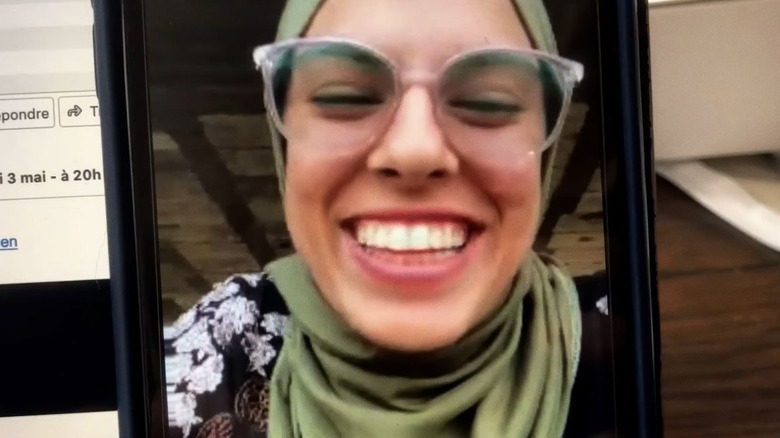
As "Babylon" actress Elinor St. John (Jean Smart) once so powerfully explained, movies allow on-screen performers to live eternally. "In a hundred years, when you and I are both long gone, any time someone threads a frame of yours through a sprocket, you will be alive again," she powerfully declared to movie star Jack Conrad (Brad Pitt). "You'll spend eternity with angels and ghosts." Cinema's power in this regard was heartbreakingly reinforced through the 2025 documentary "Put Your Soul on Your Hand and Walk," which chronicled a series of video calls between director Sepideh Farsi and Palestinian Fatima Hassouna.
The pair's communication is constantly choppy, yet Hassouna's personality vividly comes through in the imagery Farsi records. This is despite Hassouna and her loved ones enduring constant attacks from Israeli military forces. While hospitals and schools around her crumble, Hassouna keeps going and caring for those around her. "Put Your Soul on Your Hand and Walk" reinforces one of many human souls enduring a genocide.
Farsi's intentionally streamlined approach to this film (often consisting just of capturing FaceTime chats with a camcorder) lets the spotlight shine on Hassouna's testimony and personality. Fatima Hassouna and her family were killed in April 2025 as part of an allegedly targeted Israel Defense Forces attack. Yet the fascinatingly unique form of "Put Your Soul on Your Hand and Walk" ensures she'll live forever via one of 2025's most gut-wrenching and deeply human movies.
Black Bag
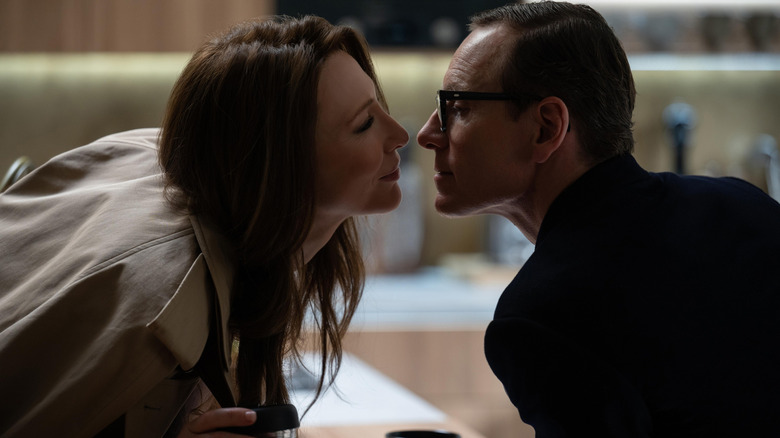
Steven Soderbergh's best films reflect the assured craftsmanship permeating his works, as well as the exciting range of genres he's explored throughout his nearly 40-year-long career. For the second of his two 2025 projects, Soderbergh delivered his take on a steamy espionage story with "Black Bag." This motion picture chronicles British spy George Woodhouse (Michael Fassbender), who struggles with the idea that his wife and fellow National Cyber Security Centre employee Kathryn (Cate Blanchett) could be a traitor.
What follows is a twisty, turny narrative full of sensual tension, unexpected detours, and a murderer's row of great performances. The stacked supporting cast (including Naomie Harris and Marisa Abela crushing it in their respective turns), confident cinematography, and persistently entertaining ambiance keep "Black Bag" immensely riveting. These proceedings are also anchored by an extraordinary score from composer David Holmes, who lends incredibly creative jazz-infused flourishes to his assorted tracks.
"Black Bag" is even a perfect showcase for Fassbender as a leading man, as his trademark unwavering intensity is ideal for a clinical, determined spy driven by a genuine love for his wife. Despite "Black Bag" being pristine entertainment that lets viewers soak in the majesty of Cate Blanchett's talent, the film was almost entirely ignored during the 2025-2026 award season, save for a welcome best original screenplay nod at the Writers Guild of America Awards. Don't let the lack of Oscar nominations dissuade you from giving Soderbergh's latest winner a watch, though.
No Other Choice
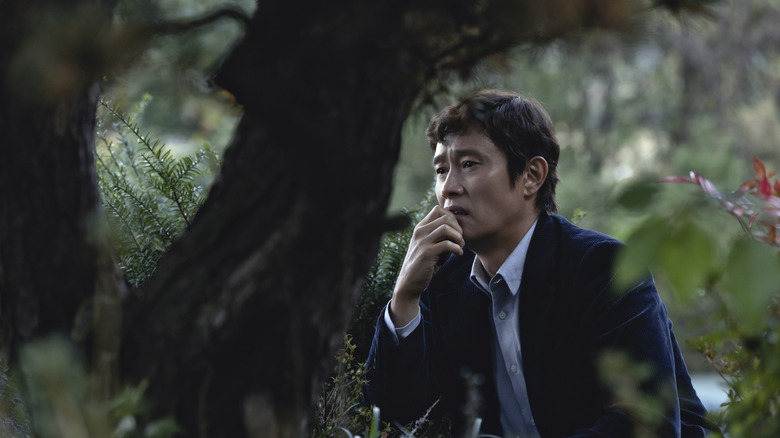
At the start of the 2025-2026 award season, the first premiere screenings for Park Chan-wook's "No Other Choice" went over so spectacularly that it was considered a major breakout contender for the biggest categories at the 98th Academy Awards. Beyond this motion picture's glowing initial reception, there was also the fact that "No Other Choice" could have finally let the Academy correct its previous snubbing of Chan-wook and his movies. This master of demented thrillers has never once scored an Oscar nomination, despite helming masterpieces like "Oldboy" and "The Handmaiden."
Alas, the man responsible for several of the 41 best Korean movies of all time will have to keep waiting for the Academy Awards to recognize his ingenious artistry. "No Other Choice" came up with zero Oscar nods at the 98th Academy Awards. This title didn't even manage to squeeze into the best adapted screenplay category, which isn't nearly as competitive of a field as it has been in recent years.
These tragic snubs mean the Oscars ignored one of 2025's most insightful and entertaining movies. "No Other Choice" is a gloriously unhinged commentary on how the modern job market turns working-class people against each other, punctuated by leading man Lee Byung-hun's excellent lead performance and quietly astonishing camerawork.
Only Park Chan-wook could pull off this delicate balance of gasp-inducing thrills and stinging capitalism critiques. It's staggering that the Oscars could find no room to give "No Other Choice" its roses.