

Classic '80s Sci-Fi Movies That Didn't Age Well
The 1980s were a boom period for science fiction movies, bringing us enduring classics like "The Empire Strikes Back," "Return of the Jedi," "The Terminator," and "Back to the Future." Some of these films were hopeful while others showed dystopian futures marred by wars or natural disasters, but thought-provoking movies like these offered a speculative look at the coming years. In the nearly half-century since, some '80s sci-fi movies have proven eerily prophetic while societal and technological advances have made other beloved works seem woefully outdated.
It's not unusual for language and sensibilities to evolve over time, but the sci-fi genre is particularly vulnerable to appearing anachronistic in hindsight. These '80s sci-fi films were beloved in their day (and still are by many) but have not withstood the test of time. Some depend on outdated themes or circumstances while others woefully underestimated how much real-world tech would advance in the coming decades. Still others have lost their appeal due to primitive or poorly executed visual effects.
Return of the Killer Tomatoes
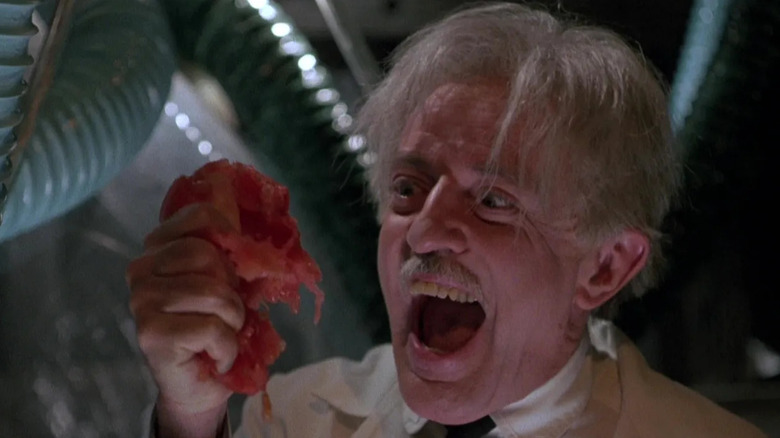
If the title of "Return of the Killer Tomatoes" didn't give it away as a tongue-in-cheek effort, the 1988 sequel to "Attack of the Killer Tomatoes" from a decade prior reveals itself immediately as such. The sequel wastes no time turning a mirror on the franchise's undeniable camp, with plenty of jokes at its own expense and that of the first film. The visual effects are semi-intentionally laughable and primitive even for the pre-CGI era. It's not one of George Clooney's best films, but he, John Astin, and Anthony Starke make the most out of a totally unserious script.
The jokes come fast and feebly, and in the end "Return of the Killer Tomatoes" pales in comparison to funnier spoofs from the era like "Airplane" and "Police Squad." Its silliness is entertaining to a limited extent, but the humor gets tired long before the final credits roll. Ironically (or perhaps appropriately), it has a 0% Tomatometer rating on Rotten Tomatoes to go along with a 49% audience score, though we'd call it more unripened than rotten.
Writer and director John De Bello appears in a minor role, and he somehow kept the franchise going for two more films and a 21-episode TV series in the early '90s. Just don't expect much from "Return of the Killer Tomatoes" and you'll get 98 minutes of messy, silly fun.
The Blob
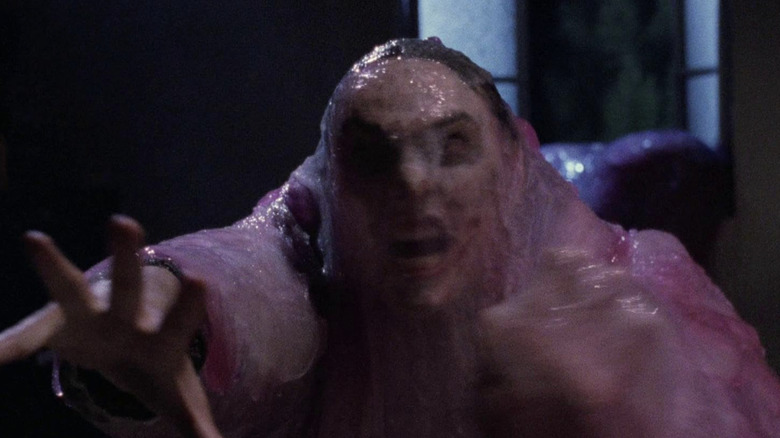
Plenty of filmmakers in the 1980s reached back to the 1950s for material to remake, with "The Thing" and "The Fly" joining "The Blob" as post-World War II movies reimagined for the Cold War era. The 1988 version of "The Blob" was an improvement over the decidedly B-tier 1957 original, but the same effects that seemed impressive in the Reagan era appear hopelessly unbelievable today.
Kevin Dillon and Shawnee Smith do a good job of anchoring a mostly watchable cast, but the abrupt tonal shifts and a jarring date-rape scene will be hard to watch for modern audiences. "The Blob" is suspenseful and more of a visual treat than many of the films on this list, but it's hard to get through without noticing the outdated language and objectionable behavior of its so-called "heroes." Dillon and Smith are fun to watch, but that's about as far as the enjoyment goes with this one.
Flash Gordon
Long before Marvel superheroes dominated the box office, "Flash Gordon" jumped from the comic book page to the big screen to save Earth from Ming the Merciless. Alex Raymond's 1934 comic helped lay the groundwork for intergalactic superheroes like Superman and Luke Skywalker, but the 1980 film that earned him a co-writing credit is clearly a product of its time.
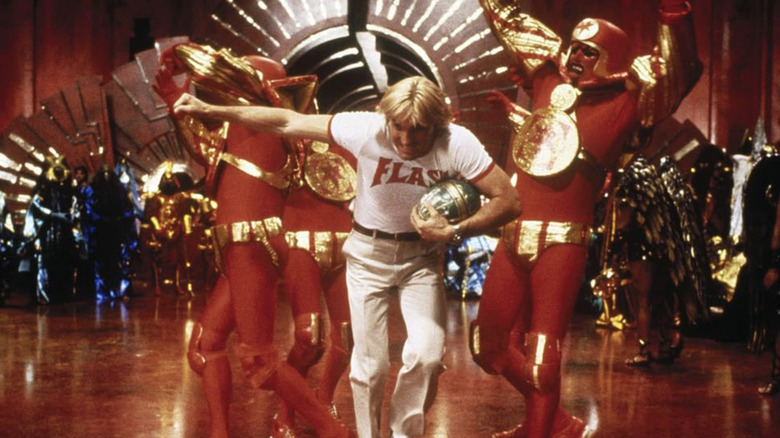
The visual effects in "Flash Gordon" are so bad they seem like an inside joke among the production team, and the film's low production values take away from the admirable performances by Max Von Sydow, Sam J. Jones, and Timothy Dalton (who went on to star in two films as James Bond).
There's some unintentional comedy in the awful dialogue, while the cheesy visual effects make "Flash Gordon" a moderately amusing trainwreck when viewed on a modern HD screen. You might even catch a glimpse of some set dressing that would have been digitally erased in a modern production's final print.
The Adventures of Buckaroo Bonzai Across the 8th Dimension
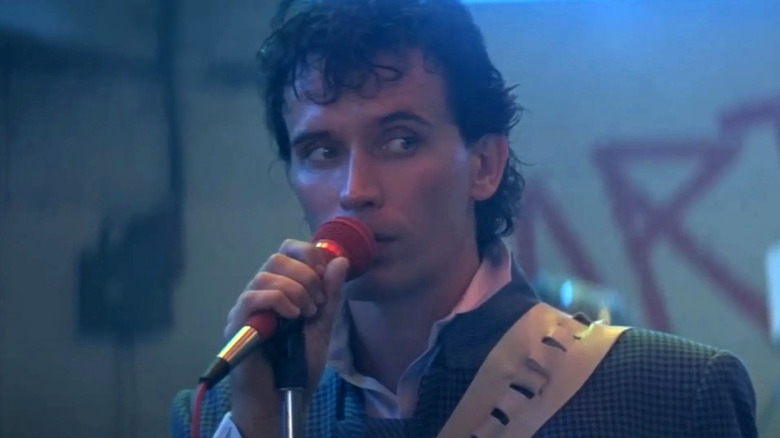
"The Adventures of Buckaroo Bonzai Across the 8th Dimension" had a wild premise and an absolutely star-studded cast befitting its wordy title. The wacky 1984 film starred Peter Weller in the title role alongside John Lithgow, Ellen Barkin, Jeff Goldblum, Jonathan Banks, Christopher Lloyd, John Lithgow, and Ellen Barkin. It's yet another "save the Earth from alien invaders" tale which went up against enduring classics like "Ghostbusters" and "The Terminator" that year. While those two films have withstood the test of time, "Buckaroo Bonzai" didn't have the staying power enjoyed by its stars.
The film's disjointed storyline and wasted performances will confound modern audiences adventurous enough to take this one on. A 2021 review on Tatler notes, "What had become of my brain? Did the law of universal gravitation hold anymore? Why do grapes exist? Only Buckaroo knows." Watching this movie today will likely leave viewers similarly baffled, even if many will feel compelled to watch all the way through to spot the familiar faces of Mike Ehrmentraut and Doc Brown.
It's one of the highest-rated films on this list on Rotten Tomatoes with a 67% approval rating from critics and 69% from audiences. The site's review consensus notes that the parody "succeeds through total devotion to its own lunacy," but that success will depend on your individual threshold for abject goofiness.
1984

While many of the films on this list don't hold up well because their predictions of the future are wildly off the mark, "1984" is hard to watch for the ways in which it's proved prophetic. The adaptation of George Orwell's classic novel of the same name came out in its namesake year and starred John Hurt as Winston Smith and Suzanna Hamilton as his clandestine love interest Julia. Richard Burton stars as O'Brien in what would be his last movie role before his death in August of that year from alcohol.
In "1984," Winston and Julia work for a government department charged with altering historical records to match the whims of the current ruling faction. In an age where most of our history and interpersonal communication are digital and can be altered or obliterated at the whims of those in power, "1984" serves not so much as a warning of the future to come as a road map to where we have already arrived.
The novel and film are still relevant decades after they first appeared, but the lessons have not yet taken hold deeply enough to prevent government misinformation from becoming standard practice. This sets "1984" apart from the other films on this list; it's jarring in its deeply unsettling familiarity to our modern world. It might be a stretch to even call this one science fiction, as it's light on the science and less fictional in 2025 than would be ideal for most of us.
Killer Klowns from Outer Space
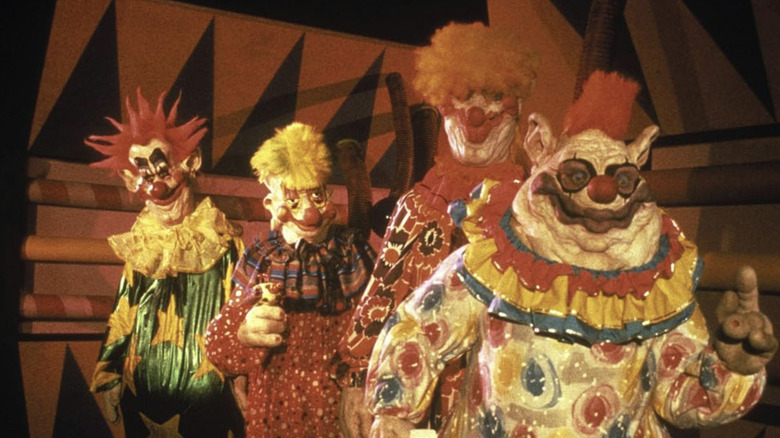
You'll probably get just what you'd expect from "Killer Klowns From Outer Space," the 1988 film that wraps itself so tightly in parody that it gets dizzy and topples over long before its 88-minute runtime has expired. You don't have to be afflicted by coulrophobia (irrational fear of clowns) to be put off by "Killer Klowns," but we recommend anyone with the affliction to avoid this dated stinker. It tries to be another "so bad it's good" campy romp, but Christopher Titus, John Vernon, and Suzanne Snyder don't have much to work with here.
Subjecting yourself to 88 minutes of "Killer Klowns" might elicit some laughs for its over-the top costumes and makeup, but in the end this is another grainy, dated schlock-fest with outdated jokes and lame dialogue. It doesn't hold a candle to Stephen King's terrifying "It" franchise in terms of horror or strength of characters, although it lends itself to some Mystery Science Theater 3000-style peanut gallery commentary.
Innerspace
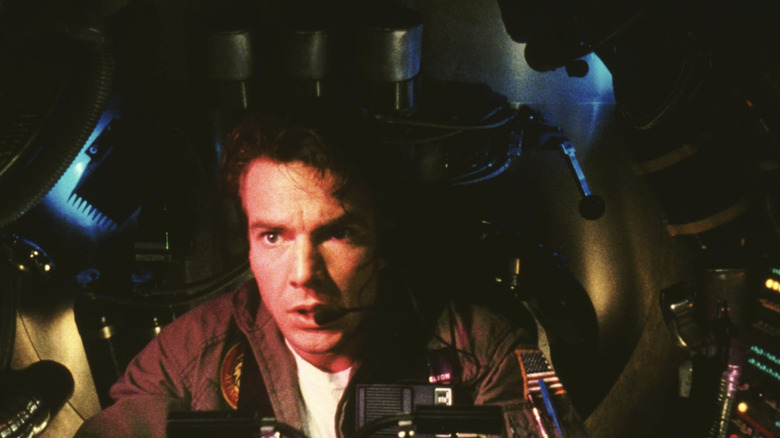
The concept of "Innerspace" seemed groundbreaking in 1987, but the technology represented in the film is now close to being in mainstream use. The film stars Dennis Quaid, Martin Short, and Meg Ryan, a powerhouse trio that makes this one well worth the two-hour investment despite its no longer fanciful premise.
Quaid plays Lieutenant Tuck Pendleton, a military pilot who volunteers to captain a microscopic vessel that will be used for medical experiments on a rabbit. The ship is accidentally injected into Short's character, where Pendelton commandeers his body in a cringe-worthy effort to reconcile with his ex-girlfriend Lydia (Ryan). This leads to an uncomfortable triangle of sorts between the three main characters which is only made bearable due to Ryan's charm and Short's goofy innocence.
Outdated gender roles aside, "Innerspace" has lost much of its mystery since its release, now that nanobots are finding their way into mainstream surgical and drug delivery procedures. There are still scientific challenges to be addressed regarding toxicity and deployment, and we're guiding these devices remotely these days instead of shrinking test pilots down to sub-molecular size to pilot them. There are sufficient amounts of both science and fiction occupying "Innerspace," but much of the content might ring too close to reality to entertain sophisticated modern audiences. Gene Siskel of the Chicago Tribune called it "A classic example of a film that would accomplish more if it tried less." The paper still awarded it three out of four stars and praised Short's performance.
Twilight Zone: The Movie
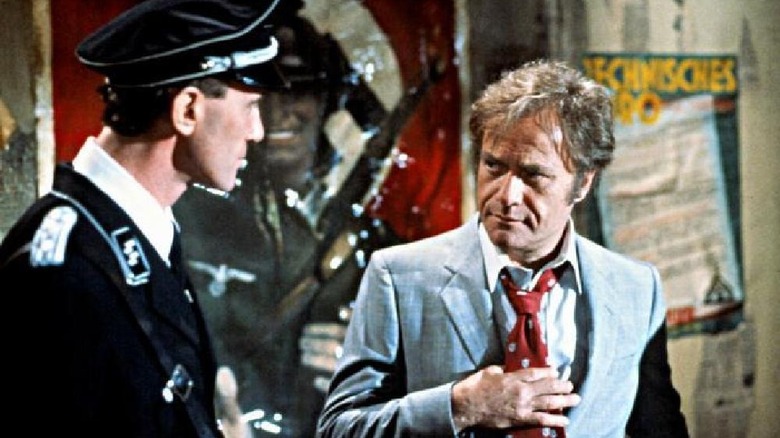
"Twilight Zone: The Movie," the 1983 film adaptation of several of the best episodes of Rod Serling's "The Twilight Zone," could have been an enduring classic, but the star-studded production was doomed by a real-life tragedy in which three actors were killed on the set in July 1982. Vic Morrow, seven-year old Myca Dinh Lee, and six-year old Renee Shinn Chen were struck by a falling helicopter after special effect explosives damaged the tail rotor during the filming of a scene for one of the film's four segments.
Co-director John Landis was one of five people who faced manslaughter charges for the incident. The trial lasted months, but eventually all five were acquitted. The tragedy, however, led to wholesale changes in on-set safety procedures, especially for productions involving child actors.
The scene was cut from the final film, but the accident cast a dark shadow over the entire production and its release. The segment, titled "Time Out," featured Morrow as Bill Connor, a bigot who is transported back in time to learn the error of his ways. Connor's presentation as a white savior to the two Vietnamese children during wartime is cringe-worthy enough to merit a spot on the cutting room floor. Time's Richard Corliss wrote, "Even with the helicopter sequence mercifully cut, the story hardly looks worth shooting, let alone dying for." One of the remaining segments saw John Lithgow take over a role played by William Shatner in the TV series episode "Nightmare at 20,000 feet."
WarGames
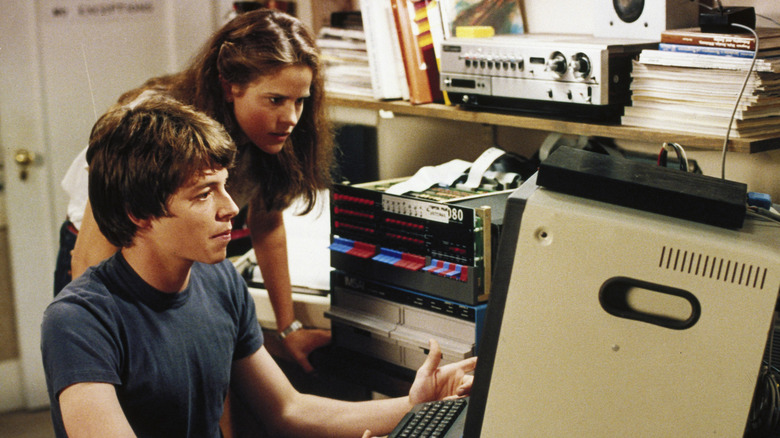
When "WarGames" appeared in theaters in 1983, most of the world was unfamiliar with home computing and the emerging hobby known as "hacking." The film starred Matthew Broderick as David Lightman, a precocious Seattle-area teenager who uses his dial-up connection to access a military war simulation computer in search of games to play. Thinking he has discovered an unreleased video game, he inadvertently fools global military commanders into believing a nuclear war is underway.
Ally Sheedy plays Jennifer, his classmate who is roped into the shenanigans when he uses his skills to change one of her grades in their school's computer system. Strong performances by Barry Corbin and Dabney Coleman, as a stodgy general and civilian cyberwarfare expert respectively, lend authority to the proceedings, but the clunky WOPR (War Operations Planned Response) mainframe machine with its large colored lights is unlike any real-life computer from any era and looks silly decades later.
If the military's utter inability to secure its primitive computer systems isn't unbelievable enough, David is also able to skulk around the NORAD facility like a seasoned international spy after being arrested and brought there without so much as a phone call to his parents. While "WarGames" is charming and fun to watch today, the circumstances are so preposterous that it can no longer be enjoyed like it was when we didn't know so much about what computers and networks could do. Many of the film's stars enjoyed long careers, including Dabney Coleman, who died in 2024 at the age of 92.
Inseminoid
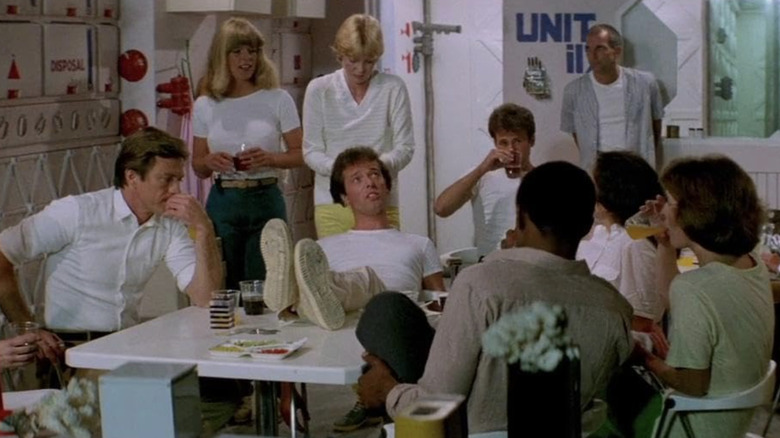
The 1981 body horror flick "Inseminoid" didn't need decades to age poorly; this one was hard to watch right out of the gate. The plot, dialogue, acting, and production values are all laughably bad, centering around a woman named Sandy (Judy Geeson) who is impregnated by an alien lifeform and transformed into a homicidal monster.
The objectionable message at its core is repulsive enough, but the film's graphic evisceration sequences will turn even the toughest stomachs. Imagine if "Alien" had been made by a fifth-grader with just enough of a budget to gross out audiences without accomplishing much else and you can save yourself the 93 minutes you'd otherwise waste watching this one through your fingers.
It has an on-the-mark average rating of 4 out of 10 stars from viewers at IMDb and an equally appropriate 12% from audiences at Rotten Tomatoes. The review aggregator doesn't even clock a score from professionals, noting only two such reviews since the film's release. That should be enough of a warning sign to stay away, although fans of truly lowbrow B-movie fare might find something redeemable here.
Weird Science
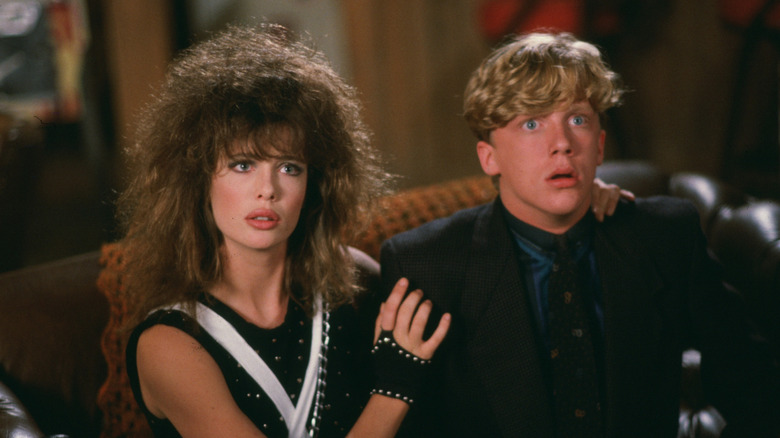
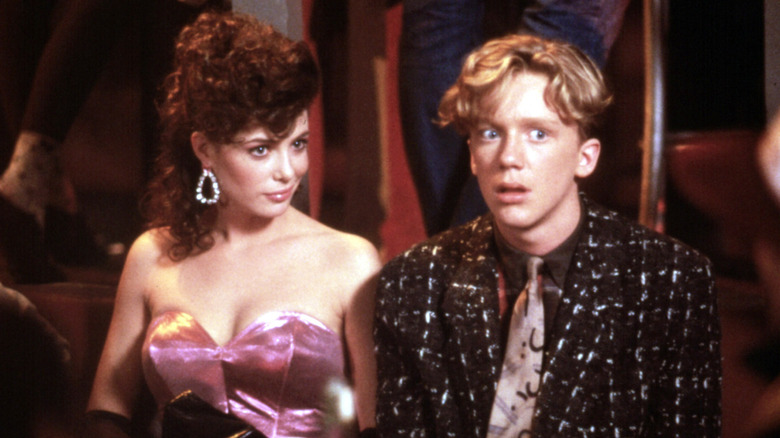
"Weird Science" has a premise that has been left behind by social evolution and no basis in actual science. Many of the actions of the protagonists would have them in prison today. What passed for teen comedy in 1985 is thoroughly cringe-inducing today but had just enough of writer-director John Hughes' magic to make it a hit in its time. It stars Anthony Michael Hall and Ilan Mitchell Smith as Gary and Wyatt, two horned-up computer whiz kids who — inspired by the story of Frankenstein's monster — animate a female doll using a computer program in an attempt to create their fantasy woman and silence some bullies.
The result is Lisa (Kelly LeBrock), who introduces far more chaos into their lives than sexy fun times. Hughes devotees will enjoy revisiting Shermer High School (also featured in "The Breakfast Club" and "Ferris Bueller's Day Off"), but anyone with 21st century sensibilities will feel mostly revulsion at the attitudes of the "inventors," their parents, friends, and tormentors.
LeBrock's performance is the only redeeming thing about the film. In his contemporary review, Roger Ebert noted, "She plays the character not for sex, but for warmth and an almost motherly affection for these two boys." LeBrock earned a Jupiter award nomination as best international actress for the role, while the special effects are decent for the era. "Weird Science" remains somewhat of a cult hit to this day, but you'll have to watch it through 1985-colored glasses to not come away with a serious case of the ick.