

'70s TV Shows That Laid The Groundwork For Prestige TV
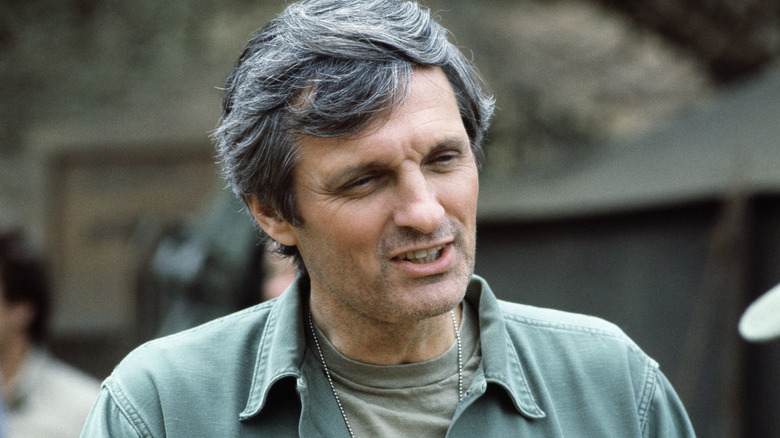
The 1970s was a golden era for cinema, and many of the best '70s movies of all time are still beloved today. Although the decade is most revered for its films, it was a great time for television as well, with writer-producers like Norman Lear, James L. Brooks, and Larry Gelbart disrupting a format that had grown stale with cliches and subpar storytelling.
Whereas 1960s shows like "Bewitched," "I Dream of Jeannie," and "Gilligan's Island" reflected a world that didn't exist, shows of the 1970s sought to depict the world as it really was at a time when the Vietnam War, the hippie movement, and the Civil Rights era had completely changed it. Suddenly, there were shows centered on single women, Black families, and loners, programs that brought current events into households across the country on primetime.
The television shows from the 1970s were so revolutionary that their influence can be felt today in the era of prestige TV. It's hard to imagine some of the best TV shows of all time — be it "The Sopranos," "Mad Men," or "Breaking Bad" – without the best television from the 1970s paving the way for more complex, thornier storytelling on the small screen. Here are '70s TV shows that laid the groundwork for prestige TV. We've broken this down into three categories: comedy, drama, and limited series. In each category, we've chosen a select few shows that had the greatest impact on what TV is like today, while also reflecting what made that era such a special time for television.
Sitcoms: All in the Family and The Jeffersons
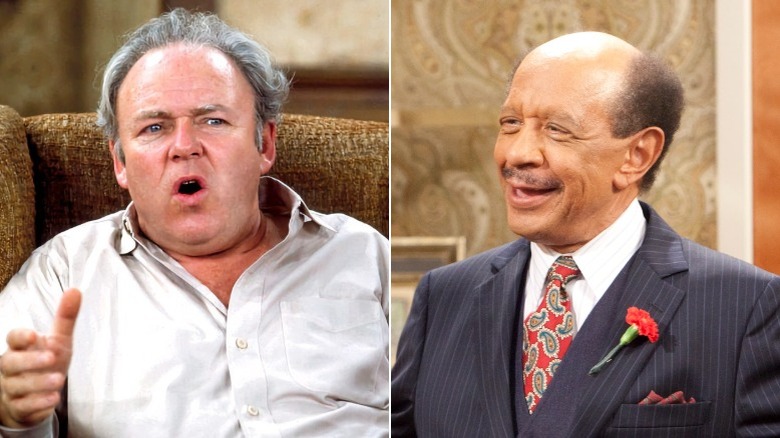
Few people did more to revolutionize TV comedy than Norman Lear, beginning with "All in the Family." Centered on working class conservative Archie Bunker (Carroll O'Connor), his "dingbat" wife Edith (Jean Stapleton), their "little girl" Gloria (Sally Struthers), and her liberal "meathead" husband, Mike (Rob Reiner), the show explored hot button issues from racism to women's liberation to the Vietnam War. Archie's bigotry was shocking in its casualness, and Lear managed to make punchlines out of slurs and slanders never before heard on network television. Yet most shockingly of all, he made you care about a man unable to deal with a rapidly changing world.
The success of "All in the Family" allowed Lear to build an empire (an "All in the Family" TV universe, if you will), including spinoffs like "Maude," which tackled the abortion debate head-on pre-"Roe v. Wade;" its spinoff, "Good Times," which depicted life in the projects for a working class Black family; and "One Day at a Time," which explored single motherhood.
The most successful spinoff was "The Jeffersons," which saw Archie's neighbor, George (Sherman Hemsley) and his wife "Wheezy" (Isabel Sanford) "move on up" after starting a successful dry cleaning business. "The Jeffersons" was revolutionary in its depiction of Black affluence, contrasting with poor junk dealer Fred Sanford (Red Foxx) and his son Lamont (Demond Wilson) in Lear's "Sanford and Son." Both shows tackled racism against and within the Black community in ways that were bracing and funny. All of Lear's shows proved that sitcoms could tackle touchy subjects without sacrificing humor.
Sitcoms: The Mary Tyler Moore Show and M*A*S*H
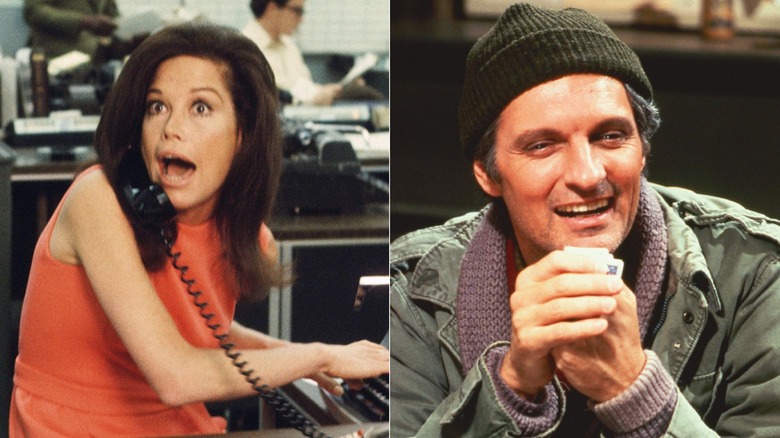
Mary Tyler Moore rose to fame in the 1960s playing a housewife in "The Dick Van Dyke Show." By 1970, she was headlining her own sitcom, which began with her leaving her fiancé and ended without her ever settling down. Created by James L. Brooks and Allan Burns, "The Mary Tyler Moore Show" explored second-wave feminism through the adventures of Mary Richards (Moore), who moves to Minneapolis and gets a job in a newsroom.
Although Mary dated throughout all seven seasons, her most important relationships were with her neighbor, Rhoda (Valerie Harper), her boss, Lou Grant (Ed Asner), and her co-workers. It's hard to imagine shows like "Fleabag" without "Mary Tyler Moore" proving audiences would tune in week after week to watch a single working woman navigate life on her own.
Equally revolutionary in its own right was "M*A*S*H," which aired on CBS on the same night as "Mary Tyler Moore," "All in the Family," "The Bob Newhart Show," and "The Carol Burnett Show." Based on Robert Altman's 1970 film, it examined the goings-on at a Mobile Army Surgical Hospital during the Korean War. Although audiences tuned in to watch the antics of wisecracking, womanizing surgeon Benjamin "Hawkeye" Pierce (Alan Alda), they were treated to some surprisingly mature stories about the toll of war as America was embroiled in Vietnam. An early progenitor in single-camera comedy, "M*A*S*H" was often presented without a laugh track, the absence of which made it feel all the more modern, dramatic, and hilarious.
Dramas: Columbo and The Rockford Files
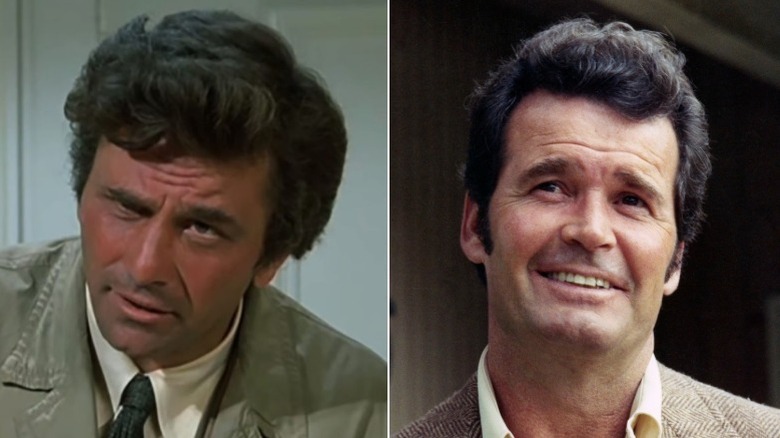
The 1970s had no shortage of cop shows, from "CHiPs" to "Police Story" to "The Streets of San Francisco." The basic formula was essentially the same, centering on a case-of-the-week for the officers to solve, interspersed with glimpses into their personal lives. The very best cop shows from that era, "Columbo" and "The Rockford Files," managed to blend the personal and professional lives of their protagonists with such ease that there seemed to be no difference between the two. In doing so, they proved that a drama series could be a character study first and a procedural second, paving the way for TV shows that treated the format as a vehicle for long-form storytelling.
The best episodes of "Columbo" functioned almost like a movie-of-the-week, with cigar-chomping, trench coat-wearing homicide detective Lt. Frank Columbo (Peter Falk) solving a murder committed by a rotating stable of celebrity guest stars. "The Rockford Files" was more traditional in its approach, following the weekly exploits of former ex-con turned private detective Jim Rockford (James Garner in one of his best roles) as he solves crimes with his dad, Rocky (Noah Beery Jr.).
What both "Columbo" and "The Rockford Files" had in common were singular, idiosyncratic lead characters who disarm criminals by masking their expertise (Columbo by appearing shambolic, Rockford by appearing nonchalant). Viewers tuned in not just to see Columbo and Rockford solve crimes, but to watch them live their lives, which were just as fascinating at the cases they handled.
Dramas: The Waltons and Little House on the Prairie
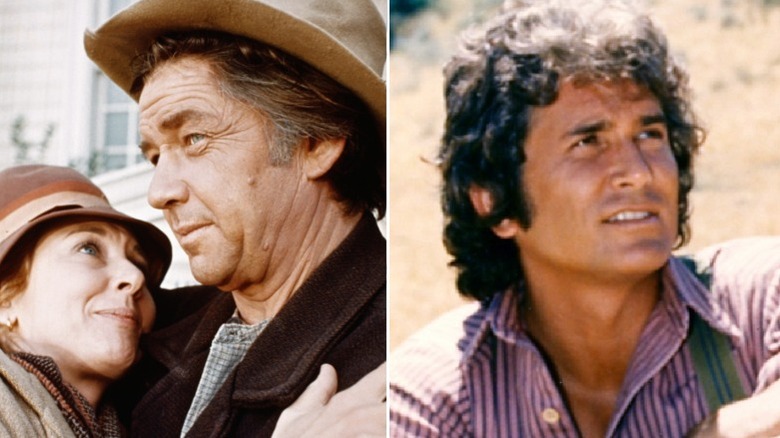
The majority of 1970s drama series were based on high concepts, be it "Charlie's Angels" (a crime fighting trio of beautiful women), "Fantasy Island" (visitors travel to a mysterious island where their every wish can be granted), or "The Six Million Dollar Man" (science rebuilds an astronaut after a near-fatal crash). These shows were escapist in their construction, allowing audiences to ignore the grimness of their real lives through fantastical stories.
Two shows that aired throughout the decade — "The Waltons" and "Little House on the Prairie" — offered escapism as well, but in a more nostalgic, small-scale way. Rather than keep viewers through high-stakes melodrama, these shows remained popular by presenting an idealized vision of the American family at a time when that was breaking down.
Set in the 1930s and '40s, "The Waltons" followed a family living in the mountains of Appalachia. Encompassing everything from the Great Depression through the Second World War, "The Waltons" proved that no hardship was too vast to destroy a strong family. "Little House on the Prairie" centered on the Ingalls, a Minnesota farm family, from the 1870s through the 1890s. Based on the book series by Laura Ingalls Wilder, the series followed the maturation of her surrogate, Laura (Melissa Gilbert). Both "The Waltons" and "Little House on the Prairie" used the past as a way to comment on the present, deriving their power through relatable stories about family dynamics, just as many shows do today.
Limited Series: Roots
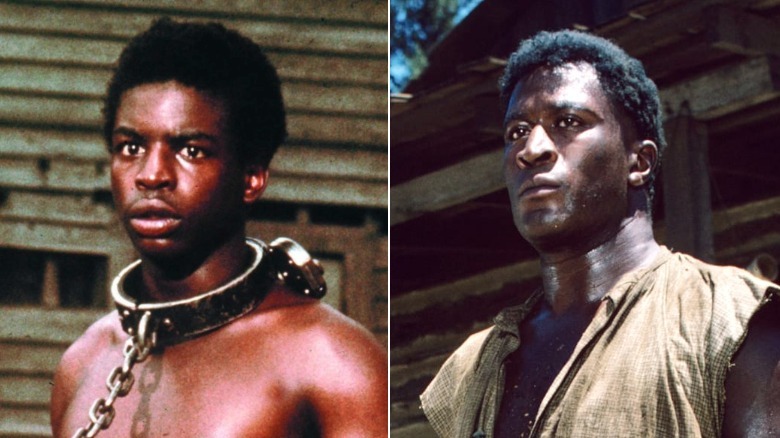
There were many limited series that captured the public imagination throughout the 1970s, from "Rich Man, Poor Man" (which made a star of Nick Nolte) to "Holocaust" (which starred a young Meryl Streep) to "Tinker Tailor Soldier Spy" (which featured Alec Guinness, fresh off of his role as Obi-Wan Kenobi in "Star Wars," a character he hated playing despite it making him famous). These shows followed more or less the same format: Take an important historical event or a best-selling book (or, ideally, both), populate it with a large ensemble of TV veterans and up-and-comers, and stretch it out with enough episodes to keep viewers coming back for more. Yet no limited series did more to revolutionize the format than "Roots."
Adapted from Alex Haley's novel of the same name, it explores the history of slavery through the multi-generational experiences of one family. Beginning in Africa with the capture of Kunta Kinte (LeVar Burton) and ending with the liberation of his descendants after the Civil War, the show was watched by an estimated 140 million viewers when it aired on ABC in 1977, ratings so big it allowed for a 1979 sequel, "Roots: The Next Generation." There was hardly a contemporary TV star who didn't show up for at least one episode, including John Amos, Ed Asner, Lloyd Bridges, Sandy Duncan, Louis Gossett Jr., Leslie Uggams, and Ben Vereen, adding to the sense that this was a once-in-a-lifetime event. The winner of nine Emmy awards, "Roots" laid the groundwork for every limited series that went on to become a water cooler topic of discussion.