

14 Best Movies Like Dirty Dancing
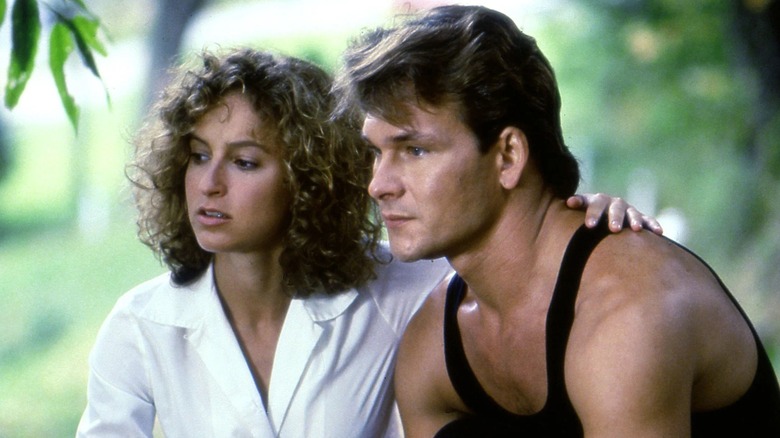
There are many 1980s blockbusters that no one talks about anymore, but the decade also gave audiences some beloved, classic films that people still watch today. 1987's "Dirty Dancing" has undoubtedly stood the test of time, thanks to a nuanced plot and a charismatic bond between its two leads (Jennifer Grey and Patrick Swayze), making it a beautiful addition to the longtime love affair between music, dancing, and film. "Dirty Dancing" presents a compassionate, lively female protagonist in Frances "Baby" Houseman (Grey) and an intense, honorable hero in her lover, Johnny Castle (Swayze).
To this day, complex, admirable characters like Baby and Johnny are hard to come by, and it's even harder to find them in such a compelling story. There are a few movie examples where a lot of the same features align, and some of them even feature great music and evocative dancing. Nothing else will ever capture the exact same magic that makes "Dirty Dancing" such a singular film, but there are plenty that can give viewers some of the same feelings.
Silver Linings Playbook
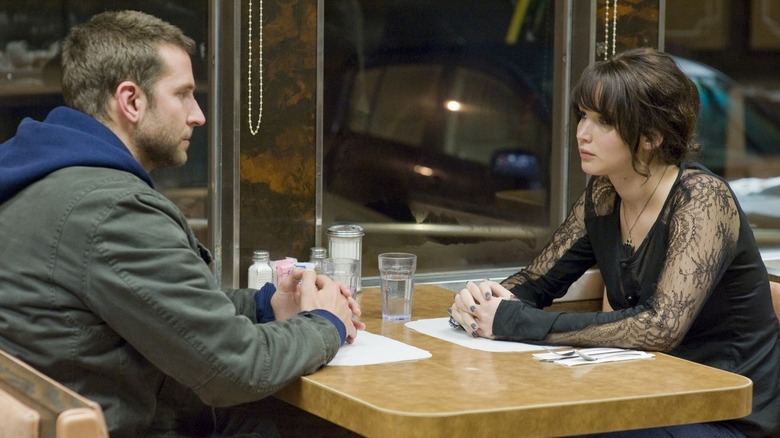
Tonally and plot-wise, 2012's "Silver Linings Playbook" is quite close to "Dirty Dancing." Many things are different, to be sure: for one thing, there doesn't seem to be a major class disparity between the film's romantic leads. However, both films are the sort of unsentimental, empathetic drama that can make people laugh, cry, and gasp. They deal with real, heavy issues, and the love story in both is tender, compelling, and relatively devoid of the sort of frustrating non-obstacle obstacles that many cinematic couples face these days.
The age gap between Tiffany (Jennifer Lawrence) and Pat (Bradley Cooper) in "Silver Linings Playbook" is a bit unsettling, but it's hard to be angry when it allowed Jennifer Lawrence to give one of the best performances of her career. The dancing aspect of "Silver Linings Playbook" is a bit home-spun; it feels more like real people pursuing a hobby as a form of therapy rather than two people who were cosmically fated to dance. That is the vibe for Baby and Johnny, too, though Johnny is a professional and there's no telling exactly what Baby might do with her life. Baby and Johnny's dancing, like Tiffany and Pat's, is less about showcasing talent and more about building a connection.
Step Up
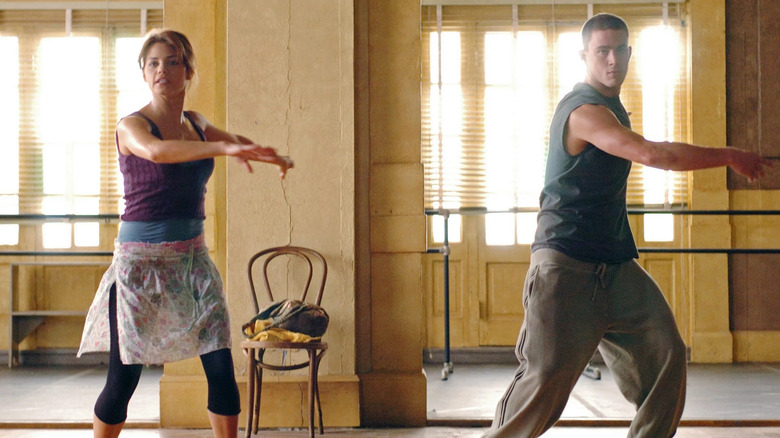
"Step Up" is likely the second or third movie that most Americans would name when coming up with films about dancing. It's also a romance, which definitely puts it in "Dirty Dancing" territory. The 2006 movie follows Tyler (Channing Tatum) and Nora (Jenna Dewan), two young people with a passion for dance. Nora is more of a classical dancer, whereas Tyler has found a passion for performance through his friendships and community. Nora dances at a very prestigious academy and Tyler is there doing community service for vandalizing it, but Nora incorporates breakdancing and other hip hop steps into an important audition routine after watching Tyler integrate the two styles.
Class is a part of both films — Tyler and Johnny both come from low-income backgrounds — but in the time between "Dirty Dancing" and "Step Up," more space was made for people to achieve upward mobility through creativity and artistry. Despite his talent, Johnny is quite self-deprecating in "Dirty Dancing," whereas Tyler takes a much more assertive role in pursuing a way out of his working class background. Johnny and Tyler are also both important romantic heroes for their generations — Gen X and Gen Y, respectively — especially because they launched the careers of real-life, sensational hunks Patrick Swayze and Channing Tatum.
Save the Last Dance
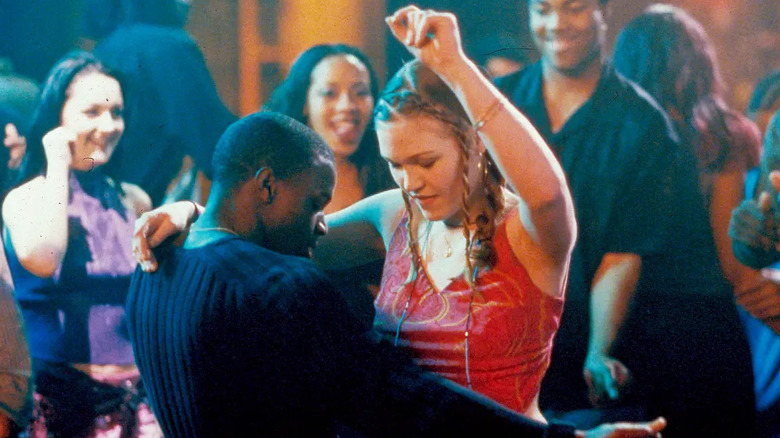
2001's "Save the Last Dance" is another classic, dance-centric rom-com starring everyone's favorite early 2000s icon, Julia Stiles. Both "Dirty Dancing" and "Save the Last Dance" are about a love connection made through dancing, so "Save the Last Dance" has long been considered one of a small number of direct, spiritual successors to "Dirty Dancing." Many films capture a similar element or essence from "Dirty Dancing," but "Save the Last Dance" feels like the missing link between "Dirty Dancing" and "Step Up." Plus, both "Dirty Dancing" and "Save the Last Dance" have a scene in them that is arguably more legendary than the films themselves.
"Save the Last Dance" follows a soon-to-be high school graduate named Sara (Stiles) who must deal with her mother's unexpected passing, which she discovers right after she flubs her audition for Juilliard's ballet program. Sara has to move to the other side of the city to live with her father, Roy (Terry Kinney), who ekes out a living as a jazz musician. Sara meets Chenille (Kerry Washington) and Derek (Sean Patrick Thomas) at her new school, and Derek ultimately teaches her about the artistic merit of hip-hop dancing. You haven't lived until you've seen Sara's final Juilliard audition.
Lady Bird
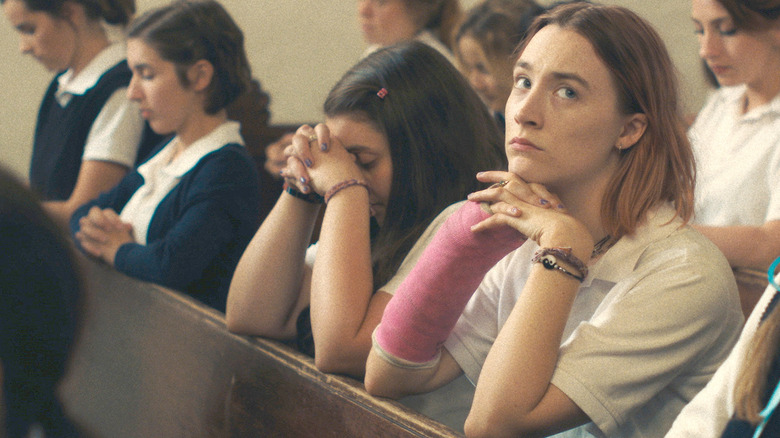
At first, it may seem like there aren't many parallels between "Dirty Dancing" and 2017's "Lady Bird." But both feature young, complex women trying to figure out their way in life. Both Baby and Lady Bird (Saoirse Ronan) go by names other than the ones on their birth certificates, signifying that both grapple with their identities, though in different ways. Lady Bird chooses her name to stand out, while Baby's name is a part of her bond with her family, which has defined her whole life. When Baby meets Johnny and the other summer staff at her family's resort, she has to figure out how to distinguish herself as an individual without losing the family connections that are ingrained in her.
Both films also take place in distinct, relatively small communities. For Baby, the community consists of the staff and guests at their resort; for Lady Bird, it's anyone involved with her Catholic school in Sacramento, California. Both groups depend on a certain kind of social performance that often conceals — and even warps — the truth, and both protagonists are each on a desperate search for clarity from within the miasma of their communities. Plus, both Baby and Lady Bird are stubborn, vulnerable, perfectly imperfect heroines who are relatable in the least artificial sense. We would argue that "Dirty Dancing" is as much a "coming of age" movie that's required viewing as "Lady Bird."
Challengers
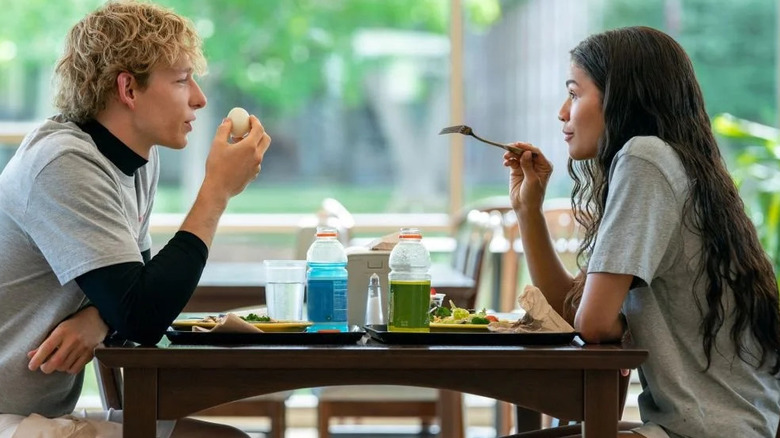
"Challengers" is a unique movie, with many elements that are certainly not easy to find in other films. The film's connection to "Dirty Dancing" is actually fairly thin, though both movies are about people training and achieving in intense, physical activity. But "Challengers" is similar to "Dirty Dancing" in the sense that they both belong to an exclusive club consisting of smoldering, highly physical films that are tastefully provocative for their time.
"Challengers" will be like "Dirty Dancing" for members of Gen-Z, in that it will be a nostalgic-yet-intimate kind of film to rediscover in a decade or two. "Challengers" ends on a much more ambiguous note, and it's definitely more provocative overall, but that's only because there has been some social progress in the nearly 40 years since "Dirty Dancing." "Challengers" is really a movie about three different leads, rather than two, and it jumps around chronologically, which means its tension often simmers into something distorted rather than exciting.
Bend It Like Beckham
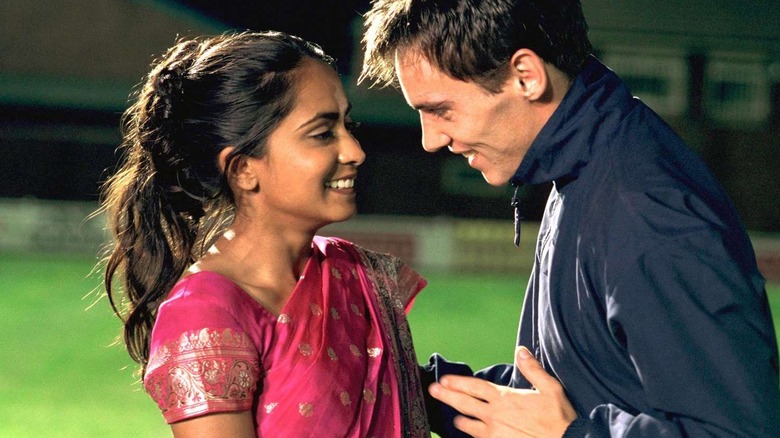
"Bend It Like Beckham" was released in America in March 2003 and quickly became a cult phenomenon for girls of a certain age. It's the kind of movie that got made because people saw how good it would be, not a movie made with the express purpose of making tons of money or gaining lots of prestige. It's just one of those films that people often find themselves grateful for, amidst the predictable, often homogenous choices of Hollywood.
The film has a likable, disarming protagonist in Jess (Parminder Nagra), a young woman attempting to balance a potential soccer career with her family's cultural expectations. The film also features an unbelievably dreamy Jonathan Rhys Meyers using his genuine (Irish) accent as Jess' love interest and coach Joe, as well as Keira Knightley — who stood out even then at the age of 16 — as Jess' teammate Jules. Jess and Baby both have to deal with strict conventions and layered family dynamics while also pursuing their own happiness. Plus it's frankly just as impressive to watch Jess and her teammates play soccer as it is to watch Johnny and Baby dance.
Call Me By Your Name
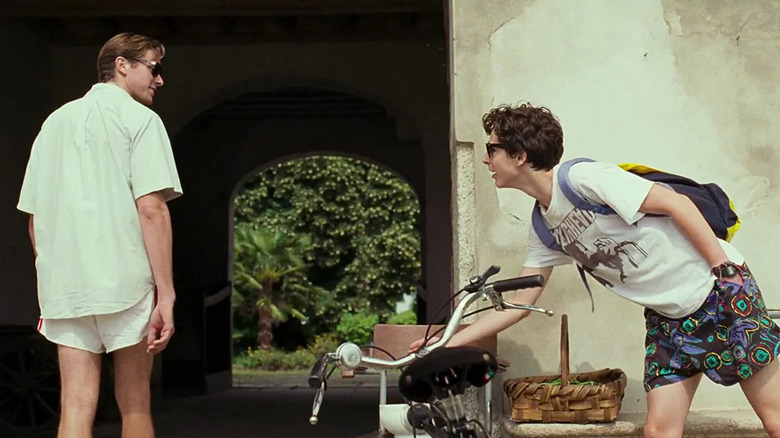
Summer romance: One of the most evocative two-word phrases in the English language and the most essential element of both "Dirty Dancing" and 2017's "Call Me By Your Name." Even though the former is set at a resort and the other in the picturesque Italian countryside, both films evoke summer heat and the cool satisfaction of a languid swim. Both stories also depend on a bubble of time where everything in someone's life is different, at least temporarily.
Elio (Timothée Chalamet) learns about ephemeral summer love when he spends three months falling for his father's grad student assistant, Oliver (Armie Hammer). They share a deep, profound connection filled with tension and passion, which is destined to end once the summer is over. "Dirty Dancing" is also a summer romance, but hopefully Johnny and Baby have a better chance as a couple in the future. It's interesting to juxtapose how Baby's family disapproves of her connection with Johnny and the way Elio's family quietly gives him space to explore romantic love for the first time.
Atonement
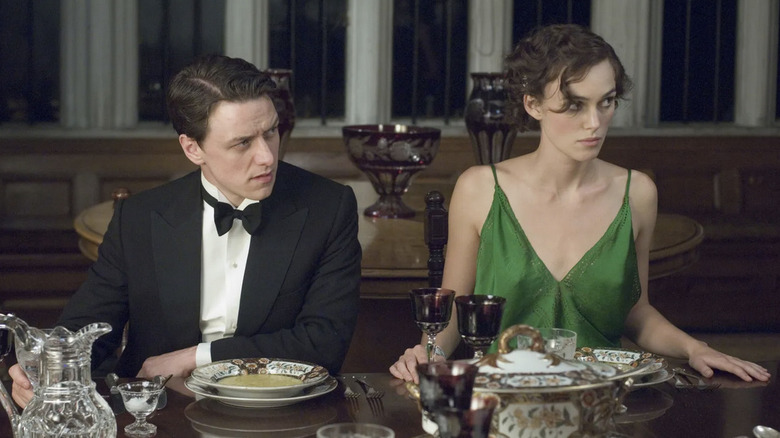
"Atonement" by Ian McEwan is one of the most revered novels in contemporary literature, and Joe Wright's 2007 screen adaptation of the story is superb. The film depends specifically on the class distinction between a wealthy family and their servants, one that more closely parallels the one between Johnny and Baby in "Dirty Dancing" than most of the other films on this list. "Atonement" is a period piece, which means it lacks the shiny, optimistic quality that "Dirty Dancing" has in spades, but it is still rife with tension — both class-related and sexual.
Robbie Turner (James McAvoy) has the unfortunate distinction of having fallen deeply in love with Cecilia Tallis (Keira Knightley), beloved daughter of his father's employer, and Cecilia is just as attracted to Robbie. What "Atonement" shows, in devastating relief, is the kind of terrible thing that can happen when we raise children in a world where they're taught that some lives matter more than others. "Atonement" also has an emotional gut-punch of an ending, so get some tissues ready. The film is told from the point of view of Cecilia's little sister, Briony (Saoirse Ronan), and that is probably the element that sets it furthest apart from "Dirty Dancing."
The Notebook
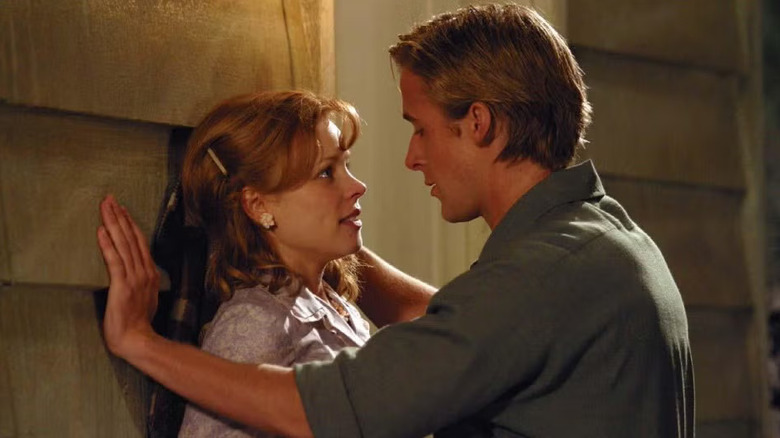
It's kind of funny that both "Dirty Dancing" and "The Notebook" have questionable parts that fans are happy to ignore, and even funnier that it sometimes feels like "The Notebook" has more — despite the fact that the book it's based on came out much more recently than "Dirty Dancing." There are disparaging, classist parents in both films, but otherwise, 2004's "The Notebook" is far more about the intensity between two people than the way their love doesn't jive with a particular community. The classism is ubiquitous, and a disparaging parent is way more of an obstacle in "The Notebook."
Allie (Rachel McAdams) falls in love with Noah (Ryan Gosling) while she and her family are summering in a small, coastal town called Seabrook. Her mother (Joan Allen) works hard to keep them apart, but their connection is practically magnetic, even moreso than Johnny and Baby's thanks to an intense real-life connection between McAdams and Gosling. This is another summer romance, but it tells so much more of the story after Allie and Noah fall in love.
10 Things I Hate About You
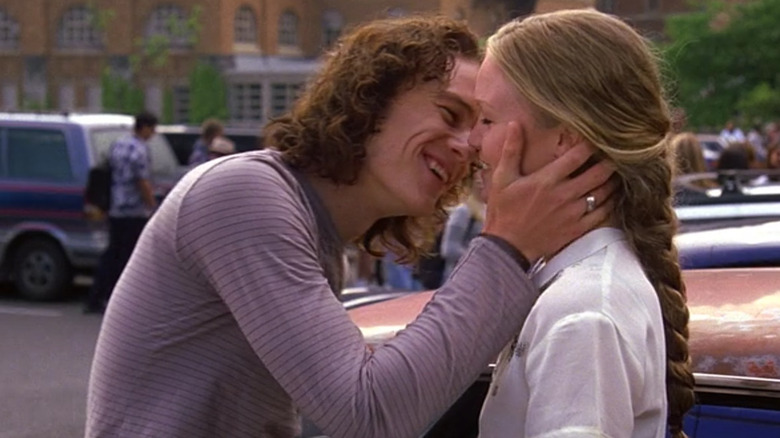
"10 Things I Hate About You" features romantic leads Patrick (Heath Ledger) and Kat (Julia Stiles), students at a Seattle high school who initially butt heads (Kat is very wary of teenage boys) but ultimately can't stay away from each other. It's a 1999 adaptation of Shakespeare's "The Taming of the Shrew," though with many changes, of course. Kat has a younger sister, Bianca (Larisa Oleynik); and, similar to Baby, much of what troubles Kat on a daily basis tends to arise from her sister's love life. That said, Bianca ultimately makes much better decisions than Baby's sister, Lisa (Jane Brucker).
"Dirty Dancing" isn't a Shakespeare adaptation, but it does share similarities with one. The romance between Patrick and Kat is top-tier, just like the one between Johnny and Baby. Patrick and Kat's story feels sincere without invoking cringe and conveys a perfect, PG-13 brand of sexy romance. A lot of this is thanks to Heath Ledger, who, even this early in his career, stands out amongst his costars. There is also a lot of father-daughter complexity between Kat and her single dad (Larry Miller), and it definitely parallels Baby's struggles with her own father. Both Kat and Baby want their dad to take them seriously, and manage to eventually do so by standing up for who they are.
Footloose
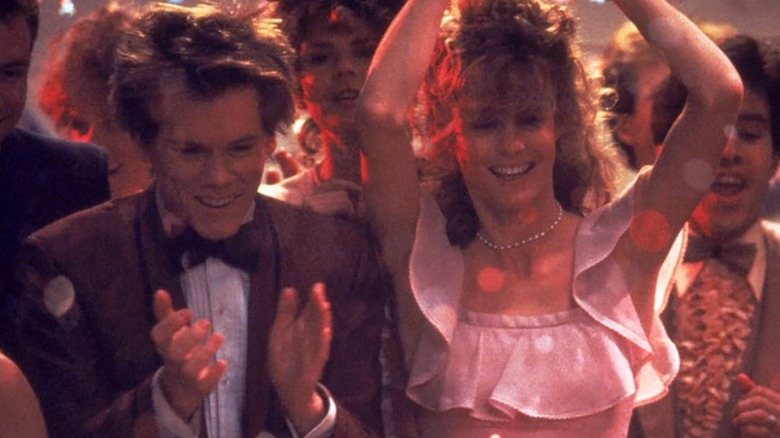
A list of films like "Dirty Dancing" would be incomplete without "Flashdance" (see below) and 1984's "Footloose." The three movies exemplify the relationship between dance and film in the 1980s. Before this, dance was often incorporated into a film more intuitively and stylistically, while the 1980s brought a crop of movies that sought to consciously examine the role of dance and music in society. These three films also all feature a killer '80s soundtrack and flashy dance moves.
"Footloose" is about a young man named Ren (Kevin Bacon) who finds himself living with his mother, aunt, and uncle in a town where public dancing is illegal, and he quickly makes enemies when he opposes the ban. "Footloose" is actually based on a true story; there is a town in Oklahoma that did ban dancing, and a class of senior high school students defied the rule in order to have a prom. "Footloose" is much more dramatic than the real story, what with the instigator from the big city and the sorrowful reverend driven to madness by his grief (John Lithgow), but both films also delve into uncomfortable realities that aren't always addressed in pop culture, like abortion and dating violence.
Flashdance
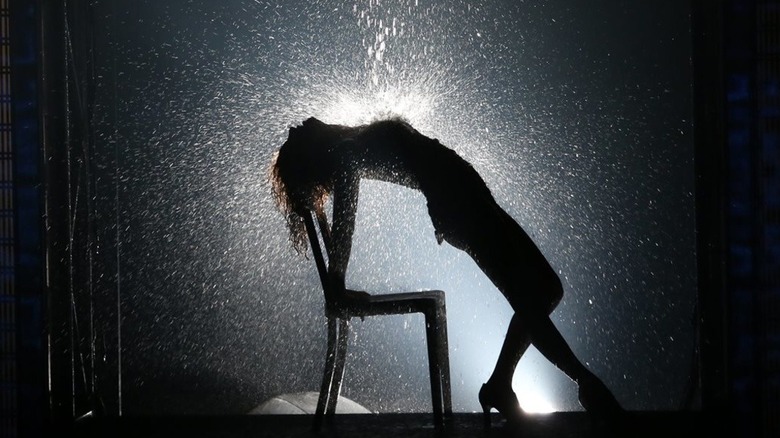
Let's get something straight right away: 1983's "Flashdance" is not as well-written as "Dirty Dancing." Many of the characters in "Flashdance" feel two-dimensional, their motivations are hazy, and there isn't very much in the way of jokes. That said, it is still an iconic '80s dance film, largely thanks to its stellar soundtrack. Irene Cara wrote and performed the hit "Flashdance ... What a Feeling" exclusively for the film, later winning the Oscar for best original song.
Jennifer Beals stars as Alex, an 18-year-old welder who lives alone with her dog, Grunt. Already she seems a little unreal — especially factoring in Jennifer Beals' delicate beauty — but she's even more unbelievable when it's revealed that she moonlights as a cabaret dancer at a local restaurant. However, the dancing in the film is a delight to watch, and Beals puts in fantastic work despite the lackluster script. It's not as much of a favorite as "Dirty Dancing," but "Flashdance" is still definitely worth a watch if someone's craving a fantastic soundtrack and some dramatic dance moves.
Ghost
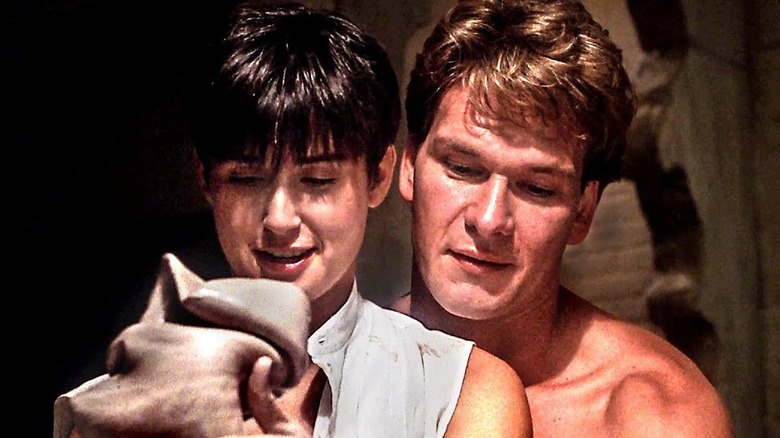
Many people love "Dirty Dancing" simply because they love Patrick Swayze. While some younger adults may not understand his appeal, those who saw him at the height of his career likely remember what a dreamboat he was to many. Not only was Swayze tall, muscular, and handsome, but he played two iconic male leads that offered a more vulnerable, self-aware depiction of men in cinema. He wasn't the first gentle heartthrob, but he set a new standard thanks to "Dirty Dancing" and 1990's "Ghost."
"Ghost" stars Demi Moore as Molly, a young woman who must grapple with the loss of her boyfriend, Sam (Swayze). Little does Molly know, but Sam has remained with her as a ghost, both to protect and to be with her. A lot of this film feels more like a thriller than a romance, but the most iconic part of the movie is, by far, the scene where Sam is standing behind Molly while helping her mold clay on a potter's wheel. Sam is a ghost at this point, so it's actually Whoopi Goldberg's character that's embracing Molly; but if you ignore that, it's certainly one of the most sensual scenes in all of cinema.
Crazy, Stupid, Love
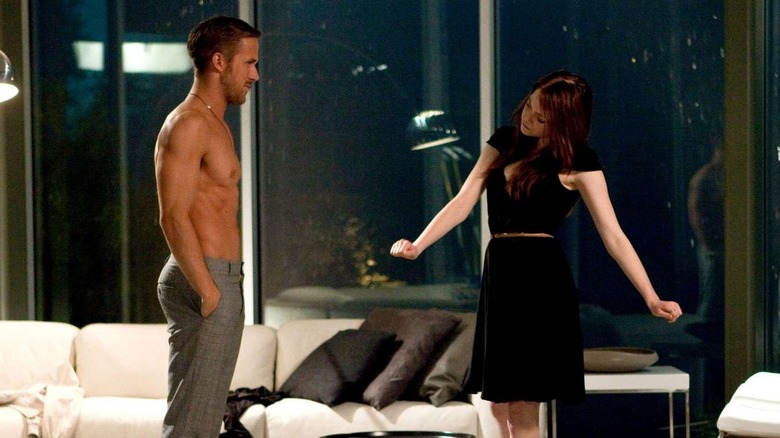
What mainly connects "Dirty Dancing" to 2011's "Crazy, Stupid, Love" is one particular scene where Hannah (Emma Stone) demands that Jacob (Ryan Gosling) use his prominent muscles to catch her in the air, like Johnny does with Baby in "Dirty Dancing." Yes, there are many cultural references to the scene in "Dirty Dancing," but the one in "Crazy, Stupid, Love" doesn't involve any attempt by Jacob to woo Hannah with the rote "nobody puts Baby in a corner" line originally delivered by Patrick Swayze.
This scene isn't a facsimile to the one in "Dirty Dancing," but it uses its iconography in a new way to signify an endearing romance. On a higher level, both "Dirty Dancing" and "Crazy, Stupid, Love" are about the many kinds of loving relationships that can arise between people and how those connections either thrive or crumble in less-than-ideal times. It's an appreciation of the light that love brings, but also an acknowledgment that it is hard-won and hard-kept.