

10 Mystery Shows That Hook You From The First Few Minutes
For every television show, it's crucial to draw the viewer in from the start. But we'd argue that's ten times as vital when a series is concerned with telling a complex mystery. If you can lock the audience in with something cryptic, enticing, and mesmerizingly intriguing early on, chances are they'll stay with you on the journey until the end to untangle the puzzle. There are creators, showrunners, and writers who specialize in this method of storytelling — like David Lynch, Damon Lindelof, or Vince Gilligan, for instance — and who truly influenced this subgenre with their unique ideas and singular vision.
Mystery television shows are captivating by design, and if you're into solving puzzles through discovery, perplexing twists, and painstaking writing, they can be a ton of fun — truly illuminating and rewarding, even if you imagine yourself as one of the greatest detectives in TV history. And the best ones usually begin with a grabby kick-off that instantly makes us invested. Here, we'll focus on ten shows that did that exquisitely well.
Lost
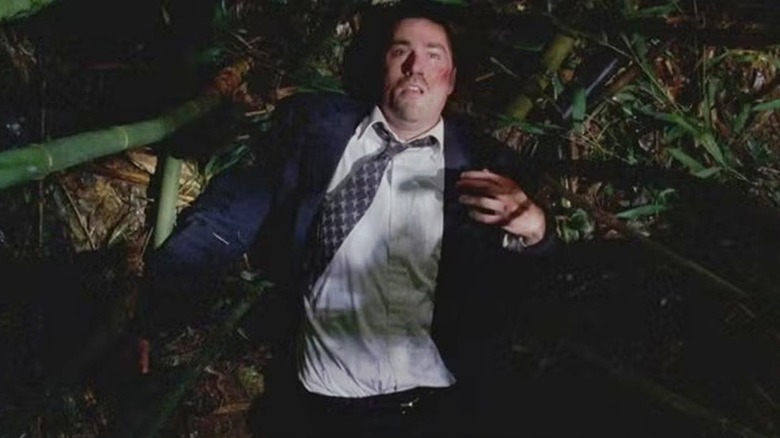
It's only right to start with one of the most popular and well-known series that practically reinvented mystery on television in the mid-aughts. J.J. Abrams, Damon Lindelof, and Jeffrey Lieber's "Lost" begins with a super close-up of an eye opening up to stare at lush canopies somewhere in the woods. It belongs to a middle-aged man wearing a suit, lying on the ground with scratches all over his face and body. He's waking in a sweat and a rush of panic. He's hurt, utterly confused (as much as the viewer is), and when he desperately runs through the forest, he suddenly finds himself on a gorgeous beach. A few moments later, he finally realizes what happened: he was in a plane crash. And he's one of a few dozen survivors stranded on a deserted island.
Within a few minutes, "Lost" expertly induced a slew of questions in an audience hungry for answers and explanations about what happened and who these people are. That was only the beginning of a story that delivered some of the most ineffable and enthralling twists in TV history during its six-season run between 2004 and 2010. No wonder the show instantly became the biggest thing on the small screen at the time. It went on to win 10 Emmys, while also launching the careers of numerous actors. Regardless of its vastly divisive series finale, "Lost" was undeniably a remarkable achievement.
True Detective
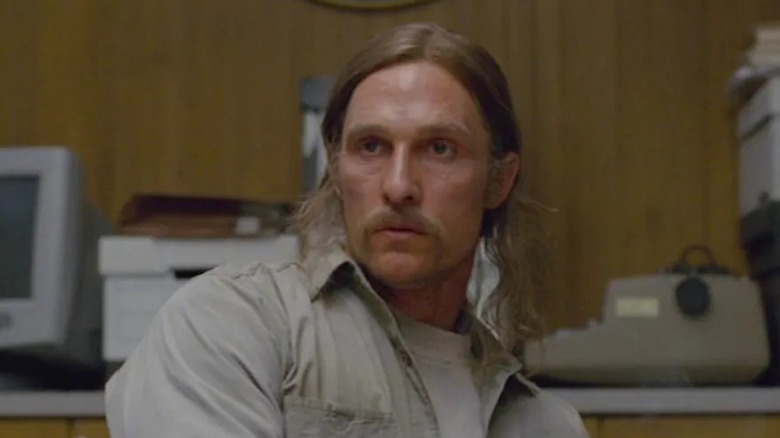
A formidable figure is carrying a body on an open field in the dead of night. He then lights a fire near a tree. Cut to former detective Marty Hart (Woody Harrelson) in 2012, who's being interviewed at the Louisiana State Police about both his eccentric partner, Rust Cohle (Matthew McConaughey), and an unusual murder case that involved some of the most obscure things he's ever seen during his career at the CID.
After a few strange comments about that partner, Cohle then appears in the flesh in a separate questioning within the same year and setting. He looks rugged and disheveled, but that's nowhere near as disturbing as his demeanor — and his recollection of the case, using words that strike you with a dark, heavy solemnity. You're hooked right then and there with a need to find out what happened.
"True Detective," the HBO anthology series, offers in its first season one of the greatest whodunnits out there. Leaning heavily on its time-jumping narrative structure, character-driven plot, and thought-provoking writing, creator Nic Pizzolatto (with the help of director Cary Fukunaga) delivered a mesmerizing mystery rooted in crime and human nature for the ages. There might be many other thematically similar and effective crime dramas out there, but there's nothing as potent and impressive as the freshman season of "True Detective."
Dark
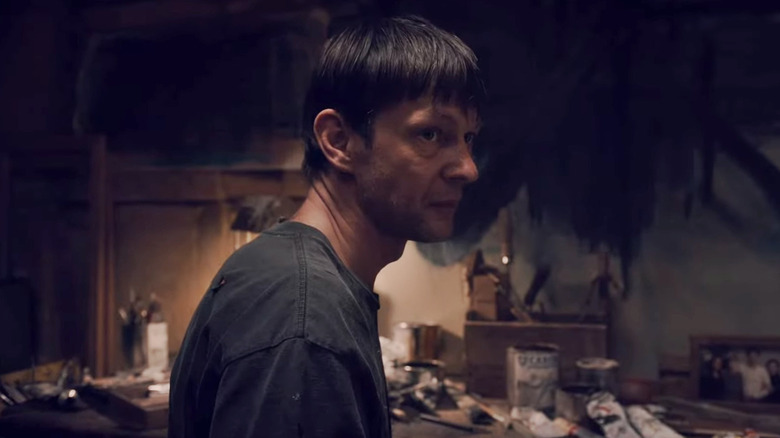
Creators Baran bo Odar and Jantje Friese did not leave matters up to chance when grabbing their audience with something so severe, in the first few minutes of "Dark," that it practically demands us to keep watching. After a succinct narration about the illusion of time over a series of old photographs depicting people as children and adults, we see an idyllic house somewhere in Germany in 2019. Inside, there's a resigned man in his art studio carefully preparing a note.
Once finished, he stands up, takes the chair to the middle of the room, and hangs himself. Right after, the camera moves to the writing on the envelope saying, "Do not open before November 4, 10:13 PM," eventually stopping on a family photo with the now-deceased in the middle. Not many shows dare to start with a full-on suicide right out of the gate (save for the enthralling not-mystery "Chernobyl," which also opens with its first disturbing sequence, out of many), which is why "Dark" immediately strikes the viewer. The narrative punch stands out as such a bold move.
Netflix's first original German-language series is easily among the most nuanced, complex, and tragic stories about time travel. From its first moment to its last, the show calls for our full and undivided attention to notice as many key details in the intricate plot as we can. And if we obey, "Dark" takes us on an intense yet emotionally rewarding journey throughout its three seasons.
Sharp Objects
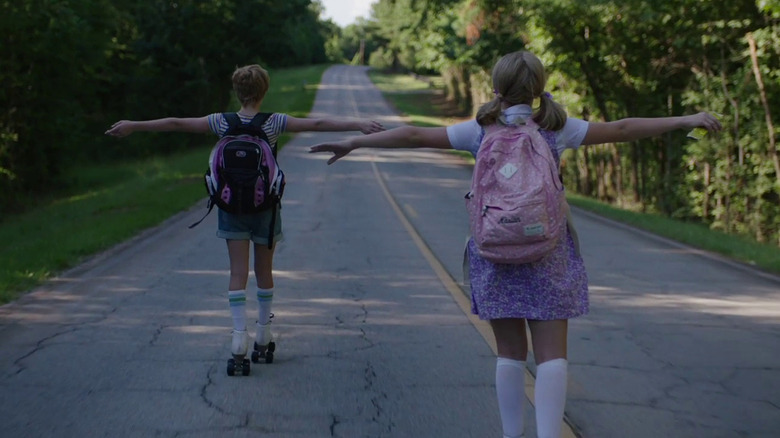
Marti Noxon's "Sharp Objects" (based on Gillian Flynn's bestseller of the same name) opts for a melancholy opening in its first few minutes (underlined by a poignant score) that hits us right in the feels. A delicately assembled montage takes us through the sleepy streets of Wind Gap, a Missouri small town, as the camera finally lands on two tween girls roller-skating on the cracked roads leading out of their hometown. A little later, the two sneak back into their enormous home at the edge of town. The parents don't notice the girls as they tiptoe their way to the room of a sleeping woman, attempting to cut her hand with a paper clip. The woman (Amy Adams) awakes, and we learn it was likely all a dream.
"Sharp Objects" is as much an unconventional whodunnit as it is a loopy psychological thriller. Just like its opening scenes, the rest of the show snakes its way into your head with a low-key yet powerfully evocative atmosphere and a slow-burning plot that takes its time to unravel the secrets of the town and its people in a way that stays with you long after the credits roll in the finale. The eight-episode miniseries is one of those book adaptations that manages to transfer the milieu and appeal of its source material to the screen with flair, offering one of the most satisfying mysteries in the genre.
Dark Matter
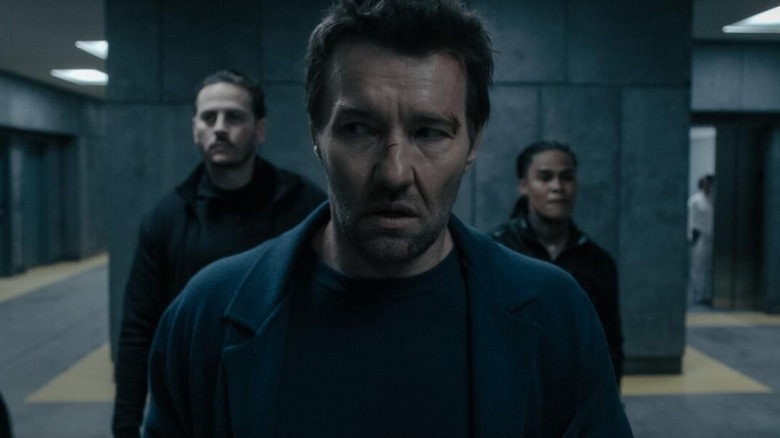
Blake Crouch's sci-fi mystery on Apple TV, "Dark Matter" (based on his own novel of the same name), begins with an unnerving scene where a man opens the door of a giant metal cube in the darkness to step into an unlit place with nothing but a flashlight. He looks around carefully, trying to get a sense of what world he just arrived in, before the series' stylish and futuristic opening credits deliver us to Joel Edgerton's protagonist, Jason Dessen.
"Dark Matter," with its brief yet intriguing cold open, hits us right away with an enigma which will gradually gain meaning as the first episode unfolds. Although it's all vague (yet rousing), it's also strangely potent in foreshadowing what's to come. The nine-episode freshman season revels in exploring alternate realities, as well as different versions of the same characters. Intricate, thought-provoking, and heavily character-driven, the Apple TV+ series offers viewers one of the best multiverse narratives on the small screen from the past five years.
Ozark
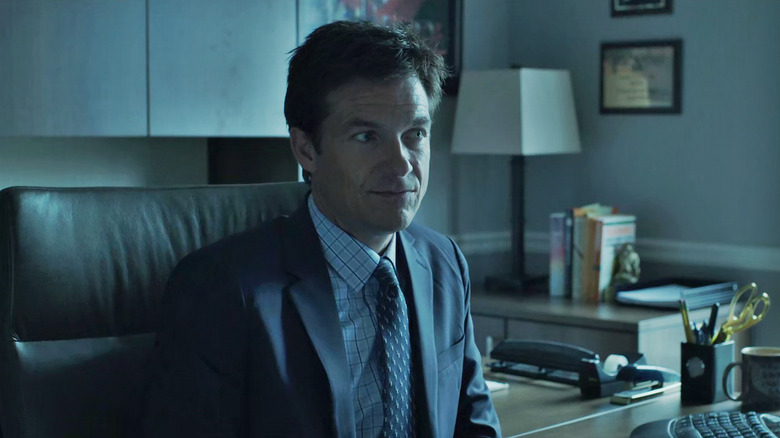
Netflix's epic crime drama "Ozark" kicks off with Jason Bateman's Marty Byrde giving us a voice-over about money, the American dream, and society, while we see him drag two giant coolers filled with tons of cash through the woods in the middle of the night. He transports them through a lake in a motorboat and then to his car, eventually putting all of it in a hiding place somewhere out of town. Right off the bat, "Ozark" makes sure we're watching a man up to no good. He's smart, charismatic, and matter-of-fact in a way that immediately clutches our attention to find out who he is and what he does for a "living."
Riding on the coattails of accomplished shows like "The Sopranos" and "Breaking Bad," creators Bill Dubuque and Mark Williams made their own version of an immoral anti-hero and his eccentric family, immersing themselves in a life of crime. Running between 2017 and 2022 for four seasons, "Ozark" delivered a nail-biting, twisty, and suspense-filled crime odyssey that took us into the weeds of professional money laundering, drug cartels, and all the repercussions that come with leading such a lifestyle. Ruthless, harsh, and unflinchingly violent, "Ozark" is entrancing from its very first minute to its disheartening last.
Severance
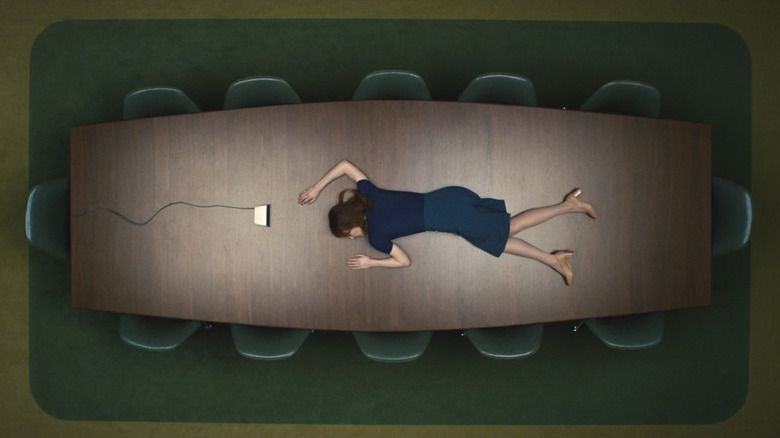
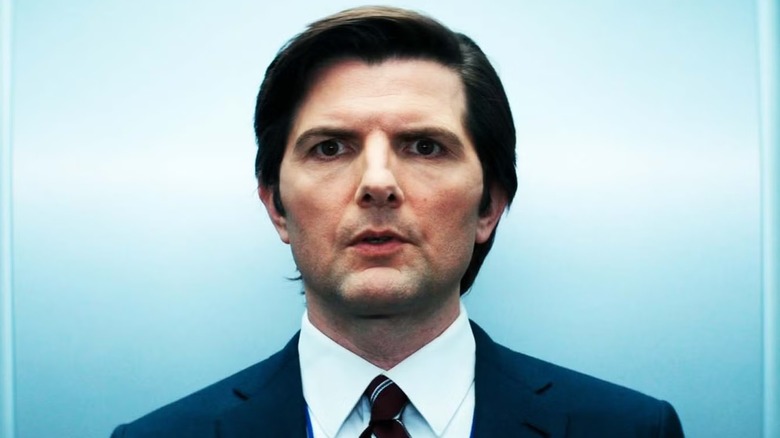
Arguably the biggest hit on television of the last four years, Dan Erickson's "Severance" begins with an unconscious woman lying on an enormous table in an empty conference room. She wakes to the sound of a man speaking through an old speaker, asking who she is and whether she'd mind taking a brief survey. Refusing to answer his questions at first, the redhead quickly spirals into panic and desperation, slowly realizing that she's trapped in an unfamiliar and off-putting place where the only exit is locked from the outside. Only then does she agree to cooperate. The trouble is, when the first question is asked, she realizes that she has no idea who she is. At all.
Director Ben Stiller creates such a paranoid, forbidding atmosphere from the get-go that we're immediately inclined to find out what the hell is going on here. That strangely appealing quality dominates "Severance" throughout its first two seasons, making it one of the most addictive, mind-bending, and exciting sci-fi mysteries in years. It's no wonder the show rapidly turned into a worldwide success, winning numerous awards, including 10 Primetime Emmys between 2022 and 2025.
The Leftovers
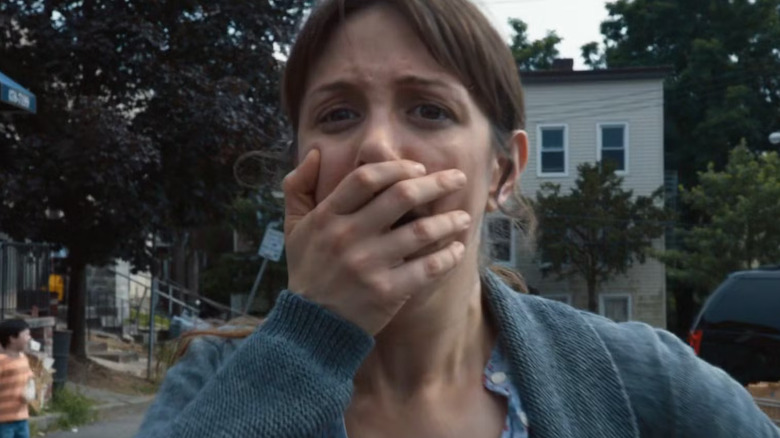
Based on Tom Perrotta's bestselling novel of the same name, his and Damon Lindelof's "The Leftovers" opens with a stressed-out young mother at a laundromat and her constantly crying baby. The woman is fielding several calls on her cell, and once she's finished with the laundry, she leaves and puts her baby in the car. The crying suddenly stops, and when she looks in the backseat, the baby is gone. Looking for the infant around the street in agony, chaos ensues as we realize that he isn't the only one who vanished without a trace. Cut to three years later, we learn that 2% of the world's population has mysteriously vanished on that day — remembered as the "Sudden Departure."
As showrunner of the series, Lindelof did his best to avoid the mistakes he had made in "Lost" a few years earlier, and the HBO show is an undeniable testament to his development as a proficient writer. Throughout its three seasons, "The Leftovers" combined the baffling and the inexplicable with profound and astonishing interpersonal drama, exploring grief, love, faith, and hope in a way that has been seldom done on the small screen before. It's simply peak TV.
Squid Game
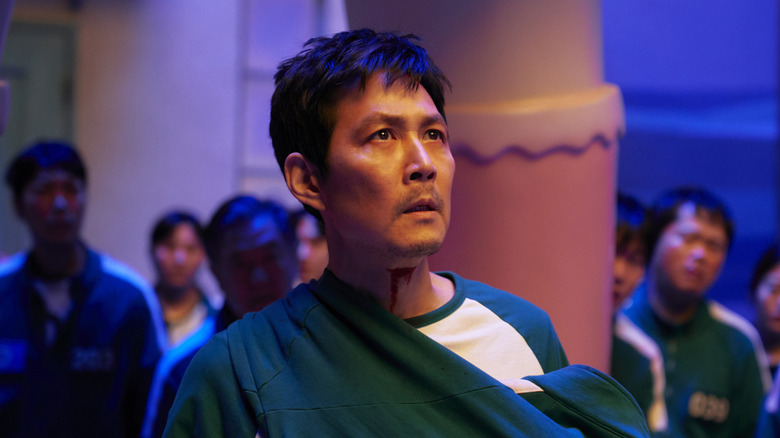
Hwang Dong-hyuk's "Squid Game" starts off with a black and white flashback to its protagonist, Gi-hoon's (Lee Jung-jae) childhood, playing a round of Squid Game with his friends, while we hear his adult self narrating the rules. This opening sequence simultaneously combines a disarming nostalgia with the subtle profundity of a kids' game, striking us as the beginning of a much deeper story. Dong-hyuk's directorial choices infused with composer Jung Jae-il's mesmerizing and blaring score (in addition to the narration) create a vibrant and enthralling atmosphere here that instantly draws the viewer into the larger narrative, eager to see what comes next.
It's hard to say anything about "Squid Game" that hasn't been said already. Dong-hyuk's brutal and uncompromising take on capitalism, poverty, wealth, and class inequality became a global sensation that took the world by storm. The show's overall impact and power may have somewhat diminished with the divisive and lacklustre continuation of Seasons 2 and 3, but that barely compromised the potency of the fascinating and unique debut season that started it all.
Yellowjackets
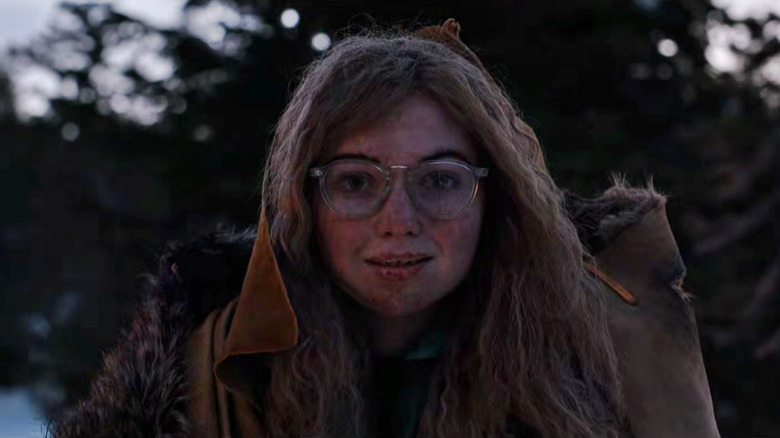
Ashley Lyle and Bart Nickerson's "Yellowjackets" begins with a fierce cold open where we see a young girl in a sleeping gown being chased through a snow-covered forest. As we follow her, we see ominous and off-putting ritualistic items hanging on trees that give off a cultish, almost barbaric vibe. While running in panic, she suddenly falls into a trap with sharp spikes sticking upward, effectively killing her in a matter of seconds. Her chaser, a human wearing animal fur and dirty clothes, approaches the trap and looks down at her before turning to leave.
Cut to 25 years later: We watch clips of interviews with various people reciting the accident of a New Jersey female soccer team whose plane crashed somewhere in the Canadian wilderness in 1996. Apparently, there were survivors — survivors who made it back to their hometown with an experience that changed them forever.
Any horror lover in their right mind couldn't say no to watching what happens next after those initial few minutes. With an opening like that and a narrative structure built on jumping back and forth between the two timelines, focusing on the survivors, "Yellowjackets" quickly became one of the best and most popular horror shows in the past five years. A true survivalist gem with a carefully assembled ensemble cast (including the terrific Melanie Lynskey, Christina Ricci, and Juliette Lewis, among others), the Paramount+ show offers a gripping drama mixed with murder, cannibalism, and supernatural phenomena in true macabre fashion. After three seasons, the series will come to an end with its fourth sometime in 2026.