

10 Harry Potter Fan Theories That Came True
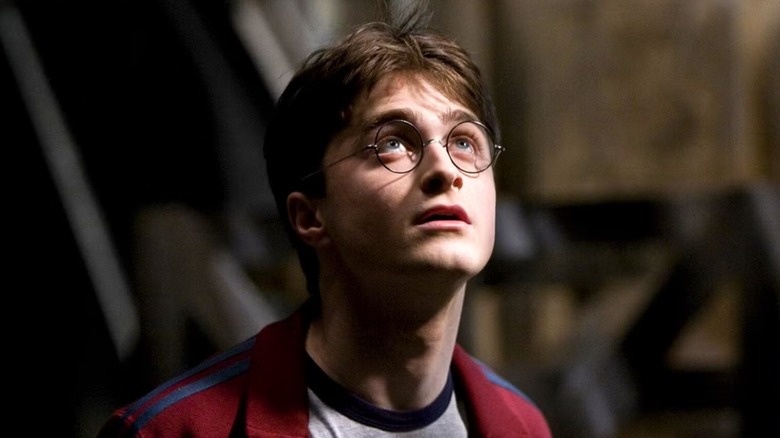
It's a heady thing when fan theories actually come true, isn't it? Whenever any intellectual property or franchise becomes hugely popular and its story is still ongoing, fans clamor to try and figure out the ending ... and that was definitely true for the "Harry Potter" fandom, which went absolutely wild while Joanne "J.K." Rowling was finishing her original series of novels about the titular boy wizard in the early to mid 2000s.
Now, one thing must be made clear here: I am an original fan of the "Harry Potter" series who grew up with these books, and as such, I was really, really into the online fandom. I was pretty deep in the trenches on various fan forums, so I picked these fan theories up like Horcruxes throughout the years. Whether you were lurking in those very same forums circa 2005 or you're not even totally sure what the term "fandom" is referring to, let's tackle some of the most popular "Harry Potter" fan theories that came to fruition in the final three books of the series. Oh, and just in case ... major spoilers ahead!
Snape's true nature
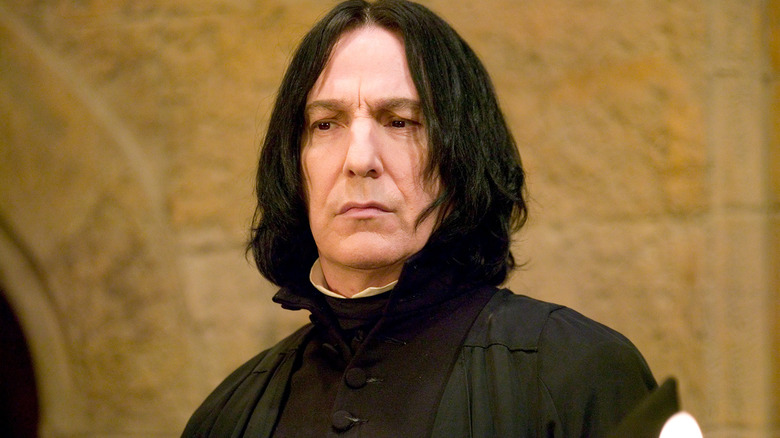
One of the most famous twists in the entire story of "Harry Potter" concerns Severus Snape, the Potions master of Hogwarts School of Witchcraft and Wizardry played on-screen by the late, great Alan Rickman. Snape, who spends his time tormenting most of his students for sport — especially Gryffindors and best friends Harry Potter (Daniel Radcliffe), Hermione Granger (Emma Watson), and Ron Weasley (Rupert Grint) — always acted sort of like a villain, and when Harry learns in the fourth book and film "Harry Potter and the Goblet of Fire" that Snape was once a Death Eater faithfully working for the Dark Lord Voldemort (Ralph Fiennes), his suspicions intensify. Of course, we watch Snape "murder" Hogwarts headmaster Albus Dumbledore (Michael Gambon) in the sixth book and film, "Harry Potter and the Half-Blood Prince," but all is not what it seems.
Not only did fans correctly discern that Dumbledore and Snape had a deal — Dumbledore is dying of a terminal illness by this point, and he has arranged for Snape to kill him — but they also were right that Snape's history with Harry actually goes back to the boy's late mother Lily. Based on context clues like Snape's behavior in a memory featuring Lily (seen in the fifth book and film "Harry Potter and the Order of the Phoenix"), fans realized Snape did everything in honor of Lily's memory, including saving Harry's life multiple times.
The identity of R.A.B.
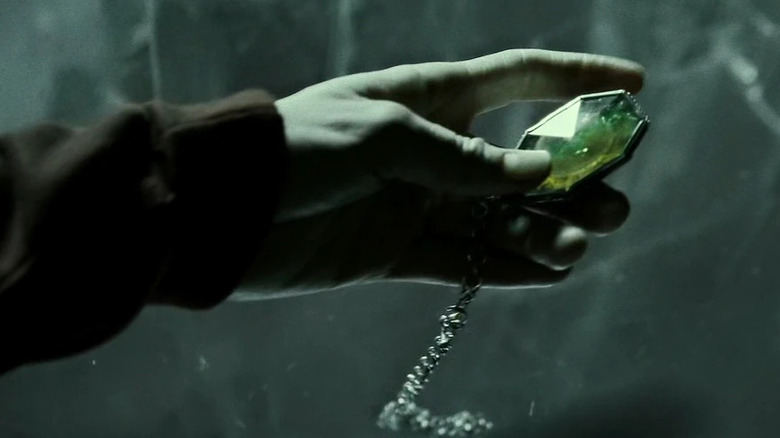
When Snape does kill Dumbledore in "Half-Blood Prince," the elder wizard is seriously weakened thanks to an expedition he and Harry undertake just beforehand, heading to a secret cave that they believe holds one of Voldemort's Horcruxes. Unfortunately for both of them, the locket in the cave, which is protected by a vile potion and sinister lake full of Inferi (reanimated corpses), is a fake and contains a note from a mysterious man named R.A.B., who tells Voldemort that he has stolen the real Horcrux and intends to destroy it. (A Horcrux, as a reminder, is a magical artifact containing a piece of a wizard's soul, and it can only be created by splitting your soul through the act of cold-blooded murder.) Utterly discouraged knowing that Dumbledore made himself weak to obtain a locket that's not even a Horcrux, Harry pockets it anyway ... and in "Harry Potter and the Deathly Hallows," the final book and movie (which was split into two parts on-screen), the mystery is solved.
Fans got there first, though. Not long after they finished reading "Harry Potter and the Half-Blood Prince," Potterheads recalled that Sirius Black, Harry's godfather played in the movies by Gary Oldman and a member of the ancient House Black, once mentioned his brother ... Regulus. Turns out that the guy's full name was Regulus Arcturus Black, and he was a Death Eater who betrayed Voldemort, making this theory one hundred percent correct.
Remus Lupin and Nymphadora Tonks's romance

Remus Lupin and Nymphadora Tonks (played on-screen respectively by David Thewlis and Natalia Tena) aren't characters that you could naturally assume ever get together. First of all, they're introduced in different books and films; Lupin, who works as the Defense Against the Dark Arts professor at Hogwarts during Harry's third year in "Harry Potter and the Prisoner of Azkaban," arrives then, and Harry doesn't encounter relatively new auror Tonks until "Order of the Phoenix." Still, fans started wondering if maybe the two would find their way to one another, and though their on-screen relationship is confined to two unbelievably small moments across both parts of "Deathly Hallows," it's confirmed at the very end of the book version of "Half-Blood Prince."
After Dumbledore's death, a lovelorn and desperate Tonks begs Remus to reconsider a relationship — he's been strenuously avoiding committing to her despite returning her feelings, only because he's a werewolf and that's an unbelievably dangerous condition, particularly if you ever might want to have children. Despite very few clues in the book, fans figured out that Tonks and Lupin would get paired up together, and though they both ultimately perish in the Battle of Hogwarts in Deathly Hallows, they leave behind a son, Teddy, who's notably not a werewolf but does inherit his mother's ability as a Metamorphmagus, meaning he can change his appearance at will. After Tonks and Lupin die in battle, Harry more or less adopts his godson, Teddy, ensuring that the young orphaned boy will never want for a family like Harry once did.
Harry is a secret Horcrux
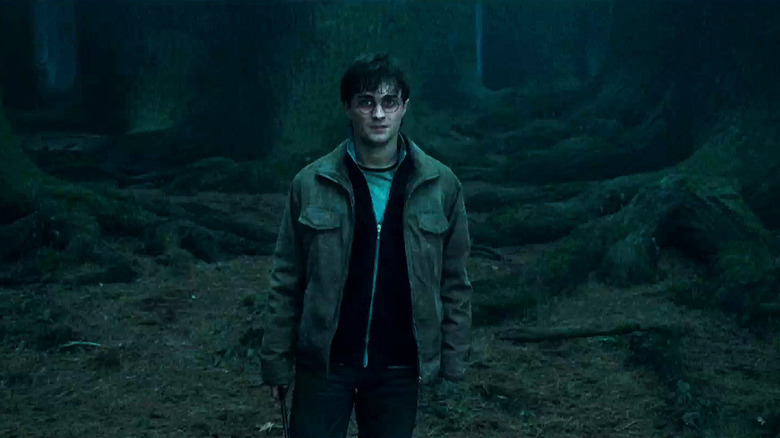
As Harry and Dumbledore search for Voldemort's Horcruxes, which he began creating through murders he committed shortly after graduating from Hogwarts in the first place, they discover that the wizard had an affinity for prized magical artifacts; the aforementioned locket, or at least the real one, belonged to Salazar Slytherin, one of the school's founders, and Voldemort also utilizes a cup that belonged to Slytherin's co-founder Helga Hufflepuff. (Put a pin in that, because there's one founder-related artifact that will get discussed elsewhere on this list.)
At some point, while the two are investigating Voldemort's history and trying to figure out which items could be Horcruxes, Dumbledore starts thinking about Voldemort's snake, Nagini ... and wonders if she could be a Horcrux. When Harry asks if animals or living beings can even be Horcruxes, Dumbledore muses, "Well, it is inadvisable to do so, because to confide a part of your soul to something that can think and move for itself is obviously a very risky business. However, if my calculations are correct, Voldemort was still at least one Horcrux short of his goal of six when he entered your parents' house with the intention of killing you."
Obviously, this idea from Dumbledore just confirms that Nagini is a Horcrux, but that got fans wondering about other living beings ... like Harry himself. Throughout the series, Harry has an intense connection to Voldemort through the lightning-shaped scar conferred by the Dark Lord when he attempted to kill Harry as a baby, and this turns out to be true: a piece of Voldemort's soul resides in Harry. In "Deathly Hallows," Harry allows Voldemort to "kill" him, destroying that piece of soul and allowing him to finally take down his nemesis.
Ron and Hermione were meant to be

Before the original run of "Harry Potter" books concluded, the "shipping wars" got really heated on the "Harry Potter" forums, with fans arguing over whether or not the series' lead female character Hermione would end up with Harry or Ron. While it feels sort of gross to distill Hermione's genuinely great character down to this sort of thing, it was a huge question, and in the book version of "Half-Blood Prince," which released in 2005, fans finally got their answer: Ron and Hermione were the couple, and Harry and Hermione were just really good friends.
This is partly because Harry's attention is fully occupied by somebody else in that book (more on that in just a second), but it's also because Ron and Hermione are more combative and ultimately more compatible from a romantic point of view. No matter what Joanne "J.K." Rowling has said in the years since the "Harry Potter" books came to a close, the reason that Ron and Hermione are a better "ship" (a shortened fandom term for "relationship") than Harry and Hermione is because they challenge each other; Hermione makes Ron want to be a smarter and more powerful wizard, and Ron helps Hermione loosen up when she's in her head too much (which, honestly, she frequently is). This was the first of two major "canon" relationships confirmed in "Half-Blood Prince," and plenty of fans who "shipped" Ron and Hermione together were mighty satisfied when their prediction finally came true.
Harry and Ginny are soulmates too
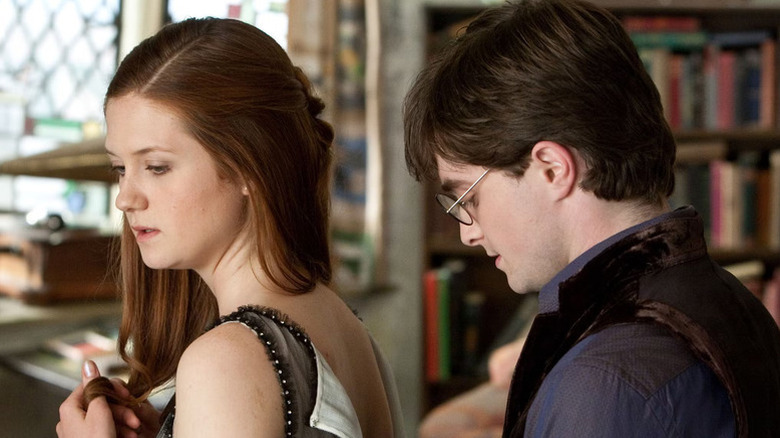
Even though Ginny Weasley's character in the "Harry Potter" movies — where she's portrayed by Bonnie Wright — gets the short end of the stick when you compare her to her book counterpart, it's still at least somewhat satisfying to see her get together with our main character Harry ... and it's honestly even more satisfying in the novel version of "Half-Blood Prince." In the books, Ginny, initially a shy and introverted girl who's the youngest member of the massive Weasley family (and the only girl born to her mother Molly, played by Julie Walters), grows up and comes into her own while Harry is off doing other stuff, and about halfway through "Half-Blood Prince," he spots Ginny kissing her boyfriend Dean Thomas (Alfred Enoch) in a hidden Hogwarts corridor and is overcome with intense, all-consuming jealousy. Though Harry and Ginny do get together in the book — after Ginny wins a Quidditch match for Gryffindor while Harry is stuck in detention, the two share a kiss — they break up at Dumbledore's funeral, a scene not included in the films, as Harry leaves to go Horcrux hunting. They eventually get back together and start a family, as we see in the epilogue on both page and screen.
Fans who "shipped" Ron and Hermione together did tend to support the idea of a relationship between Harry and Ginny too, and this entire crowd was richly rewarded by the reveals in the books. Again, apologies to anyone holding out hope that Harry and Hermione were endgame; anyone who predicted that Harry would fall in love with Ginny, and a lot of folks did, was right.
There were wizarding schools besides Hogwarts
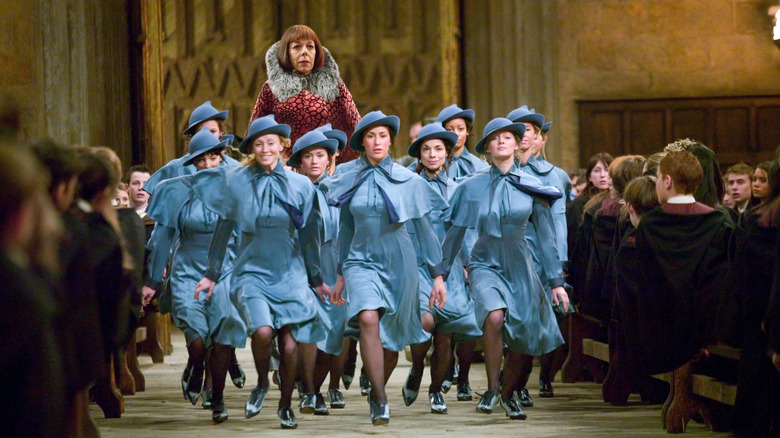
After fans were introduced to the magical academy known as Hogwarts School of Witchcraft and Wizardry in the very first "Harry Potter" book, they started wondering: are there other wizarding schools out there in this fictional universe? Fans went wild trying to figure out what those could be until "Goblet of Fire" came out and the Triwizard Tournament was introduced into the narrative, bringing two foreign schools into the mix: Beauxbatons from France and Durmstrang from an undisclosed location in eastern Europe. (In the movies, Beauxbatons is girls-only and Durmstrang appears to only admit male students, but they're co-ed in the books.)
Those are the European schools, though, and when the prequel series "Fantastic Beasts and Where to Find Them" got its own movie series, more wizarding schools were introduced, but this time they were placed all over the world, according to the Wizarding World website. Ilvermorny is the American school located in Massachusetts, Uagadou is located in a mountain range in Africa, Mahoutokoro can be found on a remote Japanese island, Koldovstoretz is in the heart of Russia, and Castelobruxo has the distinction of being in the Amazon rain forest in Brazil. Certainly, fans didn't think we'd get such a thorough look at the magical schooling system, but now we've gotten locations for wizarding schools across the globe ... proving those fans correct about their very existence.
Ravenclaw's diadem's location in the Room of Requirement
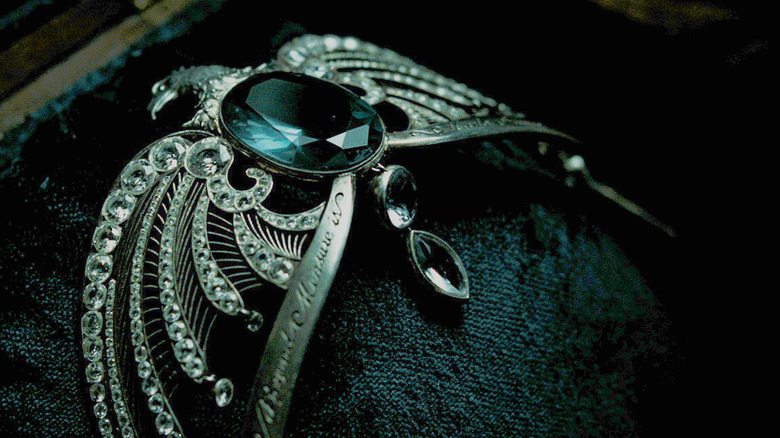
Remember how we said we'd return to the issue of Voldemort's Horcruxes and artifacts that belonged to Hogwarts founders? Let's do just that. In "Harry Potter and the Half-Blood Prince," when Harry is desperately trying to hide his scribbled-upon copy of his Potions textbook — which contains several homemade and frankly dangerous spells that, it turns out, were invented by a young and gifted Severus Snape — he heads into the Room of Requirement and finds it in its purest form, meaning that it's just full of a ton of junk. As he races to hide the book specifically from Snape after the Potions master catches Harry using one of those homemade spells on his nemesis Draco Malfoy (Tom Felton on-screen), Harry notices an object also hidden in the room:
"Seizing the chipped bust of an ugly old warlock from on top of a nearby crate, he stood it on top of the cupboard where the book was now hidden, perched a dusty old wig and a tarnished tiara on the statues head to make it more distinctive, then sprinted back through the alleyways of hidden junk as fast as he could go."
That bust and wig aren't important, but the tiara sure is. When Harry returns to Hogwarts in the book and movie version of "Deathly Hallows" — the second movie, specifically — he's searching for a diadem that belonged to Hogwarts founder Rowena Ravenclaw, and guess what? It's that very tiara. Fans clocked this during "Half-Blood Price," and they were all proven correct in a very satisfying manner thanks to "Deathly Hallows."
There was more to Crookshanks the cat than meets the eye
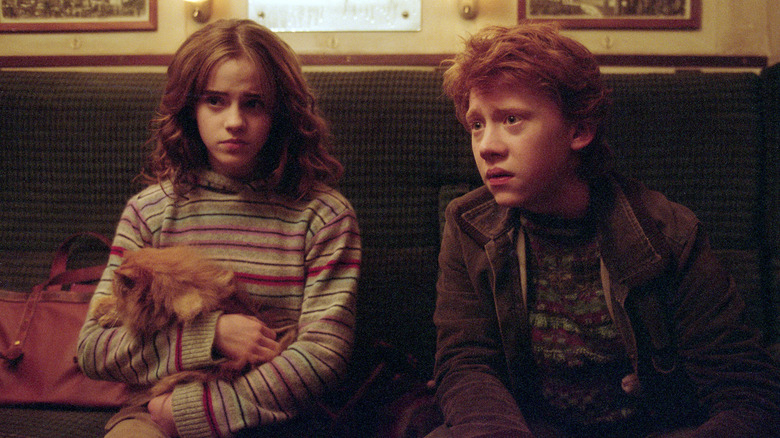
In both the book and movie versions of "Prisoner of Azkaban," Hermione, who's gone without a pet previously, picks out a cat before returning to Hogwarts for her third year — and the cat she chooses, Crookshanks, sets its sights on Ron's lifelong pet rat Scabbers. This creates a massive rift between Ron and Hermione in both versions of the story, especially when Scabbers goes missing and Ron assumes that Crookshanks is responsible. The real answer is considerably more complicated in that Scabbers is actually a wizard named Peter Pettigrew (Timothy Spall in the films) who's an Animagus — meaning he can transform into a rat at will — and has been hiding from the law for well over a decade as the Weasley family pet while waiting for his boss Voldemort to return. Still, everyone notes, throughout that book, that Crookshanks seems really intelligent, even for a cat ... and fans started to wonder if there was more to Crookshanks than met the eye.
Once again, they were correct! Crookshanks is part-cat and part-Kneazle. So what exactly is a Kneazle, then? This magical creature excels at spotting "untrustworthy" people, according to the official "Harry Potter" website, which makes perfect sense where Crookshanks is concerned; the poor cat noticed a guy pretending to be rat, tried to point it out to everyone, and got yelled at by Ron for his trouble. Not only is Crookshanks vindicated by this reveal, but he's vindicated by his genetic makeup to boot.
Neville's struggles with magic weren't his fault
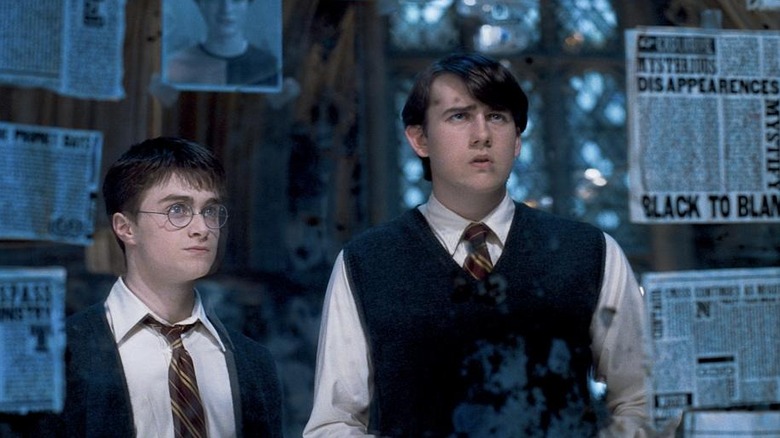
Throughout the "Harry Potter" series, Neville Longbottom — played by Matthew Lewis on-screen — is portrayed as a forgetful and even bumbling fool who's not very good at magic, and fans had a lot of theories about why that might be. Eventually, we're given a good reason in "Order of the Phoenix" when we find out Neville's unbelievably tragic backstory: when he was very young, his parents — like Harry's — fought in the resistance effort against Voldemort, but they weren't murdered like James and Lily Potter. Instead, Frank and Alice Longbottom were tortured to the point of insanity by several of Voldemort's Death Eaters, including the particularly vicious and sinister Bellatrix Lestrange (portrayed perfectly by Helena Bonham Carter in the film series). Every now and then, Neville, who was raised by his grandmother, goes to visit them at a wizarding hospital in London — which is where Harry runs into him in the book version of "Order of the Phoenix" as he and the Weasleys are visiting an injured Arthur Weasley (Mark Williams).
Fans thought that, perhaps, Neville was given a Memory Charm as a child to try and erase the memories of his parents — that was a dark theory — but after Neville's wand is destroyed in "Order of the Phoenix," he gets conspicuously better at magic. Why? He picks out his own, confirming a long-running fan theory that Neville's original wand never fully worked for him because it belonged to his father Frank. In this wizarding world, the wand must choose the wizard — even when Harry has access to the most powerful wand of all time, he still yearns for his own — and it perfectly explains why Neville struggled with magical basics for such a long time.