

The Only Foreign Language Movies Ever Nominated For The Best Picture Oscar
The history of the Academy Awards is a complicated one. For every groundbreaking and unexpected Oscar nomination, there are groan-inducing ways this awards show keeps coming up short. Just look at the 12 biggest Oscar snubs of the 2020s (so far) for countless examples of how good artistry can go unrecognized. One additional area the Oscars have especially often come up short is in giving international motion pictures their due in the best picture category. Historically, foreign language cinema has been excluded from this category. This means, traditionally, the ceremony's vision of "peak cinema" is frustratingly rooted in exclusively American imagery and artists.
However, there have been some exceptions to this phenomenon, particularly in the last decade. Across 97 Oscar ceremonies, 16 foreign language titles made outside of America have been nominated for the best picture category. These features range wildly in visual aesthetics and thematic ambitions, not to mention their countries of origin. However, they all share the distinction of upending the norms for where best picture Oscar nominees can originate from and what languages they're told in. Great cinema can come from anywhere. With these 16 films, the Academy Awards reflected that enthralling reality.
Grand Illusion
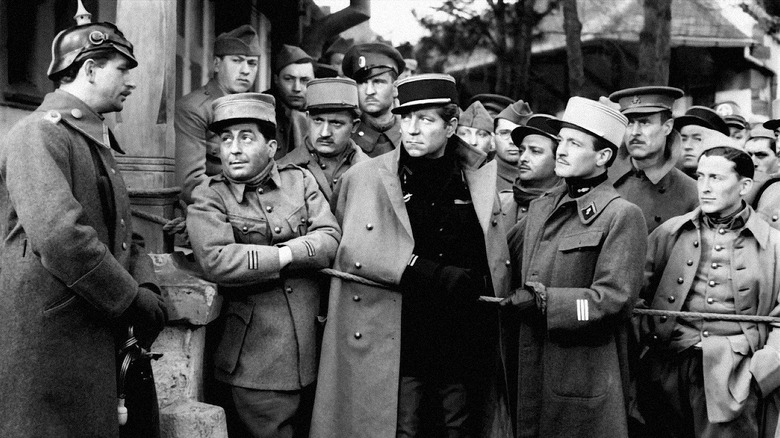
The 11th Academy Awards in 1938 looked radically different from the Oscars we're all familiar with today. For one thing, this was 15 years before the ceremony would be televised for the general public. For another, key categories like best visual effects and best international feature film had not yet been introduced. The latter realm's initial omission from the Oscars meant that it was extra hard for non-American cinema to get any Academy Awards recognition in these early years. However, Jean Renoir's "Grand Illusion" rebuked this erasure by making history as the first foreign language film to ever secure a best picture Oscar nomination.
Slotted alongside titles like "The Adventures of Robin Hood" and "Jezebel," the French-language "Grand Illusion" stuck out in this category. However, it paved an important road for the Oscars recognizing foreign language cinema, not to mention establishing this ceremony's fondness for French motion pictures.
Z
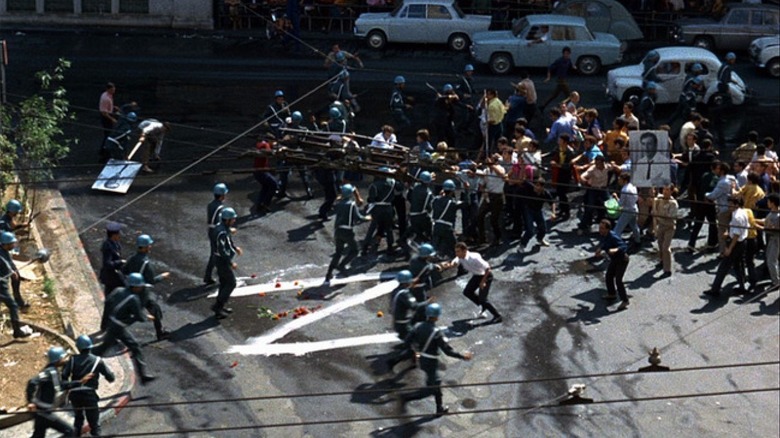
The 60s saw an explosion in notoriety and peak artistry for global cinema. Countries like Italy and Japan produced countless movies that reshaped this artistic medium while tantalizing American moviegoers with all the lurid and realistic possibilities cinema could offer, especially as homegrown cinema at the time was still stymied by the Hays Code. Shockingly, it took until the final year of this seminal decade for another foreign language film to score a best picture Oscar nomination. The feature accomplishing this feat was "Z," a Costa-Gavras directorial effort chronicling the fallout of the demise of a leftist activist.
A searing tour de force of filmmaking that still registers as dangerous and compelling, "Z" was an instant masterpiece that scored four additional Oscar nominations beyond best picture, including best director and best adapted screenplay. A new age of cinema was dawning, and the Oscars could no longer only recognize American movies for the top spot. How fitting a movie as sublime as "Z" would pave the way for this exciting status quo.
The Emigrants

There was a 32-year gap between "Grand Illusion" and "Z" in terms of foreign language movies scoring best picture Oscar nominations. Yet just three years later, Academy voters let another international title into this domain with writer/director Jan Troell's "The Emigrants." A Swedish feature starring Max von Sydow and Liv Ullmann, this title's Oscars history is peculiar. It was nominated in the best international feature film category at the 44th Academy Awards in 1972. However, rules regarding the eligibility of international titles ensured that additional nominations for best picture and best director (among other categories) didn't occur until the following year.
Strange rules and nomination practices didn't deter Academy voters from making sure "The Emigrants" got into the most prolific categories at the 45th Oscars. Better yet, the rapturously positive reviews bestowed upon "The Emigrants" have ensured it's known for far more than its Academy Award nomination history.
Cries and Whispers
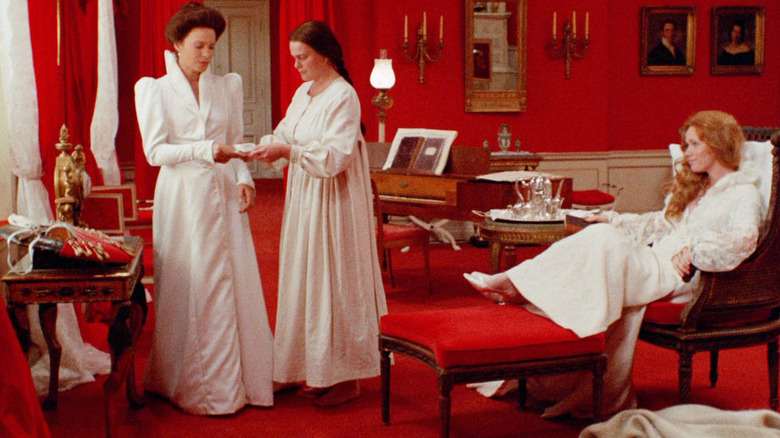
In the early 60s, director Ingmar Bergman's works won two consecutive best international feature film Oscars, a testament to just how revered this man's cinematic exploits were. This Swedish auteur, whose earliest projects include "The Seventh Seal" and "Wild Strawberries," would not see his relationship with the Academy Awards end with just these two victories. His 1973 project "Cries and Whispers" was up for best picture at the 46th Academy Awards, which put it in direct competition against "American Graffiti," "The Exorcist," "A Touch of Class," and the category's eventual winner, "The Sting."
None of these other titles even came close to exuding the kind of atmosphere one might associate with a Bergman motion picture, which made the Oscar feats of "Cries and Whispers" extra significant. Bergman would keep scoring major Oscar nominations in the years after this directorial effort, but foreign films in the best picture category were not nearly as subsequently prominent. It would take another two decades for another foreign language title to crack this Academy Awards domain.
Il Postino: The Postman
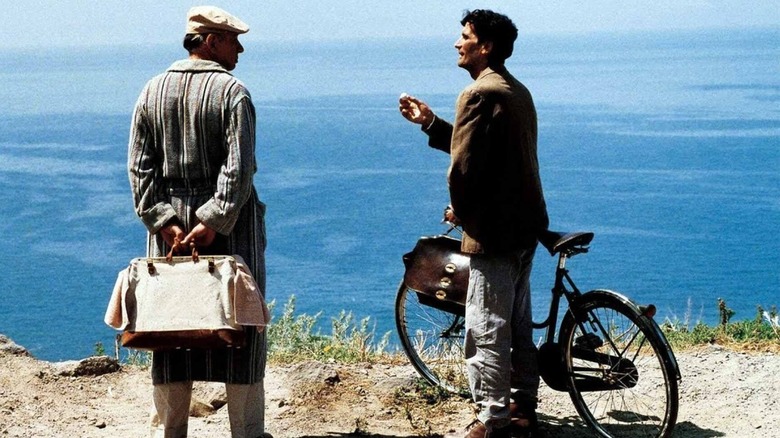
People all over the world love unexpected friendships. Titles ranging from "The Untouchables" to "Toy Story" show the enduring appeal of centering a movie around two wildly opposing people who develop a friendship together. Director Michael Radford's "Il Postino: The Postman" was another example of the broad appeal of such films. Its saga of poet Pablo Neruda (Philippe Noiret) befriending a bumbling postman, Mario Ruoppolo (Massimo Troisi) might sound like a hokey premise on paper, but it was enough to become one of the highest-grossing foreign language films of all time in the U.S.
This concept was also enough to make "Il Postino" an Academy Awards powerhouse. Scoring five Oscar nominations, the film stood toe-to-toe with higher-profile American movies in categories like best director and best actor. It also became the first foreign language movie to crack the best picture field in more than two decades. Never underestimate the universal appeal of a movie about an unlikely friendship, especially when it comes to award season potential.
Life is Beautiful
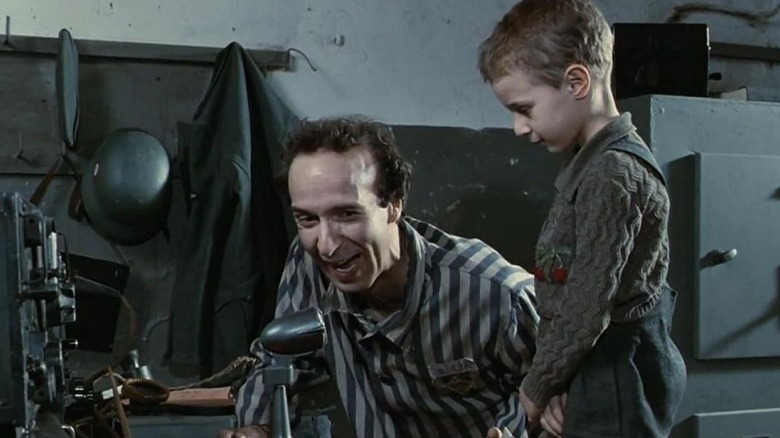
In hindsight, it's astonishing to consider that "Life is Beautiful" took off like a phenomenon in North America. Here was an Italian comedy (both directed by and starring Roberto Benigni) that juggled broad slapstick gags with drably colored and gruesome depictions of the Holocaust. Not only was this strange tonal concoction a box office sensation, it was also a global juggernaut on the awards circuit. After winning the Grand Prix prize at the 1998 Cannes Film Festival, it racked up additional victories at ceremonies at the Screen Actors Guild Awards.
There was no stopping Benigni's creative vision, including at the Oscars. When the 71st Academy Award nominations were announced, "Life is Beautiful" scored seven nods, including a best picture nomination. It was also honored in territories like best actor and best international feature film, both of which it would win. Benigni's surreal antics at that year's Oscars ceremony have only exacerbated the feeling that the film's award season dominance was a bizarre dream. However, this unconventional comedy defied the odds and took home a slew of Oscar nominations in 1997.
Crouching Tiger, Hidden Dragon

In the 20th century, the foreign language films that made it into the best picture category at the Oscars were almost exclusively titles from various European territories like Italy, Sweden, and France. However, that streak came to an end with Ang Lee's "Crouching Tiger, Hidden Dragon," which not only originated from China and Taiwan but was also told entirely in Mandarin. A sweeping wuxia film starring legendary performers like Chow Yun-fat, Zhang Ziyi, and Michelle Yeoh, "Crouching Tiger, Hidden Dragon" followed prior Lee directorial efforts like "Sense and Sensibility." That 1995 feature established how profoundly Lee's films could resonate with the Academy, as seen by its seven Oscar nominations, including one for best picture.
"Crouching Tiger, Hidden Dragon," however, even exceeded the Oscar nomination crop with a stunning 10 Academy Award nods. That included an instantly historic best picture nomination. Just by breaking into this category, "Crouching Tiger, Hidden Dragon" obliterated the idea that international best picture Oscar contenders could only hail from Europe. That kind of accomplishment comes naturally when you pair up icons like Ang Lee and Michelle Yeoh for a movie.
Amour

After "Crouching Tiger, Hidden Dragon," foreign language best picture Oscar nominees once again went into dormancy. Save for the American-financed and Clint Eastwood-directed "Letters from Iwo Jima," the first 12 Oscar ceremonies of the 21st century were almost exclusively focused on English-language films from America and Europe. This endured even during ceremonies like the 82nd Academy Awards, which doubled the number of best picture nominees from five to ten. It wouldn't be until 2013's 85th Academy Awards that this cold streak would finally be broken by a movie from Michael Haneke, one of the masters of bleak filmmaking.
This title was "Amour," which unflinchingly chronicled an elderly couple, George (Jean-Louis Trintignant) and Anne (Emmanuelle Riva), grappling with their relationship crumbling after the latter character has a stroke. This French-language feature was no easy watch, but that didn't stop Oscar voters from giving "Amour" five nominations, including one for best picture. After "Amour," the best picture category once again began annually eschewing foreign-language nominees. Luckily, six years later, a new norm for when and how often these titles broke into the biggest Oscars category would be established.
Roma

Director Alfonso Cuarón's achievements in cinema are far-reaching and include directing "Children of Men," widely considered the best sci-fi movie of all time. However, his accomplishments go far beyond his other films like "Gravity" and "Harry Potter and the Prisoner of Azkaban." They also include 2018's "Roma," which kick-started a resurgence for foreign-language cinema in the best picture category at the Oscars. This Netflix-released motion picture secured a whopping 10 Oscar nominations at the 91st Academy Awards, including two acting nods, a best original screenplay nomination, and a best picture nod. While making history as the first Netflix movie to break into the best picture category, the film was more importantly a watershed moment for how prolific Mexican cinema could be at the Oscars.
"Roma's" influence even extended far beyond this. Since it broke into the best picture category, the Academy has recognized other foreign language films in this domain on a nearly annual basis. Previously, decades could go by between foreign language best picture Oscar nominees. "Roma," as well as the increasingly global Academy voter base, helped jumpstart an exciting new trend that's broadened the idea of what best picture Oscar contenders can look like. Chalk up another outstanding win for Alfonso Cuarón's filmography.
Parasite

One of the most joyous Oscar presenter moments ever is when Jane Fonda read aloud the best picture victor at the 92nd Academy Awards. The slight smile on her face as she read the winner and that glint in her eyes as she said "Parasite" made it clear that she knew how historic this moment was. Fonda was fully conscious that nothing would be the same after she uttered that solitary word, and boy was she right. Bong Joon-ho's riotously entertaining and searingly relevant "Parasite" was an absolute beast at this Oscars ceremony, devouring one award after another. Joon-ho even tied Walt Disney for the record of most Oscars won in a single evening, an absolutely insane achievement.
What's staggering about this cavalcade of honors is that "Parasite" marked the first time a South Korean film broke into the best international feature film category, let alone the best picture domain. This country's long-overdue welcome into the Oscars was an iconic one, thanks to the film's tremendous award season feats. More than 80 years after "Grand Illusion" first established that foreign language movies could get into the best picture category, "Parasite" resoundingly declared that they could also come out on top there as well. No wonder Fonda was so clearly excited to announce the film's victory.
Drive My Car

Looper's list of the 13 best Japanese movies of all time is just a taste of the countless unforgettable motion pictures that this country has produced. The birthplace of filmmakers like Akira Kurosawa, Yasujiro Ozu, and Satoshi Kon (among many others) is an incredible artistic realm that's also been bafflingly ignored in nearly every best picture Oscar race. While titles like "The Woman in the Dunes" and "Ran" got into various incarnations of the best director category, the first 93 Academy Award ceremonies found no room to nominate a Japanese film in the best picture domain. This inexplicable and bizarre erasure finally came to an end at the 94th Oscars with a three-hour drama entitled "Drive My Car."
A motion picture from filmmaker Ryusuke Hamaguchi, "Car" was another masterpiece from this director quietly exploring the complicated lives of ordinary people. This cinematic treasure scored four Academy Award nominations, including a historic best picture nod that finally brought Japan's cinema to the most famous Oscars category. Finally, this country was getting the respect it deserved from this ceremony.
All Quiet on the Western Front

The original "All Quiet on the Western Front" film adaptation, released in 1930, was one of the earliest best picture Oscar winners. It was only fitting that a German-language remake of this seminal novel would receive similarly high-profile Oscar recognition almost a century later. Hailing from "Conclave" filmmaker Edward Berger, "Western Front" procured nine Oscar nominations, including for best picture. The latter nod was a massive achievement, marking the first time a German-language title broke into the best picture field at the Oscars.
With this grisly war title, Germany finally joined fellow European countries like Sweden, France, and Italy in delivering best picture Oscar contenders. That's an appropriately momentous accomplishment for a feature, especially with the legacy the original film's early Academy Award win.
Anatomy of a Fall

Before "Parasite" in 2019, it was significantly rarer for Palme d'Or winners at the Cannes Film Festival to get into the best picture category at the Academy Awards. It certainly happened (especially in the 1970s), but there were often tremendously lengthy gaps between these overlaps in Cannes and Oscar prestige. In the modern world, though, it's become a near-annual tradition for the Palme d'Or winner to eventually secure a best picture Oscar nod as well. Chalk that up to the terrific award season campaigning of distributor Neon (which has acquired most of the latest Palme d'Or victors) and the increasingly globalized tastes of this ceremony's voters.
One of the more recent instances of worlds colliding for the Palme d'Or and the best Academy Awards was the French feature "Anatomy of a Fall," which, after "Grand Illusion" and "Amour", brought films originating from the country back to this Oscar category for the third time ever. The film was also the first woman-directed foreign language feature to ever enter this Academy Awards category.
The Zone of Interest
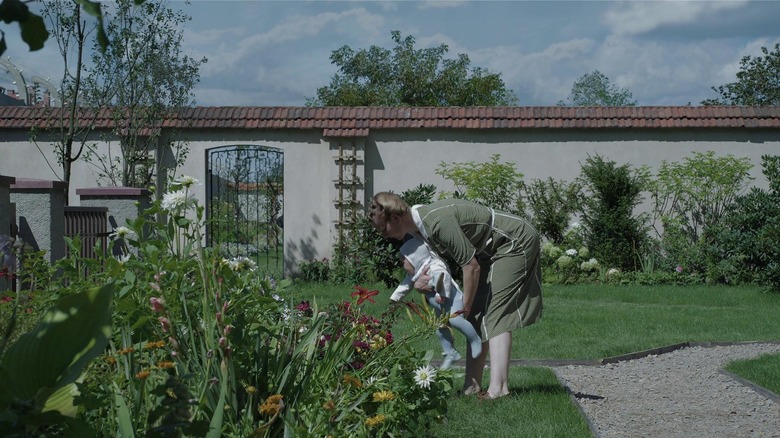
One thing that can sometimes help foreign language titles break through into major Academy Awards categories is if they can remind Oscar voters of familiar, American movies. "Il Postino: The Postman," for instance, was building on the track record of countless "odd couple" comedy movies. 2023's "The Zone of Interest" and its profiling of the banality of evil took an alternative approach with its distinctive and avant-garde sensibilities. Director Jonathan Glazer's starkly shot and quietly brutal depiction of "everyday life" transpiring just a few feet away from a Holocaust concentration camp was visually unlike any other film in history. The unorthodox imagery of the title, and its eschewing of a traditional narrative structure, was bound to alienate many viewers.
That didn't stop this project from becoming an Oscar powerhouse with five nominations, including one for best picture. Oscar voters embraced something truly unique in making "The Zone of Interest" a best picture nominee, which undoubtedly helped put such a powerfully impactful and form-breaking feature on countless people's radar.
Emilia Pérez

The most Oscar nominations in history that a single film has received is 14. In 2025, the bold and messy Mexican/French trans crime musical "Emilia Pérez" almost caught up to that record with a staggering 13 Oscar nods. That included a best picture nomination, which made "Pérez" the fourth French feature ever to break into this category. This entire project's immense Oscar honor haul was quickly overshadowed by a deluge of controversy surrounding the title, right down to a widely mocked best original song acceptance speech by the film's songwriters at the 97th Academy Awards.
Controversial or not, "Emilia Pérez" is now indisputably part of the small group of foreign language movies that have broken through into the best picture Oscar category. To boot, its entire crop of nominations came oh-so close to making history.
I'm Still Here
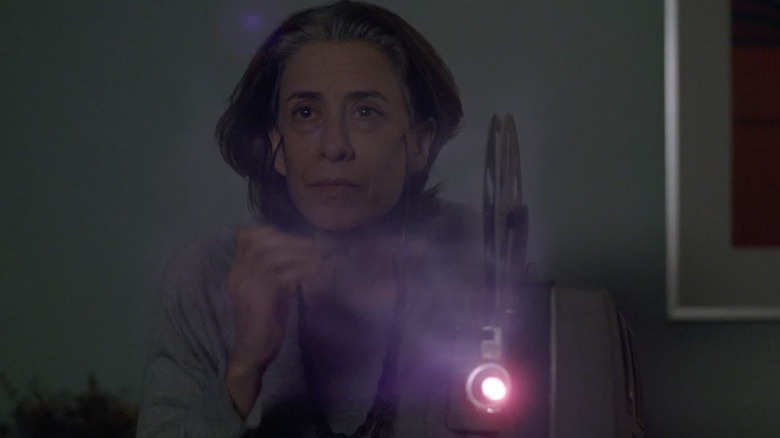
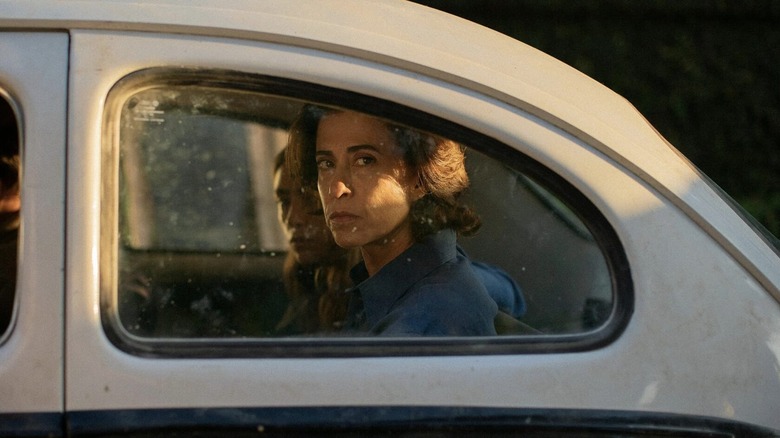
The 97th Academy Awards weren't just about "Emilia Pérez" in terms of international cinema. A 2024 film from "Central Station" director Walter Salles, "I'm Still Here," also made it into that year's best picture crop. This was a momentous achievement on many levels, particularly in marking the first time a Brazilian feature had secured a slot in the best picture field at the Oscars. Brazilian artists have been making cinematic masterpieces for decades, but "I'm Still Here" marked the first time the country's motion pictures broke through in a big way at the largest American movie award show.
While "I'm Still Here" didn't win best picture at the 97th Academy Awards, it did pull out a surprise victory over "Emilia Pérez" in the best international feature category, much to the euphoric joy of countless Brazilian viewers. Hopefully, "I'm Still Here" will only be the first of many instances of excellent Brazilian cinema getting best picture Oscar recognition.