

28 Years Later: The Bone Temple Review - An Exhilarating Sequel
- The story feels new while staying true to previous films
- Terrific cast
- It looks fantastic
- Some of the characters could have used a bit more refining
"28 Years Later" arrived amid extremely high expectations and was promptly heralded by many publications, including Looper, as one of the best horror films of 2025. It's an epic sequel that expanded the world, gave us memorable new characters, and paved the way for the next two installments in a new trilogy for the "28" series (check out our recap video here if you need to refresh your memory).
Now, original director Danny Boyle has once again handed the reins to a different filmmaker for a sequel, and expectations remain sky high. But this is not director Nia DaCosta's first attempt at following-up a beloved horror film. Just as she did with "Candyman," DaCosta arrives in the world of "28 Years Later" with confidence, swagger, and infectious energy, delivering "28 Years Later: The Bone Temple" — one of the best horror sequels in recent memory, and a must-see horror film for 2026.
Following up right after the last movie
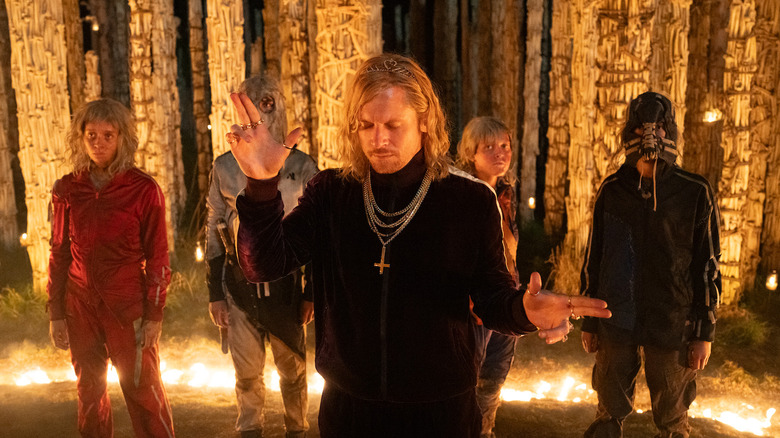
"28 Years Later" brought us a world in which the United Kingdom has essentially been left to rot in the wake of the Rage Virus, where survivors have built their own social structures out of the ruins of a fallen world. "28 Years Later: The Bone Temple" picks up the action immediately after that film, and bifurcates the narrative in a fascinating way. The boy we know as Spike (Alfie Williams), having lost his mother mere hours before, is taken into the bizarre, tracksuit-clad cult led by the charismatic Sir Lord Jimmy Crystal (Jack O'Connell), who rules his hard-fighting minions through a combination of violence, strange personal lore, and pure manic energy.
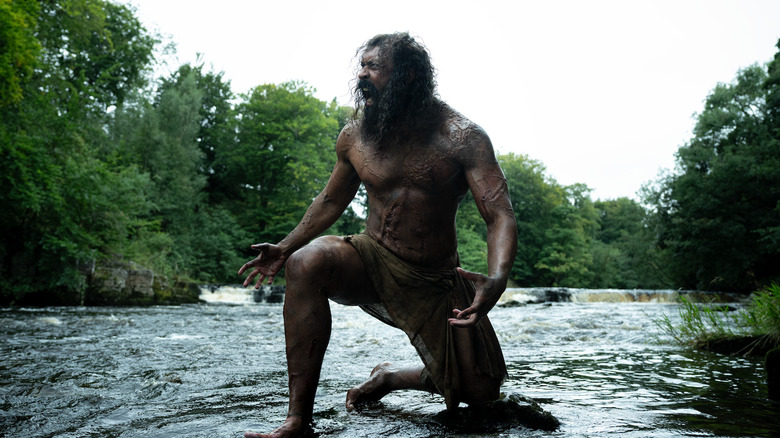
But Spike, still navigating grief as he tries to make sense of things beyond what his parents taught him, is not alone in getting used to a new world. Dr. Ian Kelson (Ralph Fiennes), the creator of the Bone Temple, is reckoning with new discoveries of his own, as he grows closer to the Alpha Infected he calls Samson (Chi Lewis-Parry), and searches for a way forward beyond just killing every Infected in sight.
These two stories eventually merge in a thrilling, unexpected climax, but for much of the runtime of "The Bone Temple," they remain separate threads, stories of two searchers fighting, sometimes in vain, for a better world. Along the way, the performances, Alex Garland's script, and Nia DaCosta's directorial prowess transform it into a stunning new entry in a franchise that can still take you by the throat.
The characters are exploring a new world
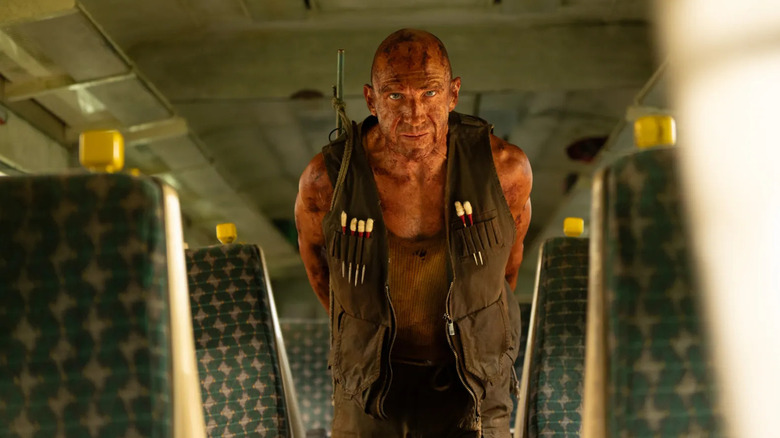
Both Spike and Dr. Kelson navigate the world of "28 Years Later: The Bone Temple" as searchers, trying to see things in a new way, which makes the film the perfect vehicle for a fresh directorial voice to step up and reinterpret what Danny Boyle and Alex Garland initially built. Nia DaCosta's camera keeps the kinetic power of Boyle's digital photography, but she also adds something of her own. Every frame of this film, from action setpieces to contemplative moments of quiet, aches with a kind of longing — not for the world that came before, but for something better that might still arrive. There's a weight to the images, a gravity and patience that allows DaCosta's own voice to shine through, while never sacrificing the tone Boyle set.
This is also reflected in the performances, even as the entire saga gets much stranger thanks to the arrival of Sir Lord Jimmy and his cult members. As the new major player on the scene, Jack O'Connell is satisfyingly savage and darkly hilarious, presenting both a raving madman and a strange prophet for the kind of world this post-Rage island could become. He's also a searcher, but he believes he's already found his truth, and he pursues it with the tenacity of a bulldog. Ralph Fiennes and Alfie Williams, meanwhile, are wonderful, delivering the heart and the sense of hope that drove "28 Years Later" to its wonderful conclusion. Together with Chi Lewis-Parry, who turns a Rage-infected giant into a remarkably subtle being, they form an ensemble worthy of carrying forward this story.
And it is quite a story, but not in the ways you might expect. Just as "28 Years Later" morphed from survival thriller into elegiac apocalyptic epic, so too does "The Bone Temple" shift, just when you think it's settled into a certain narrative rhythm. There's a sense in Garland's scripting, backed up by DaCosta'a direction, that this franchise is truly swinging for the fences, attempting to deliver an end of the world unlike anything else we've ever seen while also delivering the zombie movie goods. "The Bone Temple" is, like its predecessors, a frightening film, featuring some of the most tension-laden moments in the series, but it's also a film possessing tremendous ambition and weight. The world has not just changed forever. It's still changing forever, before our very eyes as an audience, and the thematic, metaphorical, and emotional connections forged by those changes hit like hammers right between the eyes.
We don't yet know how the "28 Years Later" saga will end, if anything lies beyond it, or which characters will have key roles to play in the upcoming third installment, beyond a couple of key players. But as a middle entry in a planned trilogy, "The Bone Temple" works like gangbusters. It's visually stunning, often genuinely frightening, and wonderfully weird while never letting go of the heart that planted "28 Years Later" so deep in our imaginations. It's a worthy sequel in every sense, and horror fans everywhere won't want to miss it.
"28 Years Later: The Bone Temple" hits theaters on January 16.