

5 Worst Moments In The Stranger Things Series Finale
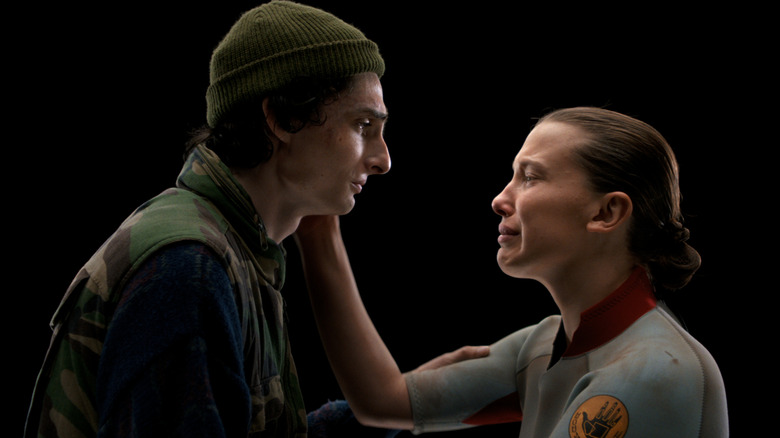
They can't all be winners. "Stranger Things" finally came to an end after a nearly 10 year run, giving fans some of what they wanted — and a lot of what they didn't. In fact, they got things that they may have abhorred. The show's finale caused enough dissatisfaction within the fanbase that an entire conspiracy theory called "conformity gate" has developed around that last episode. While some moments hit hard and some elements of that outing have received critical praise, it's hard to ignore the fact that show managed to whiff the endings of several main characters, create confusing elements with its plot twists, and generally disappointed a chunk of their viewers.
Here, we'll break down the worst moments of "The Rightside Up," pointing out major character inconsistencies, storyline problems, and all of the places where those final two hours sagged, dragged, and bagged. These are the five worst moments in the show's finale.
Vecna and Will are connected -- until they're not
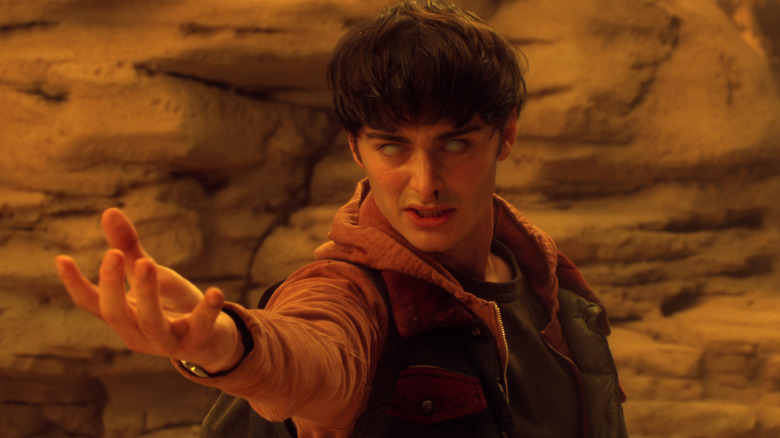
The fifth season of "Stranger Things" produced so many unfinished plot threads and newly-created plot holes that an unofficial tally of them has reached the dozens. Matt and Ross Duffer have tried to explain these problems away, but they still stick out like sore thumbs. One issue caused by Will Byers (Noah Schnapp) and Vecna's (Jamie Campbell Bower) connection through the hivemind produces a fairly big issue in particular.
During Episode 4 of Season 5, "Sorcerer," Will attains the ability to use Vecna's powers. During Season 5 Part 2, he invades Vecna's mind only to be rebuffed, and Vecna does the same to Will, implanting notions intended to destabilize him. They are depicted as being able to feel each other's pain, as well as see each other's deeds and hear each other's thoughts. Amazingly, Will is the one who takes control toward the end of the battle between the party and Vecna; he helps Eleven (Millie Bobby Brown) get in the final strike, leading to Vecna's death.
The problem? Until Vecna starts fighting with El, Will has felt every single strike and blow forged against his enemy. But when Vecna is beheaded, Will not only survives the moment, he thrives — the connection between them severed and his life going on as normal. That makes marginal sense — with Vecna dead, there's no connection to maintain — but Will surely should have felt something when his enemy met his maker.
Kali was fridged for El's ending
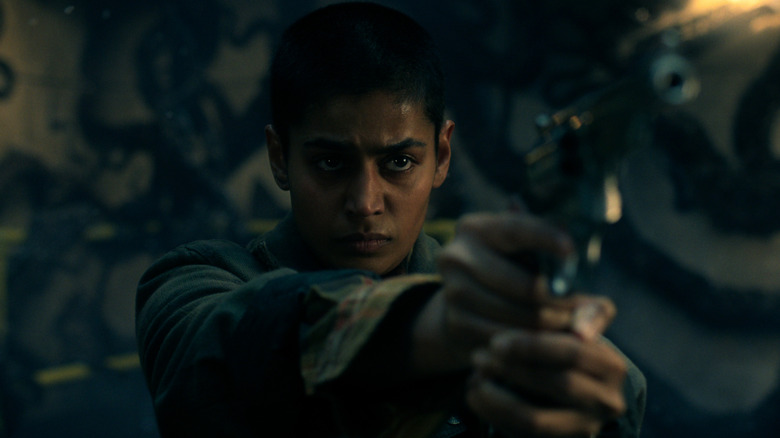
Kali (Linnea Berthelsen) was already a controversial character thanks to her appearance in El's tweenage rebellion arc during Season 2. During her reappearance in Season 5 she becomes a shadow of herself and a figure of pity, a desecration of her core characterization that peaks in the series finale. Captured by Dr. Kay (Linda Hamilton), her blood has been used to breed another generation of possible psychics. Once freed, she tells El that they ought to allow themselves to be immolated when the wormhole connecting Hawkins to The Abyss is detonated, to escape their history of being hunted by the military. But she doesn't get the chance to choose and is instead shot to death by one of Kay's cronies.
The character's entire Season 5 arc exists to service El, mainly to disabuse her of the idea she can ever have a happy, normal future with Mike Wheeler (Finn Wolfhard). She doesn't get to do many useful things outside of being victimized by Kay and acting as El's backup. Her teenage rebellion has turned into nihilism, and she sees death as the only solution to her problems. But her anger just exists to counterbalance El's optimism, as it did in Season 2.
Ultimately, El does go through with Kali's plan — or at least she appears to. But even Mike's version of events position Kali as a savior for El and a helpmeet to her happy ending — using the last of her energy and abilities to make sure that El survives the final blast. All of this buries Kali's character arc and her story under the weight of El's, making her an even bigger cipher than she was before.
Vecna's aborted redemption arc
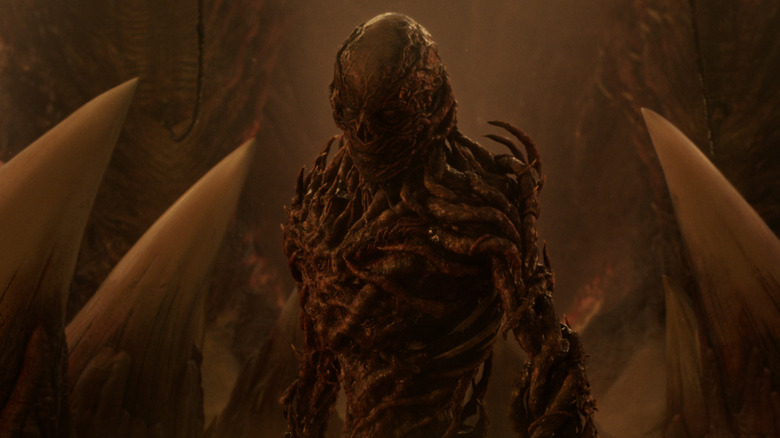
Much of Season 5 of "Stranger Things" focuses in on a secret trauma that Vecna experienced back when he was Henry Creel. He cannot enter a cavern within his own mindscape — allowing Max (Sadie Sink) a place to find respite and relief in a place where he cannot touch her. Eventually, Vecna overcomes his fear and enters the cavern, and inside is a memory of his first encounter with the Mind Flayer. One would think the entity caused Henry to fear this memory to protect itself, but this proves to be untrue.
These attempts at adding depth to Vecna and shades to Henry Creel's human-hating logic fall apart when he rejects Will's offer of redemption, choosing to stay bonded with the Mind Flayer and continue its mission of destruction. Henry suffers for his loyalty and is impaled and then beheaded. It's always nice to have shades of grey thrown into a character's backstory, but not only was it too late to redeem Vecna after he'd tortured and killed so many beloved characters, the narrative treaded water for hours of screentime trying to make the notion of his redemption plausible. Alas, it never comes to fruition and leaves the viewer feeling royally cheated.
The rules behind the Mindflayer make even less sense now
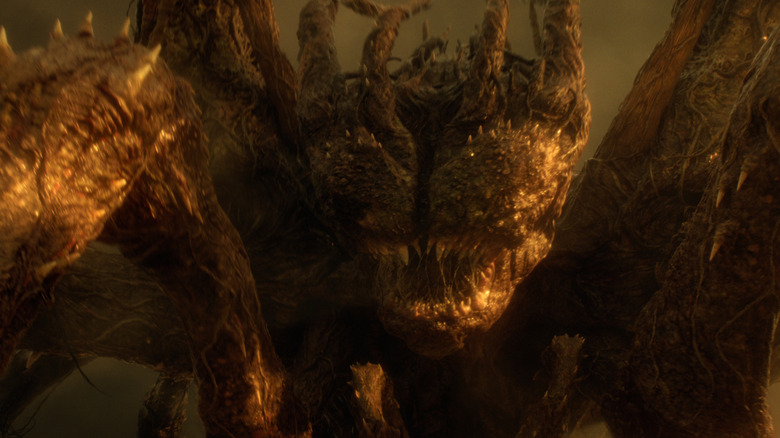
The rules governing the behavior of The Mind Flayer were further messed with during "The Rightside Up." Particles of it have been shown to be downright indestructible, and have survived all manner of calamity. While it's clearly been vulnerable to fire throughout the run of the show, other manner of attack have proven to be useless against it. Why, then, does the party choose to attack The Mind Flayer in its final form with a flare gun and bullets? An even bigger question — why does it work? Vecna is barely weakened when their attack is shown to have an effect on them, so it can't be because El and Will have softened it up.
On top of that, it barely takes advantage of the powers we've seen it wield before. It can manipulate the weather — why not send a flood of rain down upon their heads? It can mentally manipulate others — why not take hold of Will before he takes a stand and then have him attack the others? The rules that explain how the creature behaves still make no sense, and its behavior during the finale makes even less sense.
Awkward references to Stranger Things: The First Shadow abound
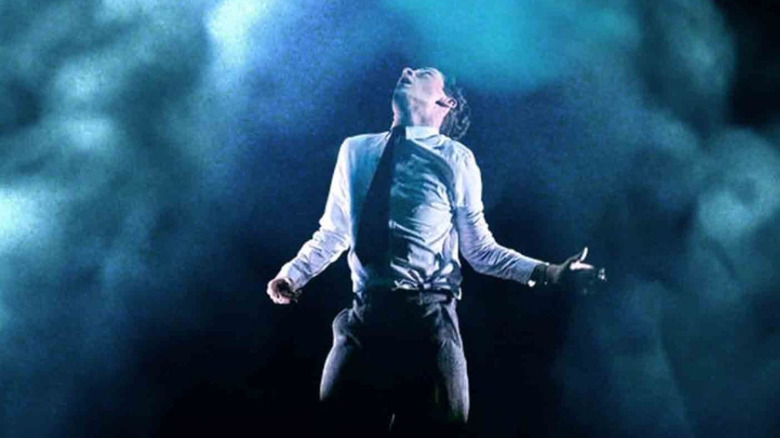
Parts of "The Rightside Up" – and several plot beats in Season 5 in general — rely upon fans' knowledge of the stage play "Stranger Things: The First Shadow." Since it's not widely available to watch, many audience members probably felt completely lost while watching the series finale. During an extended sequence in it, Max, El, and Kali take a journey through Vecna's subconscious and find themselves stuck in a nondescript high school hallway sometime in the late 1950s, looking for a shortcut through his memories to that allegedly-impregnable cave.
While Max briefly witnessed a slice of Henry's high school life earlier in Season 5, in this episode the trip straggles along while Max makes reference to what other, older characters in the show and play are doing now. They eventually stumble into Joyce's attempt at staging "Dark of the Moon," complete with masks, drumming and dramatic lighting, before finding the right path to the cave.
None of this makes sense, of course, to viewers who aren't rabid fans of the franchise. In fact, it feels like a whole lot of wheel spinning during what ought to be an extremely tense moment, making it one of the worst moments in the finale.