

Star Trek: Starfleet Academy Review - Hesitates To Boldly Go Somewhere New
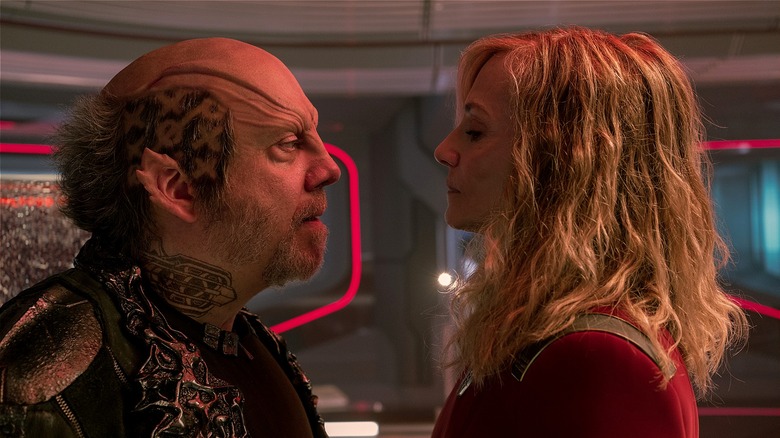
- Holly Hunter is a welcomely eccentric addition to this universe
- Paul Giamatti delivers one of his hammiest performances yet as the recurring villain
- Unsure whether it wants to be for a new generation of fans or Trek die hards, and will satisfy neither
- Becomes a stale YA drama once it lands at the Academy
After several flops, Marvel Studios head honcho Kevin Feige was reported as worrying he'd created a "no new fans club" — his interconnected universe across film and TV now so dense that there was no discernible entry point. It's a problem familiar to any long running sci-fi or fantasy franchise, and when it comes to "Star Trek," this has long proven an issue. "Star Trek's" biggest olive branch to newcomers was director JJ Abrams' 2009 reboot, which was well-received outside of the fandom and quickly grew divisive inside of it. Let's not forget that at a 2013 convention, the critically acclaimed sequel "Star Trek Into Darkness" was voted the franchise's worst by fans; it was clear Trekkies wanted to boldly go where no man had gone before, not just reinvent "Star Trek II: The Wrath of Khan" as a modern action blockbuster.
Alex Kurtzman, one of Abrams' screenwriters on those movies, has since been tasked with building Paramount's "Star Trek" streaming universe, and the latest series on his roster feels like his pop culture empire's first direct attempt since those movies to win over new fans. It is an unashamedly young-adult skewing adventure about a new generation joining the reopened Starfleet Academy, a clean entry point for audiences, set over a century since the school was last open. And yet, self-aware that it's arriving just before the 60th anniversary of the original series, many of the plots and lessons learned tie back to decades of lore across several spin-off series and movies. Rather than a back-to-basics reintroduction, it's a "Star Trek For Dummies" manual which is adamant about reminding returning fans that it hasn't forgotten about them, and will offer up as many nostalgic side plots centered around former characters and adventures as possible so they don't mistake this for the soft reboot it should have been.
Star Trek, but make it YA
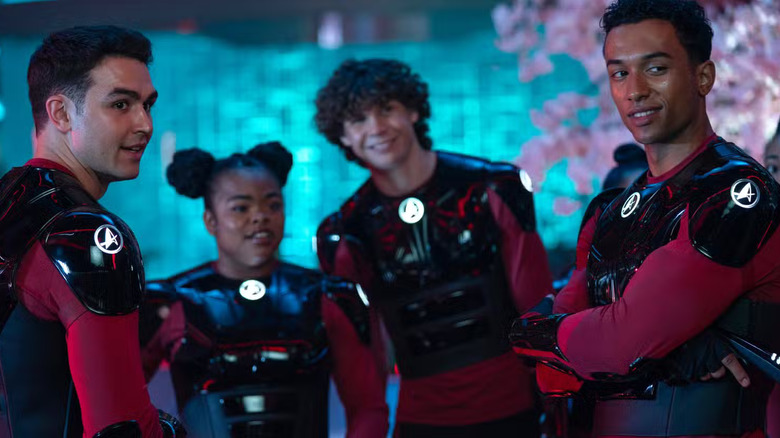
In fact, the series that "Star Trek: Starfleet Academy" feels most reminiscent of to me is "90210," the late 2000s reboot of the early 1990s teen sensation. It's another odd case of a young adult show frequently getting hijacked by the adults around them — most of whom were returning favorites from the original series that the target audience wouldn't have any connection to, having not been born when it aired. Before the series settles into its YA narrative formula, the feature-length opening episode introduces us to Caleb Mir (Sandro Rosta), who in a prologue is separated from his mother and forced on the run. 15 years later, he crosses paths with Nahla Ake (Holly Hunter), who he escaped from all those years earlier, and his punishment ends up being enrolling in the newly reopened academy she's the chancellor of.
Caleb is designed as a clone of the Chris Pine iteration of James T. Kirk, who we were similarly introduced to as he got on the wrong side of the law, before very quickly proving his brilliance when destiny forced him to Starfleet. Tensions with Caleb's new classmates are resolved by the end of Episode 1, when the voyage to Earth is interrupted by the arrival of Nus Baraka (a delightfully hammy Paul Giamatti), an unashamed villain responsible for Caleb's separation from his mom, and who is the first adversary for the mismatched students. The most prominent of these are Jay-Den Kraag (Karim Diané), who despite being a Klingon, is very much characterized as the hyper-literal, by-the-book Spock counterpart to Caleb's Kirk; and Sam (Kerrice Brooks), a holographic creation who is only weeks old and approaches every assignment with wide-eyed wonder.
With the drama being set largely within the school confines, this opening episode is as intense as proceedings get; fighting bad guys is quickly replaced by teen rituals of dating and prank wars, and the big coming-of-age lessons are found either in the classroom (a later episode is structured around Jay-Den's struggle in debate class) or in research assignments where the characters must learn about icons of "Star Trek" past. One of those is still a teacher at the school — Robert Picardo's holographic Doctor, who has been kicking for 900 years at this point in the timeline — and another is the long-missing "Deep Space Nine" protagonist Benjamin Sisko, now a folkloric hero in-universe, whose legacy is explored in an episode that couldn't be more of a transparent attempt to try and coax Avery Brooks out of retirement.
The show is designed for two opposing audiences
This will all mean next-to-nothing to the new fanbase that showrunners Alex Kurtzman and Gaia Violo are attempting to reach, and all references to the franchise's past are similarly liable to go over the heads of that demographic, who will most likely be confused why — for example — a meet-cute between two teens leads to a conversation about Humpback Whales. Those who have committed "Star Trek IV: The Voyage Home" to memory will equally be as baffled as to why such a reference has been awkwardly shoehorned in, especially when divorced from the environmental themes that drove that charmingly demented sequel.
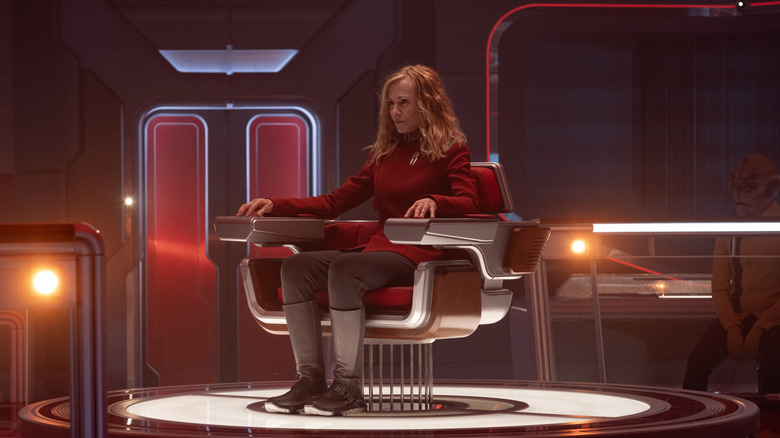
So, what does "Star Trek: Starfleet Academy" actually have to offer veteran viewers, who have stuck with the franchise through the ages, and don't need to be immersed into this world through tepid teen drama? Well, Holly Hunter is an enjoyable addition to this universe, even if the writers drastically alter her character to become far too eccentric following the pilot episode, going from a respected captain to reluctant authority figure as soon as she touches down on the San Francisco campus, colluding with kids in prank wars and turning up to every important meeting in bare feet. Hunter excels in both molds, yet they never feel like cohesive aspects of the same character; only when sharing scenes with her more by-the-book deputy Lura Thok (British comedian Gina Yashere) does this jarring recharacterization feel palatable.
The way Hunter's performance is awkwardly pitched, appearing like it's emerged from two separate series on a scene-by-scene basis, is illustrative of the big issue with this first season. Unsure of whether to extend a hand to new fans and make a sprawling, centuries-spanning universe accessible, or to play the hits to a fanbase often frustrated at the show's continued direction, it will likely wind up satisfying nobody. If teens do want to get into "Star Trek," well, there are far better entry points to be found on the same app this'll be streaming on.
The first two episodes of "Star Trek: Starfleet Academy" premiere on January 15, with new episodes released weekly until March 12.