

12 Shows To Watch If You Like HBO's Industry
This article contains a discussion of sexual assault.
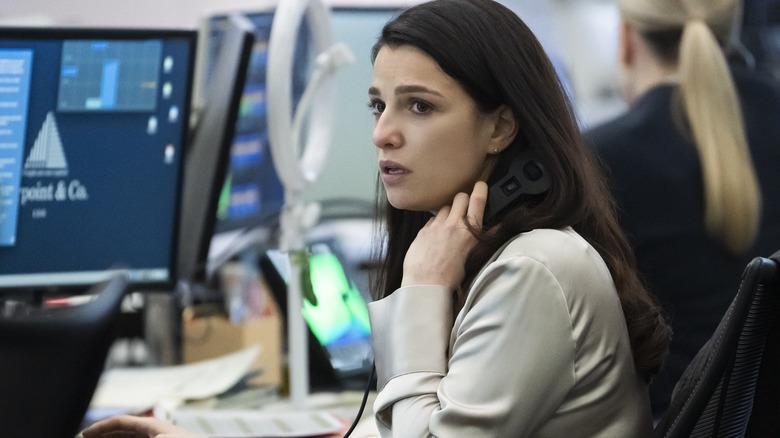
If you're not watching HBO's business drama "Industry," you're really missing out. Created by Mickey Down and Konrad Kay — themselves former investment bankers who decided to center an entire TV show around their previous profession — the series stars Myha'la Herrold, Marisa Abela, Ken Leung, and, as of its third season that aired in 2024, "Game of Thrones" veteran Kit Harington, returning to the premium network that made him famous. As a group of 20-somethings living, working, and partying heavily in London while they work at the massive fictional investment bank Pierpoint & Co, Harper Stern (Herrold), Yasmin Kara-Hanani (Abela) and her startup-focused erratic husband Sir Henry Muck (Harington), and Harper's mentor and former boss Eric Tao (Leung) get into personal scuffles, fight and make up, and even endure serious real life consequences. (In Season 3, the show centers an "Uncut Gems" style episode around Sagar Radia's market maker Rishi Ramdani where someone actually dies, and we won't say any more in case you haven't experienced it just yet.) "Industry" is, to be honest, one of HBO's best shows and one of its most criminally underrated dramas, and fans of the show know just how enthralling, addictive, and compelling this story can be even if you don't know any of the jargon.
Whether you've already binged "Industry" a whole bunch of times or you're just preparing to settle in for a marathon of high-stress and sometimes incomprehensible episodes (frankly, in order to understand all of the verbage used on this show, you might need a finance degree, but don't let that deter you for a second) led by a team of incredible performers, we've got you covered for your next watch. Here's what you should check out if you love HBO's "Industry."
Succession
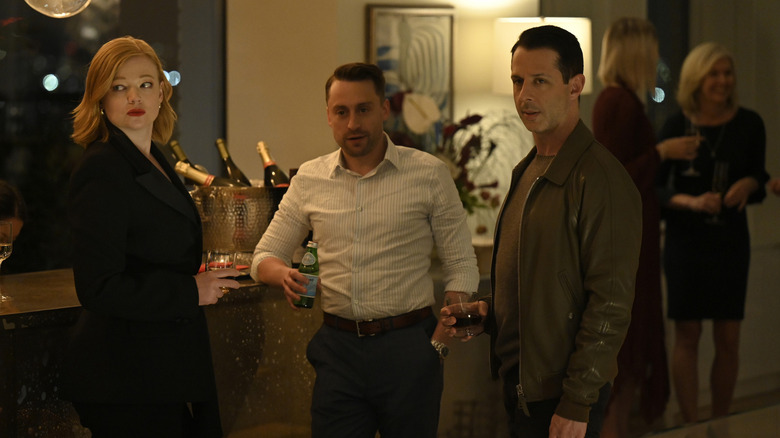
You don't have to understand all the business jargon on "Succession" to love it, just like "Industry" — although, based on the skill level of the characters involved in "Succession," it's probably more gibberish than jargon when you compare it to the inside baseball finance chatter on "Industry." A sort of modern re-telling of Shakespeare's "King Lear" with a soupçon of real-life influences thrown in (you can clearly see Murdoch and Trump family DNA in the Roys), "Succession" centers around — you guessed it — who might succeed media magnate Logan Roy (Brian Cox) as he considers retiring for health reasons at the start of Season 1. Much to the disappointment and dismay of Logan's hyper-competitive and ultimately inept children Kendall (Jeremy Strong), Roman (Kieran Culkin), and Siobhvan, nicknamed Shiv (Sarah Snook) — as well as forgotten "eldest boy" Connor (Alan Ruck), the bumbling social climber Greg Hirsch (Nicholas Braun), and Shiv's cuckolded husband Tom Wambsgans (Matthew Macfadyen) — Logan doesn't actually retire, leaving them to squabble over the mere idea of the CEO position.
"Succession" won a ton of Emmys during its four-season run from 2018 to 2023, and Strong, Culkin, Snook, and Macfadyen all took home trophies for their undeniably phenomenal performances. If you've already watched "Succession," you know it's one of the best and most surprising dramas in recent memory and is, against all odds, even funny (there's a moment in Season 3 where Roman sends a lewd photo to his own father by accident, accompanied by some incredible physical comedy from Culkin). Just go watch "Succession." You'll love it.
Billions
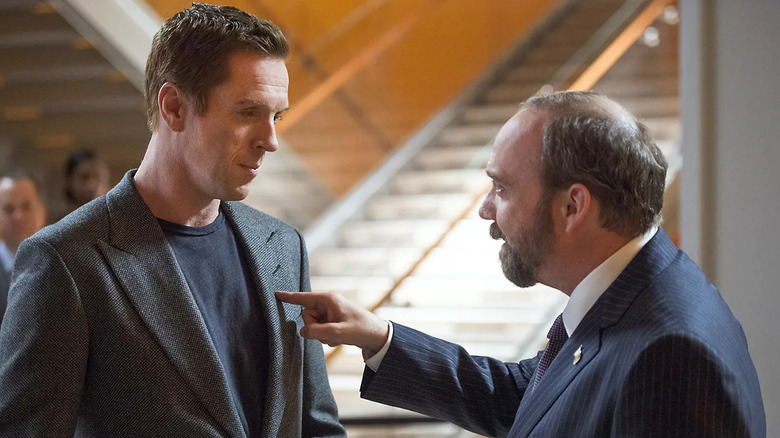
There was a period of time where people probably confused "Succession" with Showtime's drama "Billions," but the two shows are different — yet both pair perfectly with "Industry." Instead of focusing on a bunch of dysfunctional colleagues or a dysfunctional yet powerful family, "Billions" centers the dysfunctional and often openly adversarial relationship between Chuck Roades (Paul Giamatti), the U.S. Attorney for the Southern District of New York, and Bobby Axelrod ("Homeland" veteran Damian Lewis), a hedge fund manager whose entire career relies on his ability to toy with the law.
Even though "Billions" is essentially a long cat-and-mouse game between Chuck and Bobby, the series, created by Brian Koppelman, David Levien, and Andrew Ross Sorkin (the last of whom is not related to Aaron Sorkin), boasts an incredible supporting cast that includes "Mad Men" veteran and TV staple Maggie Siff, "Hunting Wives" standout Malin Åkerman, and Corey Stoll, just to name a few. "Billions" ultimately wrapped up after seven seasons, marking one of the longer runs on this list ... and if you need to scratch that finance world itch after "Industry," it's the perfect pick.
The Dropout

Anyone who hasn't figured out that Amanda Seyfried is truly one of the greats — and one of the most underrated actors of her generation — probably hasn't seen her play scammer and Theranos CEO Elizabeth Holmes on the Hulu original miniseries "The Dropout." (This is, to be clear, not to be confused with Dropout, a streaming service that's covered over at fellow Static entertainment site /Film.) Released in 2022 and created by "New Girl" maven Elizabeth Meriwether (the woman's got range), "The Dropout" casts Seyfried as the bug-eyed, deep-voiced, and overly ambitious Holmes, whose brilliant and prodigal mind helps her dream big ... perhaps too big, at a certain point. Because this is based on a real person — Holmes was sentenced to over 11 years in federal prison in 2023 — you might know the story of Theranos already, but thanks to Meriwether's knack for storytelling and Seyfried's unbelievable central performance, it's worth reliving.
Aided by "Lost" alum Naveen Andrews as Elizabeth's paramour and professional partner Sunny Balwani, Seyfried adeptly portrays Elizabeth's rise as an 18-year-old science prodigy to a disgraced CEO whose plan to create super-quick blood tests ultimately resulted in widespread (and openly criminal) fraud. In 2022, people loved scammers — this is the same year that "Inventing Anna," the Netflix miniseries about Holmes's fellow scammer Anna Delvey, dropped — and if nothing else, you have to watch "The Dropout" for Seyfried, who won an Emmy for her role and was so good that Jennifer Lawrence canceled a planned Holmes project based on Seyfried's performance alone.
WeCrashed
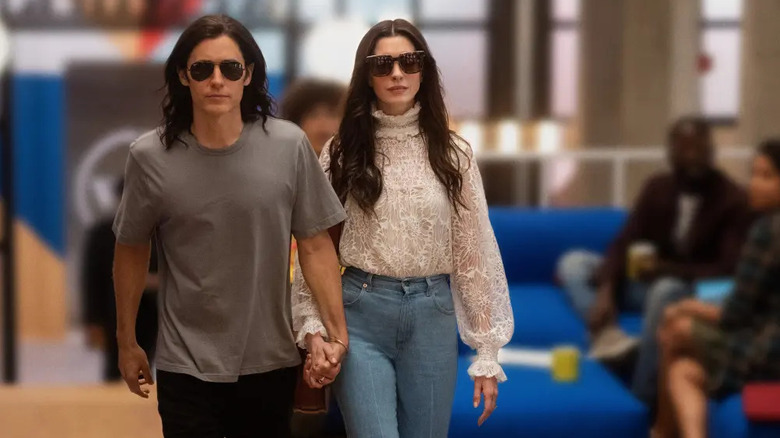
Another true-life story of an ambitious business model that resulted in outright scams and disgrace, Apple TV's miniseries "WeCrashed" centers around WeWork, the co-working space that felt unbelievably ubiquitous across the United States throughout the 2010s. Like Theranos, the audience goes into "WeCrashed" — created by Drew Crevello and Lee Eisenberg with Oscar winners Jared Leto and Anne Hathaway in the lead roles of WeWork founders Adam and Rebekah Neumann — knowing that WeWork spectacularly flamed out in real life, earning pushback after it tried to go public in 2019 and eventually declaring bankruptcy in 2023. "WeCrashed" actually beat that last point to the punch by premiering in 2022, but still, everyone knew, by that point, that the Neumanns were jointly responsible for a lot of wrongdoing.
Alongside co-stars Kyle Marvin, "The Handmaid's Tale" player O. T. Fagbenle, "ER" veteran Anthony Edwards, and "Superstore" star and future Oscar nominee America Ferrera, Hathaway and Leto portray Adam and Rebekah as ambitious but ultimately ill-advised people who squandered money to the point that WeWork went under in the most public manner possible. If you love business dramas and scammers, try "WeCrashed."
Mad Men
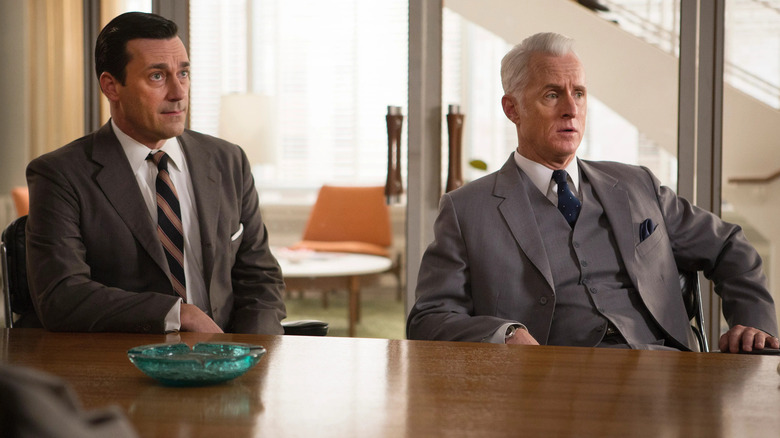
The modern template for all workplace and business dramas going forward, Matthew Weiner's seven season masterpiece "Mad Men" premiered in 2007 on AMC with relative newcomer Jon Hamm in the lead role of Don Draper, a Manhattan ad man hiding a colossal secret as he excels at his job at his firm Sterling Cooper. Despite his seemingly perfect life in the New York suburbs with his former model wife Betty Draper (January Jones) and their two children, Don is a deeply troubled man, something he's able to hide from colleagues like Roger Sterling (John Slattery), Peggy Olson (Elisabeth Moss), and Pete Campbell (Vincent Kartheiser), just to name a few. As the team at Sterling Cooper — which eventually becomes Sterling Cooper Draper Pryce partway through the series — manages different accounts and their personal lives against the tumultuous backdrop of the 1960s, we're drawn further into Don's fascinating web of lies.
There's absolutely no question that "Mad Men" is one of the best television shows ever made and a prime example of the so-called "golden age" of television, and the performances from Hamm, Jones, Moss, Kartheiser, Slattery, and other major players like Christina Hendricks (as the firm's über-powerful secretary turned partner Joan Holloway) and Kiernan Shipka (as Don's troubled but fierce daughter Sally) round out this world. If you haven't watched "Mad Men," what are you doing?! Go watch it!
The Pitt
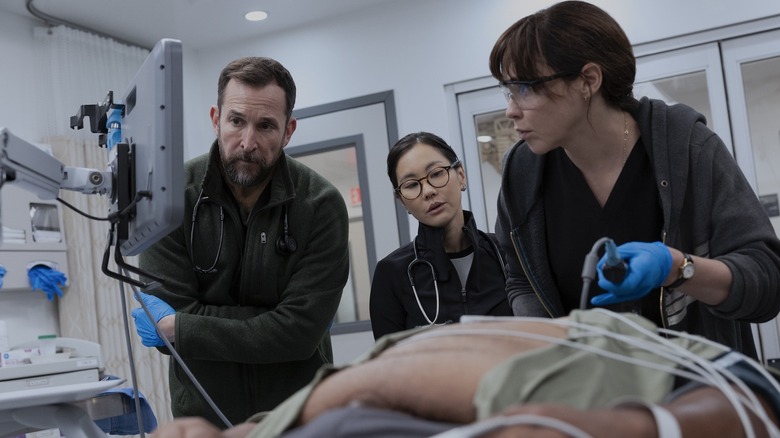
A relative newcomer as of this writing, "The Pitt" has already earned its industry bonafides; after its first season premiered on HBO Max in 2025, it scooped up a handful of Emmys that September, including a long-overdue award for its star and "ER" alum Noah Wyle as well as an award for outstanding drama series, among others. Set in a fictional and chaotic Pittsburgh emergency room and led by Wyle's trauma attending Dr. Michael "Robby" Robinavitch, the crew of this department — including stalwart charge nurse Dana Evans (Katherine LaNasa), Robby's friend and night shift counterpart Dr. Jack Abbot (Shawn Hatosy), residents like Dr. Mel King (Taylor Dearden) and Dr. Frank Langdon (Patrick Ball), and many more endure a hellish 15-hour shift, which we know because the show is told using a "real-time" conceit like "24" years beforehand. (Also, LaNasa and Hatosy took home their own Emmys for their wholly excellent supporting and guest turns in the series, marking the first major awards for these two industry veterans.
Wyle, who also helped craft the show alongside showrunner R. Scott Gemmill and executive producer and director John Wells (both of whom also worked with Wyle on "ER," as it happens), capably leads "The Pitt" into greatness, and it's just as stressful as "Industry" if that's what you're looking for — but also includes some beautiful and emotional moments of breath and levity. "The Pitt" is one of the hottest shows of the 2020s, so go watch it if you haven't yet.
I May Destroy You
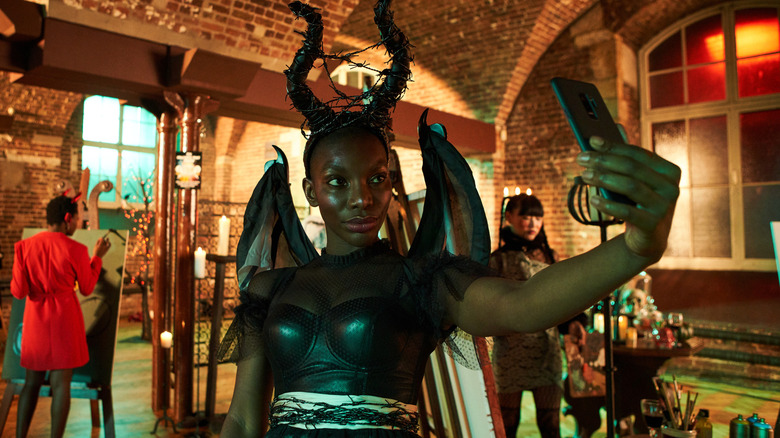
While Michaela Coel's bravura masterpiece miniseries "I May Destroy You" might not seem to have a lot in common with "Industry" at first — besides that they're both a part of the HBO family — they both focus on the party culture in London and the disastrous results that can come from it as a result of bad actors and bad intentions. Created by, written by, and starring Coel, whom you might recognize from "Black Mirror" or "Chewing Gum," "I May Destroy You" does, as it happens, address one of the most difficult and fraught topics in pop culture: sexual assault and its aftermath. When Coel's author and social media star Arabella is assaulted while out at a nightclub, she tries to grapple with the experience as well as remember what exactly happened, leading to a shocking and bloody conclusion that creates perfect catharsis.
"I May Destroy You" is dark, heartfelt, and enormously important, thanks to Coel's boldness as a creator. It's a tough watch, but still — take a break from your "Industry" binge with this miniseries.
If you or anyone you know has been a victim of sexual assault, help is available. Visit the Rape, Abuse & Incest National Network website or contact RAINN's National Helpline at 1-800-656-HOPE (4673).
Girls
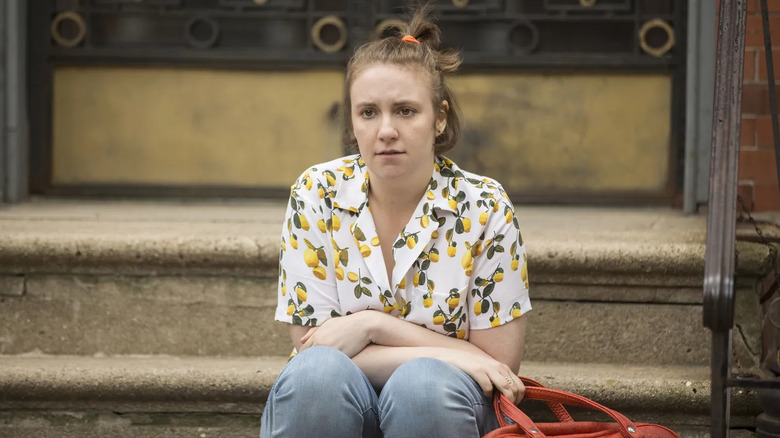
At its heart, "Industry" isn't about finance, but about messy people trying to find their way in the world — which gives it a throughline to Lena Dunham's dark HBO comedy "Girls." Led by Dunham as one of TV's great anti-heroes, aspiring writer and consummate jerk Hannah Horvath, "Girls" focuses on four titular girls — Hannah and her friends Marnie Michaels (a spectacular Allison Williams), Jessa Johansson (a perfectly blasé Jemima Kirke), and Shoshanna Shapiro (a hyped-up but strangely introspective Zosia Mamet) — trying to make it in New York. Along the way, they attend disastrous warehouse parties in Bushwick, earn and lose jobs, embark on disastrous relationships, and try to learn about who they really are. To say that often results in disaster is ... an understatement.
When "Girls" first released in 2012, bad faith actors decried it as navel-gazing and self-absorbed without fully understanding what Dunham was doing: like Jane Austen before her, she was satirizing the society she understood better than most. Now, "Girls" has been re-evaluated and earned its place as a true classic of its era, and it's compulsively watchable to boot. As a bonus, by the by, Dunham directed the pilot of "Industry" — so she actually has an ironclad connection to the HBO drama.
Bad Banks
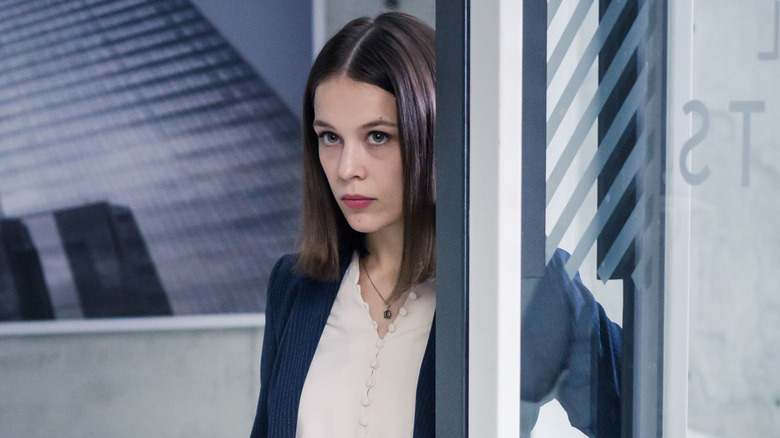
Probably the least well-known series on this list, showrunner Oliver Kienle's "Bad Banks" is a joint production between Germany and Luxembourg that is, honestly, probably the closest match to "Industry" out of all of these shows (besides, perhaps, "Succession"). Across two short six-episode seasons, "Bad Banks," which airs on Hulu if you're located in the United States, chronicles the rise and fall of banking institutions like Deutsche while also focusing on the fraught personal lives of the financial experts who try to keep it afloat.
With a cast that includes international performers like Paula Beer, Barry Atsma, Desiree Nosbusch, Mai Duong Kieu, Albrecht Schuch, and Tobias Moretti — just to name a few — and plenty of financial intrigue, "Bad Banks" pairs beautifully with "Industry." Fire up the subtitles and start binging it as soon as possible.
The Bold Type
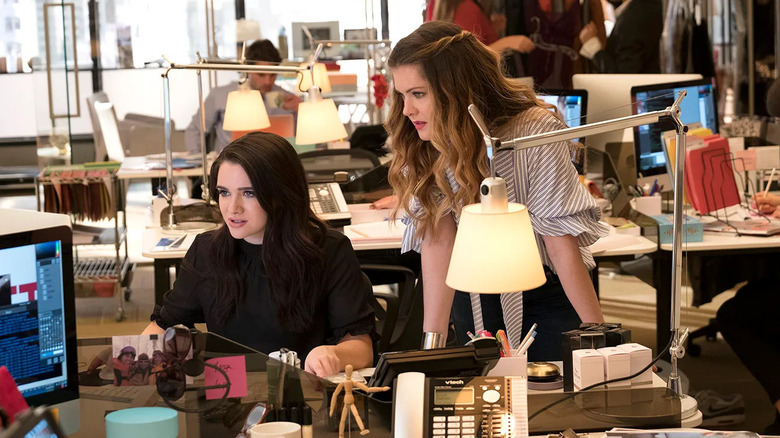
Okay, some obvious differences here: "The Bold Type" aired on Freeform (the rebranded version of ABC Family), so it's quite a bit tamer and sillier than the typically very intense "Industry." Still, the workplace intrigue and personal relationships here really do feel like a family-friendly version of "Industry," although we should note that "The Bold Type" is still definitely for an older audience; this isn't a "KidzBop" situation. The series, created by Sarah Watson and loosely based on the life and times of former Cosmopolitan editor Joanna Coles, focuses on the fictional New York-based magazine Scarlet and three of its young 20-something employees: writer and editor Jane Sloan (Katie Stevens), social media expert Kat Edison (Aisha Dee), and assistant and aspiring stylist Sutton Brady (future "White Lotus" and "Sirens" standout Meghann Fahy in her first big role).
Jane, Kat, and Sutton navigate professional crises and personal ones by banding together, those sometimes the personal and professional lines get blurred — like the time Jane gets a jade egg stuck in an unmentionable place after trying an experiment for a story — but the show also tackles some intense topics like sexual assault, exploring one's sexuality, and even a really touching storyline involving Jane learning she inherited the BRCA gene, which can cause breast cancer, from her late mother. "The Bold Type" is funny, sweet, and heartfelt, and if you wish the people on "Industry" could ever learn to get along, give this show a try.
Super Pumped
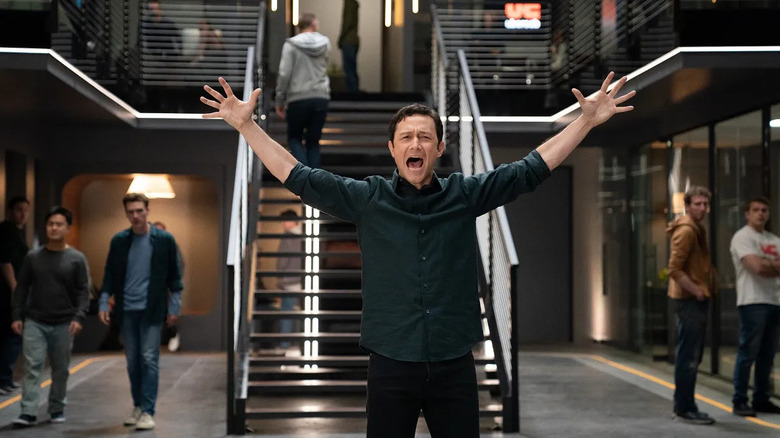
Based on a nonfiction bestseller of the same name by New York Times writer Mike Isaac, "Super Pumped" is similar to "WeCrashed" in that it chronicles the rise and fall of a very real start-up — specifically, the ride-share juggernaut Uber. (Well, the first season is; after it aired, "Super Pumped" became an anthology series, and as of this writing, it'll shift focus to other huge companies.) In this adaptation pioneered by showrunners Brian Koppelman and David Levien, Travis Kalanick, the original CEO of Uber, is played with aplomb by Joseph Gordon-Levitt, whose energy as the co-founder is infectious and somewhat sinister all at the same time. As the series kicks off, Travis and his chief business officer Emil Michael (Babak Tafti) decide to launch Uber without much, if any, input from authorities regarding what's basically an unlicensed cab company; using shady practices, the two quietly launch the app and service in as many markets as possible, even as employees quickly lose faith in Travis's promises.
Aided by stunning supporting performances from Kyle Chandler, Kerry Bishé, Elizabeth Shue, Richard Schiff, Eva Victor, Hank Azaria, David Krumholtz (reuniting with his "10 Things I Hate About You" co-star Gordon-Levitt), and Uma Thurman (whose frequent collaborator Quentin Tarantino, incredibly, serves as the narrator for the entire first season), "Super Pumped" is a wild ride, to say the least. Check it out after watching "Industry," and don't fret next time you call an Uber; the real Kalanick was quite infamously ousted from Uber in 2017.
Black Monday
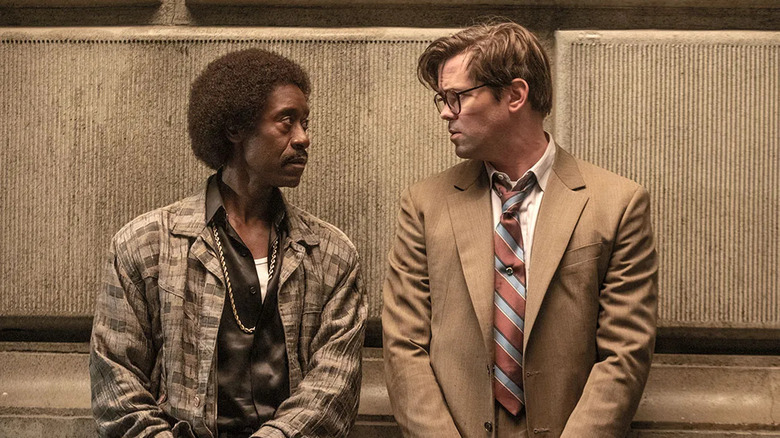
Created by Jordan Cahan and David Caspe (the latter of whom created the criminally underrated ABC sitcom "Happy Endings"), the Showtime series "Black Monday" focuses on a very real financial emergency in 1987 — namely, the stock market crash from which the show gets its ominous title — but, thanks to Caspe's comedic bonafides, puts a wry and humorous spin on a pretty serious situation. In its debut season, the audience sticks with aspiring stockbrother Blair Pfaff (Tony nominee and, as it happens, "Girls" player Andrew Rannells) as he tries to break into the Wall Street scene before the actual crash during the 1980s and ends up working for long-time broker Maurice "Mo" Monroe (a phenomenally cast and quick-talking Don Cheadle). Add in "One Battle After Another" standout Regina Hall as Dawn Darcy, one of the only Black female stockbrokers in the entire industry, and you've got a layered, chaotic, and incredibly fun series that tackles real history in the most amusing way possible. (Caspe's real-life wife and "Happy Endings" star Casey Wilson also has a fantastic recurring role as Tiffany Georgia, Blair's awful and spoiled heiress fiancée, who's constantly begging him to work less and pay more attention to her.)
"Black Monday" rarely gets mentioned in the same breath as shows like "Industry" and "Succession," but frankly, it should; not only is the subject matter strikingly similar, but all of these shows use (often crude) humor mixed with pathos. Once you've finished up every single episode of "Industry," consider giving "Black Monday" a shot.