

10 Unused Star Wars Concepts That Would Have Changed The Franchise
There's so much "Star Wars" content spread across the movies, TV series, video games, novels, and comics, that it might be hard to imagine there being much left on the cutting room floor. But with that many finished ideas comes nearly as many unfinished ones — pitches for the galaxy far, far away that almost made it into the franchise, only to be chopped.
That list is massive and wide-ranging, from alternate understandings of the Force, the Jedi, and the Sith, to wildly different character origin stories, to scripts that would have fundamentally changed the story of the overarching saga. George Lucas himself went through many versions of his complex universe before settling on the one we ultimately got in 1977, and in the years since he sold the franchise to Disney, there have been even more what-if ideas left by the wayside.
Thankfully, because of the massive apparatus around "Star Wars," many of these unused concepts eventually made their way to fans in unofficial capacities, allowing us to envision how things might have been different had certain decisions been made. Today, we're running throughz 10 of the most intriguing "Star Wars" ideas that would have changed the franchise in huge ways.
The Journal of the Whills
Let's start at the very beginning. When George Lucas was first working on the story that would eventually become "Star Wars" in the 1970s, he envisioned the saga being told through a framing device. In essence, the story would be relayed as a chronicle recorded by beings called the Whills. Lucas even intended for R2-D2 to be the one who'd deliver the story to the keeper of the journal. We still don't have exact details on what the Whills would have been like, as details shift between Lucas' various comments and notes, but it seems consistent that they would have been powerful, potentially immortal beings closely tied to the Force.
In a way, this framing explains the famous lead-in phrase, "A long time ago in a galaxy far, far away..." It also would have placed "Star Wars" even more explicitly in the epic fantasy genre, with the trope of "discovering" or "translating" an ancient story, similar to what J.R.R. Tolkien used as his frame for "The Lord of the Rings."
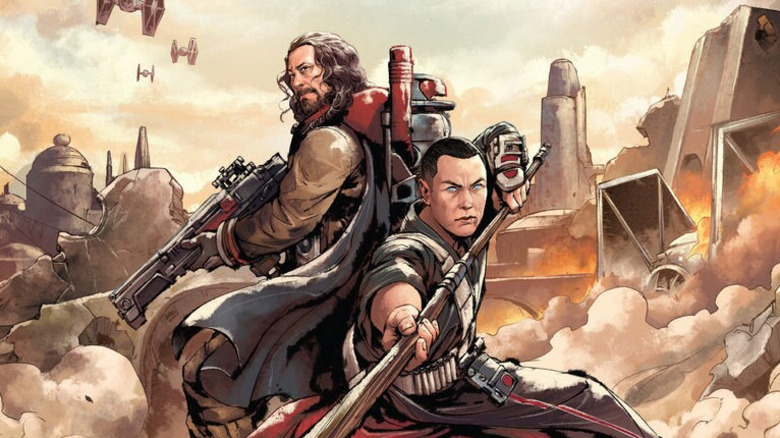
While Lucas ultimately decided to ditch the framing narrative, the Journal of the Whills has still made its way into several published "Star Wars" texts. The novelization of the first film, for instance, opens with a passage from the journal, which describes the fall of the "Old Republic" and even names the "ambitious Senator Palpatine." In the modern canon, the Whills have lingered in subtle references, such as the Force monks Chirrut Îmwe and Baze Malbus of "Rogue One" being referred to as "Guardians of the Whills."
Other key pieces of Star Wars lore, like the Chosen One prophecy, would have been alluded to had Lucas' early drafts made it through. While this framing device may not have radically shifted the actual plot of "Star Wars," it would have given a very different timbre to the overriding fantasy and approach to the Force from the start.
Luke Starkiller and the Jedi-Bendu
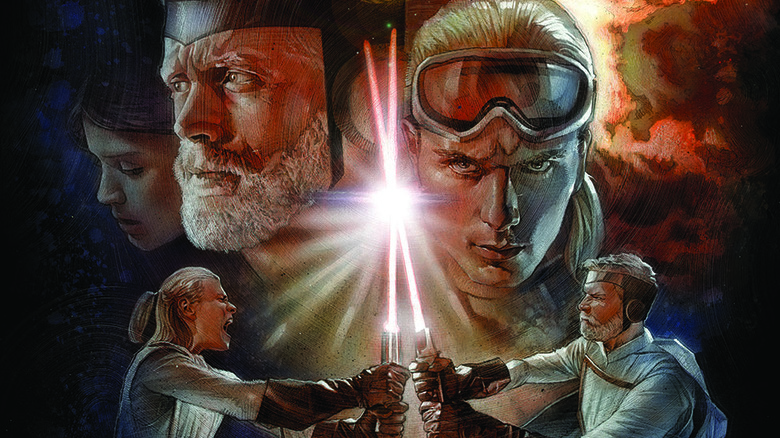
The Journal of the Whills wasn't the only early idea that George Lucas ultimately scrapped in his original "Star Wars" scripts. The first film went through a number of drafts in the years leading up to production — one that featured Luke Skywalker as an elder Jedi general who mentors a young boy named Annikin Starkiller, and a later draft that blended those names into protagonist Luke Starkiller.
While plot details varied greatly between these early drafts, there are similarities, with an overriding predilection for fantasy elements over the more sci-fi aesthetic that would ultimately come together in production. The royal line of Princess Leia, for instance, was more central, and the story pulled inspiration from Japanese samurai cinema, especially Akira Kurosawa's "The Hidden Fortress" — inspiration that remained in the finished film, but in somewhat less explicit ways.
These heightened fantasy elements also included more lore up front about the "Jedi-Bendu" and their rivals, the "Knights of Sith." Other details, like Han Solo's original alien design (used for the character of Zeb in "Star Wars Rebels") and the planet Utapau (featured in "Revenge of the Sith"), would make their way into the franchise much later.
In 2013, Dark Horse Comics released a limited series entitled "The Star Wars," adapting Lucas' early drafts with the elder Luke and padawan Annikin characters, as well as the alien Han. It's a great read for Star Wars historians, or just fans who want to learn a little bit more about how different the story might have been.
Star Wars: Episode IX — Duel of the Fates
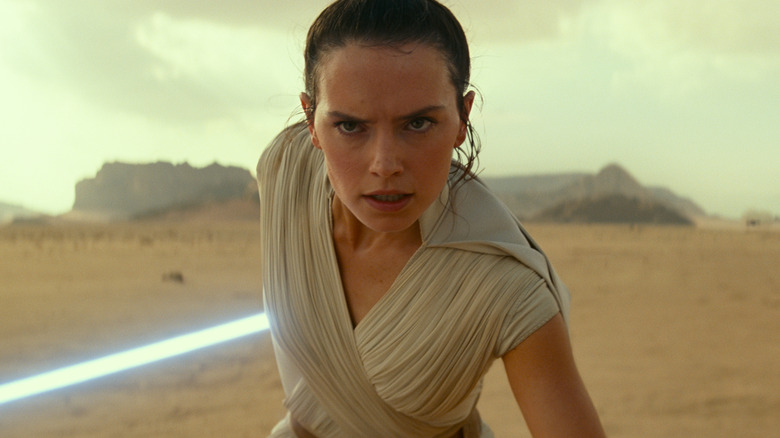
Jumping from the first "Star Wars" movie to the most recent, we get another example of a draft script being tossed in favor of something very different. Many fans will know that originally, each film in the Disney "Star Wars" sequel trilogy was meant to be helmed by a different director: J.J. Abrams for "The Force Awakens," Rian Johnson for "The Last Jedi," and "Jurassic World" writer/director Colin Trevorrow for "Episode IX." That plan was ultimately scrapped, with Abrams being brought back for the polarizing, toothless mess that is "The Rise of Skywalker." And while there's no way to prove that Trevorrow's script, entitled "Star Wars: Duel of the Fates," would have been better, the leaked script (which has been confirmed as authentic by Trevorrow) has some fascinating differences from the movie we got.
Most significantly, Emperor Palpatine (Ian McDiarmid) does not return in Trevorrow's script, and Rey (Daisy Ridley) is not his granddaughter. Kylo Ren dies in a similar fashion, choosing to give his life force to help save Rey, but he isn't really redeemed, with this action being more of a "one good deed" moment after being the main villain for the whole film. Rose Tico (Kelly Marie Tran) has a much larger role than her glorified cameo in "Rise of Skywalker," where she journeys to First Order-controlled Coruscant with Finn to help spur a revolution. Perhaps the most controversial detail is a Force arc that casts the dark and light sides as equally necessary powers, which Rey ultimately balances within herself. That idea is counter to Lucas' own description of the dark side, where it's an eternal power, but one that only exists to corrupt.
Following the controversies around "The Last Jedi," it's possible that either script would have brought the same backlash from audiences. But hey, we wouldn't have had "Somehow, Palpatine returned," which has to count for something.
Revenge of the Jedi's showdown on Had Abbadon
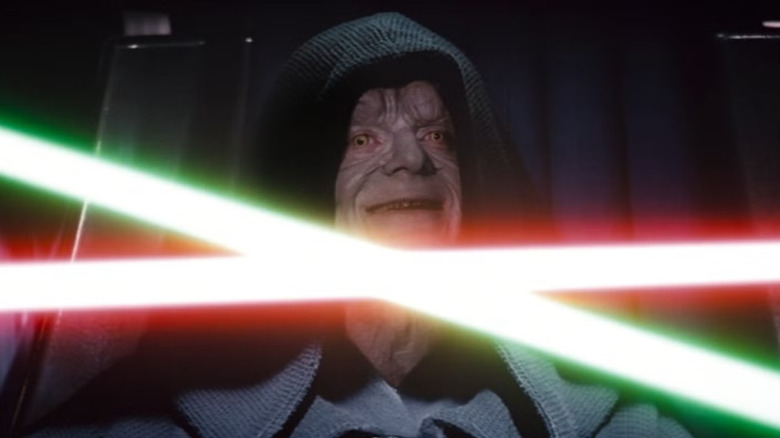
"Return of the Jedi" is another "Star Wars" film that looked very different in early drafts. Many fans will know that the original title was "Revenge of the Jedi" — one that Lucas ultimately changed due to its incongruity with Jedi morals, moving the "revenge" part instead to 2005's "Revenge of the Sith." But along with that alternate name came a very different story, and a climactic showdown that would have had major implications for the lore of the Force.
Rather than having the final battle on Endor be in some far corner of the galaxy, the rough draft placed the forest moon as a satellite of Had Abaddon, the industrial Imperial capital, renamed Coruscant in later stories. The throne room confrontation with Emperor Palpatine would have taken place within the actual Imperial Palace, and there were two Death Stars under construction in the first script.
What would have had much larger implications for the overall Star Wars mythos was the idea of Obi-Wan Kenobi's Force ghost taking corporeal form to do battle against Darth Vader during the climax. The script makes more clear references to the delineations within the Force afterlife, including the Netherworld, which Yoda mentions at the end of "Revenge of the Sith." While many of these ideas eventually worked their way into the franchise, the idea of Obi-Wan returning in a brief, physical form would have set a wildly different precedent. The closest we've gotten in the current canon is when Yoda sets a tree on fire as a Force ghost in "The Last Jedi."
Darth Bane and Darth Revan in Clone Wars
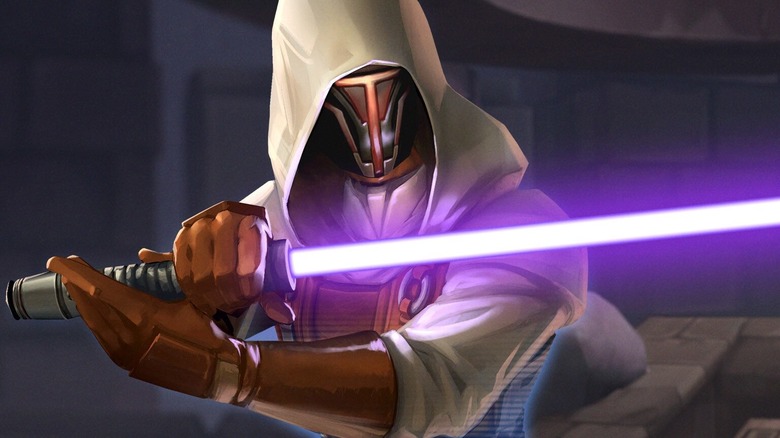
"Star Wars: The Clone Wars" holds a unique role in the franchise mythos, as it was the only core text aside from the original six films that Disney kept as hard canon after purchasing Lucasfilm. That's partly because the series was still running in the lead-up to the acquisition, and partly because George Lucas was so deeply involved in the show's production.
Long before Disney reset the canon, "The Clone Wars" was already retconning ideas from the Star Wars Expanded Universe, like the actual mechanisms behind Order 66. But in one instance, Lucas nearly brought two iconic Sith Lords from those more extraneous stories into hard canon, which would have made them part of the Disney timeline from the start as well.
The characters in question are Darth Revan, famous from his core role in "Star Wars: Knights of the Old Republic," and Darth Bane, star of a series of novels and the creator of the Sith "Rule of Two." Both were meant to appear in the famous Mortis arc of "The Clone Wars," giving council to the dark side being known as The Son from beyond the grave. However, Lucas and showrunner Dave Filoni ultimately agreed to cut the scene (which had been fully written and partially animated), as it would have changed the rules of the Sith, allowing them to detach themselves from the Force after death as the Jedi do.
"As disappointing as that was in a way, because it would have been cool to have those characters appear in 'Clone Wars,' it was absolutely the right thing to do," Filoni explained in a behind-the-scenes featurette, "because they just can't exist in that form." Lucas ultimately made the call, and the Bane/Revan scene was cut.
Star Wars: Underworld — the show that never was

Have you ever heard the tragedy of "Star Wars: Underworld"? It's not a story the Disney executives would tell you...
After finishing the prequel trilogy, George Luacs looked to television for the next era of "Star Wars." The plan was bold but compelling: A massive, big-budget, live-action "Star Wars" series, set between the trilogies and focused primarily on the underworld of Coruscant and other parts of the galaxy. A team was assembled, and over 50 scripts were completed for a show that ultimately never saw the light of day. Why didn't it happen? In a word, money. The concept was overly ambitious at the time, and Lucas never found enough backing to bring it to life, nor a way to reduce the budget while maintaining the aesthetic of the "Star Wars" films.
Lucas first referenced the show publicly all the way back in 2005. "These were dark," longtime collaborator Rick McCallum said on a 2025 episode of the Young Indy Chroniclers podcast. "These were not, you know, they were sexy, they were violent, they were just absolutely wonderful, wonderful, complicated, challenging — I mean, it would have blown up the whole Star Wars universe. And Disney definitely would have never offered to George to buy this." According to McCallum, work proceeded for half a decade, with HBO at one point being attached to help fund the project.
Though "Underworld" never made it to fans, many of the ideas from those scripts have been brought out piece by piece in the years since. Fan-favorite character Saw Gerrera, for instance, was initially created by Lucas for the show, as well as the Church of the Force seen in "Rogue One," certain scenes from "Solo: A Star Wars Story," and specific urban infrastructure elements of Coruscant seen in later "Clone Wars" episodes.
"It's something we're very precious with at Lucasfilm because it represents this big piece of work that George did before he basically left Star Wars," Filoni told Vanity Fair in 2022. "We're constantly poring over it because, to me, even though it remains unproduced, the ideas in it are what makes it so valuable. The ideas are real and true to Star Wars because it's created by George."
George Lucas' original 12-film Star Wars plan

When George Lucas first conceived of "Star Wars," his plan was, shall we say, ambitious. Before the first film's release in 1977, and in the years after it came out, Lucas repeatedly mentioned a 12-film saga. So what would all of those unmade movies have been about?
The six films Lucas ended up making — the original trilogy about Luke Skywalker and a prequel trilogy about the fall of the Jedi — comprised half of the plan. There were also extra films dedicated to the Clone Wars, which Lucas ended up making in a way through the six seasons of the animated series he oversaw following "Revenge of the Sith." Lastly, there was a sequel trilogy, which was theoretically still in the works, though Lucas had largely stepped away even before the Disney acquisition, leaving Lucasfilm President Kathleen Kennedy with some outlines and ideas, according to a 2012 StarWars.com article.
At a point, Lucas consolidated his vision down to just nine films, broken up into three trilogies, which is ultimately what we have now in the form of what Disney has dubbed "The Skywalker Saga." It's understandable that Lucas burned out, both during production of "Return of the Jedi" and later after finishing the prequels, but it's fun to imagine what his unbroken vision would have looked like had he seen it through.
The Expanded Universe's unresolved Mortis mystery
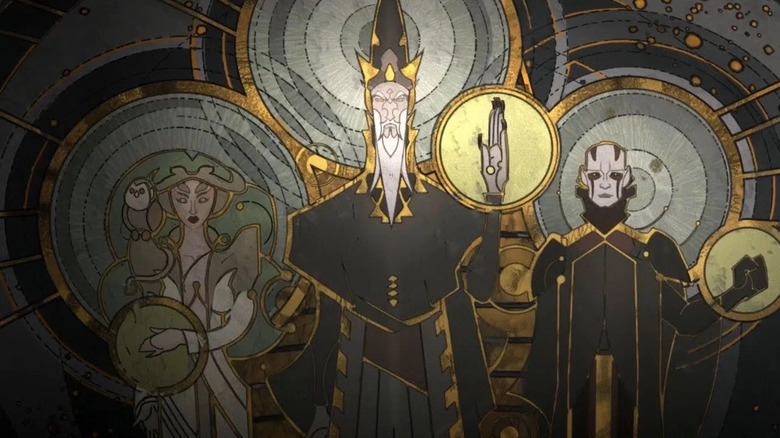
While many still mourn the "death" of the Star Wars Expanded Universe, there was never a consistent plan to the extraneous novels, comics, and video games that popped in the background of Lucas' film saga. Some pieces fit better than others, like the '90s "Tales of the Jedi" comics and the "Knights of the Old Republic" games from the early 2000s. Others explicitly contradicted or retconned other stories, leading to even more confusing sub-categories of canon being adopted as guides for fans.
For many, though, the "Expanded Universe" mainly refers to a lineage of novels, beginning with Timothy Zahn's "Heir to the Empire" and continuing through various sub-sagas, namely "New Jedi Order," "Legacy of the Force," and "Fate of the Jedi." These books featured major plot arcs centered around characters like Darth Caedus and the Yuuzhan Vong, and were written by a familiar roster of authors, with recurring names like Michael A. Stackpole, Kevin J. Anderson, Karen Traviss, Troy Denning, and Matthew Stover.
The issue is that because that series ran for so long, covering many years of lore in-universe, it also left some big unresolved threads when the Disney acquisition of Lucasfilm put it to an end. The final novel in the lineage, Troy Denning's "Crucible," continued to build on big mythic storylines like the dark Force goddess Abeloth and the mysterious Force world Mortis. The story got increasingly fantastical in scale near the end, with an emerging pantheon and expanded lore around the mystical side of the galaxy far, far away. In the end, that mythos was cut off before it could complete its own telling, but Dave Filoni may be bringing back certain elements in the mythic threads of the "Ahsoka" show, which have returned to the iconography of Mortis.
Clone Lando
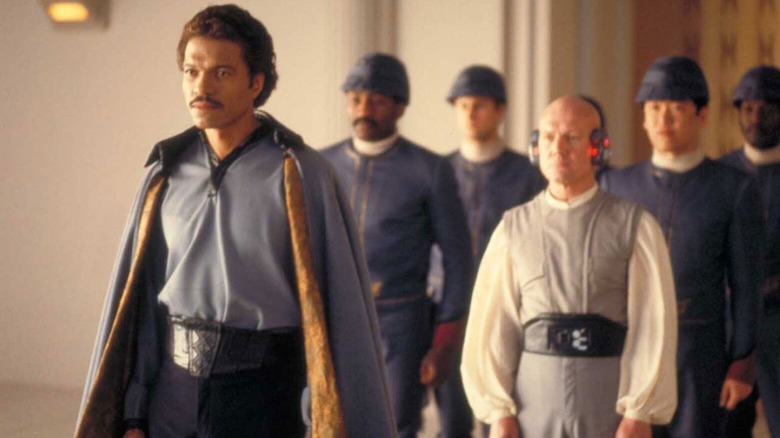
Lando Calrissian is one of the most longstanding and beloved "Star Wars" characters, but he was very different in George Lucas's original concept for "The Empire Strikes Back." Named Lando Kadar at first, the character ultimately portrayed by Billy Dee Williams was almost a clone, which would have brought more details about the Clone Wars into the saga much earlier.
The idea was for Lando to be an authority figure in a community full of clones, which galactic society would look down on due to their unique genetic origins. This clearly came about before Lucas had any real idea what the Clone Wars were, with the only reference up that point being Luke's stray line to Obi-Wan in the original movie.
Had the clone Lando idea stuck, it would have had massive repercussions for the prequels, as fans would have already gotten a very different vision of the Clone Wars. In the end, we got the former gambler and present-day mining colony regent, and a performance for the ages from Williams.
Luke Skywalker's other father (and sister)
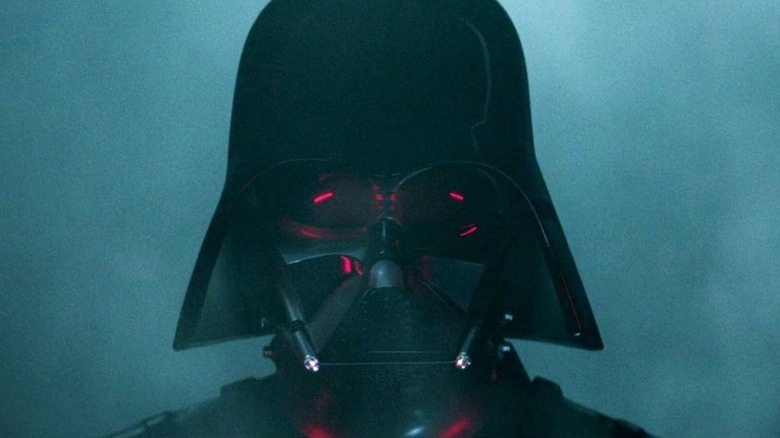
Today, the two big Skywalker family twists of "The Empire Strikes Back" and "Return of the Jedi" are pop culture canon. Darth Vader is Luke's father, and Leia is his sister. But at the beginning, neither was true. Earlier drafts for "Empire" included the appearance of Anakin Skywalker's Force ghost, who would help prepare Luke for his next showdown against Vader, a separate character. This apparition of Anakin would have also revealed to Luke the identity of his long-lost sister, a character named Nellith.
Obviously, these ideas would have massive repercussions for the entire saga. Were Vader not the fallen Anakin, the whole story of the first six films — about a man falling to the dark, only to be redeemed in his final moments by the love of his son — wouldn't have come together. The idea for Nellith also helps explain the love triangle elements between Luke, Leia, and Han in the first film, which read as creepy today, though they weren't written with the family connection in mind.
While this more sprawling cast would have surely spawned some interesting possibilities, it would have ruined the tight narrative loop that makes the original trilogy so compelling. Ultimately, Lucas went with the Anakin/Vader storyline, and the rest is cinematic history.