

10 Movies That Failed To Justify Their Enormous Budgets
We may receive a commission on purchases made from links.
Making a major studio movie is rarely a cheap endeavor. Just look at the massive costs associated with a typical superhero flick or the most expensive R-rated films of all time. It's not just universally well-known motion pictures, like a typical "Avengers" or "Star Wars" installment, that amass considerable budgets either. The most expensive movies you've never heard of prove that even obscure motion pictures can suffer from the costliness plaguing so many Hollywood features. With this in mind, it's unsurprising that not all costly tentpoles are built equally. Some projects are baffling in terms of how much they cost to make.
These are the films with underwhelming box office runs that failed to justify the gargantuan budgets studios invested in their existence. What makes these budgets so excessive varies greatly from one movie to the next. Some of these price tags are strange because they're so much higher than the established sequels or sleeper hits that inspired them. Others are just comically overpriced given the box office constraints of the genres they inhabit. Still others had tormented productions that ensured historic costs were racked up.
Whatever led to these budgets spiraling out of control, these 10 projects exemplify what happens when movies incur costs that could never be reasonably recouped at the box office. Even given how expensive most filmmaking endeavors are, these costly and infamous features are baffling exercises in just burning cash.
Battleship
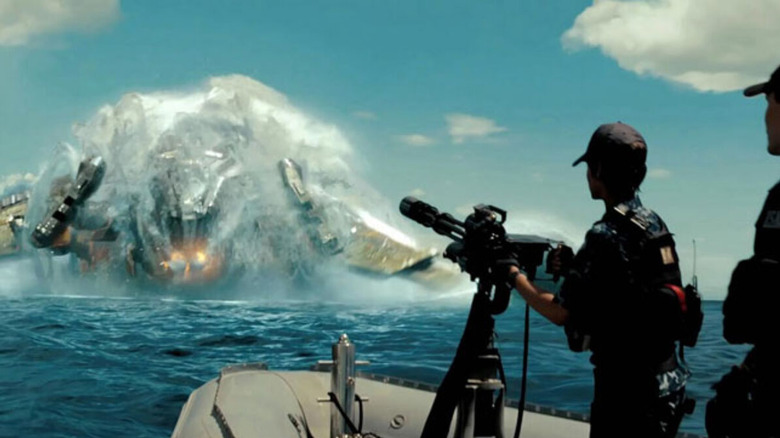
After the "Transformers" movie franchise took off like a rocket, Hasbro immediately began commissioning more movies based on its various toy properties. That wasn't a very surprising development. What was shocking was that "Battleship" was one of the first Hasbro blockbusters to try to ride the "Transformers" wave. It was already an odd choice given that its source material lacked any distinct characters to adapt, and the script also added a disaster movie/sci-fi angle totally absent from any actual "Battleship" games.
Adding to the project's baffling nature, it cost $220 million to make, noticeably more than any of the first three "Transformers" movies. It's startling to consider that the very first live-action "Battleship" movie required a price tag greater than titles like "Transformers: Dark of the Moon," which followed projects that grossed $700-plus million worldwide. "Battleship," meanwhile, was supposed to start a franchise, but unsurprisingly, throwing piles of money at the property did not suddenly make it the next "Transformers." Released in mid-May 2012, "Battleship" only grossed $313 million. Most of that came from overseas audiences, with only $65 million emerging from North America. The losses here were gigantic, and Hasbro's subsequent non-"Transformers" motion picture endeavors (such as titles like "Jem and the Holograms") were significantly scaled back in scope and cost. In trying to replicate the "Transformers" phenomenon, "Battleship" instead became the poster child of excessive blockbuster spending.
Solo: A Star Wars Story
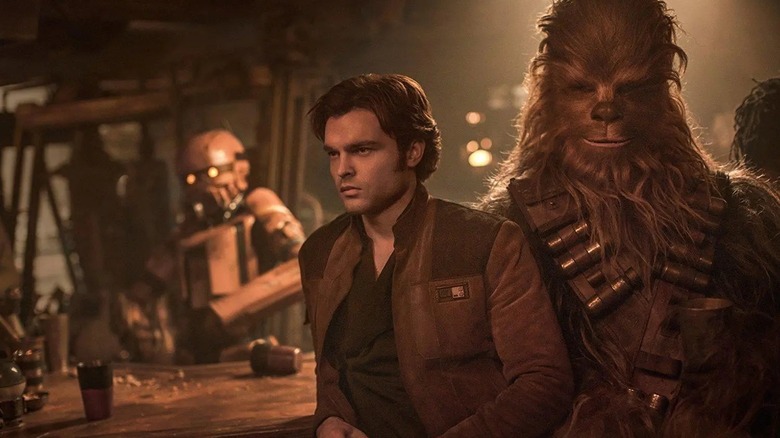
It's never been cheap to make a "Star Wars" movie. Disney knows that better than anyone, thanks to its "Star Wars" projects like "The Rise of Skywalker" and "The Force Awakens" becoming some of the costliest movies in history. However, the spin-off movie "Solo: A Star Wars Story" was an especially expensive affair, partially thanks to its tormented production. Midway through filming, original directors Phil Lord and Chris Miller were fired after creative disagreements with Lucasfilm brass and screenwriter Lawrence Kasdan.
Subsequently, Ron Howard was hired to helm the picture, which now needed some major reshoots. This meant "Solo" had a lengthier than expected production on top of all the usual experience amenities associated with blockbusters. Eventually, "Solo" amassed a budget of around $330 million. To break even with those costs, "Solo" would've needed to make over $700 million just to start turning a profit. Such an immense worldwide haul proved elusive for the beleaguered project thanks to its anemic $393 million worldwide haul and a domestic total far below other live-action "Star Wars" movies.
Released alongside "Avengers: Infinity War" and "Deadpool 2," "Solo" had no chance of registering as a must-see proposition to audiences. What a grim ending to such a tormented motion picture. There was never a universe where "Solo: A Star Wars Story" was a cheap endeavor. However, endless creative turmoil ensured it amassed a budget so large that it required a miracle to turn a profit.
Evan Almighty
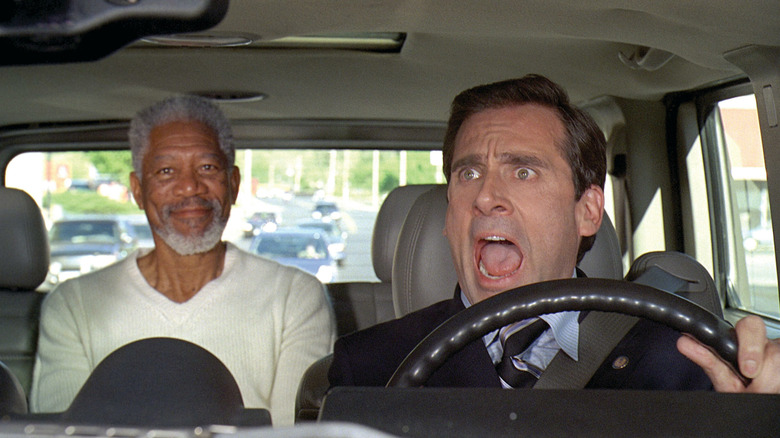
When one thinks of the costliest movies in history, big-budget superhero or franchise movies usually spring to mind. Live-action family movies and comedies aren't typically associated with budgets rivaling a Marvel or James Bond movie. But there are exceptions, and 2007's "Evan Almighty" is one of them.
To realize this Steve Carell star vehicle about a man who's commissioned by God to build an ark, Universal Pictures and its co-financiers plunked down $175 million on this project. "Evan Almighty" involved lots of real and CG animals, neither of which came cheap. There were also countless other issues during principal photography, including hindered set construction, that caused costs to spiral. Ironically, "Evan Almighty" debuted the same summer as another Universal comedy, "Knocked Up," which continued the trend of thrifty Judd Apatow comedies with its $27 million price tag. "Knocked Up" proved that cheap comedies could still deliver yuks, while "Evan Almighty" exemplified excess.
Given that the original "Bruce Almighty" grossed $484 million worldwide, "Evan Almighty" would've needed to greatly surpass its predecessor's global haul (without original star Jim Carrey) to even begin making money for Universal. That never happened, with the absurdly costly family comedy only grossing $174 million worldwide. This whole misguided enterprise was a tremendous failure, not to mention a baffling use of extravagant financial resources. There are a myriad of good reasons you don't hear about more live-action comedies or family films costing as much as "Evan Almighty."
Van Helsing
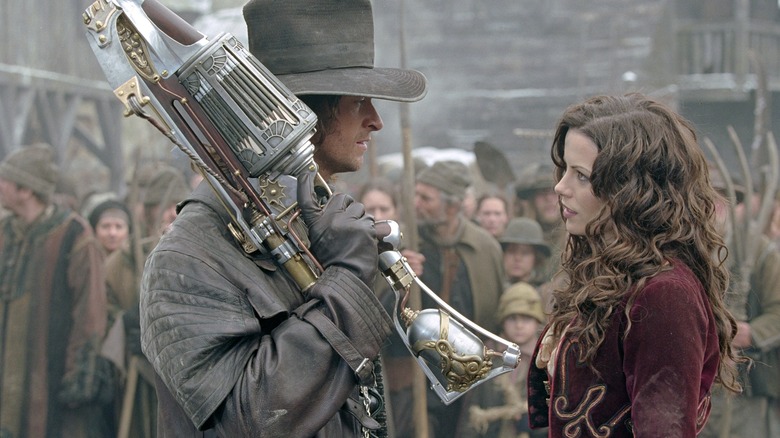
It's hard to remember now, but 2004's "Van Helsing" was a major union between two early 2000s blockbuster powerhouses. "X-Men" star Hugh Jackman was headlining this project while "The Mummy Returns" director Stephen Sommers was at the helm. Hoping to reach the $400-plus million worldwide grosses of "X2" and "The Mummy Returns," Universal gave "Van Helsing" a $170 million budget. That's an absolutely ridiculous sum for a movie rooted in the legacy of thrifty Universal monster movies.
To boot, it also was way more expensive than past Sommers blockbusters. "The Mummy Returns," for example, cost $98 million to produce. Costing a little over 70% more to create, "Van Helsing" would've needed to deliver box office numbers usually reserved for sequels to become profitable. Inevitably, that far-fetched outcome never surfaced. Though not exactly a bomb, "Van Helsing's" $300 million worldwide cume (and only $120 million gross in North America) meant it lost money for all involved. It was also nowhere near the must-see movie of summer 2004.
That same month, "Shrek 2" and "The Day After Tomorrow" alone dwarfed its box office haul in North America, while the rest of the summer had plenty of more lucrative films than "Van Helsing." Not only that, but most of these titles ended up costing significantly less. Given the lackluster quality of the overall feature, it's not shocking that profitability eluded "Van Helsing," and giving it such a massive budget certainly didn't help it any. The film's titular lead can conquer many monsters, but not an innately excessive budget.
John Carter
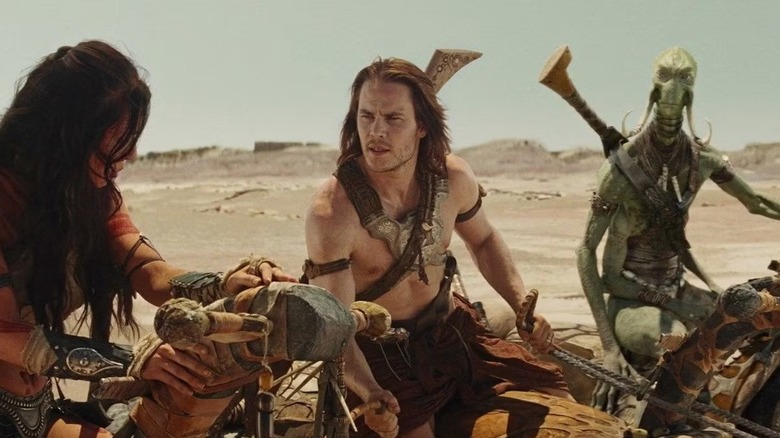
As texts like Michael D. Sellers' "John Carter and the Gods of Hollywood" vividly illustrate, Andrew Stanton's "John Carter" film faced lots of external challenges in reaching box office success. These included marketing campaign problems, weird internal politics at Disney stemming from then-head of Walt Disney Pictures Rich Ross, and competition from other March 2012 films like "The Lorax" and "The Hunger Games." Unfortunately, there was one big problem ingrained into "John Carter" from the start that ensured it could never reach theatrical profitability: its budget. This sci-fi adventure film cost over $263 million to make, a gargantuan sum that exceeded the $237 million budget of "Avatar."
Spending more on a "John Carter of Mars" film adaptation than a big James Cameron tentpole was already a foolhardy proposition. It even cost more than 2010's Disney blockbuster "Alice in Wonderland," which required $200 million to reach the screen. Whereas "Wonderland" had famous names like Tim Burton and Johnny Depp its marketing campaign could lean on, "John Carter's" $263 million was riding on a director who'd never helmed a live-action movie and an untested leading man, Taylor Kitsch.
Inevitably, "John Carter" really flopped at the box office with a theatrical run that didn't come close to recouping its extravagant costs. This failure came after lots of problems that the "John Carter" cast and crew couldn't control. Yet it was also the inevitable outcome of spending $260-plus million on a film adaptation of a 100-plus-year-old sci-fi book.
Justice League
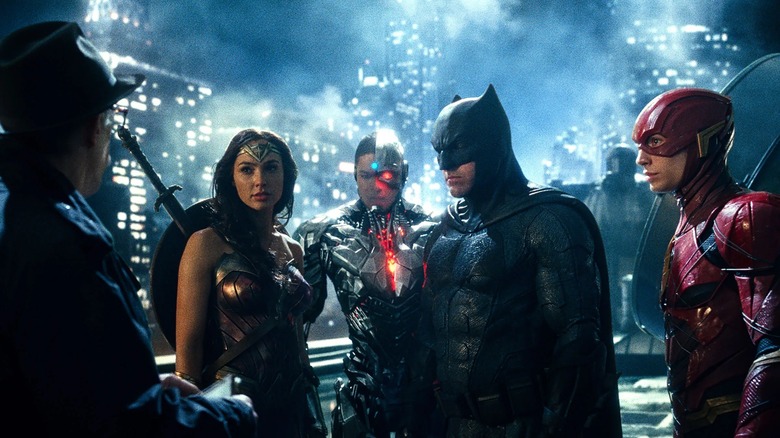
What went wrong with the theatrical cut of "Justice League" at the box office could fill up countless tomes. This November 2017 tentpole struggled to capitalize on the momentum of that year's "Wonder Woman" thanks to its shrug-worthy marketing campaign, the lack of a truly memorable villain for the titular superheroes to face, and lingering audience animosity toward "Batman v Superman: Dawn of Justice." The other problem, though, was that costs had spiraled out of control for this DC Comics feature. "Justice League" cost $300 million to make, a towering sum that meant profitability was always a long shot.
As much as $25 million of that $300 million was allegedly spent on extensive summer 2017 reshoots helmed by Joss Whedon. Like with "Solo: A Star Wars Story," "Justice League" was a 2010s tentpole that saw its budget exceed all reasonable figures thanks to a change in directors during shooting. It would've taken a miracle, or more specifically an "Avengers"-sized box office haul, for "Justice League" to turn a profit after all that chaos. Instead, it only grossed $229 million domestically and $661 million worldwide. Any other movie, even a typical blockbuster, would've been pleased as punch with those figures. But on a $300 million budget, and compared to other major DC Comics movies, "Justice League" was a box office flop. Production chaos ensured this superhero title was always fighting an uphill battle for profitability. Rather than saving the day, "Justice League" was a box office calamity.
Superman Returns

Today, nobody blinks when a major blockbuster costs $200-plus million to produce. However, as late as the mid-2000s, projects exceeding that figure were incredibly rare. "Spider-Man 2" in 2004 was only the second movie in history (following "Titanic") to cost $200-plus million to produce, for example. By 2006, though, these budgets began ballooning, which led to "Superman Returns" arriving in theaters with a $232 million price tag. Even today, that number would turn heads. Back in the summer of "Cars" and "My Super Ex-Girlfriend," it was a shocking sum. "Spider-Man 2" at least justified its hefty costs by its predecessor being one of the biggest movies of all time.
"Superman Returns," meanwhile, was the first "Superman" adventure in nearly 20 years. It was a colossal risk to invest so much money into this project, and as it turned out, the risk didn't pay off. Worldwide, this feature only grossed $391 million, far less than double its budget, let alone the box office grosses of the biggest 2000s superhero movies. Compare this budget to the $150 million cost of "Batman Begins" from just one year earlier. While far from a microbudget motion picture, "Batman Begins" had a more reasonable cost for a superhero movie reboot trying to shake off the cobwebs of past entries. "Superman Returns," meanwhile, was one of the most expensive movies ever back in 2006. That was a far too lofty price tag for a risky reboot, and its underwhelming box office run bore that out.
Joker: Folie à Deux
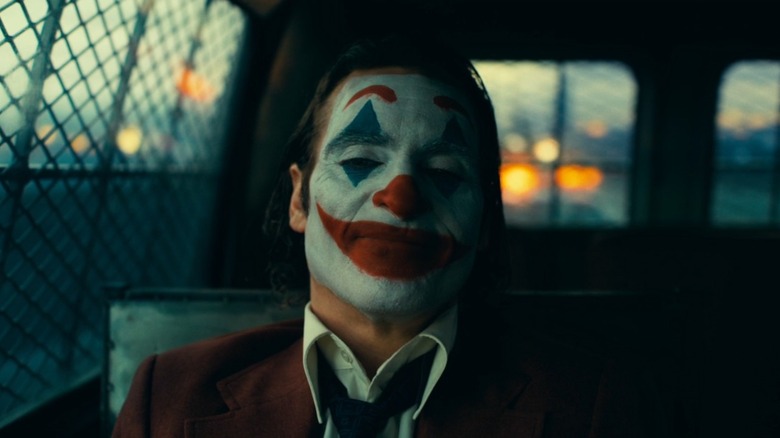
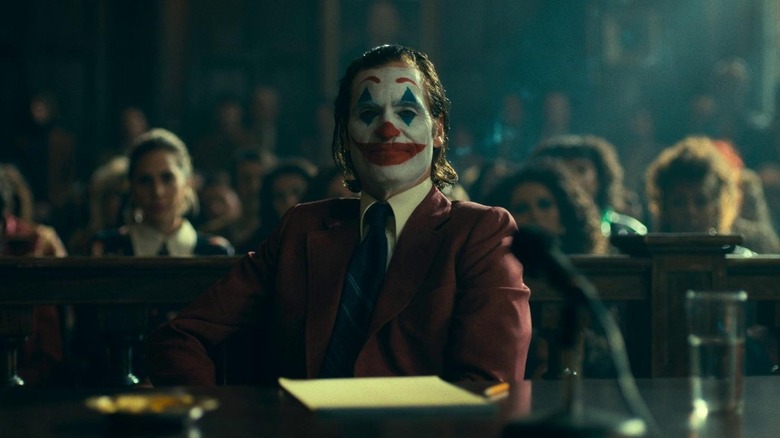
Released in 2019, "Joker" is famous for delivering a massive $1 billion-plus worldwide haul while also wielding a budget that was significantly smaller than usual comic book movie adaptations of the era. Five years later, a sequel, "Joker: Folie à Deux," threw that thriftiness out the window. With Lady Gaga now playing a revamped version of Harley Quinn — not to mention returning director Todd Phillips and leading man Joaquin Phoenix getting way bigger upfront salaries — this new "Joker" installment ended up with a budget of at least 190 million.
Plunking down so much coin on this project was always a terrible idea. After all, a grounded courtroom drama like "Joker: Folie à Deux" didn't have anything in its plot that necessarily warranted such a massive budget. Only a handful of people's salaries were really driving the whole enterprise to such extreme costs. Plus, being so expensive felt at odds with the grimy, under-the-radar aesthetic of the original "Joker." Rather than being a counterpoint to typical DC Comics features, "Joker: Folie à Deux" now had a budget on par with a typical DC Extended Universe motion picture. The subversiveness had been ironed out through massive spending. All these factors made the "Joker: Folie à Deux" budget a miscalculation even before considering its historically awful box office run that ensured it lost untold millions for Warner Bros. In abandoning "Joker's" thrifty budget, "Joker: Folie à Deux" sealed its grisly box office demise.
That's My Boy
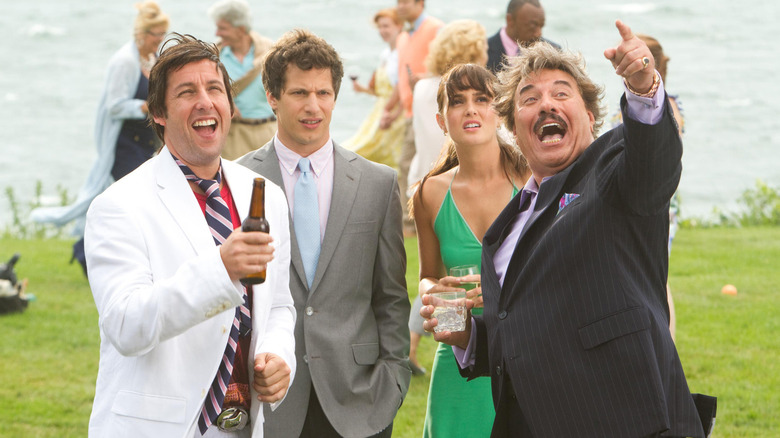
Ranking Adam Sandler's movies from worst to best is a lengthy exercise that emphasizes how many similar kinds of jokes and familiar faces pop up throughout the works spearheaded by his company, Happy Madison Productions. Another shocking overlap across many of these titles is that they cost a pretty penny. Silly films with minimal locations like "Grown Ups" or "I Now Pronounce You Chuck and Larry" inexplicably carry $75-plus million budgets. At least many of these titles paired their price tags with PG-13 ratings that ensured as many people as possible could see them in theaters, increasing their chances of theatrical profitability.
Not so for 2012's "That's My Boy," an R-rated Sandler/Andy Samberg star vehicle that cost around $70 million to make. That's pricier than the first "Deadpool" installment, which had lots of action sequences and an entirely CG character to account for. Sandler was a reliable pre-2012 box office powerhouse when he was headlining PG-13 fare, but restricting his audience to folks 17 and older took away many of his most loyal moviegoers. Something cheaper and R-rated wouldn't have been a bad move, but spending "Grown Ups" money on an R-rated comedy was a foolhardy exercise. Inevitably, "That's My Boy" flopped, making just under $59 million worldwide, including just under $37 million domestically. That dismal theatrical haul only amplified the bizarreness of spending so much money on a film with obviously limited appeal.
Wild Wild West
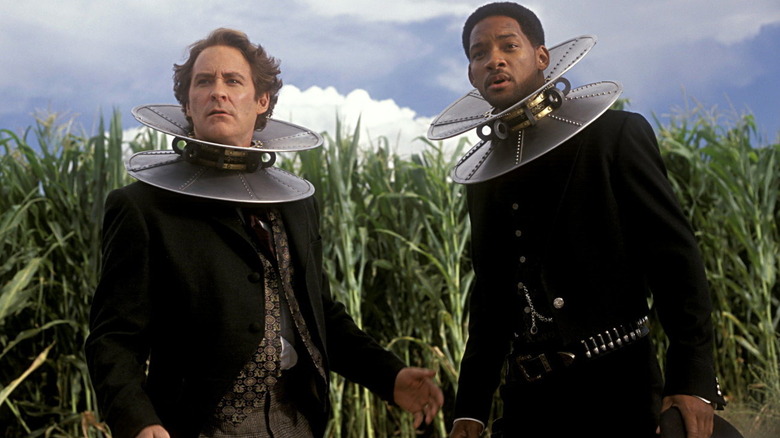
The 12 best Westerns of the 21st century exemplify how this genre is still fruitful in the modern cinematic landscape. Unfortunately, as the theatrical marketplace expands to focus heavily on worldwide moviegoers, Westerns have struggled to amass massive hauls at the global box office. This genre is just so firmly rooted in America and can sometimes be tough to translate to international audiences. Only two Westerns have ever cracked $400-plus million worldwide, and only four have exceeded the $250 million worldwide threshold. That's not a bad thing when a Western costs as much as "No Country for Old Men." However, it does make it baffling to imagine a studio spending $150-plus million on an entry in this genre.
That's just what Warner Bros. did back in 1999 when "Wild Wild West" trotted into theaters with a $175 million price tag. That eye-popping sum was significantly bigger than usual for a '90s blockbuster and meant that "Wild Wild West" would need to become one of the biggest movies ever just to begin turning a profit. It did not come close to doing that. Instead, this big-budget folly only grossed $221 million worldwide, with a little over half of that ($113 million) coming from domestic audiences. Once again, foreign moviegoers just didn't care about a costly Western. Throwing away so much cash on this flick was a terrible idea from the word go — "Wild Wild West" was doomed to failure thanks to its genres limited worldwide appeal.