

10 Worst Reboots Of Classic Franchises
Hollywood is always looking for the next big new thing. And in the case of reboots of classic franchises, they can make something new out of something old. After all, the franchise has worked before, so it's sure to work again, right?
Well, in the case of these attempts at franchise reboots, not so much. The studios who made these reboots all thought they were going to be huge: not only did they have a well-known title, but they often had great stars or great directors on board too. But when it came down to it, none of these reboots managed to take off, bombing at the box office, getting terrible reviews, or more likely, both. Whether that was because of a lousy script, a miscast actor or two, bad character design, or something else entirely, all of these franchises have seen better days.
A quick note: By franchises we mean multiple movies in the same series, so this list won't touch on bad reboots to just anything. There have to be at least two movies in the series to qualify. Of course, these reboots were so bad that their attempts at restarting the franchises they came from failed spectacularly. These are the 10 worst reboots of classic franchises.
The Crow (2024)
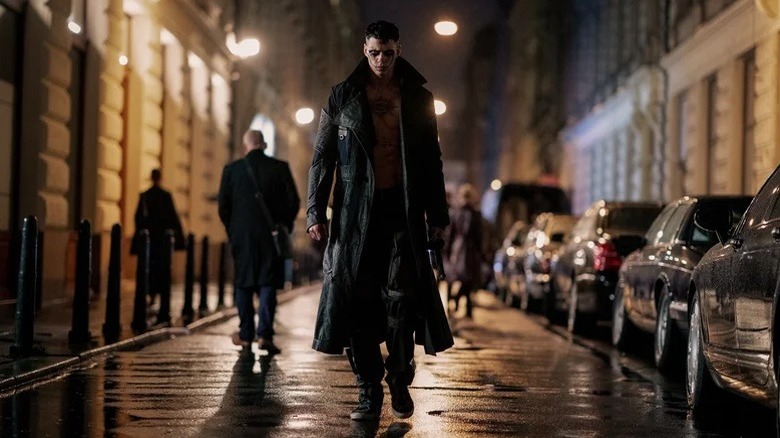
Before its 2024 reboot, "The Crow" was known primarily as the film that Brandon Lee died on. That fact, his fantastic performance in the movie, plus the film's '90s goth looks and banging soundtrack made the movie a must-see for a very specific group of people: '90s teens. It launched a franchise that mostly stunk, but at least the first one was beloved by its intended audience. So when Rupert Sanders decided to reboot the franchise, he had to differentiate his "Crow," making it stand on its own two feet. Unfortunately, just about every decision he and his writers made worked against the movie.
Not only does "The Crow" take forever to get going, it replaces main character Eric's motivation for being resurrected in the first place, and subs out the literal horrors of the original with supernatural metaphors. None of this does the material justice, leading to the inevitable question, echoed by Looper's critic reviewing the "The Crow" reboot, who is this remake for? The answer appeared to be no one, as the film only made $24.1 million worldwide and has only a 22% critics rating on Rotten Tomatoes. Tim Grierson of Screen Daily said it best, "This forgettable new version doesn't just fail to honour [Brandon Lee's] memory — it never justifies its existence on its own merits."
Planet of the Apes (2001)
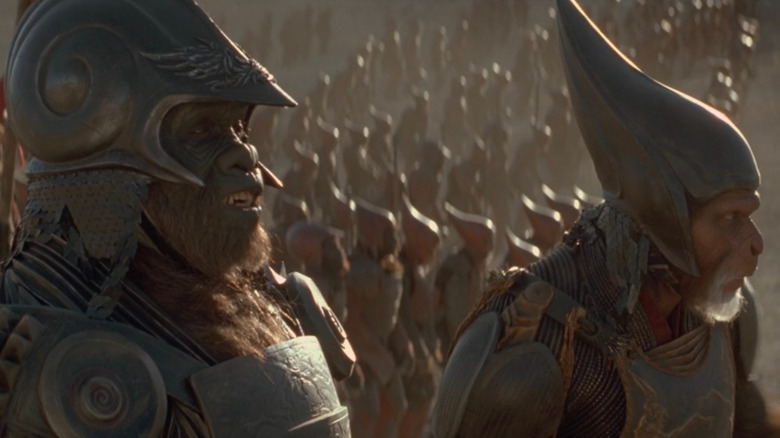
Between the first series of "Planet of the Apes" movies starring Charlton Heston and Roddy McDowell in the 1960s and '70s, and the second series directed by Matt Reeves and Wes Ball in the 2010s and 2020s, there was a much maligned version of the story. "Planet of the Apes" from 2001 was shepherded by visionary director Tim Burton and starred Mark Wahlberg, yet, despite being financially successful, it failed to catch on with audiences and stopped a potential new "Planet of the Apes" film series.
Burton had a very different take for his "Planet of the Apes," the problem was his take wasn't very good. While Burton made things look exceptional, his movie was more concerned about entertaining you than taking on any of the issues the story typically raises. Plus, it was hard for his human actors playing nonhuman roles to turn in complete performances because they were so buried under prosthetics. Then there was the film's ending, which is infamous for making little sense.
In all, it's not surprising that "Planet of the Apes" got a 43% critics score and an even worse 27% audience score on Rotten Tomatoes. Even Mark Wahlberg admitted that the film was terrible in 2011, but he blamed production company 20th Century Fox. He told MTV, "They didn't have the script right. They had a release date before [Burton] had shot a foot of film. They were pushing him and pushing him in the wrong direction" (via FandomWire).
Fantastic Four (2015)
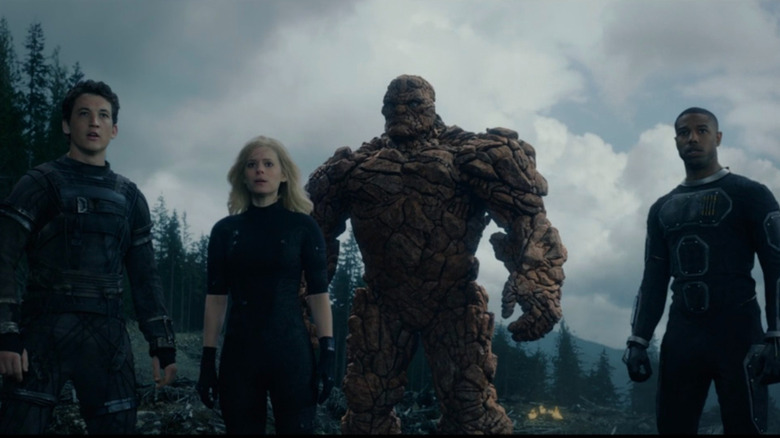
Before Marvel got the rights to the "Fantastic Four" and made "Fantastic Four: First Steps," there were two attempts at launching a franchise. The first series of "Fantastic Four" movies from 2005 and 2007, starring Jessica Alba and Chris Evans, weren't exactly great filmmaking. That makes 2015's "Fantastic Four" even worse. This "Fantastic Four" is often maligned as one of the most notorious box office flops of all time. Making only $167.8 million against a budget of $120 million, plus marketing expenses, the film not only didn't make its money back, it got horrible reviews from critics, notching only a 9% on Rotten Tomatoes. It also received five nominations at the Razzies, winning threww for worst director, worst picture, and worst remake.
There were many reasons for this, including that the director, Josh Trank, had a vision for a darker, grittier story that anyone who read the comics would have rejected. Trank fought with pretty much everyone involved in the movie while he was shooting; and the movie's studio, Fox, ordered last-minute reshoots that tried to make the film a superhero tentpole but instead made it nonsensical. All in all, the making of "Fantastic Four" was a total mess. So despite big stars like Miles Teller and Michael B. Jordan, who arguably drew focus for the oddness of his casting, the movie couldn't catch a break. "Ultimately, 'Fantastic Four' is a profound mess," writes Kristy Puchko in her review for CBR. "It's not fun. It's not exciting. It's far from action-packed. And it's most certainly not fantastic."
Ghostbusters (2016)
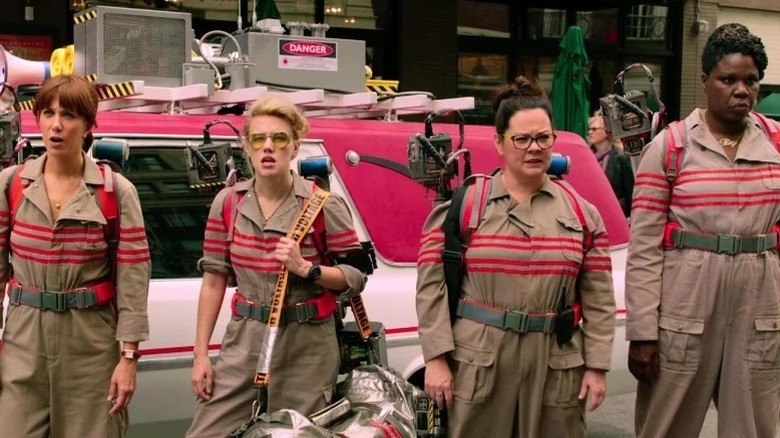
"Ghostbusters" from 1984 is a high bar of great filmmaking, with a great cast, a great director, and a great script. The sequel from 1989 wasn't quite as popular, but people still clamored for a reboot worthy of the first film. So co-writer and director Paul Feig picked up the call in the mid-2010s and set an all-female cast, including Melissa McCarthy, Kristen Wiig, Kate McKinnon, and Leslie Jones, for his film. The backlash was swift and menacing, especially against Jones, the lone African American in the cast, as naysayers heaped racist and sexist insults on the film. But while the views of the haters weren't justified, criticism of the film for other reasons was.
The primary one was that the film wasn't very funny. With people like McCarthy and Wiig in the mix, this should have been one of the funniest films ever, and yet they were constrained by a bad script. Even worse, the film relied disproportionately on Chris Hemsworth's dimwit assistant for many of its laughs. So ultimately, it's not surprising that the film only made $229 million worldwide, when, according to Feig, it needed at least $500 million to succeed. So instead of launching its own franchise, "Ghostbusters" was dead in the water. The studio ultimately decided to go back to the drawing board and do something in the world of the 1984 movie instead.
Psycho (1998)
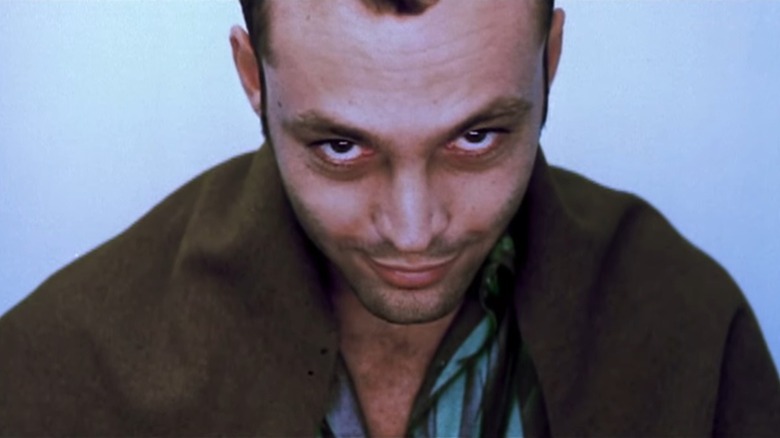
"Psycho" is an excellent thriller starring Anthony Perkins and Janet Leigh, and directed by Alfred Hitchcock. It even spawned a franchise with three mostly forgotten sequels featuring Anthony Perkins. But even the sequels were better reviewed than Gus Van Sant's shot-for-shot remake of the original. Why he decided a masterpiece from 1960 was ripe for the reboot treatment is anyone's guess, but the results aren't. The movie was horrible, and more importantly, pointless.
The reasons for this were myriad. The leads that Van Sant picked didn't have the star power that Hitchcock's originals had. Anne Heche as Marion Crane lacked Janet Leigh's luminosity, and Vince Vaughn as Norman Bates lacked Perkins' awkward gravitas. Plus, reboots are often a place that new filmmakers can examine issues that the story brings up that are important to them, but "Psycho" did none of that. Instead, its only additions to the action were turning things that made the subtext into text, like Norman Bates masturbating to Marion Crane undressing in her hotel room. The remake proved that less was more. Ultimately the film failed, making only $37 million worldwide against a budget of $60 million and earning the Razzies for worst remake and worst director.
Dolittle (2020)
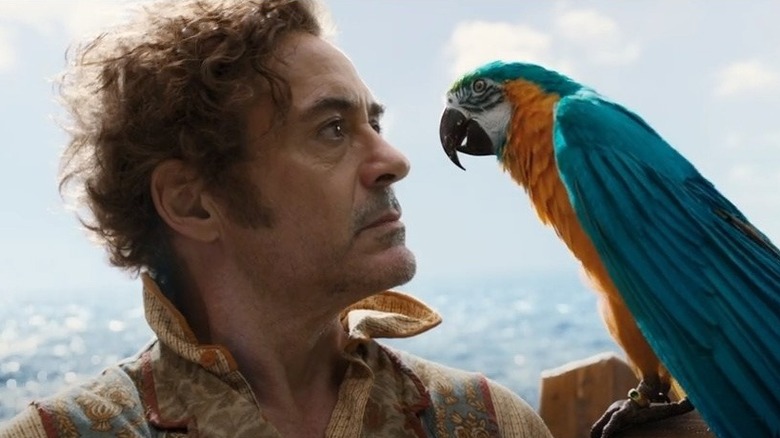
"Dolittle" was a reboot of "Dr. Dolittle," which had been popular both in 1967 as a standalone movie with Rex Harrison as the good doctor, and in a series of movies starring Eddie Murphy in the 1990s and early 2000s. So rebooting the franchise, especially with Robert Downey Jr. in the lead role, seemed like a no-brainer. Downey was just coming off his time as Iron Man in the Marvel Cinematic Universe and was riding high off everyone's love and adoration. "Dolittle" brought him back down to Earth.
The period film relied far too much on a dragon's bowel obstruction for humor, and the script and visuals just didn't work. Though this is a family film, critics didn't even think very young children would enjoy it. Giving it a 15% rating on Rotten Tomatoes, critics agreed that the story is a mess of epic proportions, deriding the humor and even decrying Downey's work. "There's a lot wrong with Dolittle," says Perri Nemiroff of Collider, "but one of the most shocking of the bunch is that Downey Jr.'s performance doesn't work at all." Even Downey himself was circumspect, telling The New York Time's Magazine, "'Dolittle' was a two-and-a-half-year wound of squandered opportunity."
Hellboy (2019)
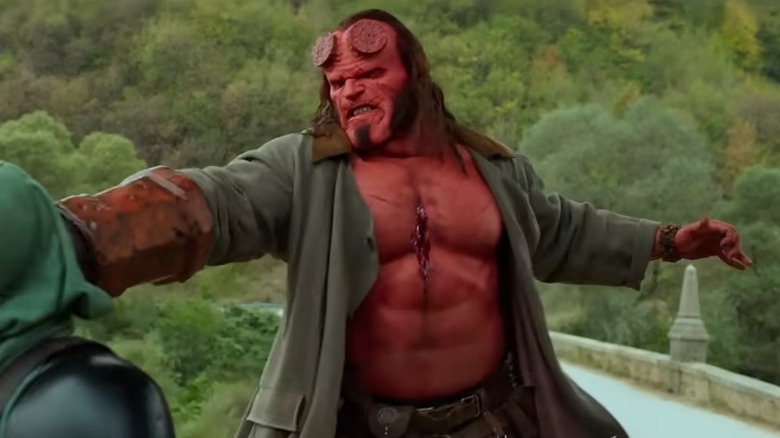
"Hellboy" is most often remembered as a franchise directed by Guillermo del Toro and starring Ron Perlman as the title character. Though certainly not for everyone, the movies hold up because of the handmade feel of the monsters and the ace acting by Perlman and the cast. After two movies in the 2000s though, del Toro called the third one off. But Hollywood is ever hopeful, so producers attempted to reboot the franchise without del Toro or Perlman.
Instead they got David Harbour to play the role of Hellboy and Neil Marshall, who's directed episodes of "Game of Thrones" and "Westworld," to helm it. Unfortunately, neither man was a match for the one they replaced. David Harbour wasn't bad in the role, but he couldn't replace Ron Perlman's memorable portrayal. And Neil Marshall didn't have the vision and imaginative verve that del Toro brings to everything he does.
Instead, the movie was like every other generic monster-fighting film, full of subpar CGI and bad storylines. As a result, "Hellboy" failed at the box office, making just $55 million worldwide against a budget of $50 million, and failed with critics. Hellboy has only a 17% Tomatometer score from 223 reviews on Rotten Tomatoes. David Fear from Rolling Stone summed up critics' ire about the reboot, writing: "Some things are better left dead."
RoboCop (2014)
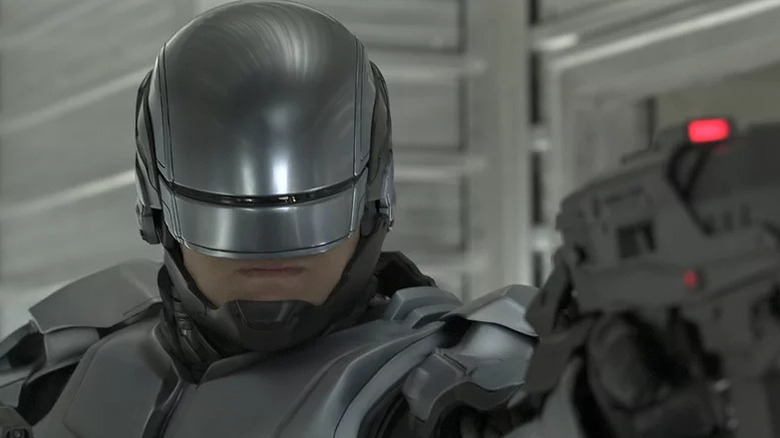
When the original "RoboCop" premiered in 1987, its prescient take on everything from the media to capitalism and its satire of hard R-rated violence made it a hit and spawned a franchise. Though the films got worse and worse as time went on, the 1987 flick still holds up, so someone was bound to come along and reboot the franchise eventually. In 2014 that reboot became a reality, but the results were shaky at best.
Though Joel Kinnaman and the rest of the cast of the movie were praised along with the visual effects and script, the reboot still fell short of the original, in part because it was rated PG-13, making it impossible to replicate the 1987 film's violent take on the material. Both critics and audiences alike disparaged the movie, and critics felt that the filmmakers had missed the point of the original. Dana Stevens of Slate summed it up like this: "Neither [protagonist] Alex Murphy's internal moral conflict nor the larger, vaguely satiric portrait of a global culture dependent on high-tech law enforcement seem to be the main point of this 'RoboCop' remake, which raises the question of what is meant to be the point." "RoboCop" has none of the irony or charm of the original, instead trying to comment on the technological issues of the time and failing miserably in the process.
Godzilla (1998)
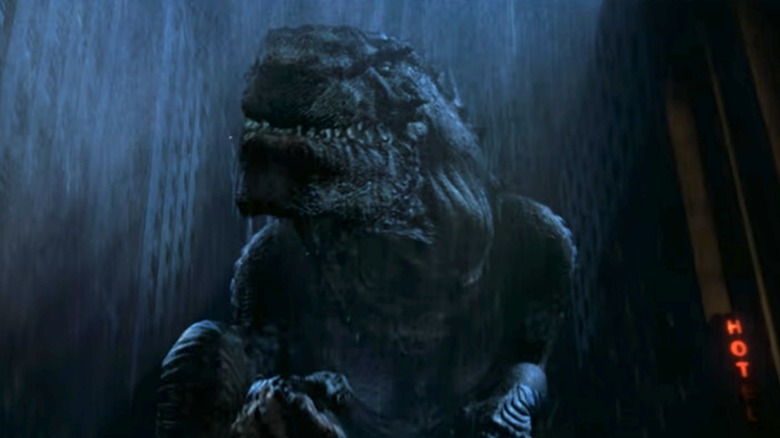
When Roland Emmerich was announced as the director of a new American-made "Godzilla" movie, people weren't surprised. After all, Emmerich had just overseen "Independence Day" at the time, an enormously successful disaster movie on a similar scale. But while it made its production budget of $130 million back at the box office and then some, one could call the 1998 "Godzilla" a bomb by just about every measure that mattered. It not only missed all the financial milestones that production company Sony set for it, it also stopped a new "Godzilla" trilogy in its tracks.
While the mistakes made in the 1998 "Godzilla" were many, the one people primarily remember is the fact that Godzilla didn't look like the Godzilla imagined by the original studio Toho, which started the franchise way back in 1954. In fact, the monster didn't resemble Godzilla as much as it did one of the dinosaurs from "Jurassic Park," which had been hugely successful a few years earlier. Emmerich has seemingly defended his version of Godzilla, saying in 2012 Reddit AMA, "My version of Godzilla was realistic. It was sleek, stylish, and it looked intimidating. It was WAY better than that Toho monster." But both critics and audiences didn't agree, giving the movie an abysmal 20% critics score and a 28% audience score on Rotten Tomatoes. Why Sony felt such a radical take on "Godzilla" was necessary is anyone's guess, as is why Emmerich decided to take the job when he clearly didn't have a lot of respect for the original, but needless to say, for those that did love "Godzilla," the film was an abomination.
The Mummy (2017)
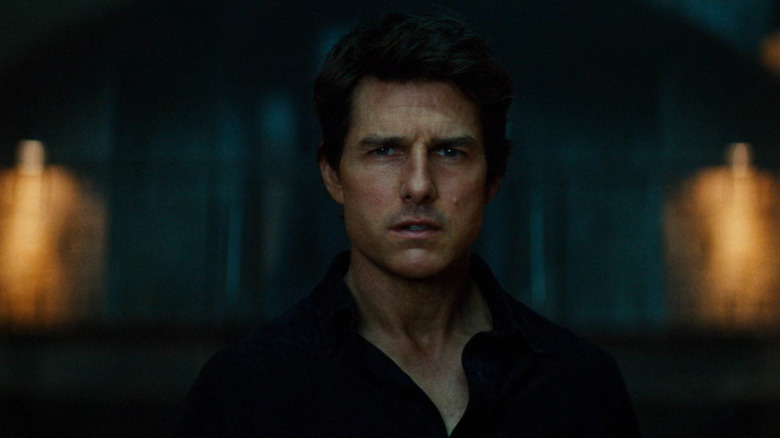
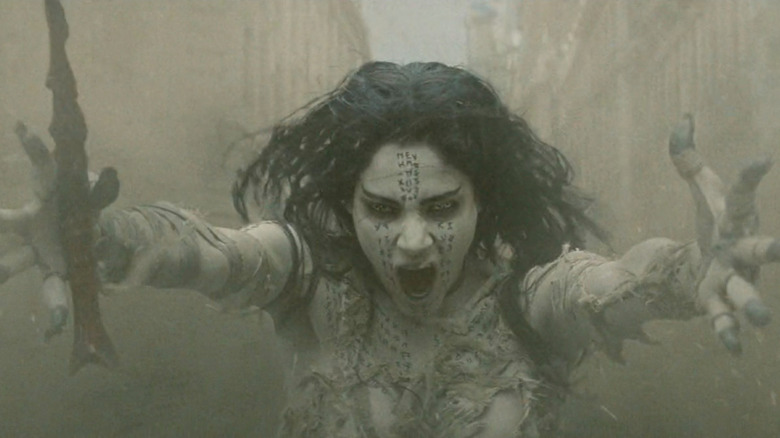
"The Mummy" first graced screens in 1932 when Boris Karloff appeared as the mummy Imhotep, but today people remember Brendan Frasier's three-film series that started with "The Mummy." Brendan Frasier's "The Mummy" was fun and scary and action-packed. It had humor and a blazing central love story. So it was no wonder that Universal wanted to reboot it, especially because they thought this could be the movie to kick off their Dark Universe, a sort of Marvel Cinematic Universe but for monsters like Dracula, the Wolfman, and the Invisible Man. Of course, starting off the Dark Universe with "The Mummy" ended up being a big mistake because it killed the whole franchise before it had a chance to take off.
Though the movie made $409 million worldwide, against a budget of $125 million, it only earned $80 million domestically. More importantly, critics and audiences alike despised the movie, and that was in spite of the presence of Tom Cruise as the lead character, Nick Morton. The movie has a 15% critics score and a 35% audience score on Rotten Tomatoes. There was nothing to recommend this movie, from the script to the dialogue to the terrible characters. The studio seemed to think they could put Tom Cruise in the lead and people would show up because of him. But that just made this like a "Mission: Impossible" movie with mummies in it, and audiences soundly rejected it.