

10 Best Motion Capture Animated Characters Of All Time, Ranked
Animation is a medium, not a genre. As the 10 best R-rated animated movies of all time or even several animated box office bombs that are actually worth watching can attest, animated storytelling is not just confined to kid-friendly Disney fare. Nor is it just restricted to pencil and paper in this day and age. Animation takes on many forms, including motion capture. This process, a combination of a live-action actor's performance and an army of talented animators, has become wildly popular in the 21st century. What once was an obscure technique is now commonplace across all kinds of cinematic storytelling.
Given its popularity, it's no surprise that not all motion capture characters are created equal. Many just can't compete with the medium's finest examples. The 10 best motion capture animated characters are crowning achievements in their field, and not just because they pushed technological boundaries. They're also a amalgamation of superlative qualities like terrific voice work, outstanding character designs, a perfect blend of performer and character, and much more. Whatever informs their excellence, these motion capture creations reflect the incredible artistry that is only possible through this blend of live-action performance and animation.
With "Avatar: Fire and Ash" delivering a deluge of new motion capture characters for audiences to absorb, there's no better time to appreciate this artform. These 10 characters all exemplify the fascinating and distinctly modern variations and potential in this constantly evolving technology.
10. Jeff the Robot in Finch
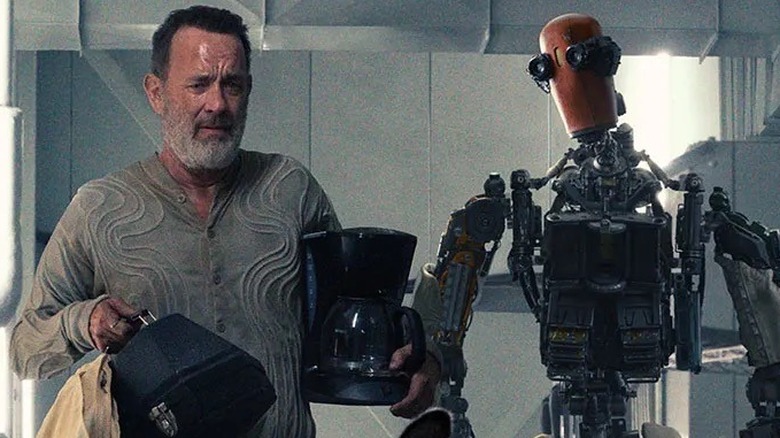
Chances are the movie title "Finch" means nothing to most of you reading this sentence. This Miguel Sapochnik directorial effort from Amblin Entertainment was one of many original projects once set for a 2020 theatrical release that got sent to streaming due to the COVID-19 pandemic. Quietly debuting on Apple TV+ in November 2021, "Finch" and its saga of a human inventor, Finch (Tom Hanks), and his robot companion Jeff (Caleb Landy Jones) in a post-apocalyptic world went largely unnoticed by the general populace. That's a tragedy since there's a lot to like in this project, including the motion-capture work done by Jones as Jeff.
In recent years, Jones has become well-known for heightened forms of Method acting, which makes his relatively restrained work as Jeff extra impressive. Here, playing a robot with limited movement and knowledge of the wider world, Jones has to play things closer to the chest in his physicality. He proves excellent in that task as he deftly portrays Jeff's restrictive metallic body language while also vividly communicating the character's childlike curiosity. Tiny details in the character's physical performance, like tapping fingers together nervously or a small tilt of the head, provide a lot of insight into what's going on inside Jeff.
That "childlike curiosity" also comes through terrifically in the actor's endearing voice work. Caleb Landry Jones's laudable motion-capture performance as Jeff in "Finch," like the movie it anchors, deserves a lot more love.
9. Kong in Kong: Skull Island
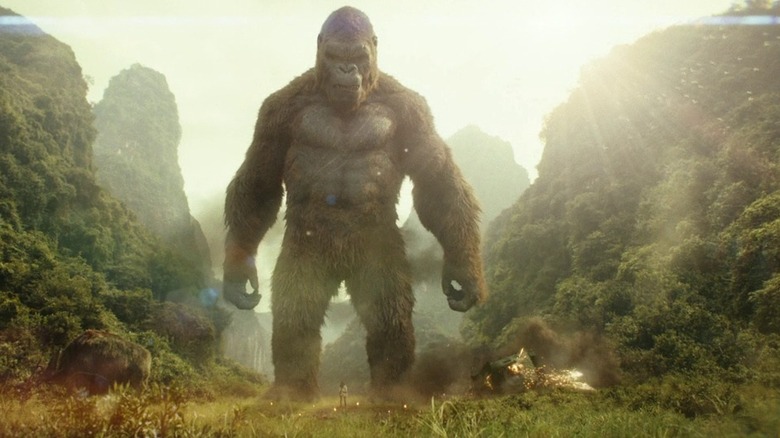
Andy Serkis gave a tremendous performance as the titular ape in 2005's "King Kong" that pushed motion-capture performances into exciting new territory. However, given that there are already multiple Serkis turns on this list, let's offer some praise to another superb motion-capture Kong. Terry Notary took on this important role for "Kong: Skull Island," which is one of several primate-oriented parts that Notary has played in his career. Rather than reminding audiences of his "Planet of the Apes" character or explicitly foreshadowing his cameo as Oleg in "The Circle," however, his Kong has a distinctive petulance that separates him from other Notary performances.
While the human characters in "Kong: Skull Island" grapple with Vietnam-based trauma or are consumed by vengeance, Notary entertainingly makes his Kong a creature guided by surface-level instincts. He's not much of a thinker, but Kong's an insanely formidable fighter when he's taking on a gigantic squid or other Skull Island adversaries. The primal, chaotic, and enjoyably instinctual qualities of this iteration of the character come through loud and clear in Notary's motion-capture performance. These elements also ensure that Notary isn't just doing a rerun of what Serkis did in "King Kong" or any other versions of the ape.
It's a pity that Kong's subsequent MonsterVerse appearances sometimes lost the personality traits that Notary brought to life so skillfully in "Kong: Skull Island." Still, in this 2017 film at least, Kong was once again a motion-capture performance champion.
8. K-2SO in Rogue One: A Star Wars Story
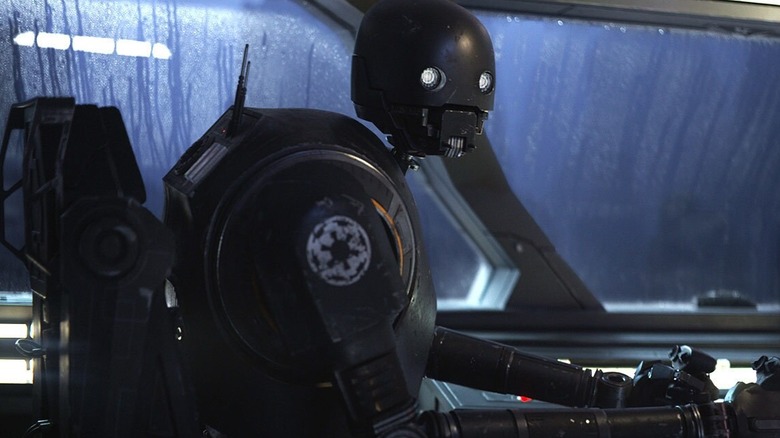
Prior to 2016, the majority of "Star Wars" droids were realized through on-set puppets and mechanical feats. In the Prequel Trilogy, CG doubles were used for R2-D2 and C-3PO, although practical versions of those characters were still the default option. While BB-8 was another practical creation in "The Force Awakens," K-2SO (Alan Tudyk) in 2016's "Rogue One" required motion capture to bring the snarky droid to life. Thus, Tudyk was called upon to put on some stilts and digitally wired pajamas to portray this scene-stealing character.
This approach proved perfect on multiple levels, such as giving live-action actors like Felicity Jones and Diego Luna something concrete to play against on-set. Even better, it lets "Rogue One" really exploit Tudyk's many chops as a performer. K-2SO, like Jeff in "Finch," doesn't have a flexible body, but Tudyk still gets plenty of comedic mileage out of his arms drooping or his head tilting downward. Meanwhile, his rapport with other actors, especially Luna, feels extra potent. Tudyk's extensive experience as a voice-over performer also ensured that he was masterful at communicating K-2SO's vivid personality just through auditory means.
Motion capture really let Tudyk flourish as K-2SO, whether it was through his on-set work or his vocal performance. In this one case, departing from exclusively practical visual effects for a "Star Wars" droid turned out to be a wise move.
7. Neytiri in Avatar
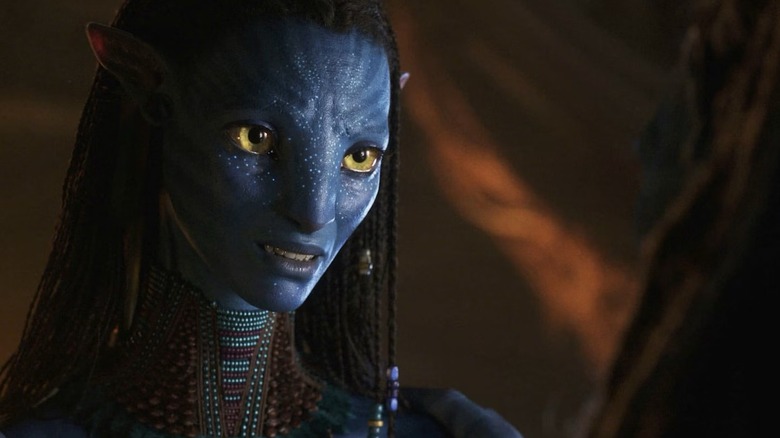
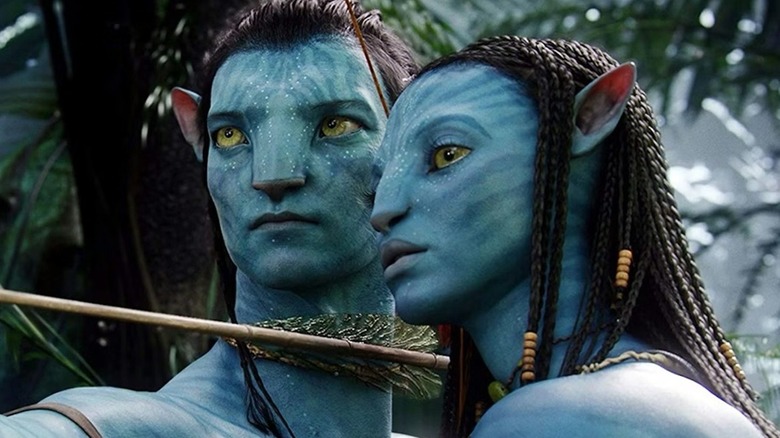
One thing that's extra frustrating about Sam Worthington's generic performances as "Avatar" lead Jake Sully is how this actor often plays opposite somebody who's giving her Pandoran role everything that she's got. Zoe Saldaña as Neytiri in the "Avatar" films is a force to be reckoned with. Not only does she eschew all cynicism or self-consciousness in her performance, but there's also a go-for-broke bravura in her most pronounced sequences that perfectly matches James Cameron's gonzo creative sensibilities. Specifically, Saldaña is magnificent portraying Neytiri's big "you are not one of the people!" breakdown to Sully in 2009's original "Avatar."
Her jagged, heart-wrenchingly devastated line deliveries, combined with Saldaña's agonizing physical performance, make the weight of Sully's betrayal fully tactile. In this moment, a digital motion-capture character becomes something hauntingly real, an achievement that wouldn't be possible without Saldaña absolutely going for it in portraying every aspect of Neytiri. There's something inherently believable and emotionally gripping in her on-screen work. Within Neytiri, one finds the perfect blend of a talented actor, groundbreaking technology, and an outstanding animation team coming together to make a cat-like alien someone whose plight you can't help but get wrapped up in.
In fairness to Sam Worthington's work, not every performance in the "Avatar" saga is all that interesting. Neytiri, though, exemplifies all that's good about this franchise, not to mention the rich, exciting possibilities of motion-capture characters.
6. Thanos in the Marvel Cinematic Universe
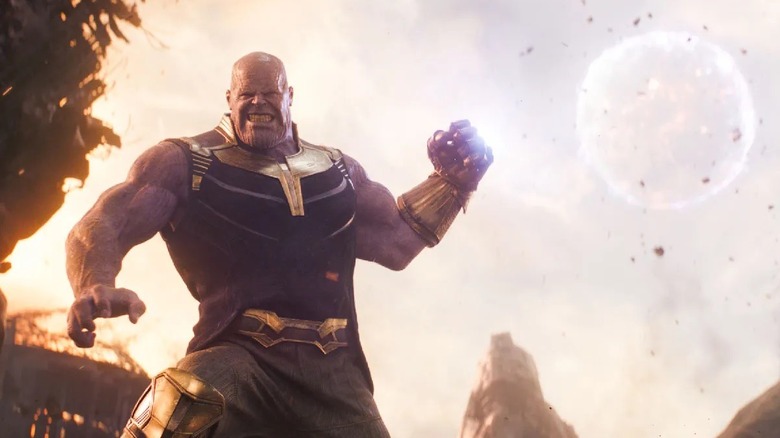
The most memorable Thanos quotes in the MCU, many of which have become pervasive online memes, exemplify how this cosmic baddie has resonated so deeply with moviegoers. Despite this ubiquity, the "Avengers: Infinity War" and "Avengers: Endgame" villain isn't quite as perfect design-wise as his comic book counterpart — for example, giving Thanos more realistic human eyes instead of his more impressionistic, vacant pupils from the original "Infinity Gauntlet" comics is a tragic concession to "realism." However, as a motion-capture animated creation, Thanos is incredibly well-realized, partially because he's so down-to-earth in his ambiance.
Though a looming purple alien with a gargantuan chin, actor Josh Brolin imbued Thanos with a weariness that fascinatingly clashed with his over-the-top exterior. The character's personality and sorrow over the galaxy's status quo was more akin to Tommy Lee Jones in "No Country for Old Men" than past "Avengers" antagonists. The believability of Thanos as a motion-capture character really accentuated this personality trait. When he's interacting with flesh-and-blood performers like Zoe Saldaña's Gamora, he registers as just another person in the scene rather than a digital concoction. His believable-looking skin textures and body language make it instantly discernible that Thanos believes he's carrying the weight of an entire universe on his shoulders.
Plus, motion capture imbued Brolin's transfixing performance with extra levels of emotional immediacy. It's no wonder every line this guy said became a meme, given what an exemplary feat of motion capture Thanos is.
5. The Monster in A Monster Calls
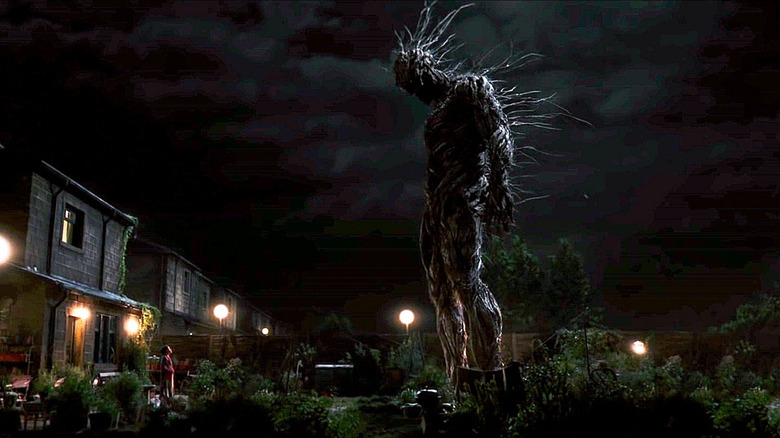
Liam Neeson's scored a slew of different accomplishments in his lengthy career, including registering as the greatest James Bond we never had. However, for 2016's criminally underrated feature "A Monster Calls," Neeson had to engage in a whole new kind of acting that had eluded him up to that point: motion-capture performances. This was necessary for him to portray the massive entity known as The Monster that steps into the life of grieving youngster Conor O'Malley (Lewis MacDougall). Neeson was very adamant in interviews that his immersive and physical work as The Monster was very different from his prior voice-over performances in titles like "The LEGO Movie," and it's easy to see why.
For this particular character, potent traces of Neeson's intimidating physicality certainly come through. That quality's perfect for The Monster, a creature that's supposed to register as towering yet also unexpectedly thoughtful in how he helps Conor process unthinkable tragedies. Motion capture allowed Neeson to exude a commanding presence while also utilizing his dramatic chops in the character's quietest scenes. The Monster, which is meant to look like a gigantic humanoid tree, also has a very distinctive gait, suggesting that it's not used to moving its limbs constantly — a quality well-realized through Neeson's subtly detailed physical performance.
For those thinking Neeson is only what we see in the "Taken" movies, his motion-capture work in "A Monster Calls" is one of many roles reflecting the impressive depth in his filmography.
4. Robbie Williams in Better Man
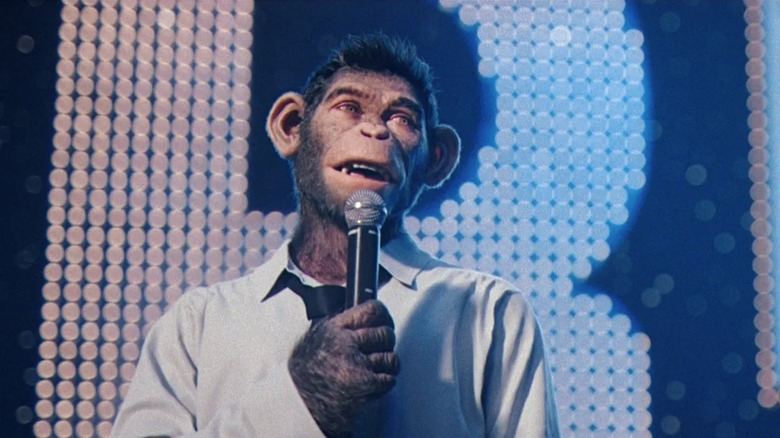
It's easy and even sometimes correct to think that all musician biopics are the same. 2024's Robbie Williams biopic "Better Man," though, brilliantly threw conventionality to the wind by depicting Williams as a motion-capture chimpanzee. The rest of the world is filled with human beings and nobody registers Williams as out of the ordinary. Audiences, though, witness a digitally rendered primate belting out tunes, berating his wife, doing drugs, and everything else under the sun in this stunning, audacious exploration of a tortured mind.
Brought to life through performers like Williams and motion-capture actor Jonno Davies, the unique depiction of the singer is a triumph on multiple levels. For one thing, the project works as a great, compelling character drama even with a digital chimpanzee star. That's a testament to the visual effects crew ensuring that the ape version of Williams seamlessly interacts with live-action performers and sets. The presence of a CG animal doesn't register as a gimmick, but rather an inventive way of probing Williams' psyche.
There are also several sweeping, heightened segments in "Better Man," including an unforgettable set piece where Williams viciously fights younger versions of himself, that make terrific use of a chimpanzee protagonist. It's also great to see such a well-realized and creative vision of a motion-capture performance existing in an unexpected genre. "Better Man" provided a toe-tapping and thoughtful demonstration that action-oriented blockbusters weren't the only ones capable of delivering realistic motion-capture characters.
3. Caesar in the Planet of the Apes trilogy
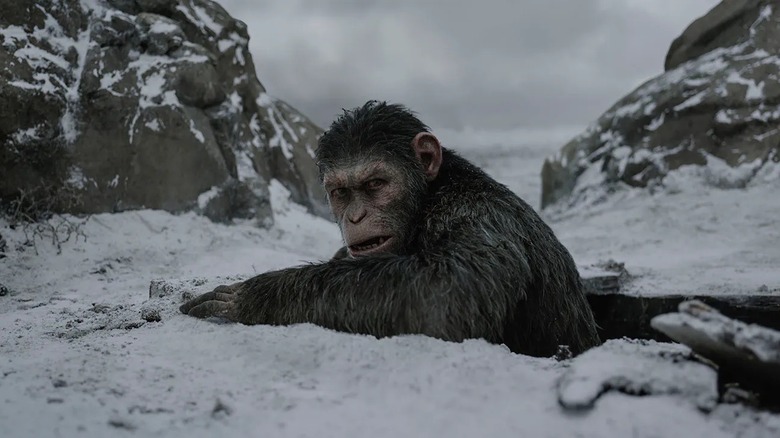
Andy Serkis got down to some ape business again after 2005's "King Kong" by playing a new version of Caesar in 2011's "Rise of the Planet of the Apes" and its two sequels. In "Rise" alone, Serkis had a juicy role to play as he depicted Caesar growing from a domesticated ape into a talking leader of a simian resistance. This particular film also marked several groundbreaking developments for motion capture animated characters, with "Rise of the Planet of the Apes" marking the first time motion capture performances were filmed outside as well as the first time this kind of acting was captured alongside live-action actors. But the detail in Serkis' work as Caesar ensured that his first turn as this ape amounted to more than historical fun facts.
As this trilogy of "Apes" movies went on, Serkis only got more and more comfortable in the role. In "Dawn" and "War for the Planet of the Apes," Serkis was able to depict an entire ape's life, from suburban youngster to grizzled leader navigating a snow-laden dystopia. The vivid humanity of that evolution came through in full force via motion capture technology, which also made Caesar (not to mention additional apes like Maurice and Koba) look stunningly realistic. The vividly detailed CG animation made Caesar look like a real ape that happened to talk, while Serkis' performance created a rich character you couldn't help but invest in.
2. Gollum in The Lord of the Rings
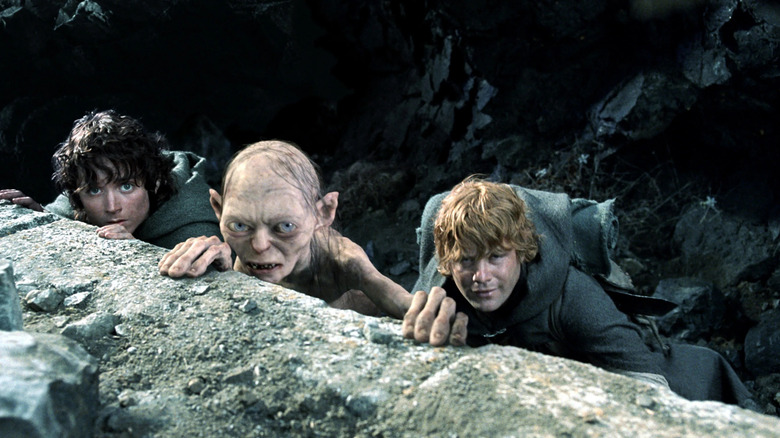
Motion capture characters didn't necessarily begin with Peter Jackson's "Lord of the Rings" movies. Jar-Jar Binks in "The Phantom Menace" and the various humans in "Final Fantasy: The Spirits Within" extensively deployed the technology before "The Fellowship of the Ring" hit theaters in 2001. Yet with Andy Serkis as Gollum in "The Two Towers," motion capture animation was popularized like never before. Neither cinema nor the career of Andy Serkis was ever the same afterward. Even removed from its historical significance, however, Gollum is still a triumph of a character, motion capture or otherwise.
Andy Serkis deployed a strange way to prepare to play Gollum, but the unorthodox technique paid off tremendously, considering how compelling this nasty creature was. Motion capture lent immediacy to how Serkis portrayed Gollum on screen, particularly any time the character was interacting with the two warring sides of his mind. Serkis was so precise in his performance that he delivered tremendous reference material and creative inspiration for the animators tasked with realizing his groundbreaking turn in post-production.
Like the "Jurassic Park" dinosaurs, the original iteration of Gollum still doesn't look outdated or plastic despite decades of visual effects advancements since the "Lord of the Rings" trilogy. Serkis is just so engrossing as the character, while the technology was so perfect for realizing Gollum, that this breakthrough for motion capture performances remains as timelessly magnificent as ever.
1. Davy Jones in Pirates of the Caribbean
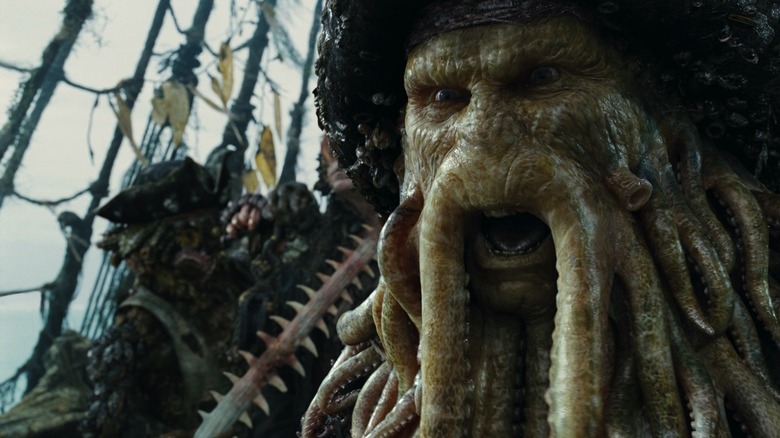
The worst CGI moments in superhero movies reflect how often modern blockbusters struggle in using CG to realize seemingly simple matters, like human faces or fantastical backdrops. While tentpoles from the 2020s flail around mimicking reality, a 2006 blockbuster set the gold standard for motion capture characters with a villain that couldn't have been more removed from reality. Bill Nighy as Davy Jones in "Pirates of the Caribbean: Dead Man's Chest" and "At World's End" was a triumph for this technology in every sense imaginable. Nighy was just a joy as this character, an intimidating yet heartbroken sea captain consumed by the ocean he lords over.
Davy Jones leaped to the big screen with impressive detail and believability. Both his design team and the animators bringing him to life were firing on all cylinders when working on this adversary. Plus, being a creature with a beard of tentacles so removed from reality made him a perfect candidate for the motion capture process. Nighy wasn't hired to portray a slightly wonky-looking human. He was meant to lend tangibility to a creature that looked like it wandered away from a H.P. Lovecraft story.
Having a human performer at the heart of Davy Jones was possible thanks to mo-cap technology, which merged computer-generated wonders with Bill Nighy's flesh-and-blood talents. It was a perfect fusion of talent that has kept a seafaring baddie still standing tall as the pinnacle of all motion capture characters.