

The Ending Of Avatar: Fire And Ash Explained
Contains spoilers for "Avatar: Fire and Ash"
The "Avatar" franchise occupies a fascinating space within pop culture. Many will insist the series has made no significant cultural impact, yet without fail, these movies wind up being huge box office successes. It's not like the Marvel Cinematic Universe or "Star Wars" where people debate endlessly about the franchise's quality or where it will potentially go in the future. People go to the theater to watch them, stay quiet about them online, and then go about their business. It's kind of beautiful, in a way.
And if you're reading this article, then you must care a little bit about the series, because you want to learn more about the ending of "Avatar: Fire and Ash." The story picks up shortly after the events of "Avatar: The Way of Water" that saw Jake Sully (Sam Worthington) and his family fend off Quaritch (Stephen Lang) and the Resources Development Administration from killing Tulkuns (the giant whale-like creatures). They succeed in that endeavor, but Jake loses one of his sons, Neteyam (Jamie Flatters), in the process.
"Avatar: Fire and Ash" picks up with a family still mourning, particularly Neteyam's brother Lo'ak (Britain Dalton), who blames himself for Neteyam's death. With a runtime exceeding three hours, there's a lot of ground to cover for "Fire and Ash," even if many of the plot beats feel similar to "Way of Water."
What you need to remember about the plot of Avatar: Fire and Ash
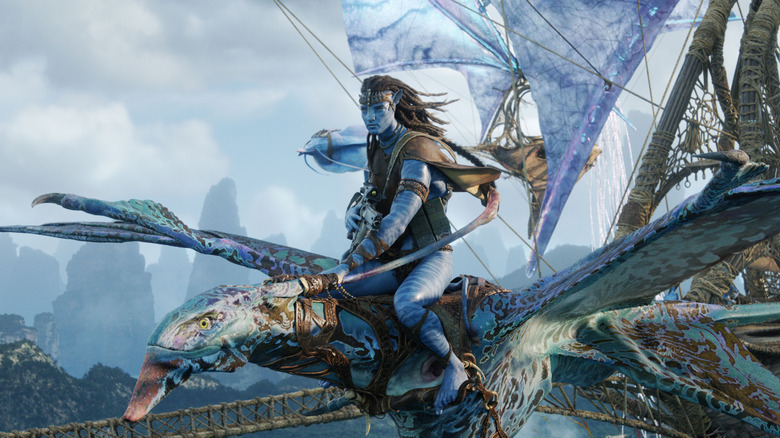
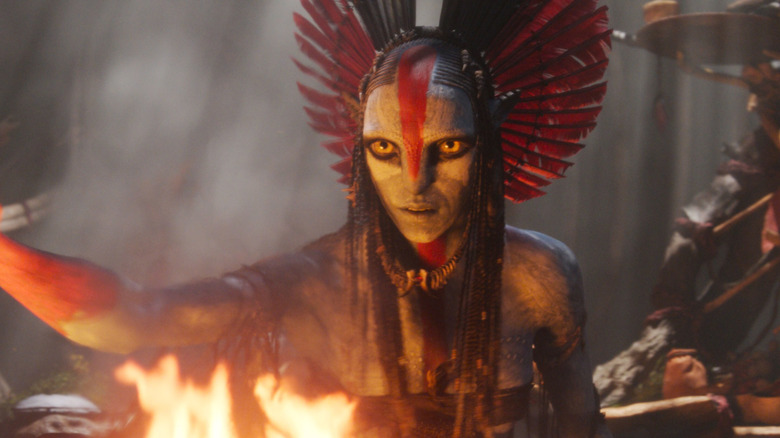
Despite the Sullys making a new home amongst the water tribe of Na'vi, Jake wants to take Spider (Jack Champion) elsewhere so that he doesn't need to wear a mask all the time to breathe. They hitch a ride with Wind Traders and are promptly ambushed by the Ash People (a tribe of Na'vi who have turned their backs on Eywa, the consciousness of Pandora), who are led by Varang (Oona Chaplin). Jake and Neytiri (Zoe Saldaña) get separated from the kids, and Spider's mask is running low on power. To save him, Kiri (Sigourney Weaver) infuses him with mycelium of Pandora, allowing him to breathe the planet's air. It also gives him the key to connect with everything on Pandora.
This makes him a desirable asset to the RDA because if they can reverse-engineer his newfound physiology, they can move more humans to Pandora and take over more of the planet. Quaritch teams up with Varang and the Ash People, giving them firearms to help obtain both Spider and Jake. Quaritch takes them both to the human's compound where Spider gets experimented on and Jake is set for execution due to his betrayal of the human race. Neytiri, with some help from human marine biologist Dr. Ian Garvin (Jemaine Clement), manages to break into the human base and escape with both Jake and Spider.
In a moment of weakness, Jake believes the only way to keep Pandora safe from total human colonization is to kill Spider so that they can never discover his secrets. It's something Neytiri suggested earlier, but she rushes to them to stop it from happening. Jake winds up sparing Spider, insisting they will find a different way to stop the humans.
What happened at the end of Avatar: Fire and Ash?
Just like in "Avatar: The Way of Water," the RDA still wants to acquire Amirta (a liquid that aids in immortality) from the Tulkuns. The humans plan an all-out assault to kill as many Tulkuns as possible during an important ritual that will see them gather together in one place. The Metkayina clan once more fends them off, and Jake reunites with Toruk, the legendary Ikran, to help in the fight.
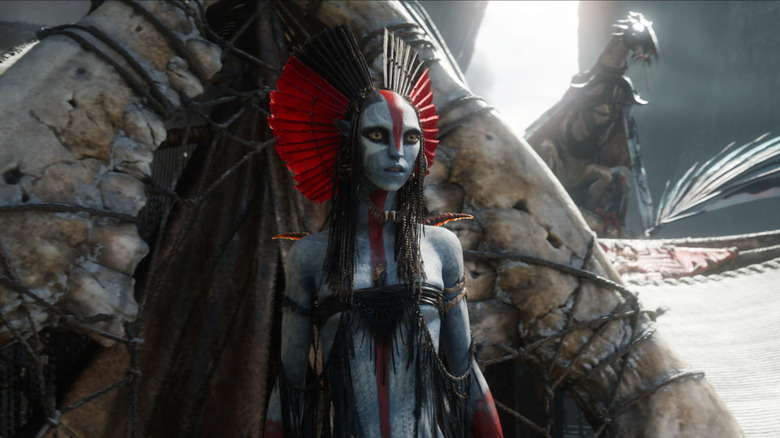
Jake's family, the Metkayina, and the Tulkuns initially do a good job of stalling the RDA, but Quaritch and Varang come riding into battle with far more firepower. They lay siege on the heroes, killing many Na'vi in the process, including Ronal (Kate Winslet), who is pregnant. She gives birth to a Na'vi baby that Neytiri promises to raise before passing away. To turn the tide of the battle, Kiri connects with Eywa, even gazing upon her face. Many creatures throughout Pandora join the battle to take down both the RDA and Quaritch's forces.
Kiri's takes out Varang while Jake and Spider fight Quaritch one last time. Jake and Quaritch momentarily collaborate to save Spider until the rest of the Sullys show up to corner Quaritch. Rather than being killed by their hands or taken into custody, Quaritch willingly falls off a ledge into a storm where he presumably dies (although Quaritch came back to life once before). Many have been killed, but Pandora is safe for the time being. "Avatar: Fire and Ash" ends with Kiri and Spider connecting with Pandora and seeing everyone who has died up to this point, including Neteyam.
What the end of Avatar: Fire and Ash means for the Sully family
Despite numerous fan theories suggesting Jake Sully would die at the end of "Avatar: Fire and Ash," no such thing occurred. For now, the Sully family stays intact, giving "Fire and Ash" a far happier ending than "The Way of Water."
Spider is accepted more into the Na'vi, with even Neytiri coming around to his presence. However, his unique anatomy still makes him a target for scientists. That's assuming they haven't already figured out how to reverse-engineer his capabilities during his short time getting experimented on. But there's a lot more to explore with Spider, especially his burgeoning romance with Kiri. By the way, Looper nailed it by theorizing Kiri was a pure clone of Grace (Sigourney Weaver) without a true father — but that's beside the point. The two share a kiss, so perhaps a relationship will form between them by the time "Avatar 4" rolls around.
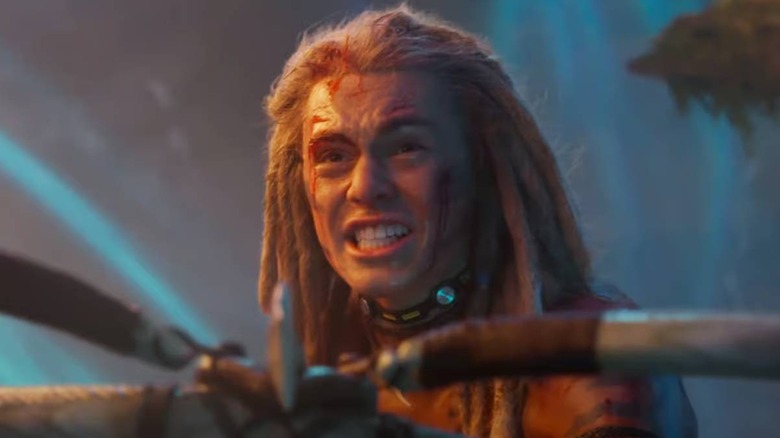
Lo'ak blames himself for Neteyam's death, and Jake doesn't exactly help with those thoughts. But Lo'ak comes into his own throughout the film, going so far as to locate Payakan to recruit the other Tulkuns to join their fight. This opens the door for him to have a much more active role going forward rather than just hiding out in the shadows listening to whatever his dad wants. And even though Neytiri promised to look after Ronal's child, one assumes her husband Tonowari (Cliff Curtis) would want to play a role in the child-rearing, too.
What are the themes of Avatar: Fire and Ash?
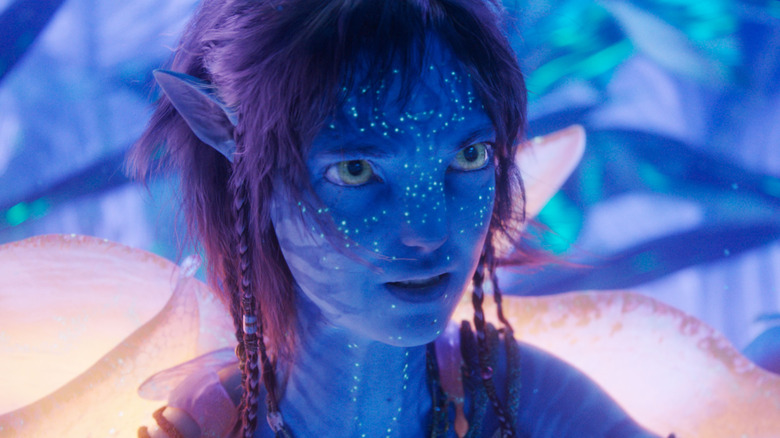
If "Avatar: The Way of Water" is about the Sullys finding their place within a new clan and culture, then "Avatar: Fire and Ash" is about them finding their place within their own family unit. Lo'ak was a bit of an outcast in "Way of Water," which made him more important than you might initially think because it allowed him to bond with Payakan, a fellow outsider. With Neteyam, the eldest brother, dead, Lo'ak can't wait in the shadows any longer. He takes action by venturing into the ocean to locate Payakan and stand up to the Tulkuns originally resistant against the idea of fighting against the RDA.
Of course, Spider is literally an outsider since he's human, but with the mycelium now coursing through his body, he doesn't belong to either world. Neytiri just wants to kill him at the very start of the film because he's too much of a liability, but now, he can't even return to Earth. The ending of "Avatar: Fire and Ash" with Spider and Kiri entering the spirit world is more than just a nice sentiment. It's Spider literally finding his people, so regardless of what he looks like, he's a Na'vi.
Then there's Kiri, who's always had a profound connection to Pandora and Eywa. She laments being a clone because, like Spider, that would also make her an outsider. But that's ultimately what makes her special and helps her to find Eywa toward the film's climax. The three kids all have something to prove — that they're not just accidents — and a sequel could see them come more into their own.
What was going on with Eywa in Avatar: Fire and Ash?
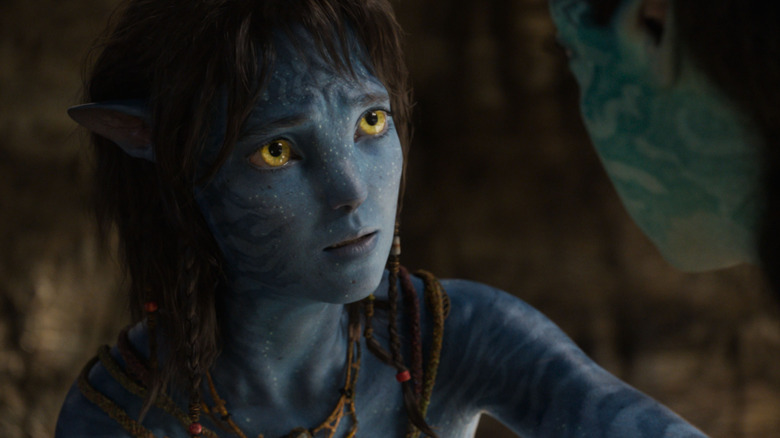
Eywa has been referenced going back to the first "Avatar" film. She's the Great Mother, an interconnected biological network that connects the Na'vi with all of Pandora's flora and fauna, and she stores the spiritual essence of all Na'vi who have died. Some of the most confusing aspects of "Avatar: The Way of Water" centered on Eywa and Kiri's connection to her, since she's more of a metaphysical presence, but "Fire and Ash" shines a little more light on her.
Kiri wants desperately to see Eywa, just to know she's there, and at the climax, she gazes upon Eywa's face with some help from Spider and Tuk (Trinity Bliss). Eywa manifests as almost an angelic Na'vi. In fact, the way she's lit and glances over at Kiri is reminiscent of the Star Child from "2001: A Space Odyssey." Similar to how the Star Child symbolizes the next stage in human evolution, Kiri finally locating Eywa could symbolize the next stage of the Na'vi interacting with the entity.
Kiri's journey is also fascinating in relation to Varang. At one point in the film, she tells Kiri, "Your goddess has no dominion here," and we learn how the Ash People have turned their back on Eywa. Another theme throughout "Avatar: Fire and Ash" becomes the conflict between faith and a lack thereof. Kiri just needs some evidence Eywa is there among all the death and destruction during the final battle, and that's when Eywa finally awakens and controls the animal life to join in the fight.
What has the cast and crew of Avatar: Fire and Ash said about the ending?
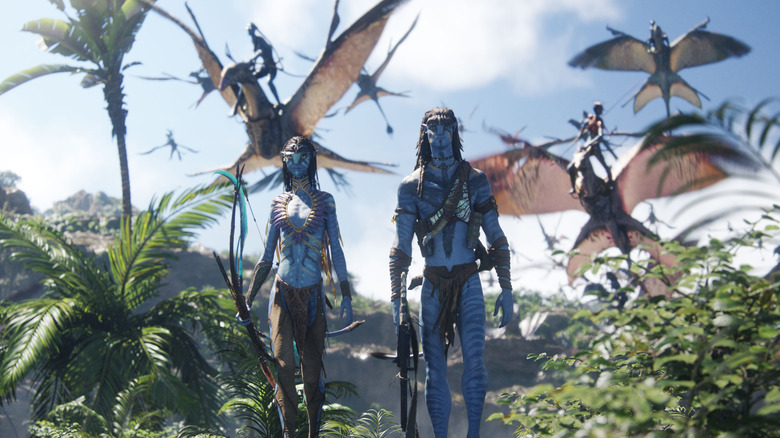
"Avatar: Fire and Ash" has no post-credits scene. There's no major cliffhanger that could lead into "Avatar 4," so if things end here, we have a sense of resolution around the Sully family. Director James Cameron has spoken about going as far as "Avatar 7," but that's assuming these films remain hugely profitable (anything below $2 billion at the box office would be seen as a disappointment at this point). And everyone seems prepared to call it a day with "Avatar: Fire and Ash" if necessary.
Sam Worthington spoke with The Hollywood Reporter about how this film could be the last one if need be, explaining, "Jake Sully said at the end of 'Avatar 2,' 'This is where we make our stand.' So I think we know what's coming. To me, this was always the final battle." Cameron appeared on "The Town with Matthew Belloni" podcast and admitted he's under no delusions of the massive amount of money "Avatar: Fire and Ash" needs to make to justify making more films. He also laid out his plans if no more "Avatar" movies are on the horizon: "There's one open [plot] thread. I'll write a book!"
The "Avatar" series could simply go down as a cinematic trilogy if necessary, since almost everything gets wrapped up neatly. Even though "Avatar" movies seem to print money, Cameron's been in the business long enough to know nothing's guaranteed.
Who dies by the end of Avatar: Fire and Ash?
Hearing from James Cameron about how he knew there might not be any more installments after "Avatar: Fire and Ash," it makes sense there aren't any major Sully deaths. Jake and Neytiri both make it out unscathed, and their victory could end the series on a hopeful note if that's the way things shake out. But not everyone is as fortunate.
As mentioned previously, Ronal succumbs to her injury and dies shortly after giving birth. It also appears that her son, Rotxo (Duane Evans, Jr.) died during the conflict as he's seen floating lifeless in the water.
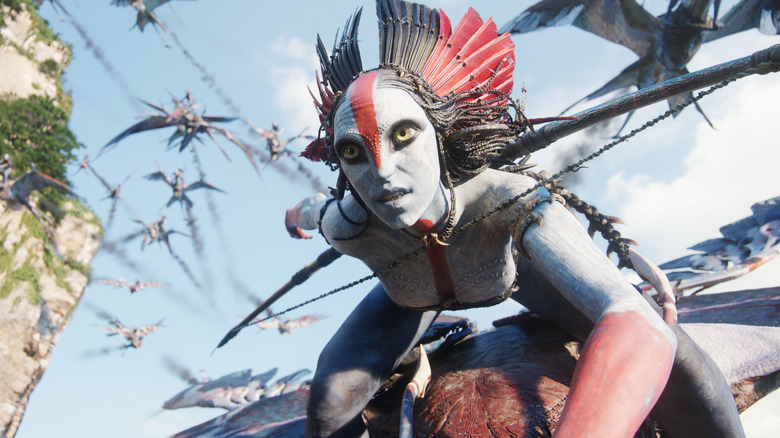
Then there are the two major antagonists — Quaritch and Varang. Quaritch falls into the storm where he presumably dies, although one would assume his consciousness is uploaded to a server somewhere and could be brought back into another Na'vi body if the RDA so desired (even though it really felt like he burned bridges there). Kiri knocks Varang off a water vessel where she seems to die as well, but we don't see either of their bodies disintegrate or anything. More than likely, this plays into Cameron's plans to end the series with "Avatar 3" if it's not profitable. If there are no more movies, he can just say the two of them died. But there's enough wiggle room to where both of them could come back to life if future stories demand it. After all, Varang is too fun of a villain to be one-and-done.
What the end of Avatar: Fire and Ash could mean for the franchise
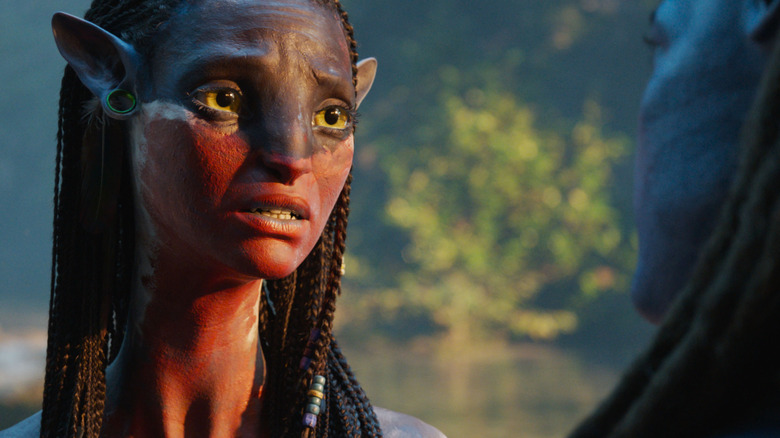
As mentioned previously, "Avatar: Fire and Ash" does a good job of wrapping things up. James Cameron mentioned tying up loose ends via a book if 20th Century Studios doesn't want more films, and he could use that to further explore Kiri's connection with Eywa or what happens with Ronal's child. Those storylines can also be explored in "Avatar 4" and beyond if this film makes money.
There's also what producer Jon Landau said before his death in regards to the franchise's future: "In movie five there is a section of the story where we go to Earth. And we go to it to open people's eyes, open Neytiri's eyes, to what exists on Earth." Plans can always change, but it does sound like we'll visit Earth at some point to explore the environmental degradation that's occurred there within this universe, with Neytiri's perspective being of vital importance. She's immensely hostile toward humans in the film, and rightly so. She's even fine with killing Spider at one point, but eventually comes around on that idea. She still probably doesn't care for most humans, but it would be interesting to see what she thinks of a world that's been ruined.
The RDA may need to lick its wounds for a bit, but with Spider still alive, rest assured they'll probably want to capture him again to figure out how people can breathe on Pandora. We might see how desperate humanity has become in the face of total annihilation with Spider being the key to everything.