

10 Star Trek Deleted Scenes That Would Have Changed Everything
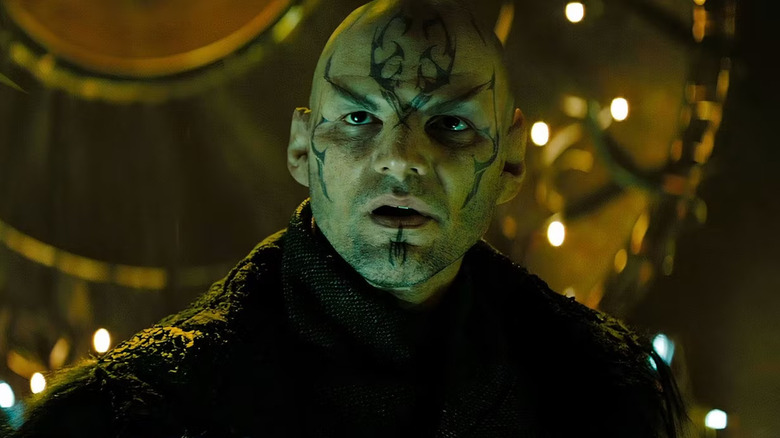
"Star Trek" is one of the greatest science fiction franchises ever, and is remarkably still going after nearly 60 years on television and at the movies. Created by Gene Roddenberry, the franchise has employed some of the brightest sci-fi writers TV and film have ever seen and filmmakers who made careers out of telling complex and dramatic stories. But like any good science fiction story, a "Star Trek" tale on screen is a complicated process to assemble; with large-scale sets, elaborate wardrobes, and of course, cutting-edge special effects which must be good enough to immerse the audience and make them believe they are in a far-off future.
With so much involved, every "Star Trek" production goes through a long journey from the page to the screen. What we wind up with in theaters or on television isn't always the full story. There are often many deleted scenes, whether they were removed for reasons relating to time, budget, or because they simply weren't working. Because this is "Star Trek," a fictional universe that spans multiple shows, a dozen or more movies, and hundreds of years of continuity, there are inevitably some deleted scenes that, had they been included, would have made monumental changes to the franchise. Here is a list of ten such deleted scenes that would have changed "Star Trek" forever.
Will the real first officer please stand up?

The fourth and final theatrical film from the cast of "Star Trek: The Next Generation," "Star Trek: Nemesis" ends with the promotion of William Riker to the rank of captain as he takes command of his own ship, the USS Titan. But the final sequence, which sees Picard and Riker saying final goodbyes, had a scene that was cut that would have added an important new character to the franchise: The Enterprise's new first officer, Martin Madden, played by actor Stephen Culp.
In the scene, Riker is exiting when the incoming first officer Madden asks him for advice. Riker gives him some intentionally bad advice, leading to a humorous exchange when Madden introduces himself to Picard. Unfortunately, Madden never appeared again, nor was he mentioned in any follow-up including the 2020 "Star Trek: Picard" series. In fact, it's mentioned in that show's third season that the Klingon Commander Worf was Picard's first officer after Riker, suggesting Madden's deleted scene never officially happened. Given that the scene has remained off-screen, it means Madden isn't a canonical character, unless he were to show up or be mentioned in a future episode or movie.
Despite losing out on playing the Enterprise's first officer, don't feel bad for actor Stephen Culp. A year after "Star Trek: Nemesis," Culp snagged the recurring role of Major Hayes on "Star Trek: Enterprise," perhaps as a way of making it up to him after losing his scene.
Wrath of Khan's deleted scene would have been controversial
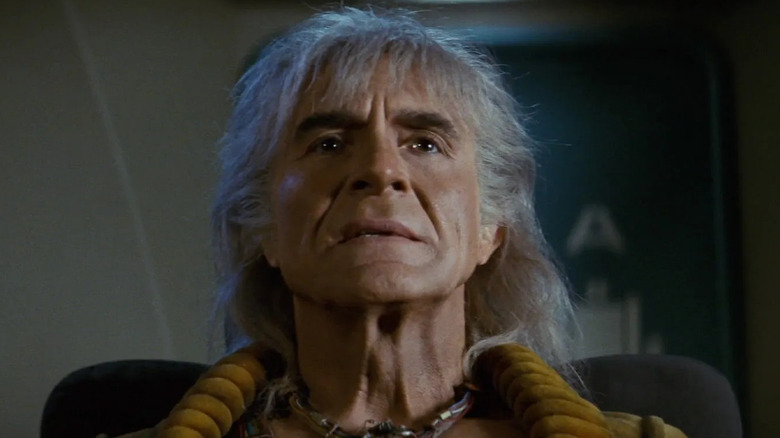
"Star Trek II: The Wrath of Khan" is often cited as the best "Star Trek" film ever made (though we disagreed in our ranked list of all 14 "Star Trek" movies). It's a suspenseful sci-fi thriller, a powerful story of revenge, and a film that delivered one of the franchise's most gut-wrenching deaths. Khan proved to be the perfect "Star Trek" villain, played to perfection by Ricardo Montalban, who made the character a pop culture icon. But a pair of deleted scenes would have changed everything about the character by introducing the fact that Khan was a father with an infant son.
The first hint is early in the film when Chekov is on Ceti Alpha V inspecting the wreckage of Khan's original ship, the Botany Bay. Through one of the ship's windows, Chekov spots an infant. It might seem like an odd detail, but later in the film Khan is seen with the child aboard the USS Reliant. At the end of the film, when Khan finds himself defeated and backed into a corner, he detonates the Genesis device.
In a scene which was ultimately cut from the film, the small child is seen in the transporter room staring at the shiny light emitted from the Genesis device. The boy reaches out before being vaporized by its detonation. Khan was always portrayed as at least somewhat sympathetic in the film, but the inclusion of a scene that kills a baby probably would have made him utterly irredeemable, and as a result, probably far less beloved among fans.
Wesley Crusher's scene left open a plot hole

"Star Trek: Nemesis" had numerous deleted scenes, not the least of which saw the introduction of a new first officer. Another was filmed for a sequence early in the film as part of the wedding ceremony between Commander William Riker and Counselor Deanna Troi. The scene, which features cameos from Whoopi Goldberg as the El Aurian bartender Guinan and wayward ensign Wesley Crusher, sees the doctor's son chatting with the rest of the crew.
In this brief, deleted moment, we learn that Riker — who is going to shortly take command of his own starship, the USS Titan — has secured the services of a now-Lieutenant Wesley Crusher for his next assignment. As Crusher tells them, he's set to take on the role of the USS Titan's chief engineer, the same role held by his old friend and mentor, Geordi La Forge, on the Enterprise-D. But like Madden, Crusher's status as a crew member of the Titan was lost to beta-canon when the scene was cut from the film. As it stands now, the franchise has never established who the chief engineer of the Titan was.
It's unfortunate, too, because what Crusher was doing back in uniform was a topic of debate after "Nemesis" was released, as he'd left Starfleet in his last appearance. If that scene had not been excised, it would have answered that question and closed a potential plot hole.
A deleted scene in TWOK changed Scotty forever

A subplot involving Khan's child wasn't the only deleted scene from "The Wrath of Khan" that would have altered the film and the franchise. There are at least two more, in fact, that would have had huge repercussions, beginning with a deleted moment in engineering after Khan's devastating attack on the Enterprise. In the final version of the film, we see the toll the attack took on the ship and its crew. One particularly emotional moment shows chief engineer Montgomery Scott (James Doohan) cradling the dead body of one of the ship's crewmen as he openly weeps over the young man's lifeless body.
At the time audiences saw the film, it was a safe assumption this crewman was one of Scotty's team in the engine room, a dedicated Starfleet engineer under his watch who's life he felt responsible for. But a deleted scene makes this moment even more heart-wrenching, because it reveals that the crewman Scotty was weeping over was no ordinary engineer — it was his nephew, Peter Preston (Ike Eisenmann). During the deleted scene, before the attack from the USS Reliant, Preston is in engineering with his uncle when Kirk comes through for an inspection. The now-Admiral Kirk is critical of the state of the engine room, at which Preston snaps, accusing Kirk of being "as blind as a Tiberian bat."
Nero was a tortured soul for longer than we realized
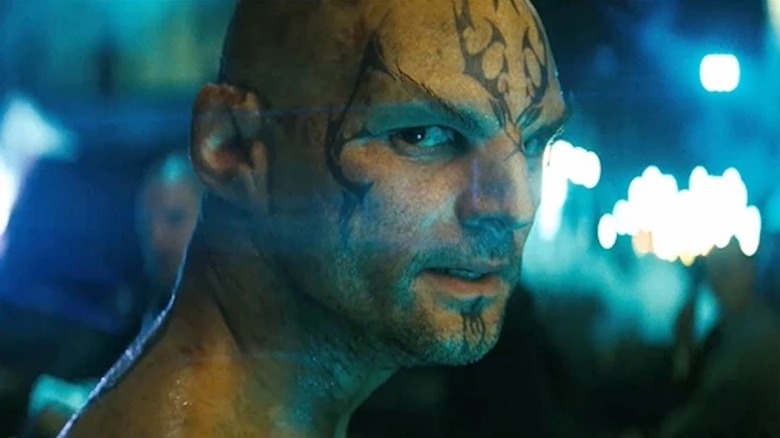
In 2009, the "Star Trek" film from director J.J. Abrams did something no other sci-fi franchise had attempted: It rebooted the entire series in a branching timeline that allowed for two separate continuities to coexist. What audiences might now forget is that the film's villain, the vengeful Romulan Nero (Eric Bana), originates from the Prime Timeline. Obsessed with getting payback on Spock for not saving his people from annihilation, his arrival into the past creates the Kelvin timeline decades before the launch of the USS Enterprise, but a deleted scene reveals that Nero's vengeful mission was derailed by the Klingons for 20 years.
In the theatrical version of the film, Nero arrives too early in the timeline and is greeted not by the Enterprise, but by the USS Kelvin, on which Kirk's father George is first officer. After the elder Kirk stops Nero's attack with a kamikaze assault, we cut to some two decades hence, when Nero returns to attack Spock's home planet of Vulcan. Starfleet sends the Enterprise to intercept, but it's too late and Vulcan is destroyed. Some fans might have wondered why Nero had laid low for so long, but this deleted scene explains why he wasn't heard from: He'd been taken prisoner by Klingons after the Kelvin incident and spent decades in captivity, tortured by Klingons on the prison planet Rura Penthe. With this scene intact, Nero's sheer insanity becomes a lot more understandable.
Wait, Saavik was a Romulan?

"Star Trek II: The Wrath of Khan" introduced fans to Lt. Saavik (Kirstie Alley), a new Vulcan character serving on the bridge of the Enterprise. She proved to be something of a protege to the wiser, older Mr. Spock, and there is at least some implication she'll have a big role to play down the line — a role she never wound up fulfilling thanks to Alley's departure from the role. One deleted scene, which would have come at the very beginning of the film, would have changed the fundamental nature of the character.
Upon the introduction of Saavik in the film's early scenes, in a moment left on the cutting room floor, Admiral Kirk (William Shatner) inquires Captain Spock (Leonard Nimoy) about their new helmsman. Noting that Saavik seems a bit more emotional than the average Vulcan, Spock notes of her, "She's half Romulan, Jim." It's a mix that makes her more emotionally volatile than the average Vulcan, including himself, who is half human.
Had it been left in, the knowledge that Saavik is part Romulan would have settled longstanding gripes that some fans had with the character, specifically that she was too emotional for a Vulcan. But without it, it paved the way for Alley's replacement, Robin Curtis, to undergo major changes and ditch all emotion and go for a much more stoic Vulcan performance in "Star Trek III: The Search for Spock."
Sisko's role as the Emissary was almost very different
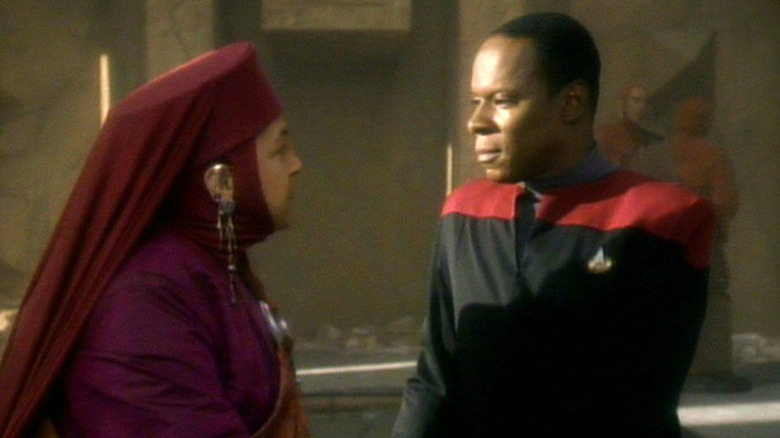
"Star Trek: Deep Space Nine" broke the mold in myriad ways. Not the least of which was its serialized story of Commander Sisko (Avery Brooks), who ranked high on our list of best characters in the Deep Space Nine series. In the pilot episode, Sisko is said to be the Emissary of the Prophets — the Bajoran Gods who reside in the wormhole. At first, Sisko doesn't quite believe or even understand that he's been anointed a religious figure to an alien civilization, but over the course of the series we learn he was no ordinary man at all; he was the offspring of the Prophets themselves, who arranged his birth so that he would fulfill his role of Emissary decades later.
A deleted scene in the pilot episode of the series appropriately titled "The Emissary" almost changed Sisko's religious origins, however. It happens in a sequence originally placed at the very end of the episode, when Sisko visits Kai Opaka (Camille Saviola) to return the Bajoran Orb. Sisko, who met the Prophets face-to-face earlier in the episode, offers to tell her about the experience. Opaka declines, saying, "One should never look into the eyes of his own gods." The scene suggests the Prophets chose Sisko as their Emissary because he was a non-believer, implying that he's just an ordinary man chosen by the Prophets — directly contradicting the Season 7 reveal that he is one of them.
Worf may not have been as bad at parenting as we thought
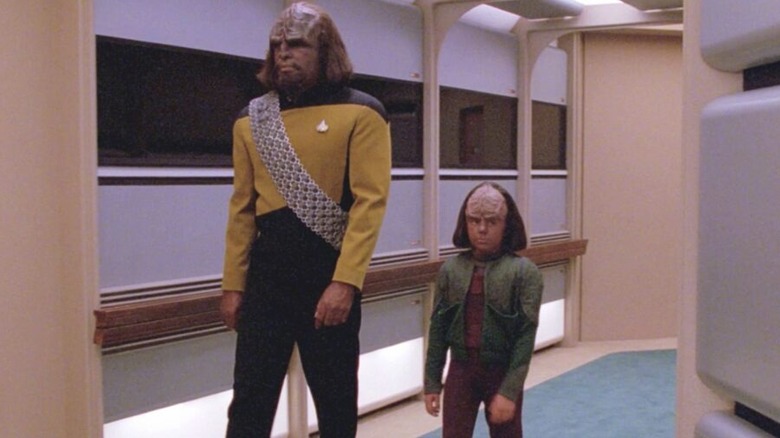
Not all consequential deleted scenes come from the "Star Trek" films. In fact, quite a few episodes through the years have had scenes cut that would have drastically changed what we knew. For example, in the "Next Generation" Season 4 episode "New Ground," a deleted scene midway through the episode gives audiences at least some explanation as to why Lt. Worf wasn't such a good parent to his son Alexander.
The issue of Worf's parenting has been a subject of much debate over the years. When he has single fatherhood thrust on him unexpectedly in Season 3 episode "Reunion," he ultimately chooses to send his young son away to live with his human parents on Earth — a choice that fans have long decried alongside characters like Counselor Troi, who questioned whether it was the right decision. In this deleted scene, Picard counsels Mr. Worf and reveals a little tidbit about Klingon society that we never knew, commenting that "Klingon officers do not permit their children to live with them."
With this knew bit of information in mind, it's more understandable that Worf would not feel comfortable with Alexander on the Enterprise. It explains why he was seemingly unmoved about transferring Alexander to his parents' custody, and why he struggled so much with fatherhood. It also would have justified his difficulty in serving alongside Alexander in the "Deep Space Nine" episode "Sons and Daughters."
The Star Trek scene that changed American history
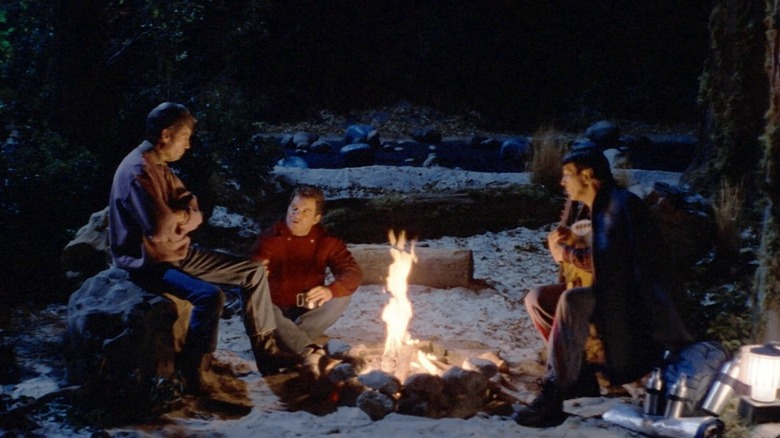
One of the more unique aspects of "Star Trek" which sets it apart from other sci-fi franchises is how it is firmly established to take place in our own future. Present day current events change the "Star Trek" timeline occasionally. For example, the January 6th Capitol Insurrection in Washington, D.C. were referenced in a more recent episode of "Star Trek: Strange New Worlds," which was forced to retcon the fictional version of the 21st century first established in the original 1960s "Star Trek" series. One moment intended for "Star Trek V: The Final Frontier" would have declared a new part of American history that we still have yet to see.
In the scene, which comes early in the film when Kirk, Spock, and McCoy are camping in the American mountains, we get a glimpse of the iconic Mount Rushmore. The monument built in the early 1920s is carved into the side of a mountain and depicts four of America's most iconic and beloved Presidents: George Washington, Abraham Lincoln, Thomas Jefferson, and Theodore Roosevelt. But the deleted scene in question shows a 24th-century version of Mount Rushmore, where a fifth face has been added. Though no name is given to the fifth U.S. President included, the matte painting created for the scene depicts an African American woman president; someone clearly elected at some point before the fall of America in the 21st century prior to the fictional World War III that decimated most of the planet.
Kirk's one night stand was almost more sinister than frivolous
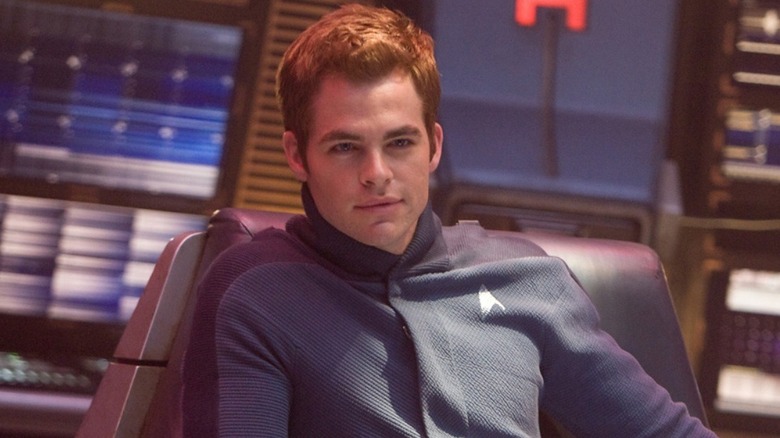
In 2009's "Star Trek" reboot film, we meet a much younger version of Kirk than the one played by William Shatner. Portrayed by Chris Pine, this version of Kirk, who is still in Starfleet Academy, is far more brash. We see him hacking Starfleet computers to win the supposedly unwinnable Kobayashi Maru test. He's also even more of a lady's man. In one moment that divided fans, he's seen having a one-night stand with a green-skinned Orion named Gaila (Rachel Nichols). Some objected to the portrayal of Kirk as someone who was prone to frivolous sex, but those who didn't like the scene would have been appalled if the film had included a deleted scene from that subplot.
In the finished version of the film, we see Kirk and Gaila in the morning after a night of passionate sex. Gaila believes they are in love, but Kirk is clearly uninterested in such an emotional bond. He dismisses her affection (which was bad enough), but the deleted moment establishes that Kirk wasn't even looking for sex: He used Gaila's interest in him to get access to the Starfleet computers he needed to cheat on the Kobayashi Maru test. Had this remained in the film, it would have turned the cocky Kirk into a straight-up dirtbag, which may explain why it was ultimately cut from the film.