

5 James Bond Movies That Have Aged Horribly
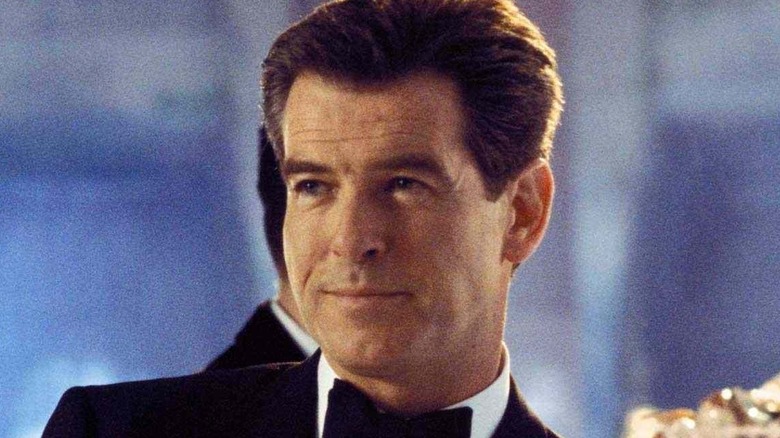
With Robert Pattinson officially confirmed to be the next actor who'll take up the James Bond mantle, the 007 film franchise is preparing to roar back to life in a major way after years away from the silver screen. With that, audiences are now looking back on the extensive history of 007's movies, which date back to 1962's "Dr. No." Spanning so many different actors and countless action sequences, the James Bond films have entrenched themselves deeply in global culture. Just look at all the chatter Pattinson's casting generated.
However, just because the Bond movies have been around forever doesn't mean they have perfect track records on all fronts. The various questionable things we all ignore in James Bond films, for instance, have inspired lots of online discussion and discourse. Then there are the Bond movies that have simply aged dreadfully. Five particular entries in the franchise stand out as having aged especially poorly on many different fronts. Some of these movies adhered to filmmaking techniques or storytelling molds that quickly became dated, while others deployed harmful stereotypes and material that has always been rotten in their globe-trotting escapades.
Whatever it is that makes these five Bond movies so cringe-worthy, they're unfortunate chapters in this brand name's past. Here's hoping Pattinson's 007 exploits don't succumb to the same tendencies.
Casino Royale (1967)
There's a very specific kind of comedy movie that appeared in the late 1950s and the entirety of the 1960s, epic experiences with runtimes reaching well over two hours (and sometimes exceeding 150 minutes) that were crammed with famous celebrities. Some of these titles have merits and major modern defenders, but many of them are a slog to watch today. Their tremendous length and reliance on then-popular personalities that are unknown in the modern world just make them inaccessible to present-day moviegoers. Even 1956's once-acclaimed "Around the World in 80 Days" is one of those best picture Oscar winners that's unwatchable today because it adheres to this format.
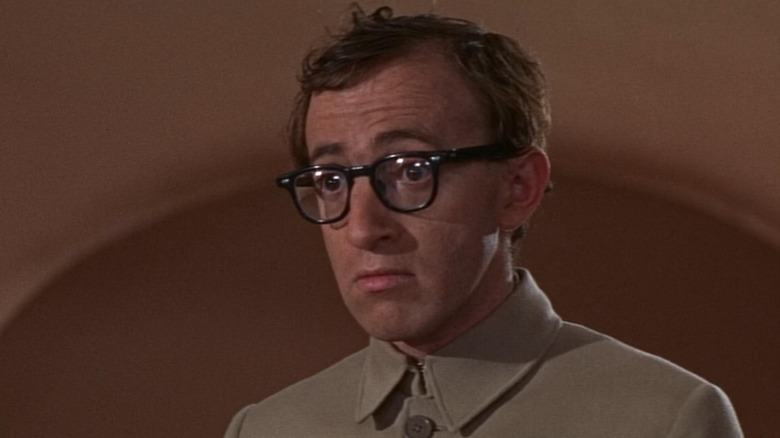
1967's loopy James Bond parody film "Casino Royale" is very much one of those bloated mid-20th century yukfests that's aged poorly. This feature, considered one of the worst James Bond movies in any ranking of the series, threw so much at the wall (including an Orson Welles appearance) only to leave viewers exhausted rather than enthralled. The excruciatingly poor pacing and dearth of jokes that have stood the test of time ensure "Casino Royale" is a painful exercise to watch in the 21st century.
Then there's the presence of Woody Allen as Jimmy Bond in this production. His appearance only reinforces how much "Casino Royale" is a product of a different era, as well as something that's hard to digest today. Thankfully, there's a vastly superior 007 adventure (totally devoid of Woody Allen) with the same name that audiences can check out instead.
Thunderball
Anyone who makes a new James Bond movie will have to reckon with the franchise's dismal track record in both writing compelling women characters and recognizing the essential nature of consent. Even "No Time to Die" director Cary Joji Fukunaga (who was the subject of harassment claims himself in 2022) openly acknowledged this poor history while promoting that 007 adventure in 2021.
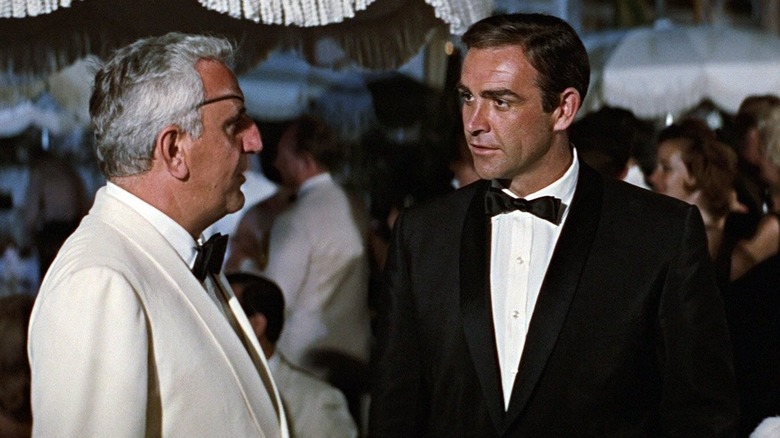
His go-to example of this issue came by referencing scenes in "Thunderball" where Sean Connery's James Bond coerces women to sleep with him and kiss him. The former scenario specifically manifests in Bond blackmailing a lady to come to bed with him, an incredibly creepy scenario encapsulating how often women have been reduced to objects to conquer in this series.
That's far from the only or even most egregious moment of creepy behavior from 007 across the entire James Bond timeline. However, these especially disturbing sequences stand out in a movie whose flatness and visual obsessions also haven't aged well. In a pop culture age before documentaries about the underwater world were ubiquitous, the endless "Thunderball" scenes lingering on the ocean floor had some novelty for audiences. Today, they're just tedious and make one wish they were watching a superior nature documentary instead. What dazzled audiences in 1965 isn't nearly enough to capture the interest of mid-2020s moviegoers.
The poorly aged "Thunderball" material ranges from being blood-boilingly cruel to puzzling. There are countless reasons why this particular Sean Connery Bond outing doesn't get talked about a lot even beyond its clumsy and dumb title.
Diamonds Are Forever
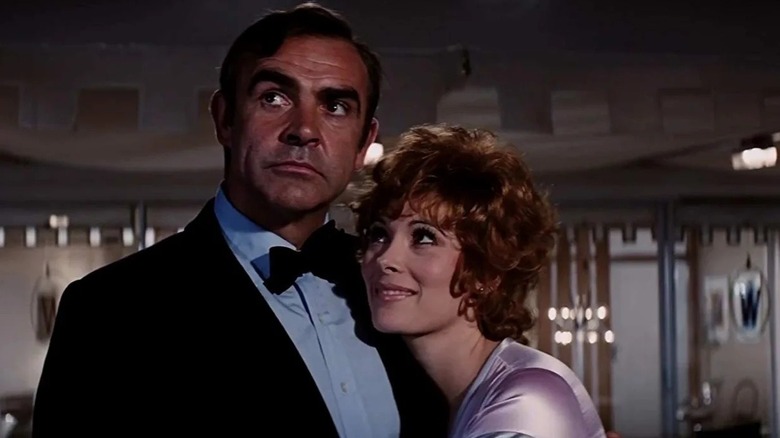
The James Bond movies are considered such distinctly British creations that it's weird to remember that the franchise has frequently sent 007 across the pond to the United States. One of his most American-centric voyages came with 1971's "Diamonds Are Forever," in which Sean Connery's Bond ventures to Las Vegas in an attempt to stop the evil plots of Blofeld and SPECTRE (he also travels to Amsterdam and the coast of Mexico, among other locales). During the Vegas sequences of "Diamonds Are Forever," a segment focusing on a flashy local entertainer delivers one of the most baffling and ill-conceived 007 sequences in the saga's history.
Christoph Waltz explaining how he's "the author of all your pain" in "Spectre" or the lamest "Die Another Day" fight scene are no match for a "Diamonds Are Forever" sequence involving a magician turning a Black woman into a gorilla. This was done in 1971, an era when the racist connotations of such imagery would be glaringly apparent. More than 50 years later, it's brain-melting to contemplate how on Earth this was ever deemed acceptable. And that's not the only retrograde material offered up by this endeavor: Strange jokes centered around a pair of gay-coded evil henchmen further make "Diamonds Are Forever" a bizarrely mean-spirited exercise.
The glittering lights of Las Vegas beckon countless tourists from across the world every year. The most baffling and off-putting "Diamonds Are Forever" segments, though, shouldn't entrance anyone.
Live and Let Die
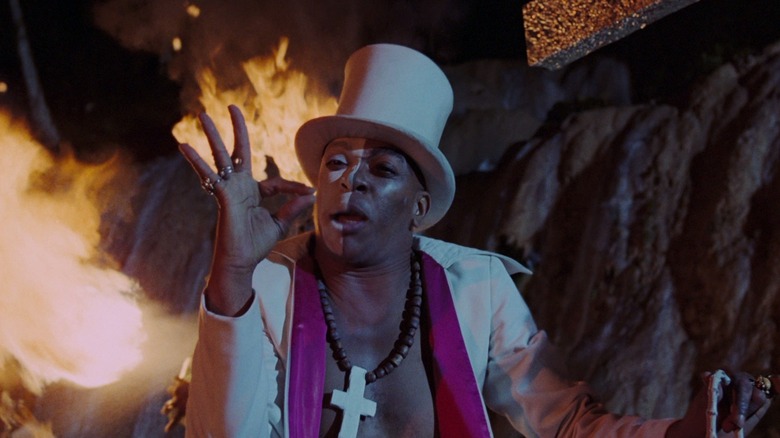
Speaking of American-set Bond movies with troubling racial politics, 1973's "Live and Let Die" sent Roger Moore's James Bond to Harlem and New Orleans. If that sounds like a recipe for a popular movie that aged terribly, you'd be correct. In this film, Bond contends with an array of Black villains, including drug lord Mr. Big (Yaphet Kotto), the one-armed Tee Hee Johnson (Julius W. Harris), Voodoo expert Baron Samedi (Geoffrey Holder), and the aptly named Whisper (Earl Jolly Brown). White heroes dominate the screen, while even the first Black Bond girl, Rosie Carver (Gloria Hendry), is eventually revealed to be a secret villain who dies right after her true allegiances come to light.
Whether intentionally or not, "Live and Let Die" ends up functioning as a film where a white British man steps in to take down the "scary" Black characters poisoning the world with their drugs. "Live and Let Die" could also be the poster child of the mainstream film industry's dehumanizing and inaccurate interpretations of how Voodoo works (a phenomenon explored in the excellent 2026 documentary "Black Zombie.") Not only is the whole thing racially irksome, but it also eschews the opportunity for the kind of outlandish, stylized villains only Bond movies can do so well. Instead of delivering a fun baddie rich with specific over-the-top flourishes, "Live and Let Die" opts for generic racial caricatures.
Housing some of the worst Bond villains, "Live and Let Die" is a staggering miscalculation that's unwatchable today.
Die Another Day
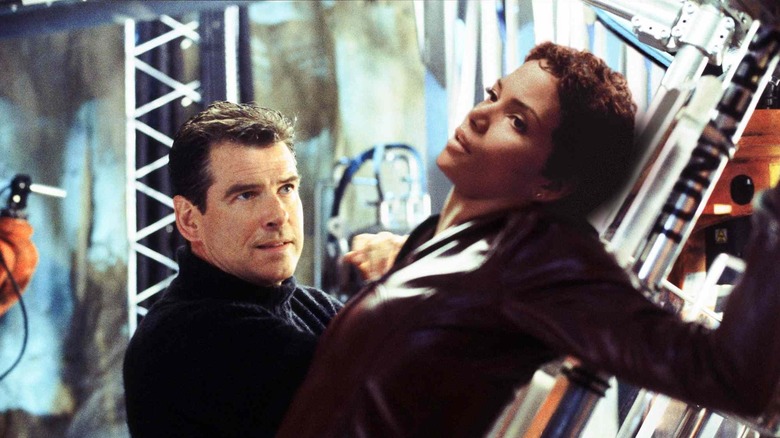
Rarely do James Bond actors get to decide what movie they go out on, let alone cap their 007 careers on the high notes they'd want. For Pierce Brosnan, his conclusion as James Bond came with the 2002 misfire "Die Another Day," an ice-encased tale involving Bond and a North Korean colonel bent on destroying the world. Even at the time of its release, reviews weren't kind for "Die Another Day," with many feeling the film was so ludicrous that none of its human drama could be taken seriously. However, one criticism of the movie in its initial launch has come to define the larger reputation of "Die Another Day:" it contains crummy CGI effects.
This element is unavoidable for any modern viewers watching the movie now. Like other early 2000s tentpoles such as "The Mummy Returns," the most eye-insulting images in "Die Another Day" reflect a misguided notion from producers and filmmakers in the time that CG had become advanced enough to literally do anything. Thus, set pieces like Brosnan's Bond surfing on a CG wave were put onto the screen without any hesitation. The deluge of distractingly shoddy digital effects throughout "Die Another Day" has ensured that it's harder to watch today than significantly older Bond movies with more arcane yet better aged visual effects techniques.
Granted, it's not like many are scrambling to rewatch "Die Another Day," which has many flaws beyond too much bad CGI. However, this particular aspect just keeps looking worse and worse with every passing year.