

5 Most Realistic Cop Movies Of All Time
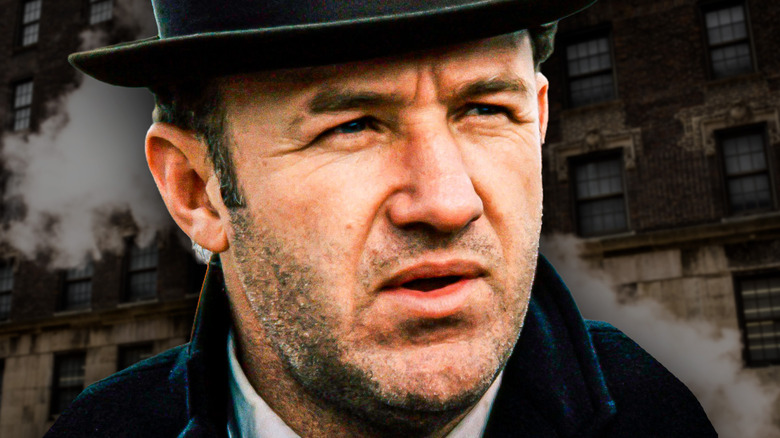
Few genres are home to as many over-the-top cliches as the cop movie. There are the countless buddy comedies where a by-the-book officer must deal with a newly assigned loose cannon partner, the deadly conspiracy thrillers where an officer realizes corruption has taken over every level of the force, and action thrillers with cheesy shootouts and even cheesier one-liners. They are often a lot of fun, but they rarely infringe on the reality that millions in this profession experience on a daily basis.
That's why we've put together five contenders for the most realistic cop movie of all time, which are listed alphabetically below. All of the following have either been commended by law enforcement officers on the dozens of internet forums we've trawled through or singled out by critics for their realism. Additionally, several utilized both current and former detectives behind the scenes, in positions ranging from advisor to co-credited screenwriter, to maximize the realism and deglamorize the job away from the more prevalent Hollywood depictions of what it entails.
There are some bangers below, but if you want a more authoritative, expansive overview of the genre, cliches and all, then check out the best cop movies of all time once you've finished reading.
End of Watch
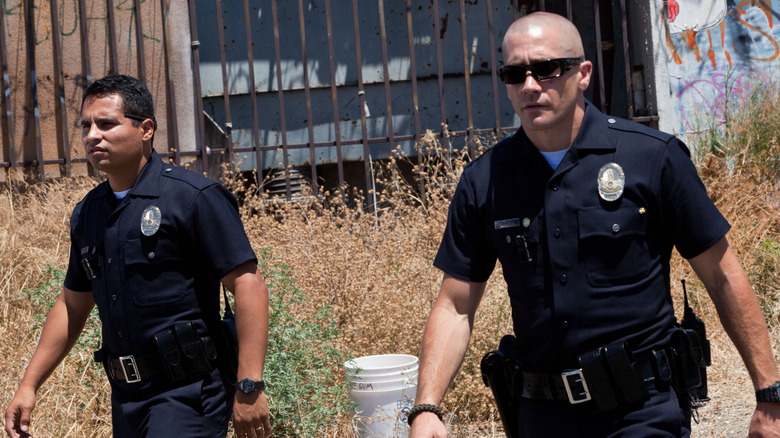
Released just a few years after "Paranormal Activity" made found footage movies all the rage again, the presence of A-listers like Jake Gyllenhaal and Anna Kendrick ensured there was no chance of audiences being fooled into thinking 2012's "End of Watch" was the real thing. However, David Ayer's movie only utilized this aesthetic for an extra layer of authenticity, with his LAPD procedural thriller born out of wanting to focus more on the normal day-to-day routines of law enforcement. His prior work (such as "Training Day") focused predominantly on crooked cops, but as he had numerous friends in the LAPD, he wanted to write a movie truer to their experiences on the ground.
Of course, this is a Hollywood movie, so what a real cop would expect on a regular shift has been significantly heightened — house raids, shootouts, and dealings with a cartel are unlikely to all appear on the same day. But Ayer anchors this in the relationship between Brian Taylor (Gyllenhaal) and Mike Zavala (Michael Peña). The two actors spent five months training with the LAPD, participating in 12-hour ride alongs to monitor the behavior of cops that would gradually become second nature to them. The movie's extra texture doesn't come from the number of real-life authorities who served as advisors behind-the-scenes, but the actors' unscripted mannerisms.
Small details like the way they adjust their belts, or Gyllenhaal's Taylor flashing a signal to a police helicopter, offer a lived-in authenticity. Coupled with the actors' close, bantering relationship and healthy dose of dark humor to cope with the demands of the job, it adds up to one of the screen's most realistic depictions of police work.
The French Connection
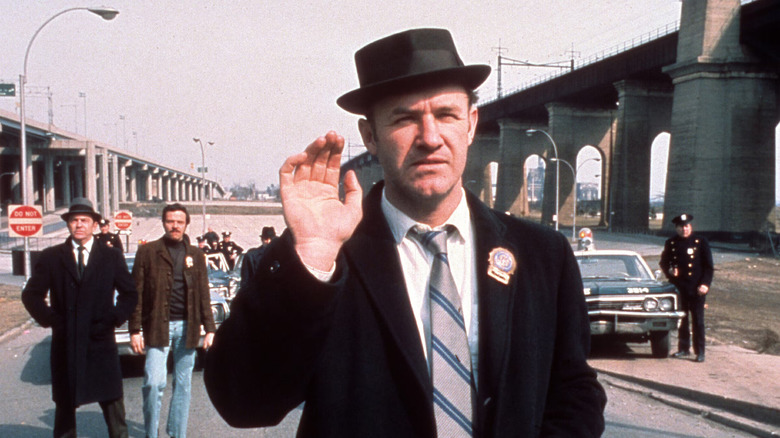
The blueprint for every gritty crime drama that followed, director William Friedkin's Oscar-winning 1971 procedural rewrote the rule book for the cop movie — and more than 50 years later, it still feels more bluntly realist than its numerous imitators.
Adapted from Robin Moore's 1969 non-fiction book of the same name, the movie lifts many of its details from a real NYPD investigation that lifted the lid on the French Connection drug trafficking scheme between 1960 and 1962. This is when heroin, which had been an epidemic for roughly 30 years by that point, was being smuggled into North America from Turkey via French labs. The story shares many of those beats, although the two antihero protagonists (Gene Hackman's Popeye Doyle and Roy Scheider's Cloudy Russo) are only loosely based on the real investigators.
The actors shadowed their character inspirations for several months prior to filming, following them on patrols, drug busts, and less exciting shifts just to pick up cop lingo. What ensures "The French Connection" could never be viewed as a Hollywood heightening of real events is the groundbreaking techniques Friedkin used to make audiences feel like flies on the wall, employing a documentary aesthetic that made the New York winter feel even more punishing and desolate.
This approach was extended to what has been called the best car chase scene ever, shot amidst real traffic (which we still can't believe didn't kill anybody, even with police supervision). Even the small details are accurate: the police let Friedkin use real confiscated heroin whenever a scene required it. The movie would still be one of the best cop movies of all time without these added layers, but the grim authenticity gives it more of a well-earned, rugged texture than most films in the genre.
L.627
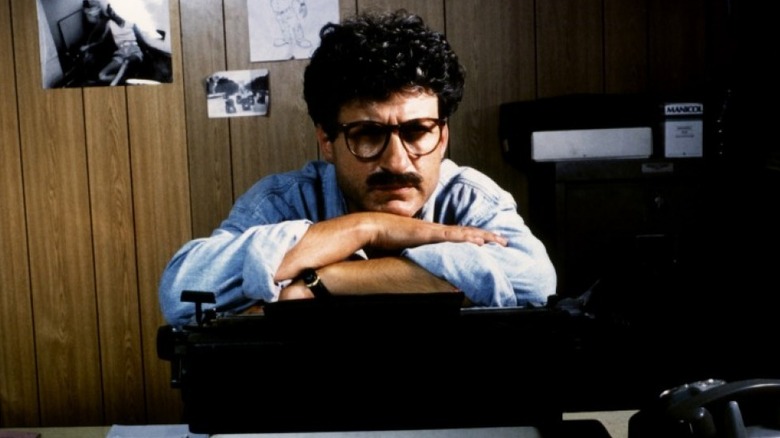
This 1992 French movie, which was nominated for the César (France's Oscar equivalent) for best film, is easily the most obscure title on this list to an international audience but goes even further than "The French Connection" in depicting the day-to-day lives of narcotics officers. Unglamorously named after the article in the French Code of Public Health relating to drug offenses, director Bertrand Tavernier's movie, if anything, feels like the purposefully drab response to William Friedkin's more intense, exciting procedural.
Co-written with Michel Alexandre, a 15-year veteran of the French police force, the movie follows Lucien "Lulu" Marguet (Didier Bezace), recently demoted from central Paris to the suburbs, where he is assigned to a team investigating drug trafficking at a low level. The script draws from many of Alexandre's own experiences, so don't expect any high-tension shootouts. This is a more grounded portrayal of working in an underfunded department with outdated equipment, not enough resources, and too much paperwork that will be far more recognizable to those on the job than any bombastic Hollywood effort. Like Friedkin, Tavernier utilizes a documentary style to bring the drama to life, with the handheld camera and natural lighting re-emphasizing the mundane nature of the routine.
Perhaps most relatable for many viewers with law enforcement experience are Lucien's new co-workers, who don't share his passion for the job and make it obvious they're only there for the paycheck. With all the internal politics and bureaucratic roadblocks in the way, you understand why mentally checking out and doing nothing more than is asked is more desirable. The French were years ahead of us when it came to quiet quitting.
Memories of Murder
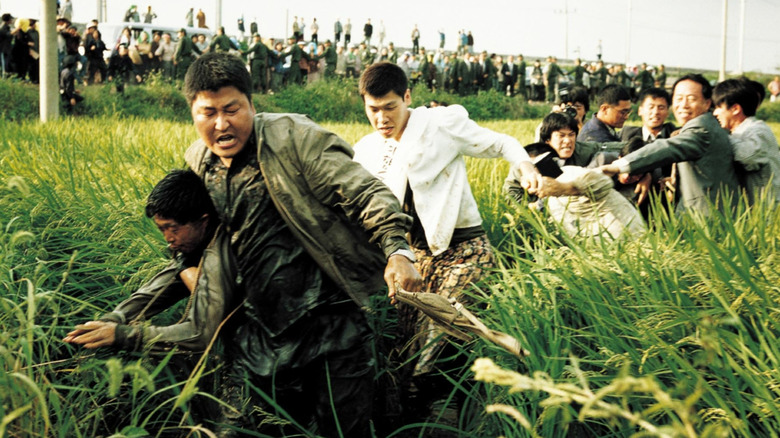
South Korea was just about to end its military dictatorship and transition to democracy when the Hwaesong murders – the country's first-ever serial killer case — began, with law enforcement officials not having the money or the resources to efficiently investigate. Director Bong Joon-ho's breakout film, "Memories of Murder," is only loosely based on that case but helped bring it back into the national conversation; even then, the perpetrator wasn't arrested until 2019, 16 years after this movie first wowed audiences in its home country.
The neo-noir thriller confronts various miscarriages of justice during the era of dictatorship, when cops would routinely coerce innocent parties into confessing to crimes via brutal interrogations, largely because they didn't have the means to look any deeper. Bong avoided shooting in Hwaesong, because he didn't want to trouble any families in the area still fruitlessly hoping for justice, which is why the movie isn't strictly adapted from the case and only alludes to it. However, he did read the real archived reports and interviews by the detective conducting the investigation, drawing inescapable parallels that don't exploit real pain but still stress the urgency of resolving an open case.
Famously, the movie's final shot — in which Song Kang-ho's detective Park Doo-man looks directly down the lens of the camera — was the director's attempt to confront the real killer, who he was convinced would see the movie. It wasn't until months after the release of Bong's "Parasite" when the police would finally identify the culprit as Lee Choon-jae, allowing the rest of the world to finally stare directly into the eyes of the man responsible for such a harrowing murder spree.
Reno 911!: Miami
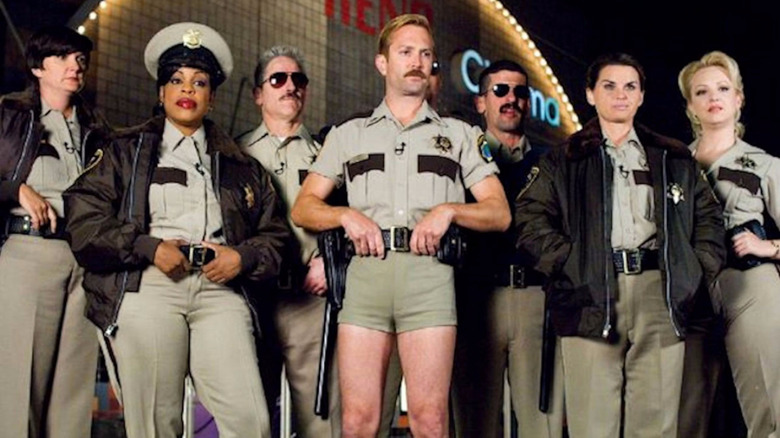
We looked at several Reddit threads and other message boards where current and former cops debated what the most realistic depiction of police work was — and by a significant margin, the silly Comedy Central series "Reno 911!" was the title they'd most often compared to a documentary.
Although a parody of the true-crime sensation "Cops," the issues in the mockumentary sitcom were seen as more accurate to those that real officers would have to deal with on a day-to-day basis: eccentric neighbor disputes, devoting too much time to petty crimes, and a bureaucratic indifference to any larger operation. The characters may bumble more than most who passed their training, but their routines aren't quite as exaggerated as they may seem, according to the experts.
The movie spin-off wasn't as critically well-received because it increases the absurdism to levels beyond parody, after a bioterrorist attack at a police convention leaves the Reno squad the only officers left working in Miami because they were late. However, writers Robert Ben Garant, Thomas Lennon and Kerri Kenney-Silver — who also return as three of the dysfunctional cops — spent several years building up the chemistry between their characters, ensuring they play off the most ridiculous action movie cliches thrown at them in ways that feel akin to the show's off-kilter reality.
Even with this heightening, a lot of time is still dedicated to dealing with the nuisance calls and low-level disputes that populated the show; the Reno team may have more power and more responsibility, but the troubles that come their way are still largely those most exhausted officers have to deal with.