

5 Best '70s Western Movie Villains, Ranked
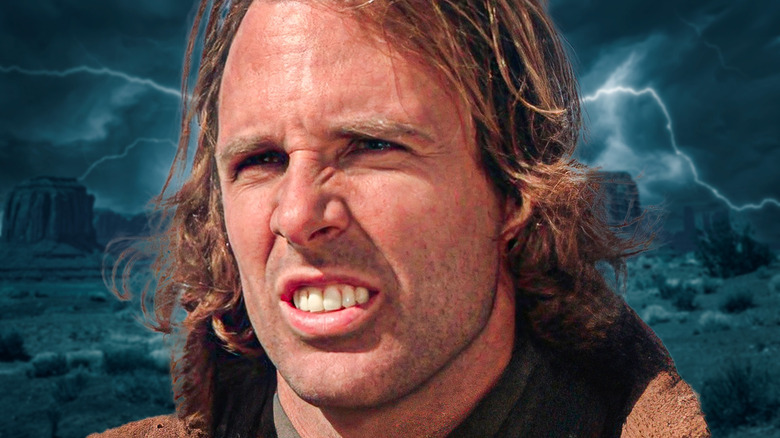
The 1970s may not have been as rife with Western classics as the 1960s, but the decade still gave us some extremely memorable works in the genre. As this article will show, this was a period in which Western films often blurred the lines between straight-laced heroes and mustache-twirling antagonists. Because of this, the pool of old-school villainy in the 1970s Western films is somewhat shallower than it was over a decade or two before. However, this particular period of time did turn in its share of iconic Western antagonists, as well.
Some of the names on this list are well-known and beloved. Others are somewhat obscure. In a couple of cases, it could actually be debated whether the characters are evil at all, or merely antagonists whose hostile actions are dictated by the complex circumstances of the movies they appear in. Still, regardless of how they ended up that way, all of them served as some of the most memorable villains of 1970s Westerns.
5. Colonel Günther Reza (Duck, You Sucker!)
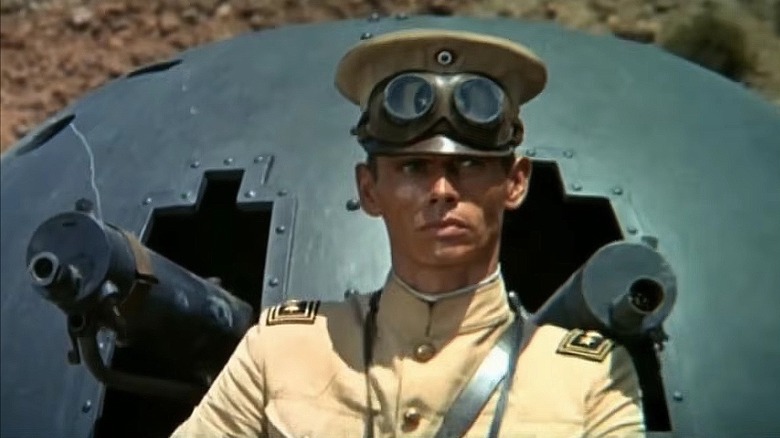
Arguably the worst of Sergio Leone's Western movies but still extremely entertaining, 1971's "Duck, You Sucker!" is known by many names, including "A Fistful of Dynamite" and "Once Upon a Time ... the Revolution." The Zapata Western's Mexican Revolution themes and morally grey characters sometimes make it very hard to know who to root for. However, the movie's most classically themed villain is without doubt Colonel Günther Reza (Antoine Saint-John). Also credited as Colonel Ruiz and Gutiérrez (depending on the dub), Reza is one of the most imposing figures in 1970s Westerns and doesn't need to speak much to show just how formidable he is. All he needs to do is loom, wear some extremely Nazi-coded outfits — and, of course, command a great antagonistic military force.
Reza doesn't emerge until roughly halfway through the movie, but from that point on, he's a constant threat. A torturer and a terminator, he's an indomitable symbol of an opposing force that can only be conquered through cunning and creative explosions. In this, he's a unique Leone antagonist — and honestly, one of the legendary spaghetti Western filmmaker's less impressive villains. However, he's still a force to be reckoned with, and his constant, lethal threat to the protagonists earns him a place on this list with ease.
4. Asa Watts (The Cowboys)
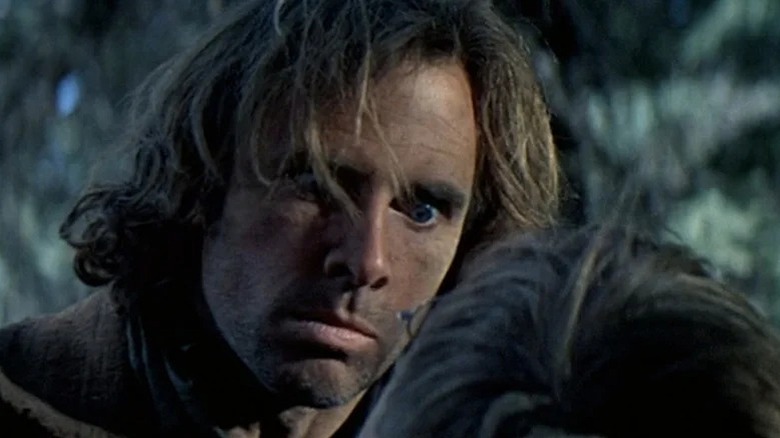
"The Cowboys" is one of the most overrated John Wayne Westerns. However, it's far from Wayne's five worst Western movies, and it features an antagonist for the ages — one who manages to actually kill Wayne's hero, no less.
1972's "The Cowboys" is a late-career Wayne piece that features the Duke as Will Andersen, a rancher who starts recruiting young boys for a massive cattle drive out of desperation and lack of a reliable workforce. Early on, he comes to a head with a group of men who also try to get hired, setting the stage for the film's central conflict. The leader of the group is Asa "Long Hair" Watts (Bruce Dern), and boy, does he turn out to be a problem. Watts and his gang turn out to be cattle thieves who start following the herd and antagonizing Andersen's crew. Watts establishes himself as an outright boogeyman, but when the inevitable fistfight with Andersen comes, it seems that Wayne's character prevails like pretty much always. And then, in the aftermath of the fight, Watts shoots Andersen and his gang steals the cattle.
This is a shocking twist to the usual tale of the tape when it comes to Wayne films, and it considerably elevates Watts' villain status. Granted, Andersen's young protégés and the crew's cook Jebediah Nightlinger (Roscoe Lee Browne) soon avenge their employer's death by raining doom on the raiders, and Watts gets his just deserts. Still, his evil deeds are more than enough to make him a standout bad guy.
3. Paints His Shirt Red (Jeremiah Johnson)
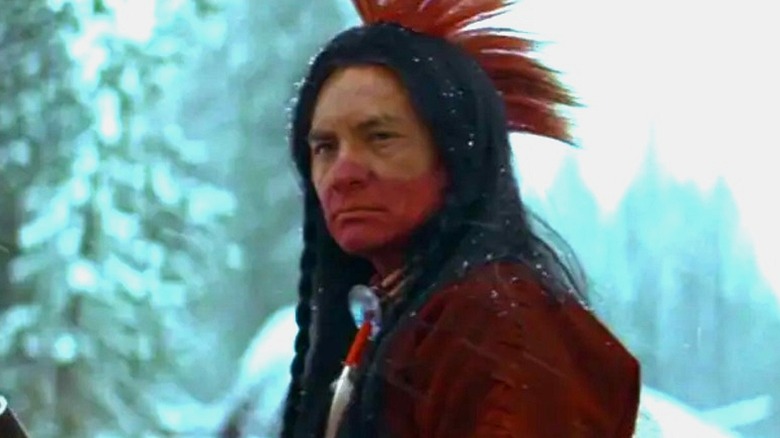
It's debatable whether Paints His Shirt Red (Joaquín Martínez) is a villain, per se. He rarely appears onscreen in Sydney Pollack's 1972 film "Jeremiah Johnson," and in the end he makes peace with the titular mountain man (Robert Redford). However, as a Crow tribe chief, Paints His Shirt Red is quite clearly behind the Crow attacks against Jeremiah and his family, only calling it quits when it becomes evident that the main character is all but unkillable.
The feud between the Crow and Jeremiah begins when he is forced to lead a party through the tribe's sacred burial ground. The Crow immediately retaliate by killing Jeremiah's family. Jeremiah chases down and kills the majority of the attackers, and the Crow start sending warrior after unsuccessful warrior for his head until his deadliness earns their respect and a wordless truce is reached.
From Paints His Shirt Red's point of view, Jeremiah starts out as the villain here; he desecrates their burial ground and proceeds to act as a one-man death machine. However, since the Crow chief isn't the protagonist of the movie and Jeremiah is, Paints His Shirt Red is the closest thing the film — which posits nature as the ultimate challenge — has to a human antagonist, and he makes great use of his limited screen time.
2. Hedley Lamarr (Blazing Saddles)
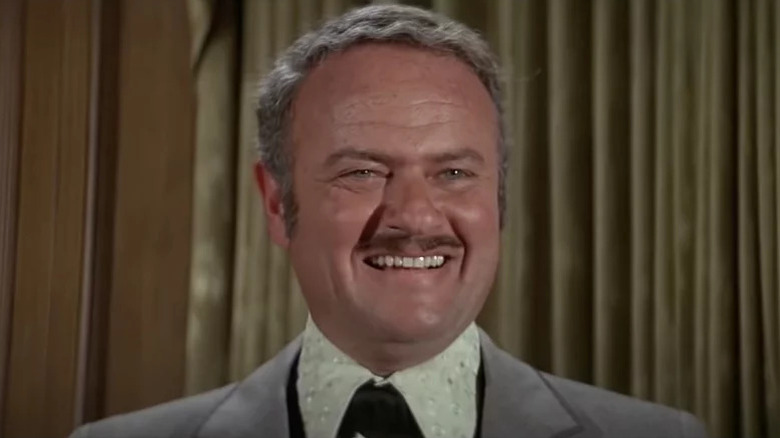
"That's Hedley!" The man everyone mistakenly calls "Hedy Lamarr" might be the big bad of one of the greatest Western comedies ever made instead of a "proper" villain. Nevertheless, territorial Attorney General Hedley Lamarr is one memorable and effective antagonist.
Due to the way it tackles and lampoons racism, Mel Brooks' "Blazing Saddles" is one 1970s movie that would never be made today. Still, Harvey Korman's smarmy Wild West bureaucrat finds the perfect balance between mustache-twirling cartoon villainy and surprisingly effective and brutal antagonism, and is fond of breaking the fourth wall for good measure.
Mel Brooks worked with Harvey Korman multiple times, and the actor's turn as the villain of the 1974 Western parody-slash-homage is a perfect example of why Brooks kept calling. No matter how ridiculous things get, Korman serves as a love-to-hate-him figure who ties everything together. His deliberately unlikeable but relentlessly entertaining portrayal helps sell even the most meta moments of the movie. With any other actor, in virtually any other movie, the movie's grand finale — which breaks the fourth wall, bursting from the screen to the showdown outside Hollywood's famous Chinese Theatre — would come across as laughable. With Brooks holding the reins and Korman handling the villain work, it's an amazing finale.
1. Ulzana (Ulzana's Raid)
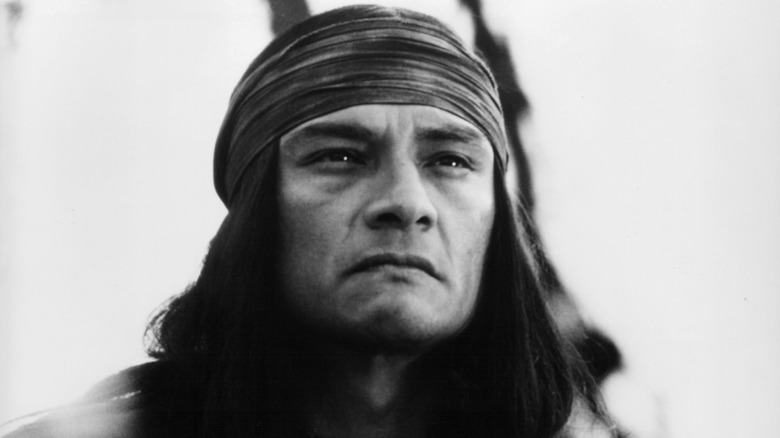
Joaquín Martinez, who also played Paints His Shirt Red in "Jeremiah Johnson," really pulled his weight in 1972 when it comes to complex Western antagonism. While more modern versions of the movie would likely cast a Native American actor for the role, Martinez's portrayal of the Apache war chief Ulzana in Robert Aldrich's "Ulzana's Raid" is arguably the most nuanced antagonist character in the 1970s Western genre.
Understandably angry after white authorities force his people into a reservation, Ulzana and a group of loyalists set out to wage terrible violence against white settlers and authorities. The Apache warriors' acts of brutality are extreme and often shown in uncomfortable detail, highlighting the lengths they are willing to go to against their enemies — and that to them, every white person is an enemy.
The events are split between the portrayal of Ulzana's activities and the efforts of Army scout McIntosh (Burt Lancaster) and Ulzana's brother-in-law, Ke-Ni-Tay (Jorge Luke), to bring down the violent war party. Through Ulzana and Ke-Ni-Tay, the movie explores two different ways to approach a new, forced way of life. The action unfolds as a de facto war film where all parties get a measure of sympathetic portrayal, and the juxtaposition of the U.S. military and Ulzana's guerrilla tactics is a fairly transparent allegory of the Vietnam War. While Lancaster is ostensibly the star of "Ulzana's Raid," the film's effectiveness hinges on Ulzana himself — and Martinez delivers by turning in the Western antagonist performance of the decade.