

5 Best Stephen King Movies Of The '80s, Ranked
There were a handful of Stephen King adaptations in the 1970s following Brian De Palma's delightfully sleazy take on King's debut novel "Carrie," but it was the 1980s when the author's credit became a common sight on movie posters. By then, King had become a household name, and there were very few novels or short stories he'd penned that didn't create studio bidding wars to bring them to the screen. Even when he tried writing novels under a pseudonym to escape his own success, word soon got out, and a couple of them wound up getting turned into movies too.
For this feature, we're counting down the five best Stephen King movies of the 1980s, a decade where the highs more than make up for the lows. Of course, you can easily find some of the worst movies bearing his name, instead. But if you're not a sucker for punishment, then you're in the right place as we count down our choices for the cream of the crop.
The following five stellar adaptations are still considered some of the definitive King films, so we'll be surprised if any of your favorites have missed the cut. As much as we love to throw out contrarian takes, some of the masterpieces here are hard to argue against.
5. The Running Man

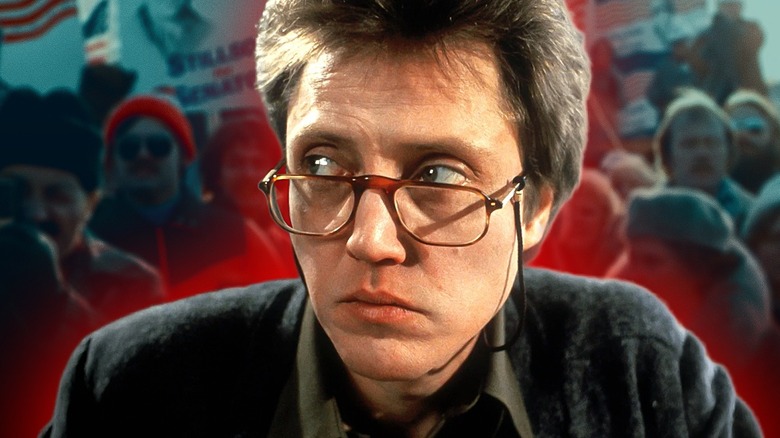
Very loosely adapted from a novel King wrote under his Richard Bachman pseudonym, "The Running Man" is often overlooked in lists of great King adaptations because of how far it strayed from the source material. However, viewed after Edgar Wright's more faithful take underwhelmed upon arrival in 2026, it feels like time has been kind to director Paul Michael Glaser's adaptation, even if he replaces his grizzled everyman lead with Arnold Schwarzenegger at the peak of his powers. The Austrian Oak plays Ben Richards — he's American, don't question his accent — a captain in a totalitarian police state framed for the mass murder of civilians in a food riot.
Once released from prison, the host of the titular hyper-violent game show hopes Richards will participate to boost sagging ratings. The public need a villain they can cheer against, and this bulky criminal is considered just the ticket. The TV producers, however, didn't bet on how adept he was at survival. Released in the same year as Paul Verhoeven's satirical sci-fi "Robocop," which also imagines a police-run dystopia where the public are kept in check through mindless entertainment, "The Running Man" suffered by comparison, bending towards the genre conventions that "Robocop" gleefully broke.
It has ultimately aged better than you'd expect, in large part because the 2017 period setting proved more on-the-money than filmmakers could have intended. It also balances the campy thrills we want from a Schwarzenegger movie with a political satire that feels extra pointy today. No, it's not as good as "Robocop," but it's a lot better than it's given credit for.
4. Christine
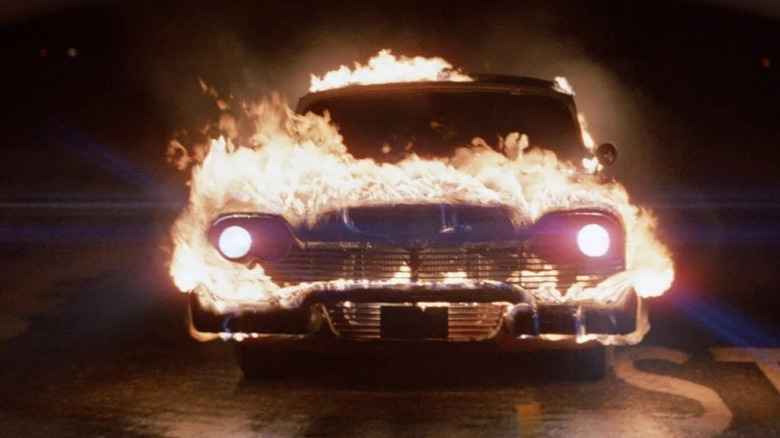
There are two movies on this list that King has reportedly referred to as boring. One of them is further down this list, and you can probably guess what it is. The other is one many fans would be surprised to learn the author looks down upon, considering its enduring cult status. John Carpenter, meanwhile, made no secret that "Christine" was a director-for-hire gig, as he urgently needed a rebound after the spectacular box office failure of "The Thing."
The liberal approach he took to adapting the book is likely the main reason King has quietly disavowed it, but to our eyes it's a clear elevation of an overlong source that runs out of gas long before it's over. Carpenter makes something punchier and less overly concerned with the lore surrounding the haunted car's creation, with a brief 1957 prologue setting the stakes for the action in 1978, when bullied teen Arnie Cunningham (Keith Gordon) buys the car and undergoes a drastic transformation.
King's novel is best appreciated as a satire on America's obsession with the vehicles, and Carpenter pushes that further as the story takes frequent supernatural left turns that poke fun at the idea of a supercar being the ultimate status symbol. It becomes more over-the-top than the source novel but is a hell of a lot more fun because of it. A story about a killer car never needed to be a horror epic, and Carpenter transforms the premise into pure B-movie bliss.
3. The Dead Zone
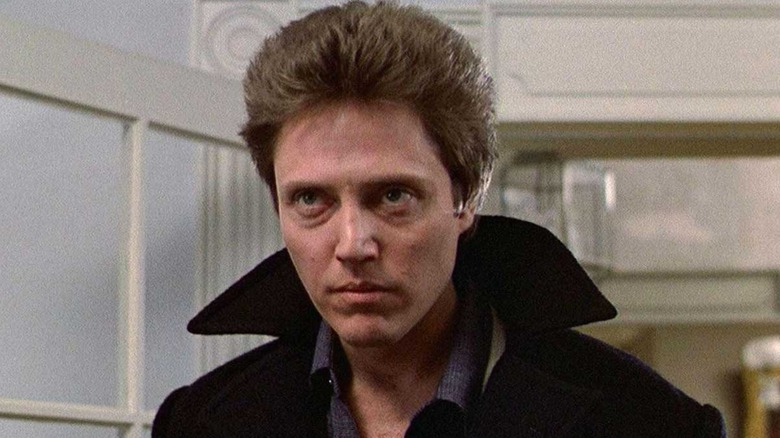
1983 was an incredible year for director David Cronenberg. While "Videodrome" was a box office bomb upon release, it has stood the test of time as one of his definitive movies. Just a few months after his pioneering work of body horror, he delivered what critics at the time (including Roger Ebert) considered to be the best King adaptation to date. "The Dead Zone" may have been eclipsed by several more takes on the author's work since then, but remains impactful for the way it explores a version of the ultimate what-if question: If you could go back in time and kill Hitler as a baby, would you?
Christopher Walken stars as schoolteacher Johnny Smith, who wakes up from a five-year coma to discover a new supernatural ability. He can see the past, present, and future of anybody he comes into physical contact with. The condition alienates him not just from loved ones, but also anybody who learns of it, with disastrous consequences that turn him into a hermit. This all changes when he meets an aspiring senate candidate (Martin Sheen), of whom he promptly has a vision of dropping a nuclear bomb when eventually elected as President. Should he intervene and change the course of history, even if it comes as a significant cost to his own life?
"The Dead Zone" is a slow burner that takes time to reveal its premise, spending much of its duration as a more self-contained character study of a man learning to adjust to his new life. Walken is a better fit for this everyman role than you may expect, and the result is the rare Cronenberg movie you could recommend without worrying about getting horrified looks.
2. The Shining
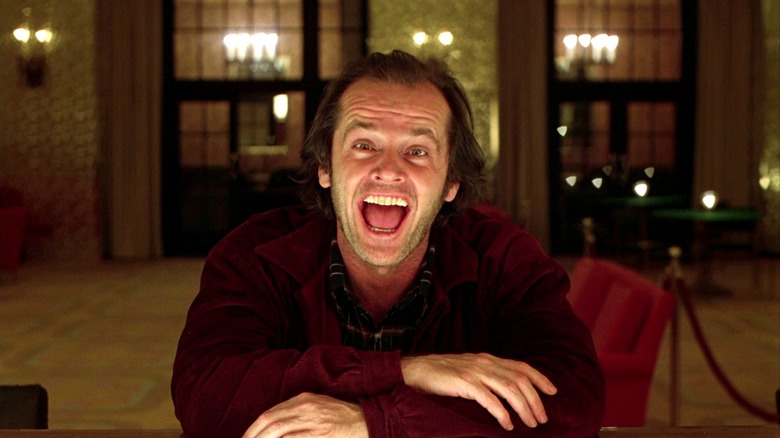
No matter how much King tells us he hates it, nothing will stop us from loving "The Shining." Stanley Kubrick's psycho horror removes all traces of critical self-analysis in the source story to create a far more ambiguous portrayal of Jack Torrance (Jack Nicholson). He's a man who King characterized as abusive due to ghostly interventions, and Kubrick suggests he didn't need much extra help to get there. You can understand why the author was against seeing what appears to be a self-insert character treated this way, no matter how dark the original iteration, but the director's slippery hold on reality makes the character even richer as a menacingly unreliable narrator.
Debates have raged for decades on just how much we can trust the perspective of events in "The Shining," with the surreal sightings and mysteries throughout the Overlook Hotel's vast, unpopulated corridors largely left unexplained. We'd argue this is why it remains unsettling even after endless rewatches, with the intricately designed interiors hiding new terrors we haven't even begun to unpack. There's a reason cinephiles are still obsessively revisiting Kubrick's film, with even its most incidental costume designs inspiring fevered conspiracy theories. The documentary "Room 237" outlines some of the juiciest, including Danny's knitted jumper being the director's supposed admission he faked the moon landing.
While that may all be nonsense, the uneasy atmosphere in the Overlook still makes us feel like we haven't begun to scratch the surface of the myriad mysteries inside its walls. Contrasted with King's less ambiguous source, you can see why he'd be frustrated — but we find something new to appreciate every time we visit the accursed hotel.
1. Stand By Me
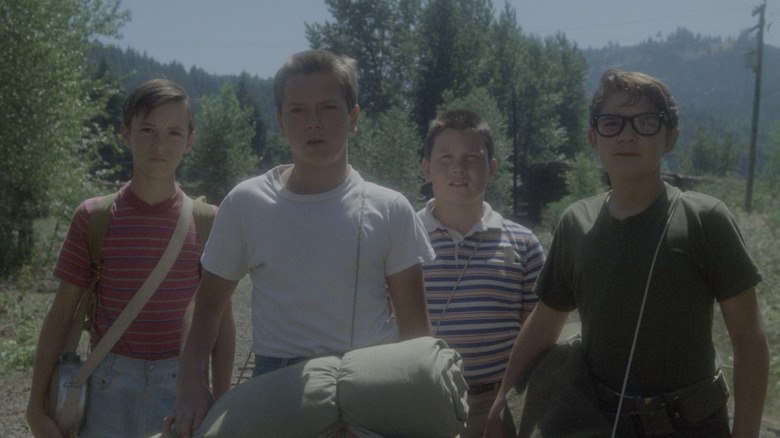
Is "Stand By Me" the definitive American coming-of-age movie? Adapted from King's novella "The Body," director Rob Reiner's classic balances 1950s nostalgia with an overwhelming sense of melancholy as an author (Richard Dreyfuss) looks back at one fateful Labor Day weekend in his youth after learning his childhood best friend (River Phoenix) has been killed. The movie recounts the adventure the 12-year-olds had looking for a dead body after overhearing the news from a greaser elder brother, in the last days of summer before they went their separate ways and the dynamics in their friend group changed for good.
It's the rare movie about adolescent angst that's concerned with the issue of mortality, via the dawning realization that the arcs of their lives have already been decided for them in some terrible, unchangeable ways. "Stand By Me" is one of the most powerful coming-of-age stories because of how it conveys the ways some children can be written off by society so early into their lives, their fates determined by the atmosphere of their family homes.
As with "The Shawshank Redemption" in the 1990s, the result is the rare tear-jerker that can get past the defenses of even the most stoic men. It's a seemingly warm, nostalgic tale of childhood friendship that gradually reveals itself to be a darker tale about the people we've lost connection with along the way. There are plenty of contenders for the crown, but this might be the best King adaptation of them all.