

5 Best Sam Peckinpah Western Movies, Ranked
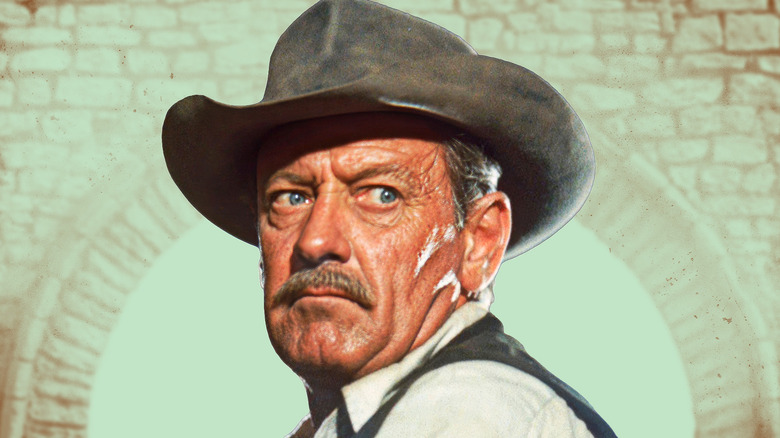
The Western genre has seen many names define its screen legacy in various forms over the course of film history, such as John Ford, Howard Hawks, Anthony Mann, Sergio Leone, and Budd Boetticher. But no list of the Western greats would be complete without the incomparable Sam Peckinpah. Before he earned the nickname "Bloody Sam" on account of his penchant for graphic violence, Peckinpah initially got his start writing for such television Westerns as "Gunsmoke," "The Rifleman," and "Have Gun, Will Travel."
After years of working within the genre on the small screen, Peckinpah eventually got the opportunity to expand his creative range in 1960 with his own series, "The Westerner," starring Brian Keith in the lead role. Even though the short-lived Western was cancelled after just 13 episodes, it provided him with enough clout to nab the directing gig for the feature film "The Deadly Companions" the following year, which also starred Keith alongside Maureen O'Hara. It may have been a learning curve, but it was one that kickstarted a run of some of the most unique films ever made.
Peckinpah's revisionist Westerns are elegiac in nature, as they feature legendary late 19th-century figures being unable to keep up with the contemporary punches, bullets, and bloodshed that come with the shifting tides of the 20th century barreling toward them. He was never one to shy away from the somber and vicious demeanor of the Wild West, depicting violence in its purest form.
In Peckinpah's Wild West, death is the only guarantee, but it helps to make friends before the end. His approach revolutionized the genre in ways we're still feeling today. With that in mind, let's rank his five best Westerns based on how he approaches themes of companionship and brutality.
5. Junior Bonner
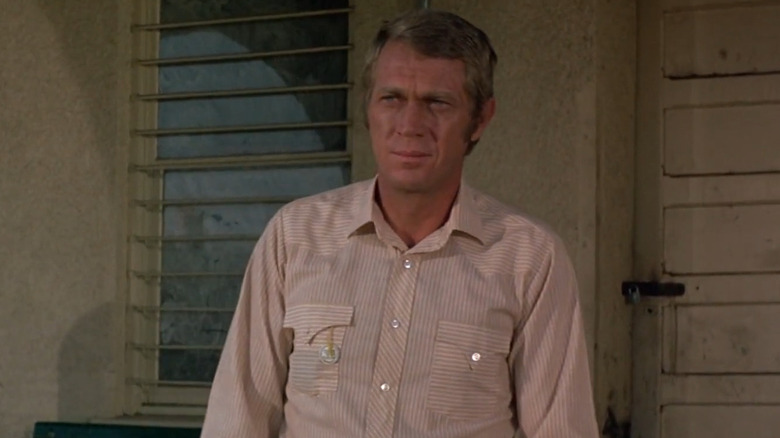
The start of the 1970s gave us some classic movies pertaining to character studies set within the world of rodeo shows, such as Steve Ihnat's "The Honkers" and Cliff Robertson's "J.W. Coop." Shuffled among the bunch was Sam Peckinpah's 1972 offering, "Junior Bonner," a surprisingly tender neo-Western drama about trying to find yourself amid reuniting with your dysfunctional family.
In this case, the titular character, often going by JR (Steve McQueen), is an aging rodeo cowboy who winds up returning to his hometown of Prescott, Arizona, following his recent unsuccessful attempt to ride a bull. Upon his arrival, however, JR learns that the Bonner clan isn't doing much better in terms of their inadequacies. Not only has his wise mother Elvira (Ida Lupino) split from his riding legend father Ace (Robert Preston), who himself wants to find a new life in Australia, but he's also witness to his entrepreneurial brother Curly (Joe Don Baker) demolishing the old family home for real estate purposes.
While JR trying to successfully get back on the bull seems as if it will be the driving force of "Junior Bonner," it's not the most important thing on this film's mind. Peckinpah, along with screenwriter Jeb Rosebrook, ultimately presents a slice-of-life story that's more concerned with spending time with these characters as they grapple with the drastic changes of the modern world encroaching on their way of life, and where they go from here. It may be one of Peckinpah's lesser-revered works on account of its lack of momentum and leisurely pacing, but it carries a bruised allure with its share of affecting moments, especially in the wake of the notoriously controversial "Straw Dogs." Some have even considered "Junior Bonner" one of McQueen's best movies.
4. Ride the High Country
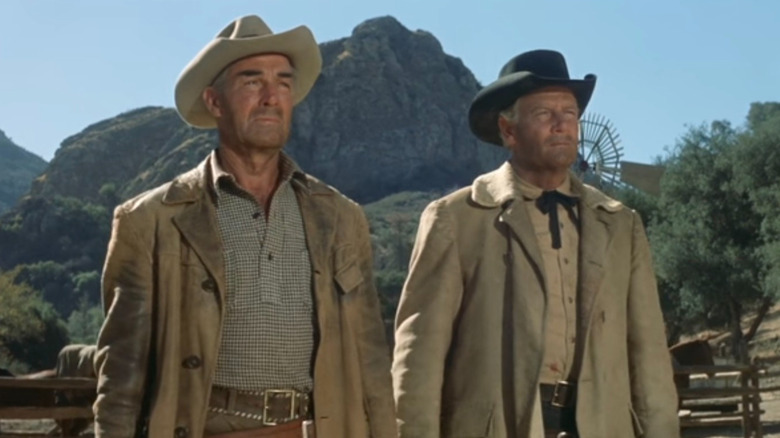
If "The Deadly Companions" was Sam Peckinpah's test drive to see if he could translate his television skills to a feature film, then his sophomore Western "Ride the High Country" sees him taking a big leap forward with his craft. This time, he recruits two established Western icons in their twilight years on an odyssey through the High Sierras where danger takes many unexpected forms.
It turns out that transporting gold is a deadly business, so ex-lawman Steve Judd (Joel McCrea) is hired to take on the risky assignment, along with the option to bring along some helping hands to ensure they make it safely. He's unaware, however, that his friend/former partner Gil Westrum (Randolph Scott), along with his youthfully impulsive sidekick Heck Longtree (Ron Starr), plan on betraying him at the perfect opportunity. Along the way, the trio meets an adventurous woman named Elsa Knudsen (Mariette Hartley) whose presence makes the trip much more complicated than they expected, and one that further tests the group's ability to stay united.
McCrea and Scott's screen history adds greater weight to the proceedings of "Ride the High Country" as it results in a dynamic that's loaded from the moment they meet. Through all of the side journeys, namely the middle stretch where the trio becomes embroiled in Elsa's relationship with her aggressive fiancé Billy Hammond (James Drury), the central relationship between McCrea and Scott is always front and center. You keep waiting for the horseshoe to drop amid some of the most beautiful scenic mountainside backdrops of any '60s Western. The film is one of Scott's best Westerns and serves as the genesis of Peckinpah's sensibilities concerning aging figures of the Wild West coming to terms with the end.
3. The Ballad of Cable Hogue
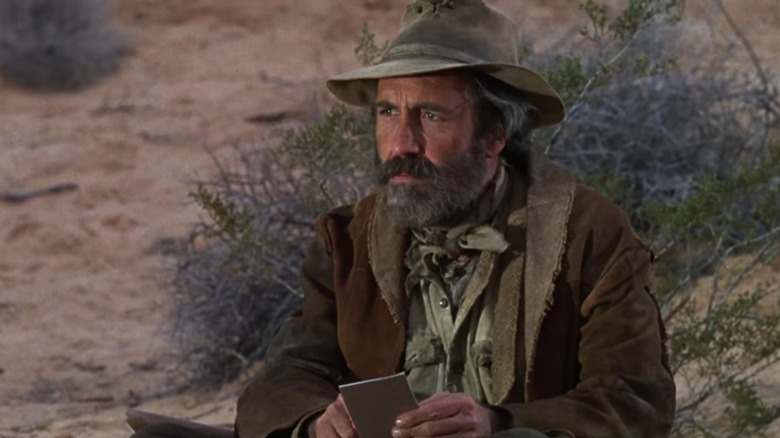
On the heels of 1969's visceral Western "The Wild Bunch," Sam Peckinpah's follow-up film didn't continue that cycle so much as engage with a softer and more lyrical form of storytelling pertaining to the Wild West. While 1970's "The Ballad of Cable Hogue" didn't garner the same reputation, the Western comedy-drama is quietly one of his very best films and a '70s Western flop that's actually worth watching.
After being left for dead out in the Arizona desert, a wandering frontiersman named Cable Hogue (Jason Robards) is miraculously saved by a muddy watering hole. He takes advantage of this being the only water source for many miles and decides to build his own business/personal sanctuary around it. Naturally, this draws the attention of a bunch of colorful characters, including the womanizing Rev. Joshua Duncan Sloan (David Warner), an incredibly sweet sex worker named Hildy (Stella Stevens), and even the men who did him wrong.
Peckinpah touted "The Ballad of Cable Hogue" as his personal favorite work, and it's easy to see why. The film proved he was more than his barrage of bullets and bloodshed, eschewing his more violent cinematic tendencies in favor of a tender dramedy revolving around a man taking advantage of the little bit he has. Robards is phenomenal here as a firm, yet gentle wanderer who somehow manages to charm every oddball character he comes into contact with. It's Stevens who really impresses, as she infuses a lot of warmth and individuality into a character who's initially discovered through the size of her voluptuous chest. If you're searching for a consistently funny hangout Western with an ample amount of melancholy, look no further than Peckinpah's underappreciated masterpiece.
2. Pat Garrett and Billy the Kid
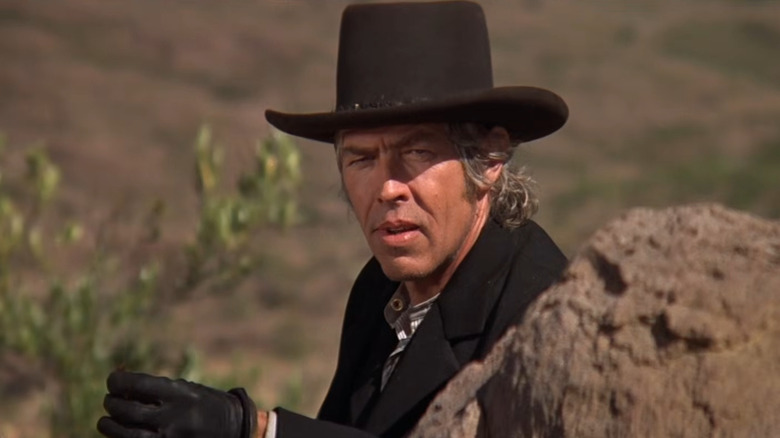
There is perhaps no sadder movie in Sam Peckinpah's filmography than 1973's "Pat Garrett and Billy the Kid," which pits two real-life legends in a mutually assured spiral into the annals of history. The revisionist Western drama serves as both a continuation of Peckinpah's perspective of the incessant violence that plagued the Wild West and a response to it.
In this mythic incarnation of Sheriff Pat Garrett (James Coburn) and gunslinger Billy the Kid (Kris Kristofferson), the two are presented as former friends who find themselves on different sides of the law. A standoff between Billy's crew and Garrett's law posse ends up with the former's capture and sentence to be hanged in the town square. But when Billy makes his bloody escape, Garrett is tasked with bringing him in once and for all, with the two just narrowly avoiding each other until their inevitable final encounter.
There's no glory or sensation to the violence of "Pat Garrett and Billy the Kid," and it's often underscored by the somber tunes sung by the great Bob Dylan (who also appears in the film as one of Billy's associates). It's hard to think of a more mournful image in Peckinpah's oeuvre than Slim Pickens' Sheriff Baker bleeding out against a sunset to "Knockin' on Heaven's Door." Coburn and Kristofferson are magical in making these characters feel human.
On top of having the most turbulent production of any Peckinpah feature, the film is notorious for being relatively unfinished due to the incessant interference from then-MGM President James Aubrey during production, along with a botched theatrical release, resulting in multiple cuts over the past five decades. For years, the 1988 Turner preview version, which is perfect in its imperfection, arguably comes the closest to capturing Peckinpah's original vision.
1. The Wild Bunch
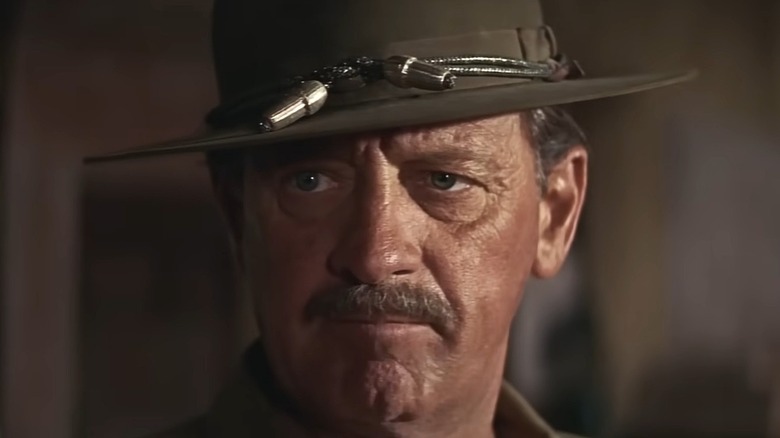
If there was ever a movie that encapsulates everything that made Sam Peckinpah one of the defining filmmakers of the Western genre, it's the 1969 shoot-em-up "The Wild Bunch," which takes place during the Mexican Revolution. Once again, we're situated in the company of aging outlaws who can feel the development of the 20th century rearing its ugly head. But rather than succumb to it, these men look obscurity in the face with a loaded barrel and smiles built from their years of extravagant bloodlust.
Leading the bunch is Pike Bishop (William Holden) alongside the likes of violent men such as Dutch (Ernest Borgnine), Angel (Jaime Sánchez), and the Gorch brothers (Warren Oates and Ben Johnson). Whether they're holding up a payroll office, a train, or aiding ruthless Mexican general Mapache (Emilio Fernández), there's seemingly no job that can stop them. Deke Thornton (Robert Ryan), a former member of the bunch, is forced to take them down, but his marks have no intention of going out quite so easily.
"The Wild Bunch" (one of the most rewatchable Westerns of all time) isn't just Peckinpah's best Western; it's a totemic fixture of 1960s cinema. Editor Lou Lombardo set the template for every action movie over the following five decades with his revolutionary method of quick-cutting action of characters moving at different speeds, and that legibility still hasn't been recaptured in quite the same way. It's a testament to Peckinpah, co-screenwriter Walon Green, and the film's sprawling cast that you can find humanity within this assortment of bloodthirsty criminals who would rather go out in a blaze of glory than give up their lifestyle. The wild bunch sticks together until the bitter end, and what an ending they get.