

What Role Do The Nazgûl Play In The Rings Of Power's Second Age Story?
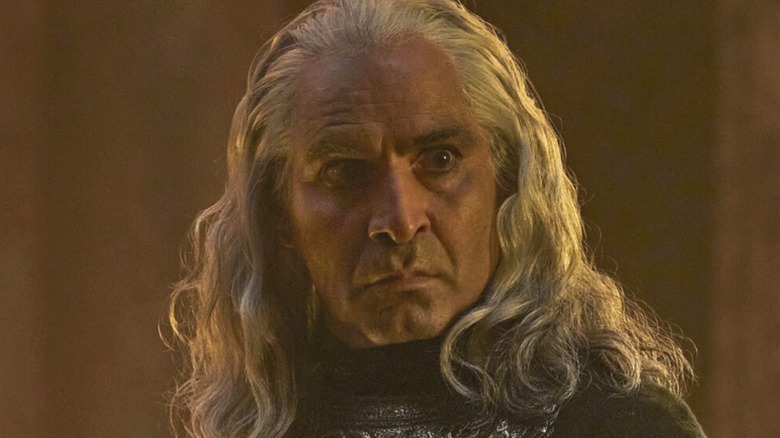
"The Lord of the Rings: The Rings of Power" Season 3 is going to show us the earliest days of the Nazgûl — or the "Nazgnagôl," as showrunners J.D. Payne and Patrick McKay have dubbed them in their Second Age adaptation. Remember, Season 2 gave us the Nine Rings for Mortal Men. By the finale, the Nine were forged, and Sauron had them in hand, but they weren't on any fingers yet. (You can get the full recap before "The Rings of Power" Season 3 here.)
When Season 3 rolls out, expect to see at least some of those overpowered trinkets on the hands of an ennead of new owners. But don't expect Payne and McKay's Second Age Nagnagôl to look, function, or operate quite like the Black Riders we know and fear (and let's be honest, kind of love) from "The Lord of the Rings." These will be the early iterations of Sauron's most terrifying servants. They're powerful and have an impact, but they're still finding their sea legs as otherworldly terrors in service to the Dark Lord. They won't be riding around hunting the One Ring (which isn't even forged yet), but will be actively helping the Dark Lord conquer Middle-earth.
The fact that they aren't the fully ghostly individuals we meet later doesn't mean these Nazgnagôl won't be intimidating, either. These are still some of the most impressive, ambitious, and bloodthirsty individuals you'll ever find among mortal folk doomed to die. To understand how they help Sauron at this point in the Middle-earth timeline, you need to dig into the history not just of the Rings of Power themselves, but of the men who wield them.
Who are the Nazgûl in the Second Age?
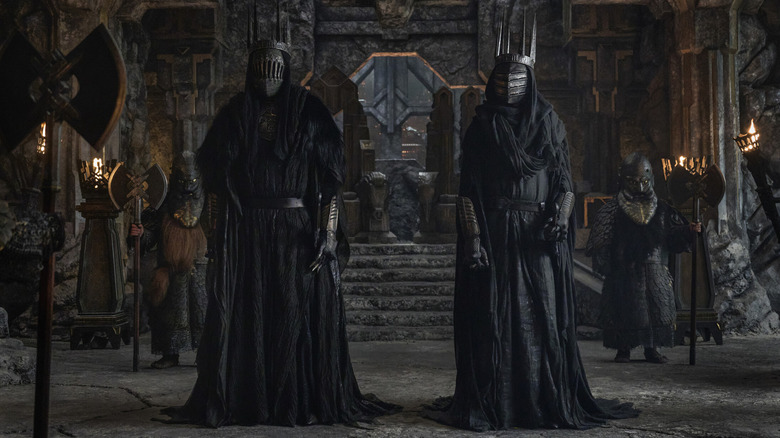
Let's start with the bad news. J.R.R. Tolkien only ever names one of the Nazgûl directly, and even then, we only get the name drop in the posthumously published book "Unfinished Tales." That one of the Nine is called Khamûl and is briefly described as "The Shadow of the East," "the Black Easterling," and the Nazgûl "Second to the Chief." That chief goes by the name of the "Witch-king" (and later the Witch-king of Angmar). Apart from that, we don't get much more personality-wise. But the shoe fits, especially in "The Lord of the Rings," where the Ringwraiths are millennia-old, overstretched apparitions and mere extensions of Sauron's will more than individual personalities.
But during the Second Age, when they first get their Rings? They're men who are very much still alive and opinionated. They're also hyper-ambitious and powerful, each in their own ways. "The Silmarillion" says that at least three of the Nazgûl "were great lords of [the] Númenórean race." It also describes the Nine when they're initially lured into Sauron's web thusly: "Those who used the Nine Rings became mighty in their day, kings, sorcerers, and warriors of old. They obtained glory and great wealth." It doesn't clarify if they are already in these positions before they get their Rings or not, but in the end, the Nine establish themselves as super-powered individuals in areas of political, magical, and military power.
The Nazgûl pay a heavy price for their early ambitions
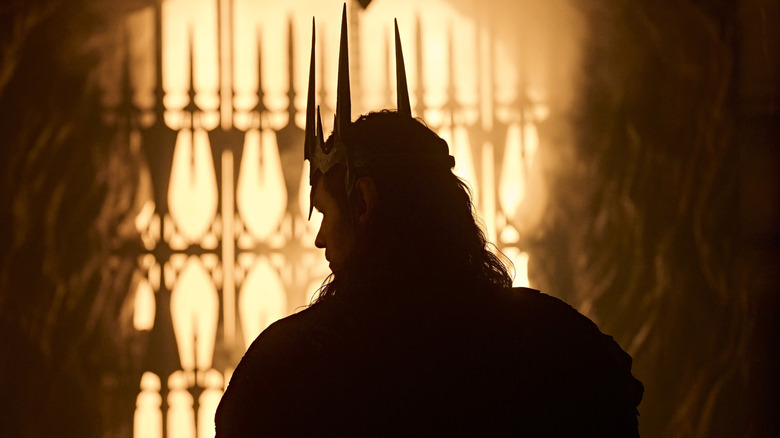
While "The Silmarillion" tells us that the Nazgûl are ambitious and successful in their career arcs, the book adds right away, "Yet it turned to their undoing. They had, it seemed, unending life, yet life became unendurable to them." It also notes that they can become invisible and see things from the "other side" or the "Unseen world" (which already featured in Season 2 of "The Rings of Power). But these advantages aren't a positive. They're a mark of their slide into ghoulish servanthood.
The book gives us the chilling conclusion: "And one by one, sooner or later, according to their native strength and to the good or evil of their wills in the beginning, they fell under the thraldom of the ring that they bore and under the domination of the One, which was Sauron's."
That "One" Ring isn't here yet, but it's coming this season, and when it does, expect these nine Men to realize their mistake — even though, by then, it'll be too late to do anything about it. It'll probably be a fast slide into evil, too, since "The Rings of Power" timeline is condensing the 3,500-year Second Age story into the span of a few decades.
What are the Nazgûl actually up to during the Second Age?
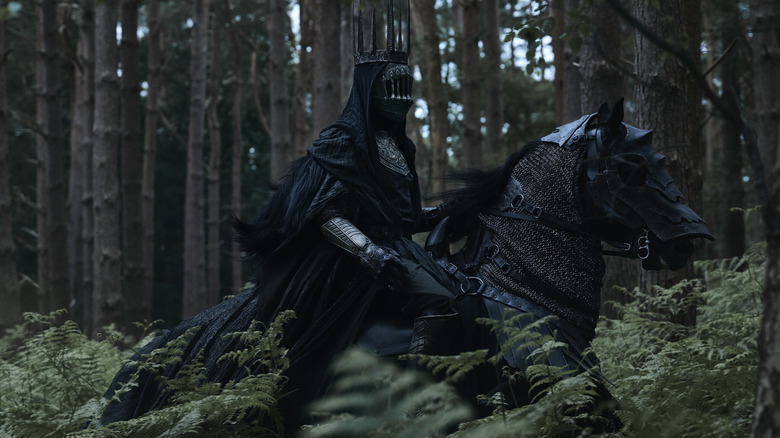
So one Nazgûl is named Khamûl, one is the Witch-king, three are Númenórean lords, and they all slowly gain wealth and power while losing their souls. Expect to see a lot of that start to unfold in Season 3. We already know from the promotional material that Khamûl appears this season (played by Zubin Varla). He'll likely get a story arc away in the east, in Rhûn.
But J.R.R. Tolkien doesn't actually give us any background on Khamûl until long after "The Rings of Power" takes place. And the reality is, while we get some tidbits about the origin of these horrifying men here and there, in the end, we don't actually hear anything about what they're specifically doing during Sauron's first rise to power during the Second Age.
What we do know is that this is the time that they rise to power and become Sauron's most terrifying servants. We also know that they accumulate wealth and power after getting their rings. Sauron conquers most of Middle-earth during this time, too, and is especially strong in areas on the edge of the map, like the kingdoms of Harad, Khand, and Rhûn.
"The Silmarillion" says that in these areas, "Sauron was both king and god; and they feared him exceedingly, for he surrounded his abode with fire." The Nazgûl are part of that god-like process of domination and suppression. We don't have the details directly from Tolkien, but you can bet your bottom dollar that JD Payne and Patrick McKay are going to give us their adapted and fleshed-out version of what that looks like in Season 3.
Season 3 of "The Rings of Power" premieres on November 11th.