

5 Hallmark Movies From The 2000s That Have Aged Horribly
In the 2026 documentary "The History of Concrete," director/central subject John Wilson mentions a workshop he had recently attended for writing a Hallmark movie. Footage of this presentation sees a woman explaining the rigid rules for what to do and avoid in crafting a Hallmark feature. Specifically, she emphasizes that people come to these titles looking for escapism, so it's key to avoid any brutal elements from reality. This isn't just interesting given how much Hallmark movies contrast from Wilson's modus operandi of filming grimy everyday life. It also makes apparent the very core of Hallmark cinema that everyone was already subconsciously aware of.
Despite so many Hallmark movies being formulaic and the opposite of challenging, these titles certainly have a loyal fanbase, especially when it comes to Christmas-themed TV movies. However, that doesn't mean all Hallmark features stand the test of time as enjoyable small screen fluff. Specifically, there's five 2000s Hallmark motion pictures that have aged as well as eggnog sat out on the sizzling hot sidewalk. These titles from the dawn of the 21st century have all proven outdated in a variety of bizarre but compelling ways.
However, they all reflect how even the most banal entertainment striving for "inoffensive" can slip into some uncomfortable territory. John Wilson and other hopeful Hallmark movie writers take note, these five films exemplify what not to do with these features.
Mail Order Bride
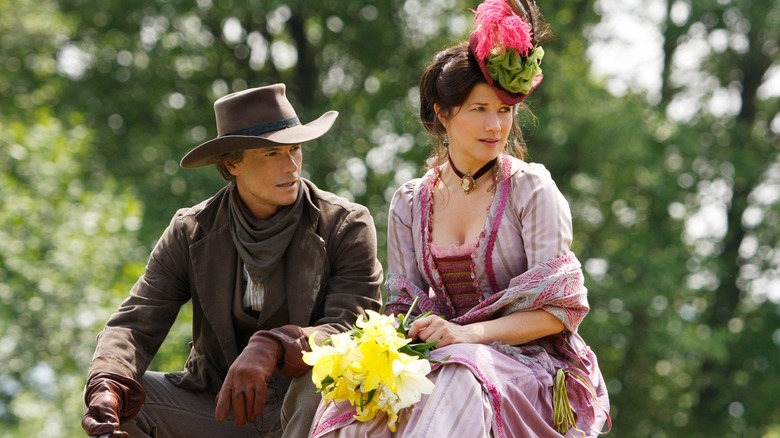
Everything is gooey and perfect in Hallmark movies, whether they're themed to Christmas or not. That includes titles like 2008's "Mail Order Bride," which, as its title makes clear, essentially deals with a form of human trafficking. This two-hour enterprise follows Diana McQueen (Daphne Zuniga) as she attempts to leave her old life and toxic boss, Tom Rourke (Greg Evigan), behind. To accomplish this task, she poses as a random guy's mail-order bride. Taking on this false identity leads to an actual romance between the two even as pervasive lies and the shadows of McQueen's old life threaten to creep up and destroy everything.
Even given that Hallmark will basically make a movie about anything so long as it depicts a "cozy" heteronormative romance, it's still insane that this network green-lit and aired a movie called "Mail Order Bride." True, McQueen consents to be in this position for her own benefit and is depicted as being in control of the situation she's been forced into. Still, even tackling this topic opens up a whole void of darkness that the best Hallmark Channel movies wisely steered clear of. Trying to fit a snuggly romance into a premise hinging on such a dark concept like mail order spouses is a problem director Anne Wheeler never overcomes.
There's a limit to what material the Hallmark Channel aesthetic can tackle. "Mail Order Bride" came up way short in challenging those limits.
Loving Leah
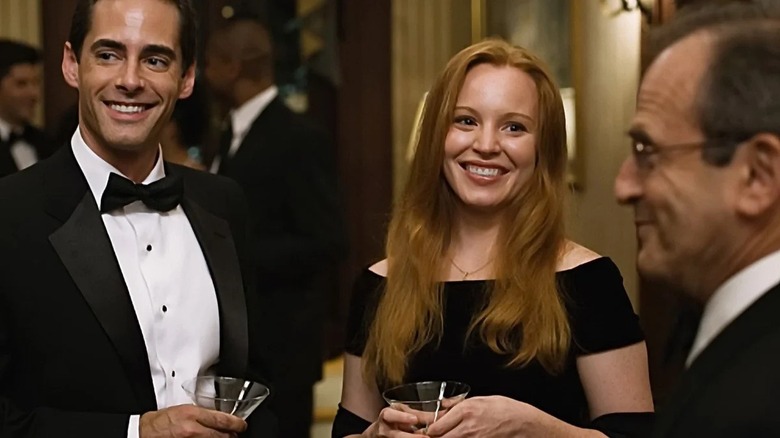
Long before Timothee Chalamet's best performances, he was a child actor taking whatever gigs came his way. What you probably never knew about Timothee Chalamet, though, is that one of his earliest parts was a tiny role Hallmark's "Loving Leah." Airing on the CBS network in 2009, nobody involved in "Leah" could imagine this production was a launchpad for the future "Dune" and "Marty Supreme" star. Instead, it was just a "standard" Hallmark movie about a grieving widow, Leah Lever (Lauren Ambrose), falling in love with her brother-in-law, Jake Lever (Adam Kaufman). To add extra wrinkles to the proceedings, Leah must navigate the various Judasiam traditions associated with remarrying.
Props to "Loving Leah" for adding specificity to Hallmark's vague or implicitly Christian-by-default aesthetic by bringing in Jewish culture to its story. However, that welcome detail is way overshadowed by the bizarre decision to hinge this movie's plot on a woman hooking up with her dead husband's brother. What a bizarre premise that's incredibly uncomfortable to witness, especially since this is yet another concept that Hallmark's default style has no hope of properly processing. The disconnect between how the characters treat this concept and how audiences feel about it proves too distracting to overcome.
If you want a few seconds of early Chalamet acting, "Loving Leah" will prove worth your time. Otherwise, this is just a baffling entity whose very existence makes you wonder if Hallmark executives ever say "no."
A Boyfriend for Christmas
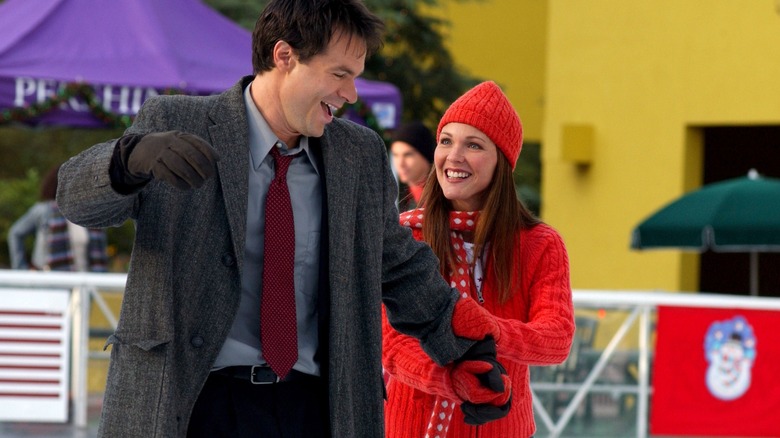
The best Christmas movie Santas show the immense and varied legacy this Christmas icon has had on the big screen. However, whatever form Santa has taken, it's doubtful anyone has thought of Kris Kringle as an ideal person to guide their relationship. The 2004 Hallmark feature "A Boyfriend for Christmas," though, sought to rectify that status quo with a story about Santa Claus intervening in a woman's romantic escapades. The film's insane premise concerns Holly Grant (Kelli Williams) asking Santa at the age of 13 for a boyfriend. Two decades pass and nothing has come of this wish. Then, one Christmas morning, a man named Douglas Firwood (Patrick Muldoon) appears at her doorstep, apparently here to be that Yuletide partner she's long craved.
Yes, Santa Claus (Charles Durning) has stepped in to provide a romantic companion for Holly. This concept, from the get-go, is rife with weird questions about consent and autonomy that no one wants to think about when experiencing a fluffy Hallmark movie. Plus, Santa stepping in to take control of Holly's love life is ... weird. Just weird. An offhand Christmas wish at 13 doesn't offer up permission for an old man to suddenly control a woman's romantic pursuits decades later.
"A Boyfriend for Christmas" almost certainly started life as an eye-catching title and then a movie was wrapped around it. The result is a project with a stomach-churning rather than cutesy premise, not to mention a bizarre take on Santa.
Love Finds a Home
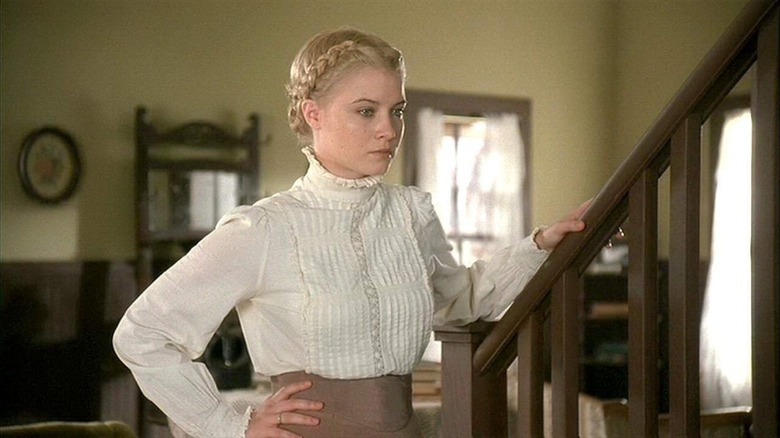
The pregnant Annie Nelson (Haylie Duff) serves as the impetus behind every plot machination in the 2009 Hallmark Western "Love Finds a Home." Specifically, the differing views of how to best help Nelson between doctor Belinda (Sarah Jones) and nursemaid Mary (Patty Duke) spurs endless problems. Can Nelson get the care she needs amidst all the dueling views on how to help pregnant ladies? Looming over everything are the potentially fatal hardships facing Nelson if she doesn't receive proper care. These are Wild West times, after all. Nelson could totally pull a Padme and perish while giving birth if Belinda's science-based advice isn't followed.
The specter of death during childbirth looms over "Love Finds a Home," making this an odd production to process. The best Western movies of all time tend to deal with heady subject matters, but they also weren't trying to wrap everything up in treacly Hallmark endings and emotional resolutions. Meanwhile, the entire endeavor boils down women to their ability or inability to give birth. Women don't get much more dimensions here, a sign of how often fictional ladies scrape by for any scraps of depth in American culture.
Though based on texts penned by Janette Oke, the whole film feels like men emulating what they think women "must" talk and think about all the time. These odd approaches to gender and its grim central source of conflict make "Love Finds a Home" less cozy and more uncomfortable.
Riding the Bus with my Sister
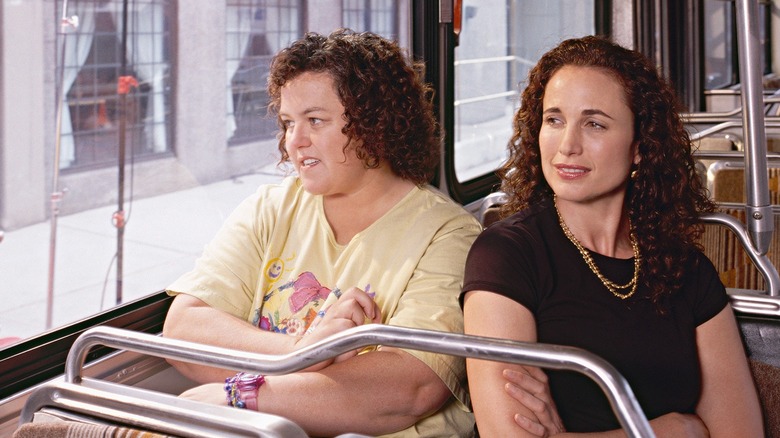
"Riding the Bus with My Sister" sounds like a movie that can't be real. Directed by Anjelica Huston and based on a Rachel Simon memoir of the same name, this title follows Rachel Simon (Andie MacDowell) connecting with her intellectually disabled sister, Beth (Rosie O'Donnell), after their father dies. Essentially, "Riding the Bus with My Sister" see's Rosie O'Donnell getting her own "I Am Sam" where a neurotypical actor plays a broad, outsized caricature of a disabled person for schmaltzy means. Like most of these projects, the story is filtered through a non-disabled gaze (here represented by Rachel Simon) and the unique facets of the disabled character are played for laughs.
This approach to chronicling disabled experiences on-screen is incredibly harmful on many fronts. "Riding the Bus with My Sister" didn't invent these tropes, but it sure didn't avoid using them either. O'Donnell's performance and the condescending screenwriting should've raised some red flags back in 2005. Two decades later, this material is borderline excruciating. The assorted problems ingrained into this title have only gotten worse with time.
Given the dearth of artistic merit here, nobody should spend time on "Riding the Bus with My Sister" when vastly superior projects actually centering disabled voices (like "Crip Camp," "A Different Man," or "Mary and Max," among others) exist.