

You Can See Everything's Secret Star Makes You Reconsider Everything
Contains spoilers for "You Can See Everything"
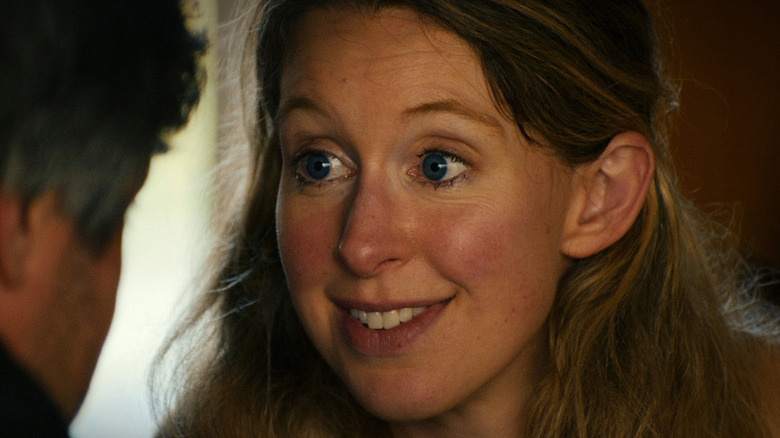
"You Can See Everything," Nathan Fielder and Lance Oppenheim's documentary about Elizabeth Holmes, has a major character who cannot be named in any spoiler-free reviews but whose presence reshapes the movie in several ways. This character is Amanda Seyfried, the actress who played Holmes in the 2022 miniseries "The Dropout."
Seyfried thought she was over playing Holmes after finishing "The Dropout," but this documentary has her return to that Emmy-winning role to reenact events the documentary crew experienced but couldn't film. A reenactment of a business meeting that occurred before production began drops a bombshell: Holmes' husband Billy Evans (played by Seyfried's "The Testament of Ann Lee" co-star Christopher Abbott in the reenactments) wants a portion of the profits from the documentary, an unorthodox and unethical demand that threatens to implicate the movie's viewers in its subjects' crimes.
A24 agrees to go with this request to get the project off the ground (although the end credit title cards let us know that Evans dropped it after filming finished). This reveal would seem to expose Holmes' statements about not making money from the film as lies — but conveniently, Holmes leaves the room right before Evans brought up the subject, either letting her feign ignorance or meaning she was innocent on that account. Fielder meets with Holmes in prison to question her on this matter, and since he can't film in prison, this necessitates another Seyfried reenactment.
Amanda Seyfried reevaluates her own work -- and Nathan Fielder's
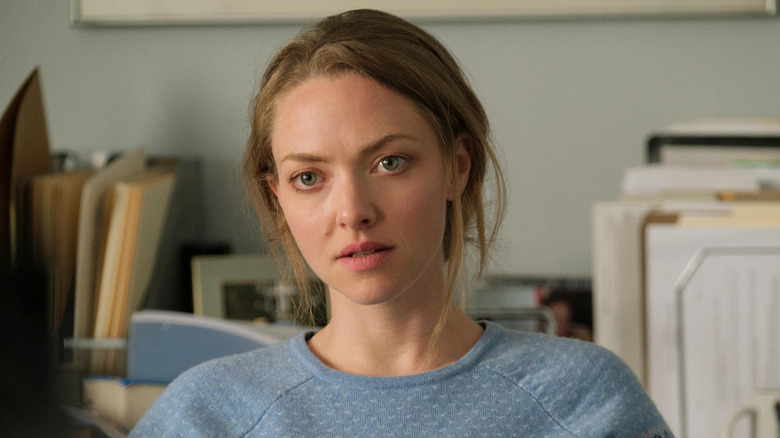
Beyond just doing reenactments, Amanda Seyfried collaborates with and at times challenges Nathan Fielder throughout the second half of the nearly three-hour film. Fielder's instincts for extreme meta layers reach a peak when Seyfried watches earlier documentary footage of the real Elizabeth Holmes as she watches Seyfried playing the fictionalized Holmes in "The Dropout."
Being confronted with how a real person reacts to their dramatized and not wholly accurate portrayal raises tons of questions about the strangeness of the whole bio-drama genre as a whole. These questions are even harder to answer when the real subject is suspected of faking aspects of her life as well.
Seyfried ends up speaking with the real Holmes via phone, while having an in-person confrontation with Billy Evans, the most unambiguously unsympathetic figure in the documentary. You can debate whether documentaries or docudramas are by nature exploitative, but those questions are small potatoes compared to Evans' cashing in on his wife's brand, making an AI copy of her and admitting he's posting on her X account without her permission. In a revealing moment, Evans attacks Seyfried over her criticism of Charlie Kirk.
In reenacting Fielder and Holmes' prison meeting, Seyfried is perceptive in questioning if Fielder has been manipulated by Holmes. Anyone who has seen the incredible detail Fielder puts into recreations in "The Rehearsal" is inclined to trust his memory in the "You Can See Everything" reenactments, but when he doubts his own memory, changing Holmes' wording from "I know he was talking to you about it" to "I know he was talking to you about something," Seyfried wonders if he's scared to incriminate his subject.
Could Amanda Seyfried get an Oscar for a documentary performance?
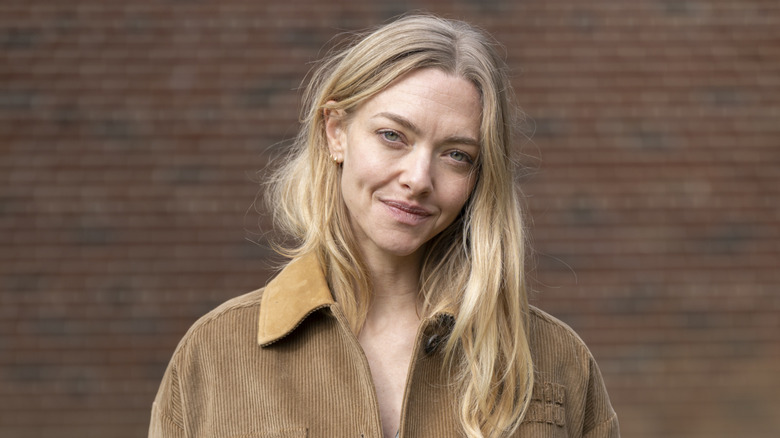
With the extreme critical and audience praise for "You Can See Everything," one wonders how well the film could do at the Oscars. It could very well become the first documentary nominated for best picture (or second, if you count "Chang: A Drama of the Wilderness" getting nominated in the one-time-only "best picture, unique and artistic production" category at the first Oscars in 1929). Could Amanda Seyfried also get a nomination for best supporting actress?
The closest precedent would probably be Maria Bakalova's nomination for "Borat Subsequent Moviefilm." That wasn't exactly a documentary, but that cringe comedy involved actors interacting with real people (including, infamously, Rudy Giuliani). Yet Bakalova was playing a character the whole time she was on screen, whereas Seyfried is only playing a character some of the time. Those reenactment scenes with Seyfried as Elizabeth Holmes are great enough to warrant inclusion in the awards conversation, but does it put her at a disadvantage that her most interesting moments on-screen are when she's just herself?
But then there's another question to be asked: is she just herself in the non-reenactment scenes or is she still, on some level or another, acting? Nathan Fielder has long left viewers questioning how much of his screen persona is genuine awkwardness versus an exaggerated act, so the same questions are sure to be asked about the professional actress sharing the screen with him. You can see everything, perhaps, but some things we might never fully know.