

Dune's Bene Gesserit Explained: Everything You Need To Know

There are several major groups that keep the gears of the "Dune" universe turning. While some factions, like the Great Houses and the Emperor, operate in the open, others are more comfortable pulling the strings from the shadows. The Bene Gesserit is one of these latter groups, but don't let their quiet approach to politics fool you. This shadow organization of undercover women represents one of the most powerful political and economic forces in the Imperium.
The Sisterhood (whose earlier history has already been partially adapted in the (admittedly rushed) prequel series "Dune: Prophecy") stands behind thrones, manipulates bloodlines, and reshapes cultures. Its members are capable and well-trained individuals who are (technically) working together to move humanity toward what they consider to be a better future. But that doesn't mean they're as pure in action as they are in intention. The members of the Bene Gesserit have plenty of blood on their hands, just like everyone else they interact with.
Let's take a look at the history of the group, their unique organizational structure, and the intense talents and capabilities that its Sisters show off as they inform, influence, and do damage control throughout Frank Herbert's sci-fi world.
How did the Bene Gesserit begin?
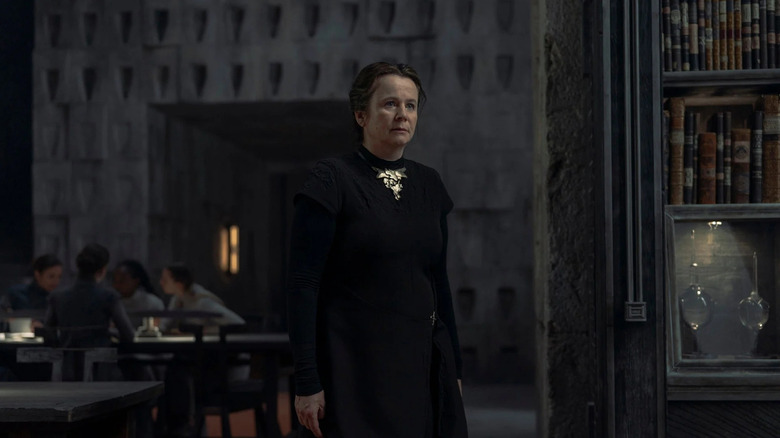
The earliest stories of the Bene Gesserit goes back to humanity's Earth history, which the Sisterhood remembers via dives into its collective Other Memory. While the details are muddled, here's the closest thing we get to an explanation. The group's most distant past connects to the Priestesses of Jowf on Old Earth (a fictional riff on early Assyrian history). As humans spread out across the "Dune" universe over millennia, a group of women labeled "sorceresses" form the earliest versions of an organized entity. This comes shortly before their story shifts from myths and legends to (fictional) historical fact.
The Bene Gesserit emerge into known "Dune" history after the Butlerian Jihad — an anti-AI event also called the Great Revolt. In the aftermath of the universe-altering conflict, the Bene Gesserit achieve early momentum as a formally structured political force. However, for a long time, this structure remains simmering in the background. The embryonic group stays in the shadows, even more than what we see in the first "Dune" book and Denis Villeneuve's first two "Dune" movies.
Rather than adopt overt tactics, the growing enclave begins to work their way into powerful positions through secrecy and stealth. They position members in famous Great Houses to slowly increase their influence. They also help with mediation, negotiations, and similar activities in the Imperium, creating a quietly critical dependency on their services in the process.
Why does the Bene Gesserit Order exist?

The Bene Gesserit Order is a terrifying and entertaining part of the "Dune" story. But while other groups like the Great Houses have clear goals (make money, annihilate your enemies, accumulate unlimited power — the usual), the purposes of the Bene Gesserit are a bit less obvious at first. This is partly because the group's goals are long-term in nature. They might try to topple a powerful family or influence a marriage alliance or a trade dispute. But the end goal is bigger than the squabbling parties involved. That goal? It's to guide a version of humanity that is void of artificial intelligence to a more capable and advanced future. And who is under their guidance and control.
Here's how the Reverend Mother Mohiam summarizes the emphasis of her order in the first "Dune" book. She starts by acknowledging that the focus of the Bene Gesserit is political influence, saying, "The original Bene Gesserit school was directed by those who saw the need of a thread of continuity in human affairs. They saw there could be no such continuity without separating human stock from animal stock — for breeding purposes."
This comes after a conversation about the Great Revolt. That is the epic struggle, also called the Butlerian Jihad, where humanity defeats the "thinking machines" (sentient AI trying to take over). In the wake of that event, the Bene Gesserit commit to developing human minds without the crutch of thinking machines. And yes, for millennia, the manifestation of this goal is to breed better humans, and we'll break down what that means for the "Dune" story shortly. First, let's look at the leadership of the Order and look at one of the key external features of the Bene Gesserit: the way they use religion to accomplish their mission.
The Reverend Mothers are a critical part of the Bene Gesserit Order
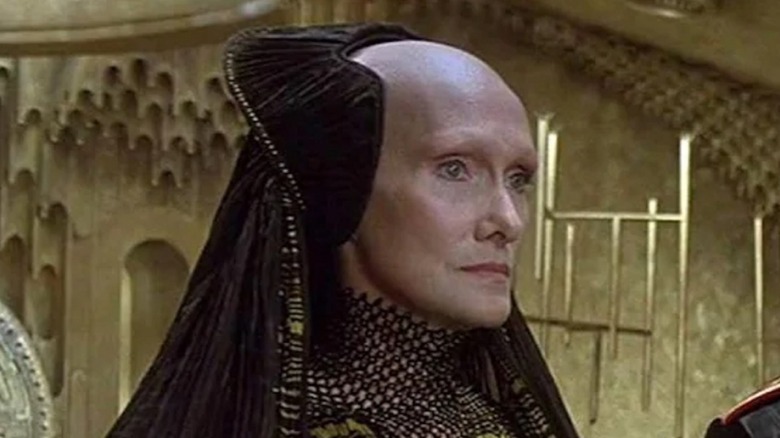
The leadership of the Bene Gesserit is organized under the theologically-coded Reverend Mothers and the Mother Superior. There are a lot of layers to the Order, though. For instance, Proctor Superiors oversee individual chapter houses, and there are also the individual sisters who make up the main body of the order.
Leading these members and chapters are the Reverend Mothers. The most famous of these is Lady Jessica, who becomes a Reverend Mother during her exile among the Fremen in the first "Dune" book and in "Dune: Part Two."
There are many other Reverend Mothers operating across the Known Universe. These are the regional top dogs guiding the quiet execution of the Bene Gesserit's goals, from breeding plans and shaping cultural traditions, to simply gathering and passing along critical information. Reverend Mothers can share their personality and memories, too. This is part of what happens when Lady Jessica drinks the Water of Life and gains Other Memory in the story. At the tippy top of the organization is the Mother Superior, the unquestioned matriarch of the Order and the point of the power pyramid.
The overtly religious (but not internally embraced) overtones of the Bene Gesserit
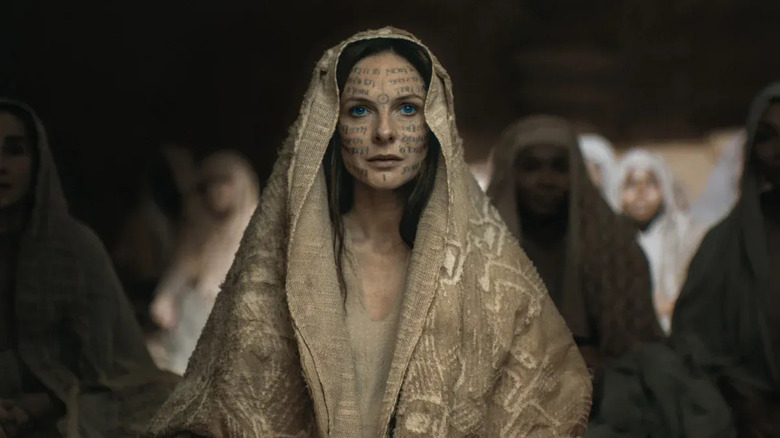
The Order of the Bene Gesserit is cloaked in ritual and tradition. It's also dripping with mystery. For any casual observer looking in, this closed-off group of influential and powerful women with otherworldly attributes comes across as cult-like. The Bene Gesserit deny that they are a religious order, but in reality, the mystic group operates like one. They're also okay with cultivating the aura of religion in their activities. In "Dune," that's largely how Paul Atreides is able to step into the role of a savior figure for the Fremen — thanks to the religious groundwork the Bene Gesserit have laid long before his arrival.
In "Children of Dune," Paul's daughter, Ghanima Atreides, addresses the role of religion when reciting the Bene Gesserit credo, saying it "is the emulation of the adult by the child. Religion is the encystment of past beliefs: mythology, which is guesswork, the hidden assumptions of trust in the universe, those pronouncements which men have made in search of personal power, all of it mingled with shreds of enlightenment." However, she adds that the religious overtones of the Bene Gesserit are different by saying, "And always the ultimate unspoken commandment is 'Thou shalt not question!' But we question [...] The work to which we have set ourselves is the liberating of the imagination, the harnessing of imagination to humankind's deepest sense of creativity."
So, while the Sisterhood is religious in appearance, it isn't afraid to break the rules and wield religion to its benefit, using it to mold the human race. This unique combination is how we get one of the most iconic elements of their efforts: the attempt to breed the Messianic Kwisatz Haderach.
Breeding humans is high on the Bene Gesserit priority list

Bene Gesserit representatives are constantly involved in politics and aristocratic scheming. They invest in economic power and are used to rubbing shoulders with geopolitical powerhouses. If there's one manifestation of their influence that comes up the most, though, it's breeding human beings — with the end goal of producing one superhuman in particular.
The Bene Gesserit are obsessed with improving humanity by coupling up the right individuals. Over the generations, their goal is to breed a superhuman male, a Messianic character (or characters) called the Kwisatz Haderach. On the surface, this would be a male Bene Gesserit who could bridge the gender gap and bring together the two sides of humanity. In theory, they would unite the unique memories of each half into a single human capable of guiding the interstellar race on its next great step forward in its evolution. It sounds great on the surface, but this is the "Dune" universe. It's hard to find anyone with pure motives. In reality, the successful breeding of a human savior figure would put this critical chess piece under the control of the Order, allowing them to manipulate where the race goes next.
This breeding program sets the stage for "Dune: Part One," where the Bene Gesserit Lady Jessica (Rebecca Ferguson) is supposed to have a girl as part of this prescribed path forward. When she chooses to have the boy Paul instead (yes, Sisters can choose the gender of their children), it throws everything off as the program is approaching its multi-generational conclusion. The result is the chaotic events of "Dune" and "Dune: Messiah," which we're getting in Denis Villeneuve's trilogy of "Dune" films.
The Bene Gesserit Other Memory is a cognitive history book

In "Dune," Lady Jessica (and her unborn baby Alia) gain access to Other Memory, a collective group of a person's own ancestral memories and, in the case of Reverend Mothers, a string of past memories, personalities, and experiences passed from one female leader to the next.
The Reverend Mothers have the burden of carrying these inner voices as part of their office. They can use them to understand and to reach far back into the history of their Order, even when written histories are lost or destroyed. It's a useful mental tool — but it comes at a cost, and not just the fact that you have a ton of voices in your head to manage.
Other Memory can come through a ceremony where past memories are transferred to a new Reverend Mother via a special narcotic. In Lady Jessica's case, that substance is the (super gross) Water of Life that she consumes in "Dune: Part Two." This transfer ceremony is always a "live or die" test — one where the consumer can perish in the trial. If they emerge, they can hone the ability to hear the portfolio of memories that they personally contain, as well as those the previous Reverend Mother is passing along to them. While Other Memory is a terrifyingly nifty superpower, it's just one of several exceptional capabilities that the Bene Gesserit unlock over the millennia that their Order develops.
The Voice and Truthsense are also incredible Bene Gesserit powers
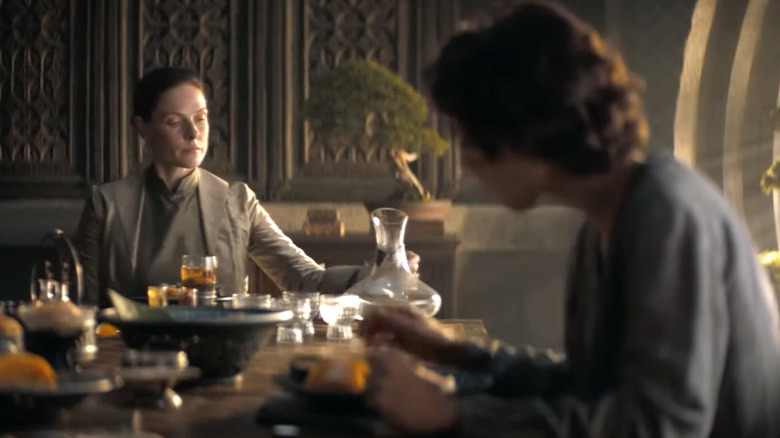
The Bene Gesserit Reverend Mothers may be the main ones able to house the distant past through Other Memory, but there are other skills that all members of their order can tap into. One of these is the Voice. In the movies, this is depicted as a creepy, low-tone growl. Orders are barked at someone, and hey, presto! They obey.
The Voice isn't magic, though. The Bene Gesserit use religion and mysticism as a cloak, but in reality, most of their abilities are explained through things like training and physiology. In the case of the Voice, members of the Sisterhood (and occasionally others, like Paul Atreides) simply use a specific vocal register. By hitting this frequency — which is different for each person and requires expert understanding and attention to detail — they tap into a physiological response that forces compliance. Think of it as a much creepier and more understandable version of a Jedi mind trick (which, in reality, is one of the more messed up parts of the "Star Wars" franchise, anyway). By understanding the Voice, Sisters are also able to resist its bone-chilling charm.
Along with the guttural siren-like compliance of the Voice, the Bene Gesserit can tap into Truthsense. This is a more advanced part of a Sister's enhanced ability to generally sense detailed emotional messaging. In essence, it turns them into human lie detectors and has a variety of useful applications. That more attuned awareness also allows Sisters to judge if someone is putting on a fake accent. It can also help detect concealed weapons. Through their overall heightened sense of awareness and observation, the Bene Gesserit can even detect if an individual has ulterior motives or is hiding a secret.
Prana-Bindu Control gives Sisters a wild degree of physiological control
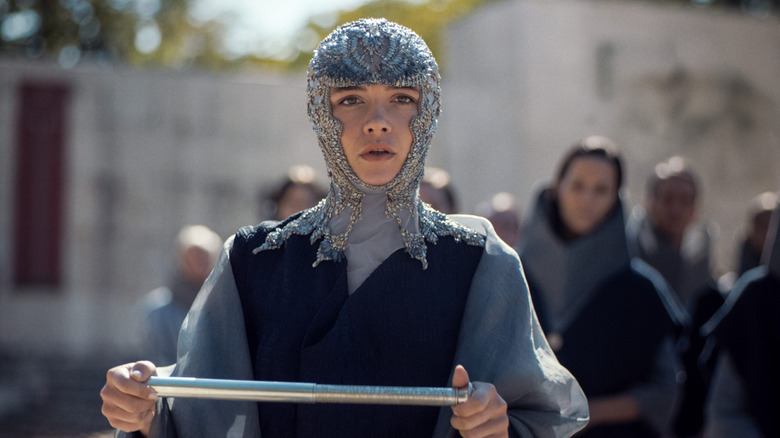
One of the quieter but more impressive advantages of being a member of the Bene Gesserit is the training that gives you Prana-bindu control. Prana means "muscle," and bindu refers to "nerves." In other words, Prana-bindu training gives you more control over your muscles and nerves — and in the case of the Bene Gesserit, extraordinary control.
By learning the art of Prana-bindu, a Sister can survive in extreme weather conditions by regulating their temperature. They can also slow metabolism to avoid starving and can even take a single bite of something, break it down in their mouths, and understand the individual ingredients involved in the dish. Another side effect of Prana-bindu is that it turns the Bene Gesserit into some of the most well-trained hand-to-hand combatants. They are able to develop advanced capabilities, like faster attack speed, and when this is combined with trained fighting techniques, it gives them a unique edge in any violent engagement.
Prana-bindu also gives the Bene Gesserit more sophisticated control over their bodily functions. The most famous of these is their ability to menstruate on command and choose the gender of a conceived child. But there are other advantages. If a Sister is poisoned, they can control how their body reacts to the unwelcome substance. In theory, they can even control the aging process, although actually doing so would expose their members through an outward appearance of immortality.
The Bene Gesserit stay busy in politics and trade
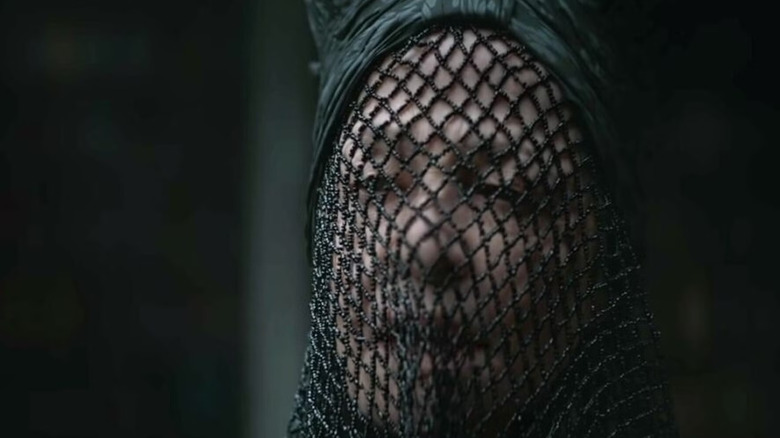
The Bene Gesserit thrived for millennia in the background of the "Dune" universe. They cultivate elaborate individual abilities and created a shadow organization with impressive power that reaches into Major Houses and even Imperial households. But there is another side to the Bene Gesserit, one focused on the dollars and cents. The Order is also involved in the economic powerhouse known as CHOAM.
Combine Honnete Ober Advancer Mercantiles, or CHOAM for short, is the ultimate commercial organization (and something that "Dune" movies have managed to get wrong from the book more than once). The group monopolizes commerce across the Imperium, controlling what goods move where. Its members openly include the Landsraad (a parliamentary group made up of the Great Houses) and the Emperor. But there are silent partners as well, including — you guessed it — the Bene Gesserit. By owning a stake in the biggest trade conglomeration humanity has ever known, the Order creates a tangible tool they can wield as they operate behind the scenes.
The Bene Gesserit remain a powerful force throughout much of Dune's history

The economic element of the Bene Gesserit's involvement in CHOAM mainly serves to underpin the Order's primary focus, which is and remains political influence. The Bene Gesserit use this covert combination of economic and political power to guide humanity long before the main "Dune" books take place, and they continue to do so in the post-Atreides era. That's when their order scatters across the universe and threatens to devolve into chaos without strong leadership.
As the later books unfold, this brings them into conflict with other groups (like the Bene Tleilax, who are behind many of "Dune's" creepiest creatures) as well as a hostile enclave spun out of their own ranks: the Honored Matres. This violent and aggressive manifestation of their order eventually reunites in an uneasy alliance with the Bene Gesserit, helping them re-establish a sense of purpose.
However, as the known part of Frank Herbert's story ends, the revived order is still tinged with a distinct lack of control over the future they had so long tried to manipulate to their own ends. From there, it's either up to your imagination, or on a path laid out by the many books (many only dubiously accepted by hardcore fans) offered by Herbert's son, Brian, with the assistance of Kevin J. Anderson.