

5 Historical Adventure Movies That Are Unwatchable Today

Culture evolves over time. Movies are no exception, nor is the way we perceive them. Unfortunately, not all old films age like fine wine. For instance, many classic 1980s movies are unwatchable today because what was considered to be all right at the time simply wouldn't fly now — and in some cases, barely flew back then.
One category that's particularly susceptible to the passage of time is the historical adventure movie. The genre has given us more than its share of entertainment, but as years have gone by and our sensibilities have changed, certain historical adventure films have become outright uncomfortable to watch. Especially older movies in this genre can feature concepts, story arcs, casting decisions, and old-timey attitudes that make them incredibly awkward from the contemporary standpoint. Today, we'll take a look at some of the worst offenders. Here are five historical adventure movies that are effectively unwatchable by modern standards.
Zulu
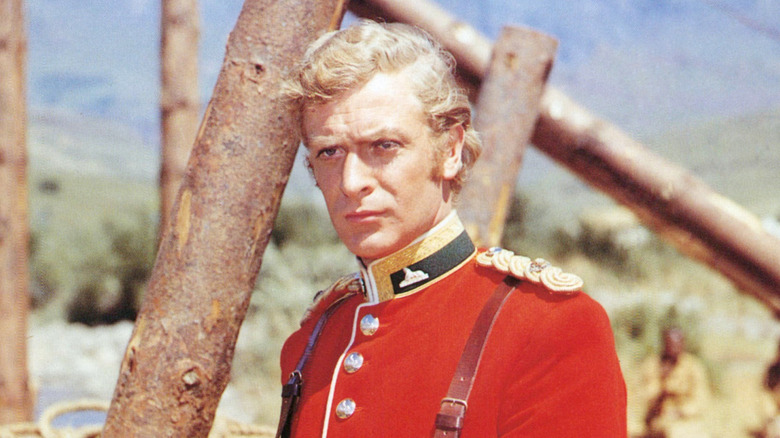
Directed by Cy Endfield, the British 1964 movie "Zulu" is based on the real-life Battle of Rorke's Drift, a 1879 wartime incident where roughly 150 British soldiers faced a 4,000-strong Zulu force. You can probably see how its cultural sensitivity is behind contemporary times, and indeed, "Zulu" is rife with racist sentiment. The movie portrays the Brits — who, notably, were the colonizers here — as noble heroes who gloriously endure an overwhelming force of enemies.
On one hand, "Zulu" half-heartedly reflects on its own attitudes by offering both sides moments of dignity. On the other, though, the majority of the movie is still happy to revel in said attitudes. "Zulu" explicitly sides with the outnumbered colonizers and presents the British Empire, of all things, as a plucky underdog that's merely defending its land (which happens to be in Africa).
"Zulu" enjoys something of a classic status in Britain, and its issues have been the subject of debate over the years, even being labeled as a movie promoting far-right sentiment. One person who doesn't buy this is Michael Caine, who played Lt. Gonville Bromhead in the film. "That is the biggest load of b****** I have ever heard," he commented to The Spectator in 2023. Still, the fact remains that "Zulu" does its level best to portray its white colonizers in the most heroic and positive light possible, which is not a great look decades later.
Braveheart
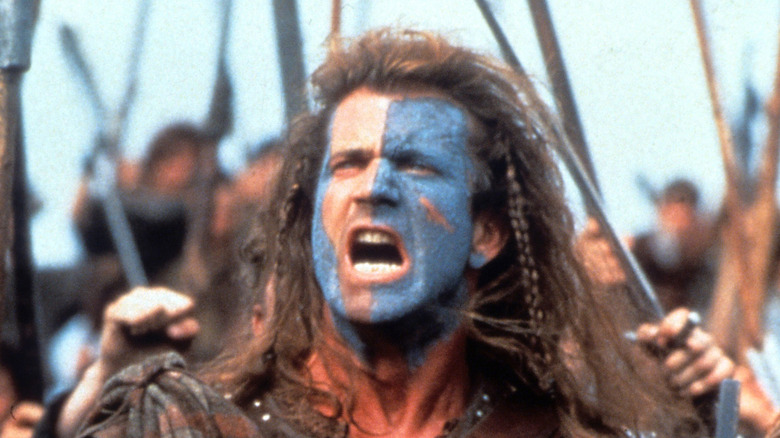
In all fairness, Mel Gibson's "Braveheart" is arguably one of the best war movies of all time, and is at least somewhat based on a true story. The 1995 film about Scottish hero William Wallace (Gibson) and his struggle against the vicious King Edward I Longshanks (Patrick McGoohan) also won a whopping five Academy Awards, including best picture. So, what makes it unwatchable?
As fictional movies go, "Braveheart" is not a bad one. However, as a depiction of real events, it gets a whole bunch of its events wrong. Neither the face paint nor the Scottish tartans that are so important to the film's imagery were in play during Wallace's life. There are numerous historical inaccuracies, from battle details to the relationship between Wallace and Isabelle (Sophie Marceau), whose real-life equivalents would have been toddlers during the film's pivotal events. Even the Braveheart moniker was never actually associated with William Wallace, but rather Robert the Bruce (Angus McFadyen) — whom the movie portrays as a young political animal who eventually grows a spine after Wallace's actions.
There's also the matter of Mel Gibson himself. The actor and filmmaker has a lengthy history of racist, homophobic, and controversial comments that has impacted his public image. It's up for debate, of course, whether an artist and their art can be viewed separately — but if you're of the opinion that this isn't the case, any movie Gibson has directed and appears in carries the same stains as the man's reputation.
Gunga Din
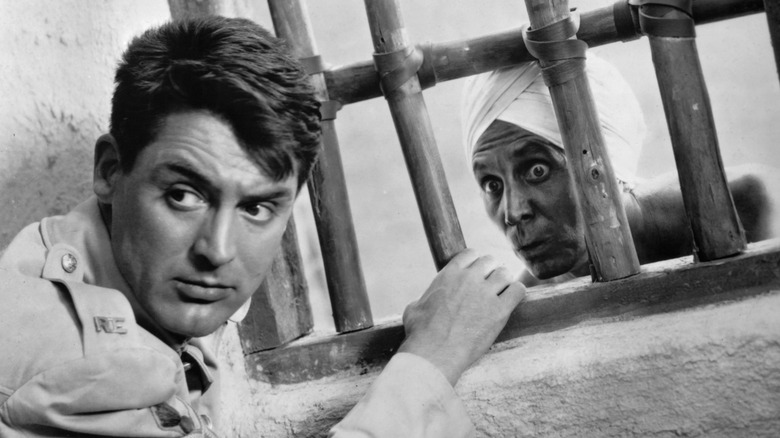
The 1939 historical epic "Gunga Din" features the likes of Cary Grant and Douglas Fairbanks Jr., and focuses on a trio of heroic British soldiers on a dangerous mission in India. Based on the Rudyard Kipling poem of the same name, the film depicts their attempts to prevent the rise of the dangerous Thuggee cult. As you might suspect, this wasn't made with the greatest possible care. Expect to see copious racial stereotypes, and a whole lot of brownface. Even the titular character, waterbearer Gunga Din, is played by the very white Sam Jaffe.
Granted, "Gunga Din" is hardly the only movie of its era to indulge in stereotyping and racist attitudes. However, the movie's legacy is arguably greater than most because it went on to inspire a far better-known blockbuster. George Lucas used several of the film's ideas as inspiration for his "Indiana Jones and the Temple of Doom" — a 1980s hit that also hasn't aged well because of its own insensitive attitudes.
55 Days at Peking
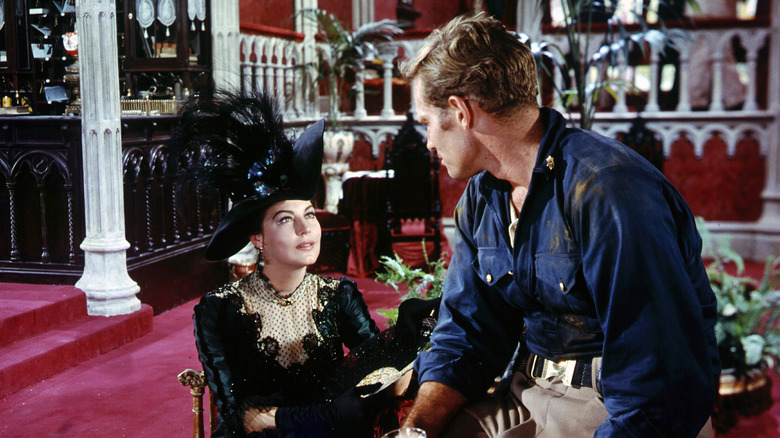
A 1963 Hollywood epic about China's Boxer Rebellion — an 1899-1901 movement that aimed to drive foreign influence away from the country — already comes across as a potential hotbed of cultural insensitivity. Add in the fact that the movie's events unfold through Western eyes, and the final product is happy to confirm this suspicion. "55 Days at Peking" focuses on Western characters played by Charlton Heston, David Niven, and Ava Gardner. Sure, there are also notable Chinese characters. However, in Hollywood's most unsavory traditions, they're brought to life by actors like Flora Dobson, Robert Helpmann, and Leo Genn in yellowface.
"55 Days at Peking" focuses on the pivotal Battle of Peking, and features plenty of stunning visuals. However, contemporary viewers will likely be too distracted by the blatant use of yellowface to enjoy it. And honestly, it doesn't help that at the end of the day, "55 Days at Peking" simply isn't a very good movie.
Apocalypto
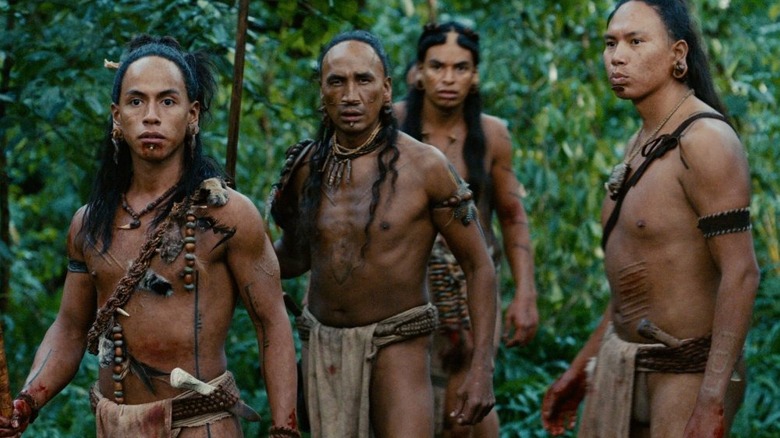
Mel Gibson makes his second appearance on the list with "Apocalypto," an epic adventure film taking place in the late stages of the Mayan culture in the early 16th century. It stars Rudy Youngblood as Jaguar Paw, a young hunter whose life is upended when raiders attack his village.
The 2006 film was nominated for three Academy Awards, but it also drew criticism from folks who knew something about Mayan culture. A large number of people in Guatemala are descendants of Mayans, and Ricardo Cajas, the country's presidential commissioner on racism, accused "Apocalypto" of promoting an inaccurate image of Mayans as bloodthirsty barbarians. Several activists in Guatemala also voiced similar opinions about the film's savage portrayal of Mayans.
In 2007, Gibson was also personally confronted with similar sentiments when Cal State University's assistant professor of Central American studies, Alicia Estrada, called parts of "Apocalypto" racist and factually mistaken to his face. "Lady, f*** off," Gibson retorted, according to TMZ (via ABC News).