

5 Best Western Comedies Of All Time, Ranked
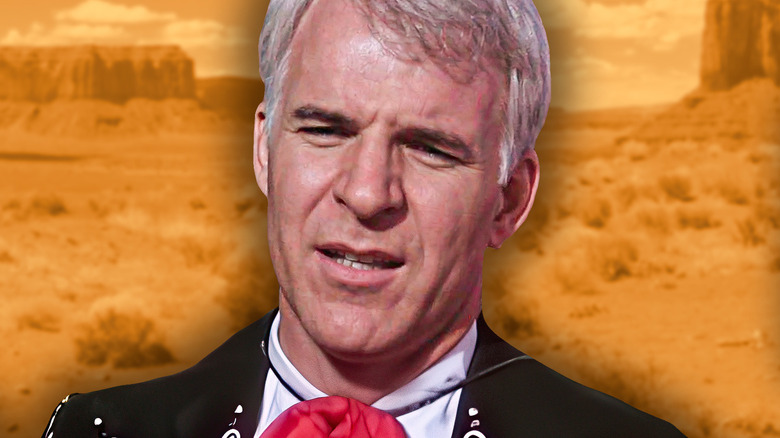
There isn't much to laugh about in classic Westerns, as life in the old west looked nothing short of harrowing even in the most romanticized examples of the genre. The further from that golden age we've gotten, the darker the stories have become, and the brutality of spaghetti and revisionist Westerns spares little time for jokes. Even the genre-bending efforts of Quentin Tarantino have their humor share space with uncomfortable examinations of the most brutal periods in America's history. Even if you laugh, it's stretching the truth (not to mention undermining their subject matter) to label them as comedies.
The five films on this list all buck that trend, offering chuckles as well as affectionate tributes to this most cinematic of Hollywood genres. Although these are our personal picks, the criteria for inclusion was whether you could label them comedies first and foremost. The most recent example on this list is possibly the least conventional, but it offers too many dark laughs throughout to be seen as anything but a stinging satire. Some are more crowd pleasing than others, but all five are a rootin', tootin' good time if you can get on their wavelength.
5. Back to the Future Part III
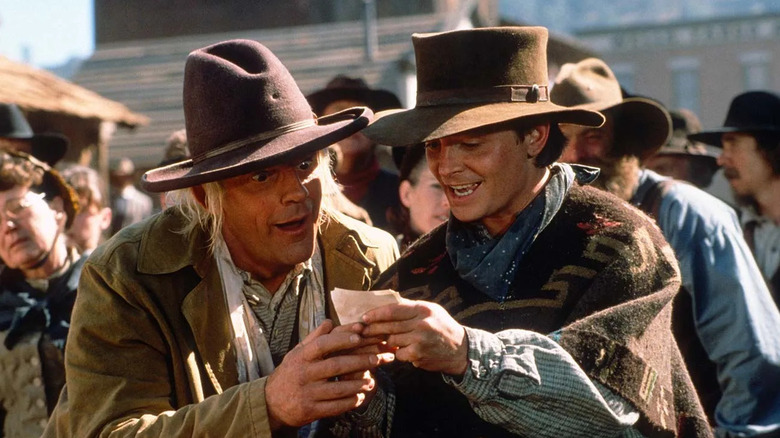
Even though the ending of "Back to the Future" was intended as a gag rather than a sequel tease, "Part II" ended up tying itself in knots around the plot of the original to the extent that it complemented it perfectly (if a little confusingly to our young brains). Add onto this the fact the original was about saving your parents and the sequel about saving your children, and it felt like the franchise had gone full circle in two movies with nowhere to go.
So Robert Zemeckis decided to complete his trilogy by making a left field turn to the Western, sending Marty McFly (Michael J. Fox) back to 1885, to save Doc Brown (Christopher Lloyd) from being killed by Biff's great grandfather. The result can feel like a "Back to the Future" greatest hits package at times, as it translates the familiar beats of the first into a period setting, but there's enough charm — and enough clear affection for the Western genre from everyone involved — to stop it from feeling like a carbon copy in cowboy drag.
The screenplay by Zemeckis and Bob Gale finds fun ways to incorporate sci-fi storytelling in an analog setting, such as having to power the DeLorean via a steam train. Add the franchise's most developed love story, between Doc and schoolteacher Clara (Mary Steenburgen), along with more stakes from the butterfly effect than the movie is typically given credit for. It makes you wish Marty and Doc could find their place in other genres, although we should be glad the franchise ended before it could wear its formula out.
4. Rango
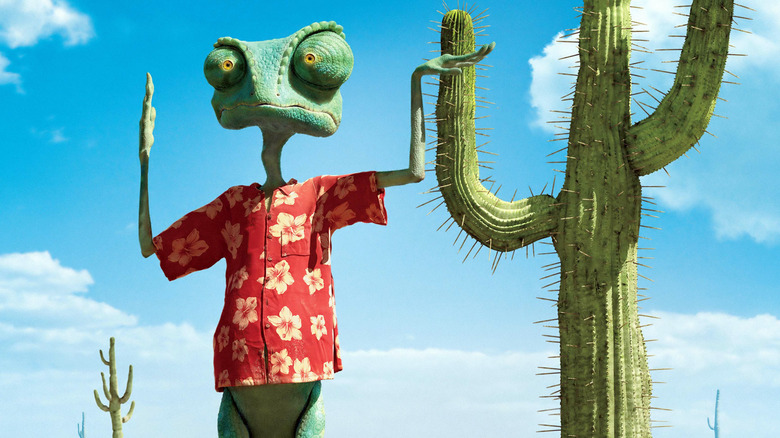
An Oscar-winning animation that we don't really talk about anymore, "Rango" is one of the strangest blockbusters of the 2010s — although considering it comes from director Gore Verbinski, who opened one of his "Pirates of the Caribbean" sequels with a child hanging, we'd be shocked if it were anything but surreal. Johnny Depp voices a family's pet chameleon who gets stranded in the Mojave Desert after falling out of their car, where he gets told about a nearby town named Dirt, inhabited entirely by animals. Making his way there, he takes on the alias of Rango, presenting himself as a tough drifter, and after accidentally killing the outlaw Gila monster Bad Bill (Ray Winstone) in a duel, is given the job of town sheriff on the spot.
As the plot unfolds, it transforms into pure cinephile catnip, albeit a batch that would go over children's heads. There are nods to spaghetti Westerns, including a mirage of Clint Eastwood's Man with No Name, as well as a conspiracy thriller plot that echoes "Chinatown," and the most unlikely of callbacks through Depp's filmography (remember that he reprises his "Fear and Loathing in Las Vegas" role here for a future trivia night).
There's no wonder this seemed to have baffled most of the children seeing it, debuting to a C+ Cinemascore, although it rode its critical acclaim all the way to awards shows. Every kid who did love it probably became an obsessive Letterboxd user once they grew up. It's also the last great movie Depp starred in before his schtick became insufferable.
3. Three Amigos
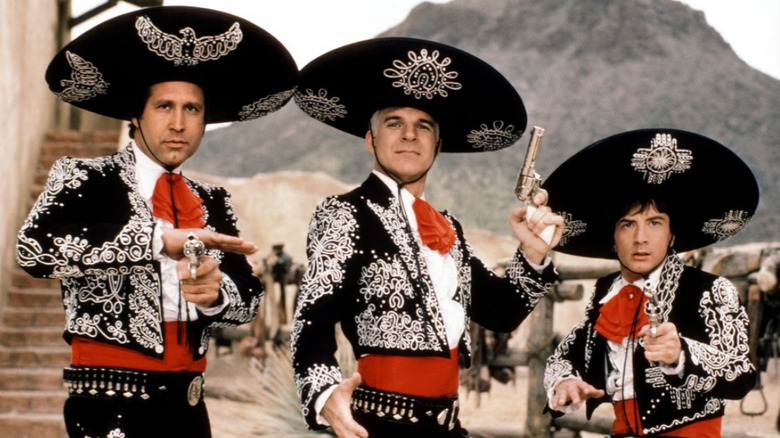
As much a love letter to silent cinema as it is the Western, this genre pastiche from director John Landis strands three movie stars — Lucky Day (Steve Martin), Dusty Bottoms (Chevy Chase) and Ned Nederlander (Martin Short) — in a remote Mexican village they believe they've been hired to perform for. The reality is that young villager Carmen (Patrice Martinez) saw one of their films and mistook them for documentaries, believing that their characters (the titular Three Amigos) could save them from the bandit troupe led by El Guapo (Alfonso Aurau). It's a straightforward misidentity premise, with the three actors unknowingly risking their own lives believing that they're taking part in an elaborate performance, bumbling their way into victory until the bandits find out their true identities.
The movie was a long-gestating passion project for Martin, who co-wrote the first draft back in 1980, with almost every comedy star of the decade in talks to be his co-stars; at one point, Bill Murray and Robin Williams were going to play the other two amigos, in an iteration that would be directed by Steven Spielberg. The eventual production would be fraught because of the notoriously difficult Chevy Chase, although having a director who was still going through legal proceedings due to deaths on an earlier production hardly smoothed those tensions over.
It probably wasn't a surprise that it premiered to mixed-negative reviews, with Roger Ebert giving it a one-star pan, but the tide turned quickly, and it's now regarded as one of the peaks of all three actors' filmographies, as well as a promising beginning to a creative partnership between Martin and Short that continues to this day.
2. Eddington
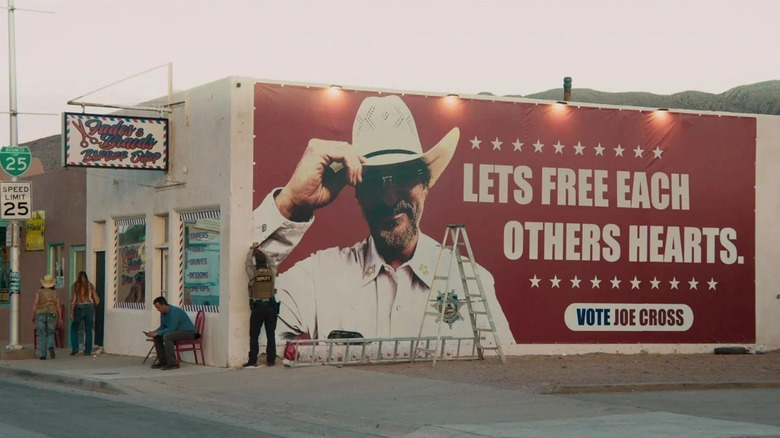
When Ari Aster's "Eddington" premiered at Cannes in 2025, the critical responses were all over the place. Had this enfant terrible filmmaker created a stinging satire about how we're still dealing with the cultural and political fallout of the brain-breaking year 2020, or was he reheating stale discourse, because we had nothing else to do during lockdown but go on Twitter and argue?
If you felt the answer was the latter, it was probably because you understandably didn't want to revisit that cursed year, and Aster making a neo-Western conspiracy thriller centered around one New Mexico town's election race might have been too soon. In this sprawling epic, we have a sheriff who becomes a politician in response to anti-mask mandates (Joaquin Phoenix), married to a QAnon-pilled wife (Emma Stone), with their opponent being the Democratic incumbent running on building more AI data centers (Pedro Pascal).
Add a cult leader who may be the son of Jeffrey Epstein (Austin Butler) and a backdrop of social tensions linked to the killing of George Floyd into the mix, and "Eddington" becomes a powder keg of every hot button issue that has dominated American politics since the COVID pandemic. It is also absolutely merciless in its satire across the entire political spectrum, brutal in its parody of everybody from young white activists whose awakening came from posting a black square on Instagram, to the useful idiots peddling conspiracies about masks that distract from the establishment's real intentions.
In its incredible final moments, it reveals itself to have been a villain origin story for a distant secondary character all along. No film in the Trump 2.0 era has better articulated the very stupid ways we've found ourselves back here.
1. Blazing Saddles
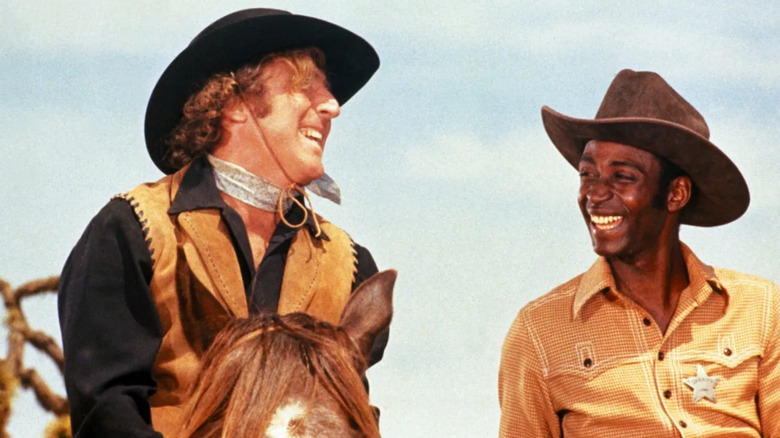
Anybody who says you couldn't make a movie like "Blazing Saddles" any more has a fundamental misunderstanding of who the jokes are aimed at. Mel Brooks' send-up of the Western has probably earned that reputation due to mixing its satirical takedown of racism — both throughout the genre's history and America's present — with some of the most gloriously lowbrow jokes ever constructed. But why can't a movie have an abundance of fart gags alongside an important social message?
As was the case with Brooks' earlier movie "The Producers," critics were divided about a movie that took a frenetic, gag-a-second approach to tackling one of the most harrowing, shameful chapters in Western history — and unlike other Westerns on this list, it further divided critics due to its ramshackle sets and messy narrative that prioritized laughs over telling a satisfying story.
Audiences found themselves laughing too hard to share these nit-picking critiques, and the movie has stood the test of time as one of the defining Hollywood comedies despite this approach. Why afford something as backwards as racism anything in the way of an intelligent rebuttal, when it's far funnier to depict it in all its rank stupidity?
Released in the same year as "Young Frankenstein," Brooks became the most influential comedy auteur of the era by ripping Hollywood history in two, following these genre pastiches with affectionate tributes to silent cinema and Hitchcockian thrillers. This was far more scathing towards the Western than those were to their genres; if it was a love letter, it was written with a poison pen.