

5 Worst Movie Title Changes In History, Ranked

Long before Tom Cruise's "Digger" bombed at the box office, writer and director Alejandro González Iñárritu was already making bold creative decisions that would underpin the film's eventual divisive reception. Originally, "Digger" was entitled "Blah Blah Blah," a reference to the phrase various European citizens and diplomats begin chanting as Cruise's Digger Rockwell continues his tirade against the world. The phrase proved important enough for the final film that one of composer Cosmo Sheldrake's tracks in the "Digger" score is titled "Blah Blah Blah." Eventually, though, the feature ditched that and secured its final name, presumably because the initial moniker seemed to immediately welcome apathy from potential moviegoers.
However, that original "Digger" name is certainly more creative and eye-catching, making this yet another single-word title that leans on a heretofore unknown character's name. It's a clear downgrade, but it's far from the worst example of this phenomenon. Countless motion pictures over the years have undergone drastic title changes very much for the worse. The five worst movie title changes in history (ranked below from "least worst" to worst based on the author's subjective opinion) reflect tragic turning points in history where fitting and idiosyncratic titles were eschewed for more generic impulses.
There's entire sagas behind these movie title changes, some of them even more compelling than the final features themselves. Let's take a look at five egregious examples of such changes that paved the road for "Blah Blah Blah" becoming "Digger."
5. Saldado to Sicario: Day of the Saldado
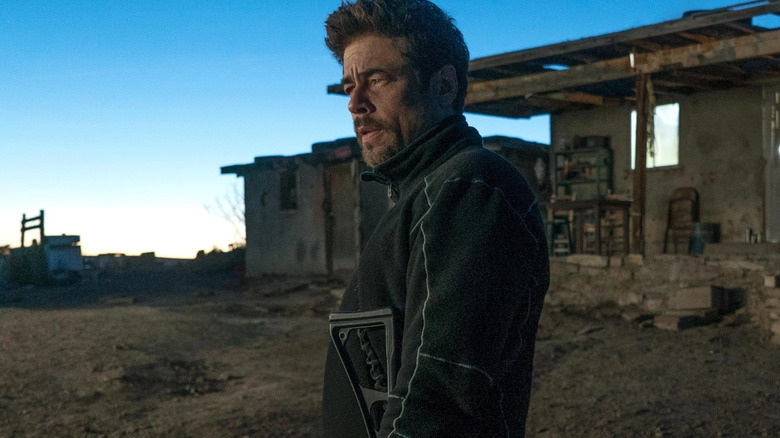
2015's "Sicario" should've remained a great movie that never got a sequel. Alas, because everything in capitalism can be milked for further profits, a grim exploration of the pointlessness of both violent revenge and the War on Drugs inspired a follow-up. Not only that, "Sicario: Day of the Soldado" also turned Benicio del Toro's haunting Alejandro Gillick character from the first movie into Liam Neeson in "Taken" or Charles Bronson in "Death Wish," an older man who keeps ending up in action movie scenarios. This Stefano Sollima directorial effort was a tremendously bad idea from the get-go, though its misguided creative tendencies were made extra apparent through how comically indecisive its producers were about its title.
Initially, this follow-up was just called "Soldado," a Spanish word for soldier. That was a clean moniker, echoing the single Spanish word title of its predecessor. By the time the domestic marketing for this title began, though, it was retitled "Sicario 2: Soldado." That was a dumb move already on many fronts, including how using the number "2" in the title felt ill-suited for a grim action crime movie. Things only got worse, though, when "Soldado" was just three months out from its premiere and its title was once again changed to "Sicario: Day of the Soldado."
What was once a tidy moniker had become a blabbering mouthful. Plenty of bad decisions permeated this production, but the persistent downgrades of the "Soldado" title replacements were especially egregious.
4. All You Need Is Kill to Edge of Tomorrow
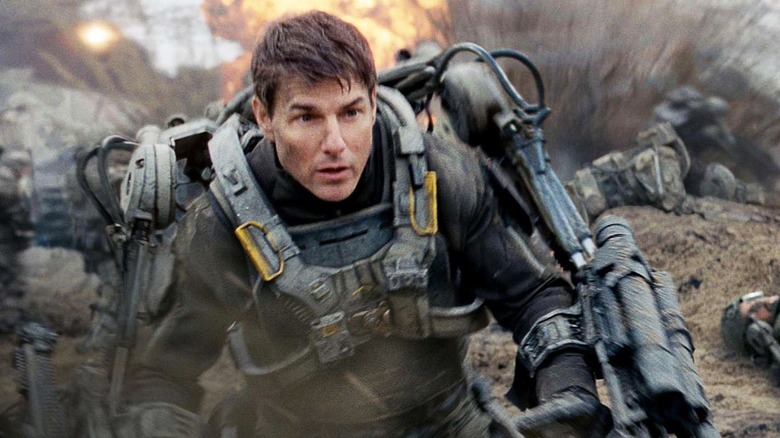
Director Doug Liman's "Edge of Tomorrow," starring Tom Cruise and Emily Blunt, is based on Hiroshi Sakurazaka's light novel "All You Need Is Kill." While the source material was popular enough for Warner Bros. and Village Roadshow Pictures to acquire it in the first place, these studios got cold feet about actually releasing a new Cruise movie called "All You Need Is Kill." As the marketing campaign for this project prepared to properly launch at the 2013 San Diego Comic-Con, it was announced that "All You Need Is Kill" would be renamed "Edge of Tomorrow." This infamous moniker would come to define the film's entire reputation.
Liman later revealed to Den of Geek that he agreed with replacing the "Kill" title, but the one he wanted didn't end up being chosen (more on that momentarily). Other producers and studio executives noted they approved of the change in the hopes of making the project appeal to a wider array of audiences. Given that the original "Edge of Tomorrow" title was undeniably aggressive, not to mention anime not being quite as mainstream in 2014 as it would be a decade later, this change could be conceivably understandable. However, the new moniker was so generic and didn't even sound like it belonged to a sci-fi film.
After underwhelming theatrically, "Edge of Tomorrow" gained a reputation as a totally underrated box office flop. To get more people interested in the project on home video, Warner Bros. once more changed the movie's name, this time to Liman's original choice of "Live Die Repeat."
3. Leaf Men to Epic

The now-defunct company Blue Sky Studios is mostly just known these days for creating nearly all six "Ice Age" movies, but the studio's library does include plenty of other titles like "Robots" and "The Peanuts Movie." There's also its 2013 feature "Epic," which followed human Mary Katherine (Amanda Seyfried) getting trapped in a "FernGully-"esque plot where she's shrunk down and discovers a whole world of forest critters and people. Director Chris Wedge and company clearly had to sand down the film to fit studio executive demands, but there's also obvious impulses scattered throughout the title reflecting how this was meant to be a darker, more dramatic filmmaking effort from the "Rio" studio.
Distributor and financier 20th Century Fox seemed to be hesitant about this production, as seen by the awkward title change "Epic" suffered. Originally, this movie was entitled "Leaf Men," a nod to its William Joyce-penned source material, "The Leaf Men and the Brave Good Bugs." However, according to Wedge, during its final months of production, "Leaf Men" was forced to undergo a title change to the more generic "Epic." It's hard to tell what the impulse here was. Were there concerns "Leaf Men" might make audiences think of "Antz" and "A Bug's Life?"
More likely, Fox's marketing team wanted to get in on the word "epic" being popular as a youth-driven slang term in the early 2010s. This maneuver certainly didn't help "Epic," which became Blue Sky's lowest grossing movie ever domestically at the time of its release.
2. Rapunzel to Tangled
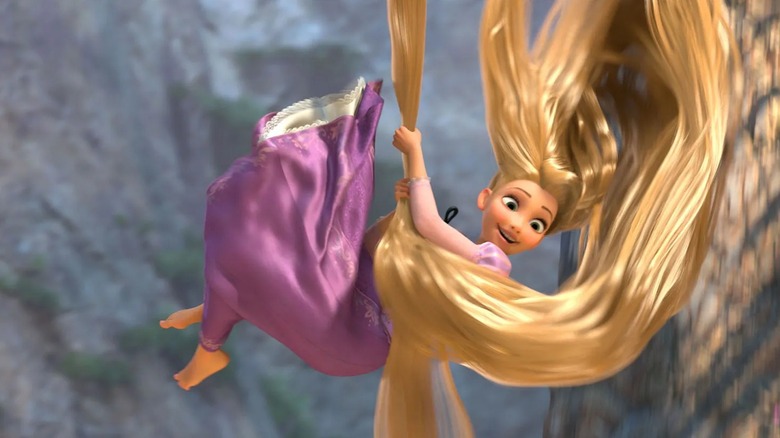
In March 2010, eight months before the next Walt Disney Animation Studios title was set to hit theaters, the Mouse House revealed that the then-forthcoming "Rapunzel" was undergoing a drastic title change. While past Disney fairy tales (like "Beauty and the Beast," "The Little Mermaid," and "Cinderella," among others) kept the names of their source material, "Rapunzel" would now be called "Tangled." This drastic alteration is a core facet of the untold truth of "Tangled." The immediately controversial move was perceived as perpetuating a gender-based bias against women-led movies. Former Disney Animation head John Lasseter later confirmed this title change was simply to ensure boys and men were more comfortable with seeing the production than they would be if it was titled "Rapunzel."
Considering "Moana" had a girl's name as its title and 45% of its opening weekend audience were men, it's clear that this marketing maneuver was deeply short-sighted and only reinforced toxic perceptions that women-centric projects can't appeal to all audiences. Equally as frustrating was that eschewing the naming conventions of classic Disney Animation Studios releases suggested "Tangled" was ashamed of being like "Aladdin" or "Sleeping Beauty." In reality, the film was a phenomenal fusion of classic and modern sensibilities, unafraid to deliver glorious and lusciously emotional musical numbers that could stand toe-to-toe with the best Disney ditties.
As a film, "Tangled" exuded confidence and precision in its creative aims. Unfortunately, this embarrassing title change only suggested uncertainty and remains one of the most egregious title changes ever.
1. A Princess of Mars to John Carter
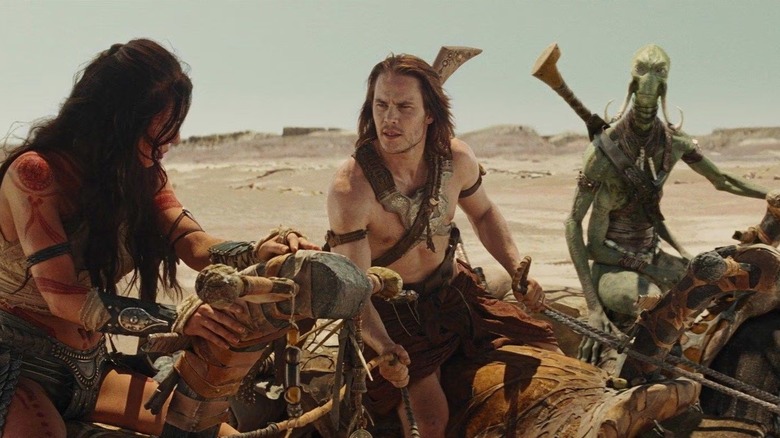
Speaking of early 2010s Disney movies that unwisely downgraded their titles, let's talk "John Carter." When the film's production got underway, director Andrew Stanton already changed its name from "A Princess of Mars" (the title of the Edgar Rice Burroughs novel it was based on) to "John Carter of Mars." They had to let audiences know that a man leads this movie, not an icky girl! However, 10 months before this production hit theaters, Disney abruptly shortened its name to just "John Carter." The moment this marketing tactic was announced, it was rightfully lambasted as ridiculous. After all, the new title meant absolutely nothing to the general public. John Carter was not a character name as pervasively popular as Peter Parker or Katniss Everdeen.
Apparently, Disney's in-house marketing team demanded the renaming after the March 2011 film "Mars Needs Moms" flopped, as well as concerns over the initial title alienating women moviegoers. To make matters more baffling, certain "John Carter" posters still kept the "JCM" acronym that now made no sense without the original title. Meanwhile, trailers and posters also refused to indicate to audiences that the story took place on Mars, further making "John Carter" impenetrable for casual moviegoers.
Once March 2012 rolled around and this film finally premiered, it's no surprise "John Carter" really flopped at the box office. Disney, in trying to make this book adaptation "more accessible," instead sealed its fate with a dismal new title that alienated Barsoom fanatics and newbies alike.