

5 Sci-Fi Movies That Are Way Better Than Any Star Trek Project
It's incredible to remember that Star Trek started life as a 1960s TV show. What was once just another primetime sci-fi program like "Lost in Space" captured people's imaginations so profoundly that it couldn't be stopped. Even after "Star Trek: The Original Series" ceased airing new episodes, its name kept getting attached to new projects, including all 14 "Star Trek" movies and a bevy of further TV programs. If you love this universe of Klingons and Captain's logs, then you're in luck. There's plenty of Star Trek material to go around, both on the big and small screens.
Star Trek itself might not be everyone's cup of tea, though. Certain Trek projects have not gone over super well either with critics or audiences. Considering this, it's not surprising that, even with six decades of storytelling, no piece of Trek media can live up to some motion pictures. Specifically, there are five sci-fi movies that stand out as being superior to every production that's carried the Star Trek brand name.
These five features don't just reflect incredible artistic achievements. Taken together with the Trek legacy, they all encapsulate how varied sci-fi storytelling can be. These kinds of sagas can look and feel like anything. That's an exciting truth these five sci-fi movies, all of them way better than any Star Trek project, embody in enthralling fashions.
Stalker
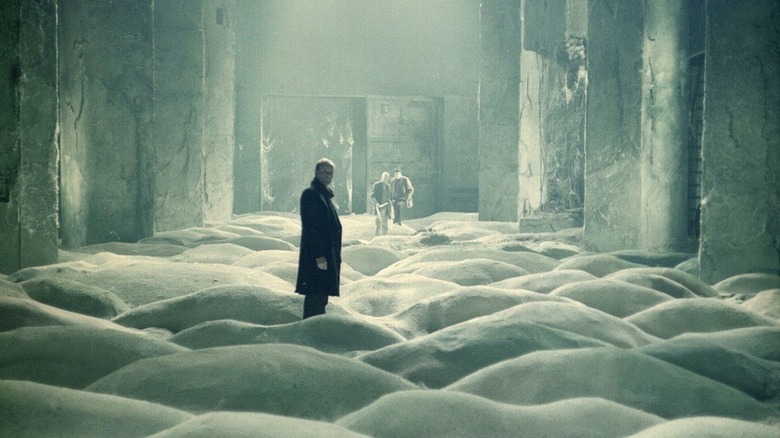
Star Trek provides an optimistic vision of sci-fi storytelling. Their tales offer much-needed doses of hope that, in the future, humans will put aside their intolerances. Sometimes, though, you need not just grim sci-fi but outright bleak detours. Leave it to director Andrei Tarkovsky to deliver one of the most haunting slow-burn sci-fi movies ever with "Stalker." This motion picture (based loosely on "Roadside Picnic" by the Strugatsky Brothers) follows the titular Stalker (Alexander Kaidanovsky), the Writer (Anatoli Solonitsyn) and the Professor (Nikolai Grinko) all traveling into The Zone, a forbidden terrain where anything is possible. As lonely and lovely to behold as the real life Exclusion Zone still surrounding Chernobyl, "Stalker" preceded the nuclear disaster by seven years.
Like future TV masterpiece "Hannibal," Tarkovsky and company make the ominous incredibly beautiful in "Stalker." The land comprising The Zone is made up of bright and inviting hues, while the "real world" beyond is shaded in dull colors. The Zone is full of danger, yet it's also so luscious that it's easy to see why folks like The Stalker would be tempted to venture into its maw. Danger, though, is always present within The Zone, as exemplified by the superb trio of lead performances that depict each of their characters slowly crumbling the longer they stay in this realm.
The otherworldly sci-fi machinations at play in The Zone offer a haunting backdrop for a film rich with apocalyptic dread and evocative imagery. There is no easy joy here, just raw confrontation with the existentialism plaguing countless souls. In "Stalker," sci-fi storytelling highlights rather than distracts from realistic turmoil.
Arrival
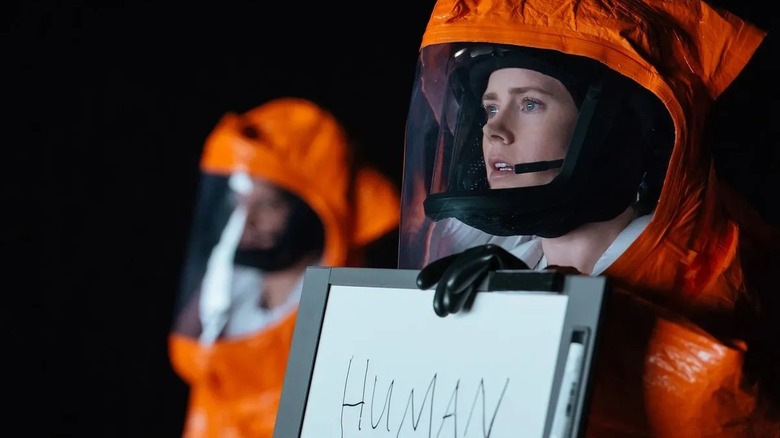
Many of the best episodes of "Star Trek: The Original Series" or the greatest hours of "Star Trek: The Next Generation" weren't about relentless action. Instead, they used sci-fi storytelling to provide interesting yarns about what could be in store when humanity and the galaxy collide. Fusions of disparate cultures would be springboards for exploring how human beings function when meeting the truly new. Carrying on this tradition of meditative sci-fi sagas is 2016's "Arrival," which translates the first contact experience into motion pictures better than any Star Trek tale.
"Arrival" is about a linguistics professor, Dr. Louise Banks (Amy Adams), being tasked with figuring out how to create communication between humans and newly arrived (hence the title) gigantic aliens. It's a motion picture about connectivity between individuals you'd think could never unite, a concept that underpins so much of Star Trek. Resorting to violence in "Arrival" (as one scared character does) only creates further problems, not solutions. Instead, it's all about how careful communication, vulnerability, and connecting with others will save the world.
Even with the towering scale of its alien creatures, "Arrival" never loses track of its human characters and their struggles. That balance of sci-fi and down-to-Earth impulses doesn't just make Star Trek proud. The excellent "Arrival" surpasses the franchise at its own game.
The Thing
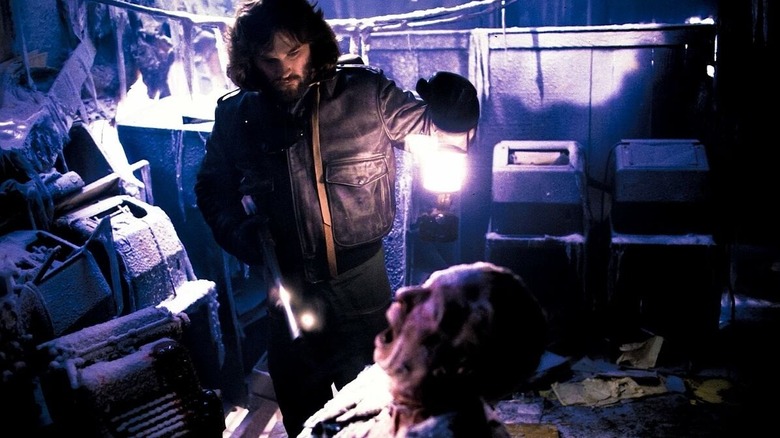
If "Arrival" refined the Star Trek thought process of using sci-fi storytelling to posit a hopeful narrative about human and alien worlds colliding, John Carpenter's 1982 masterpiece "The Thing" went in a tonally opposing direction when chronicling a shape-shifting cosmic creature infiltrating an Arctic research base. While Vulcans and humans get along, "The Thing" shows us in deadly conflict with an alien being. Meanwhile, these extraordinary circumstances don't suddenly make every "The Thing" character unite in the face of conflict. They're untrustworthy of each other, convinced that any one of them could be the alien in disguise.
Like the best Star Trek properties, though, "The Thing" has sharp social commentary on its mind. Among the concepts "The Thing" quietly depicts is the chipping away at the classical machismo archetype as a default savior figure. The arctic research base at the center of "The Thing" is exclusively full of men (once an unfortunate truth, now no longer the case), all of whom look and initially act like traditional masculine movie heroes. When the alien starts picking people off, though, they turn on each other rather than magically saving the day.
"The Thing," in other words, use sci-fi trappings to obliterate the idea of men innately being more equipped for conflict and heroism. It's one of many thoughtful and compelling elements informing why this chilling (literally) feature is considered the best sci-fi horror movie of all time.
Everything Everywhere All at Once
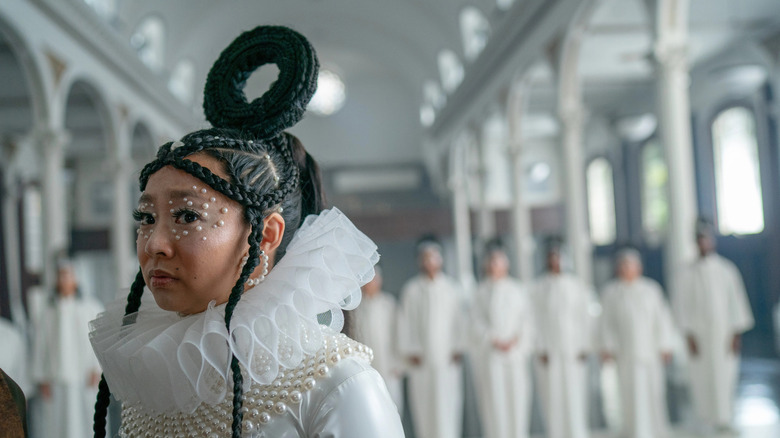
Throughout Star Trek history, the Mirror Universe has allowed for unique versions of familiar characters and multiverse shenanigans. While several Mirror Universe adventures have proven popular, none of them can hope to compare to the greatest live-action multiverse movie: "Everything Everywhere All at Once." After directing the 2016 indie film "Swiss Army Man" and multiple music videos, the directorial duo Daniels got a bigger budget with "All at Once" to let their imaginations run wild. The result was a moving creation full of creativity, silliness, and raw pathos.
Filtering the saga of Evelyn Wang (Michelle Yeoh) discovering her ability to navigate various powers across the multiverse through such an expansive tone doesn't just ensure that the Daniels can explore every potential corner of their high-concept premise. It's also an inspired way of channeling the complex and sometimes paradoxical emotions dominating both everyday existence and complicated familial relationships. Like so many great sci-fi yarns, "Everything Everywhere All at Once" uses the absurd to evoke reality. This intricate aesthetic allows performers like Michelle Yeoh, Ke Huy Quan, and Stephanie Hsu to deliver all time great performances.
So many multiverse stories are hollow fan service and regurgitations of the past. "Everything Everywhere All at Once," meanwhile, uses the concept behind the Mirror Universe for its totally unique and singular triumphs.
Nirvanna the Band the Show the Movie
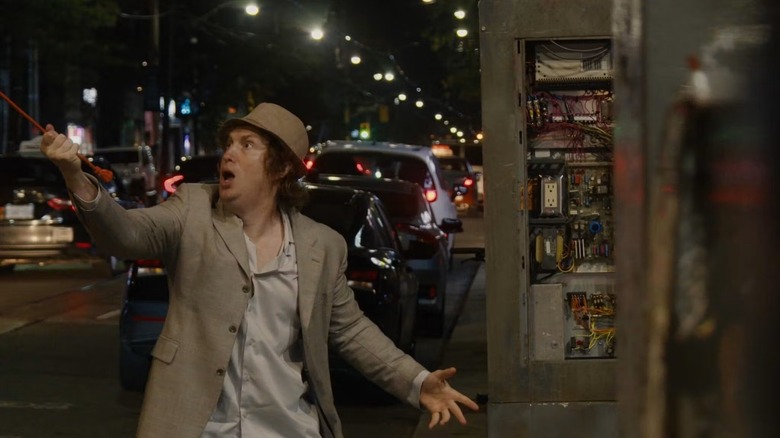
In 1989, the Star Trek saga engaged in its wackiest adventure when the crew of the Enterprise went back in time to 20th century San Francisco in order to procure humpback whales for the high-concept "Star Trek IV: The Voyage Home." Though many consider it to be one of the best time travel movies of all time, amongst time travel comedies, this and every other Trek project must bow before the artistic might of two Canadian goofballs and their RV. "Nirvanna the Band the Show the Movie," one of the best movies of 2026, is a side-splitting modern classic.
This project follows Matt (Matthew Johnson) and Jay (Jay McCarrol) struggling to achieve their dream of performing a show at their local venue, Rivoli. In an attempt to make their dream a reality, they accidentally travel back in time to 2008. Even in the crowded pantheon of silly time travel comedies, writer/director Johnson (who penned the script with McCarrol) makes the concept of doofuses messing around with time feel brand-new. Jokes about jumping from enormous heights or black-and-white flashbacks that suddenly add in new dialogue to previously seen sequences are just some of the ways "Nirvana" inspires massive belly laughs.
There's no shortage of amusing lines or clever filmmaking tricks scattered throughout this magnificently humorous flick. With apologies to the Enterprise crew, "Nirvana the Band the Show the Movie" is easily the champion of time travel comedies.