

5 Most Realistic Disaster Movies Of All Time
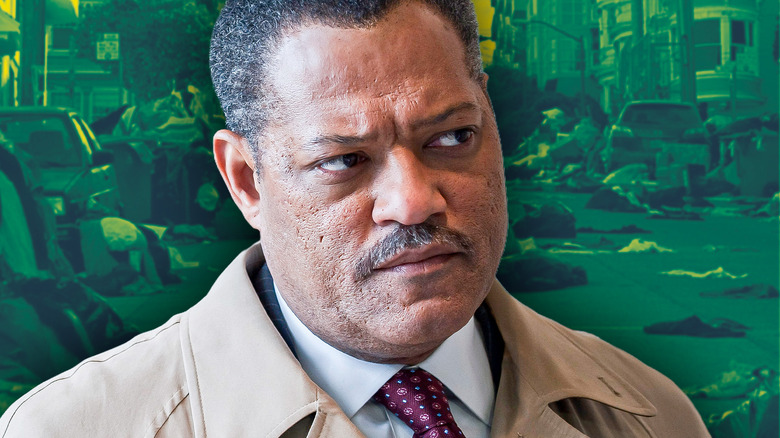
Suspending disbelief comes with the territory of watching a disaster movie. As much as we want to invest in the intense, high-stakes drama, part of us also wants to be reassured that nothing onscreen could ever happen –- we've got enough to worry about before considering how the world could suddenly end. However, sometimes morbid curiosity gets the better of us and we want to embrace the doom and gloom of a scientifically accurate disaster flick. The five movies below may all take narrative liberties, but they're well-researched enough to give us sleepless nights.
To narrow down this list, we excluded any movies based on real events. Films like "Apollo 13" have a natural advantage when it comes to depicting the facts, and we want to focus more on titles which have best reflected our own apocalyptic anxieties. These films have worked with experts and researchers to get a valid perspective on the worst possible scenarios, as well as older works which have proven to be true thanks to dark real world events in the years since they first released.
The odds of many of these events happening are low, but you'll never know when you need to prepare for the worst, just in case ...
Dante's Peak
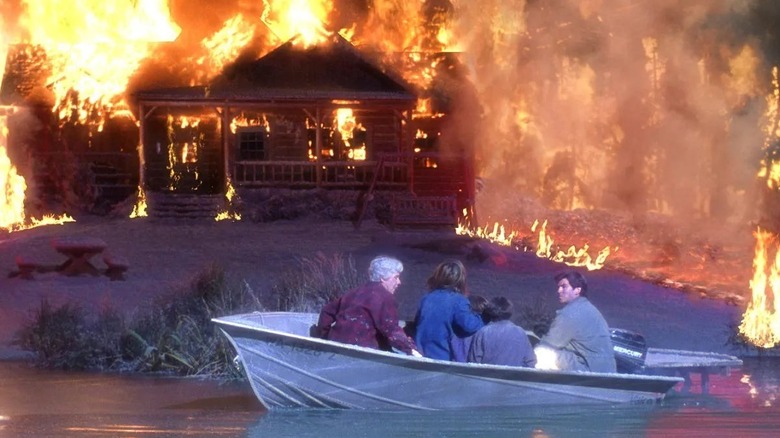
If you've assumed that the 1997 Pierce Brosnan action vehicle "Dante's Peak" was scientifically inaccurate, then prepare to be shocked. Volcanologists and geologists alike have labeled it one of the most factually accurate disaster movies ever made. No, we can't believe it either.
Producers hired three retired volcanologists from the U.S. Geological Survey as consultants in its earliest stages, with the filmmakers wanting their thrills based in sound scientific fact. The initial responses from experts watching their efforts was a lot more pedantic, with some interviewed by the Los Angeles Times in 1997 complaining about the narrative license you expect a movie like this to take; compressed timelines and unrealistic set pieces being the top complaints.
As competing blockbusters were pushing the limits of visual effects during the late 1990s, the silliest scenes now play out like an attempt to create the most photorealistic disaster movie spectacle that was possible using the era's technology. It's important context for the film, which in recent years, has been reassessed as being more scientifically accurate than it was initially given credit for.
The first experts surveyed were reluctant to praise anything but the real-life dynamics between Geological Survey employees and the realistic dialogue. Now, Harvard papers have been written about what the film can teach emergency responders and policy makers, citing several real-life disasters where officials ignored warning signs similar to the movie. Who'd have thought "Dante's Peak" was a movie that governments need to study closely?
Greenland
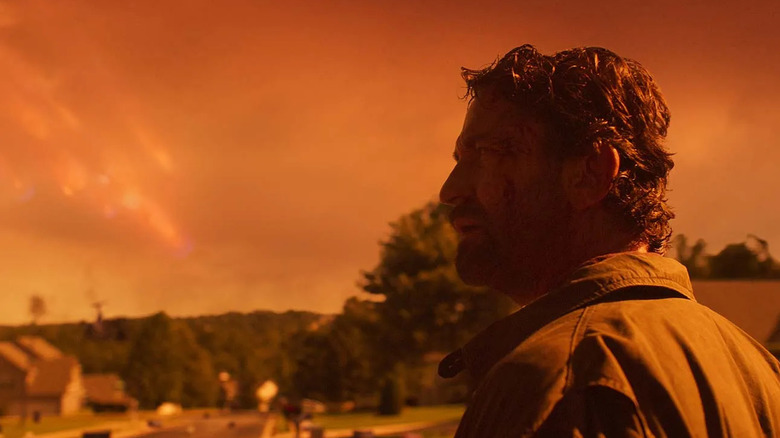
You don't go into a Gerard Butler movie expecting anything in the way of scientific accuracy, especially one where the action star must protect his family from a comet hurtling towards Earth. This is why it may surprise you that the science of "Greenland" is scarily far truer than appears, although experts have reassured us that there is little chance of humanity's extinction being caused by a rogue comet anytime soon.
The dark what-if scenario of director Ric Roman Waugh's movie imagines a planet killing comet from another solar system entering ours without warning, which NASA would be able to track, and there are no indications of happening within our lifetimes. Setting aside the far-fetched deus ex machina that leads Butler's John Garrity to race to a military bunker in Greenland with his family, and you'll find a movie that has put in the research.
Waugh worked with NASA scientists at the Jet Propulsion Laboratory to ensure the factual details about a comet's impact on Earth were correct, looking at the historical case study from 65 million years ago –- when the dinosaurs were wiped out by one –- to ground the story. However, what makes "Greenland" feel eerily realistic isn't the amount of time dedicated to research, but the family's dynamic as they prepare for the unthinkable.
Released during COVID, when tales of mass deaths and shortages of essential supplies became recurring headlines, the movie uncomfortably echoed several aspects of pandemic-era life, but it didn't need those uncanny similarities to feel believable.
Twister
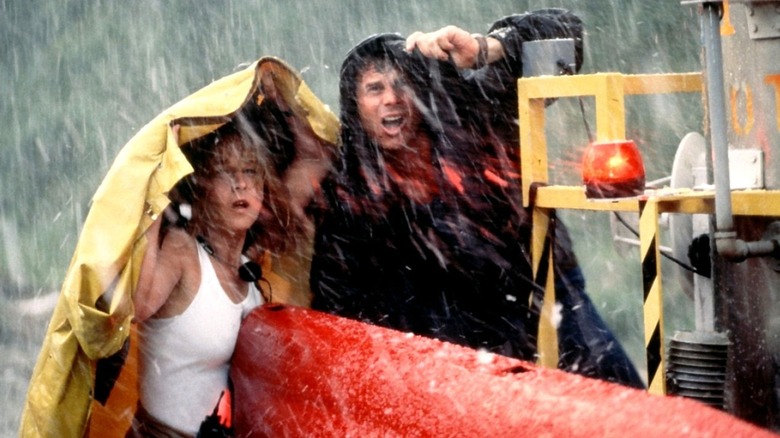
No, scientists don't drive directly into tornadoes, and we can't even begin to outline the impracticality of deploying the Dorothy sensor to measure tornadoes from the inside (naturally, researchers drop devices on the ground several hours before impact). Those are the exciting, high-stake inventions that transform "Twister" from a realistic scientific account into a fun summer blockbuster, and we wouldn't have it any other way.
While it's far from a true story, director Jan de Bont's movie is a lot more fact-driven than you'd expect. Even the Dorothy device, which is used far more carelessly than any real research team would, is inspired by a real machine with its own "Wizard of Oz" inspired nickname: the Totable Tornado Observatory, or TOTO.
While "Twister" goes a lot more over-the-top, screenwriters Michael Crichton and Anne-Marie Martin have clearly done their reading, with the script holding up to scrutiny in a way many of its action sequences can't. Characters frequently speak using meteorologically accurate jargon, and much of the technology used reflects the limitations of tornado tracking during the 1990s like the GOES-8 weather satellite.
Most importantly, the movie's funniest scene is also scientifically accurate: the cow swept up in a tornado. Visual effects supervisor Stefen Fangmeier was inspired by several real headlines, although it's not something that can happen with any gust of wind -– you'd need an estimated wind speed of 200-225 miles per hour before the average sized cow can get blown away with a tornado.
The Wave
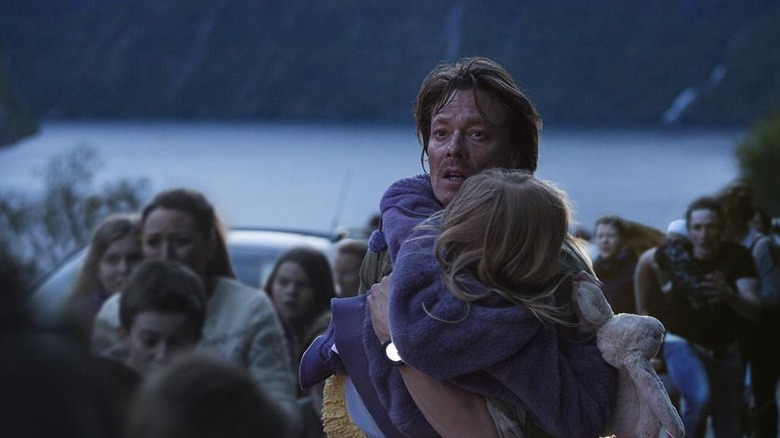
Regarded as one of the more authentic disaster movies, this 2015 Norwegian effort translates Hollywood spectacle to Scandinavia, but doesn't forget the science many American filmmakers trade for cheap thrills. The disaster in question here is a plausible one; a collapse at the Åkerneset crevice, an unstable mountainside in western Norway monitored by scientists due to the catastrophic effects that would follow. Experts expect that this will inevitably happen, with the crevice growing by seven centimeters a year, which would eventually mean collapsing into the fjord below and triggering a megatsunami that would displace those in nearby towns and villages.
"The Wave" may be a lower budget production but shares the genre's penchant for speeding up the timeline so its characters can face maximum devastation. In real life, a collapse of the mountain would take place over several stages, allowing enough time for residents to evacuate –- even with that taken into consideration, the procedural narrative that unfolds accurately details how the fallout would happen, just on a much quicker timeframe.
To increase the stakes further, "The Wave" opens with title cards outlining similar natural disasters in Norway in 1905 and 1934, the former of which killed over 60 people. The events of director Roar Uthaug's movie may be exaggerated, but they're grounded in historical precedent, with those case studies -– and the preventative measures taken to stop a repeat –- helping keep the movie grounded as it pivots further towards spectacle in the third act.
Contagion
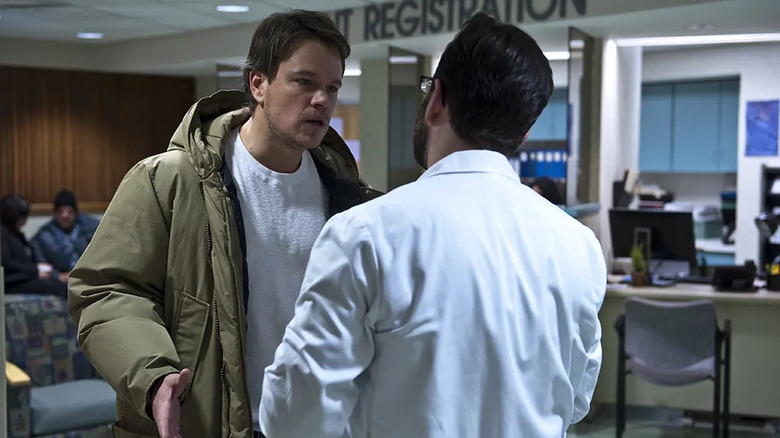
We don't need to linger on how Steven Soderbergh's "Contagion" became the most realistic disaster movie of all time –- we all lived through it. Although it was hardly the most reassuring watch during the COVID pandemic, when an A-list tale of a virus with a 30% mortality rate accelerated many of our worst anxieties, people still couldn't help but watch it. Now, the distance we have gives us better appreciation for screenwriter Scott Z. Burns' accurate predictions.
The origins of the virus and how it was transmitted were nearly identical to COVID, and the organized responses of the CDC and WHO –- who quickly initiated contract tracing and quarantine protocols –- mirrored the steps quickly taken to curb the spread. As with all the disaster movies above, the only thing different was the timeline; we had to wait much longer to get our vaccinations.
Another thing Burns' screenplay accurately predicted was the rapid spread of online misinformation, with an anti-establishment grifter (Jude Law) claiming to have his own miracle cure. Of course, "Contagion" suggests someone like this would get their comeuppance; if anything, our post-pandemic reality has only given these anti-science charlatans more of a platform, as well as a foothold in dictating public health policy. It only took six years from the real pandemic for "Contagion" to suddenly appear to have a much happier ending despite a bigger death toll –- maybe it's still too soon to revisit it, even if it's one of the best disaster movies of the 21st century.