

5 Best Horror Movies Of The '70s, Ranked
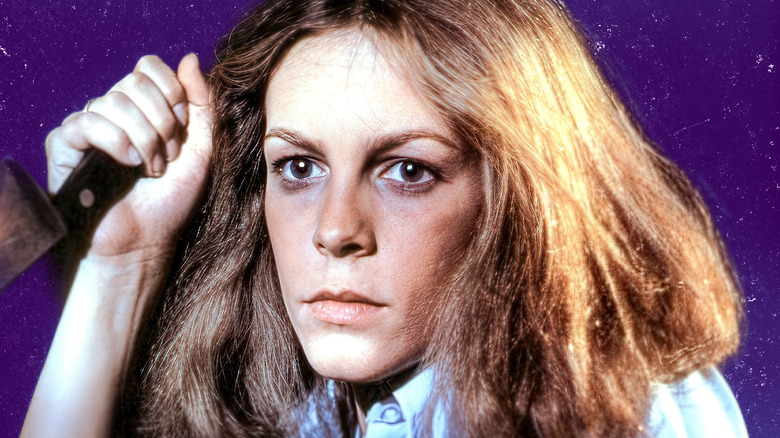
Throughout the 1970s, the horror genre exploded in popularity. The New Hollywood era of gritty, adult-oriented stories that was dominant in the opening half of the decade, thanks to filmmakers like Francis Ford Coppola and Martin Scorsese, was mirrored in the rise of more explicitly violent, experimental and often downbeat frightfests that were miles from resembling the typical monster movie. The dawn of the summer blockbuster era saw just as many influential works made for a mass audience as there were independent films, pushing the genre further into uncharted territory as the slasher film broke into the mainstream consciousness.
There are countless masterpieces from the decade that would be worthy of inclusion, and narrowing this list to just five defining titles was no easy task. To make our selections, we first aimed to capture a broader mix of movies to better reflect the defining trends of the 1970s in horror, and with those in mind, hand-picked what we believed to be the most enduring, measuring their ongoing influence on the genre alongside their average ratings from cinephiles on IMDb and Letterboxd to ensure they all remain widely beloved.
It was a rich period for the genre, which is as apparent from the number of stone-cold classics that missed the cut as it is from the top five itself. However, these are the movies which we feel continue to stand above the rest. These are the films that we believe still resonate to this day, and they're every bit as terrifying as when they first premiered.
5. Don't Look Now
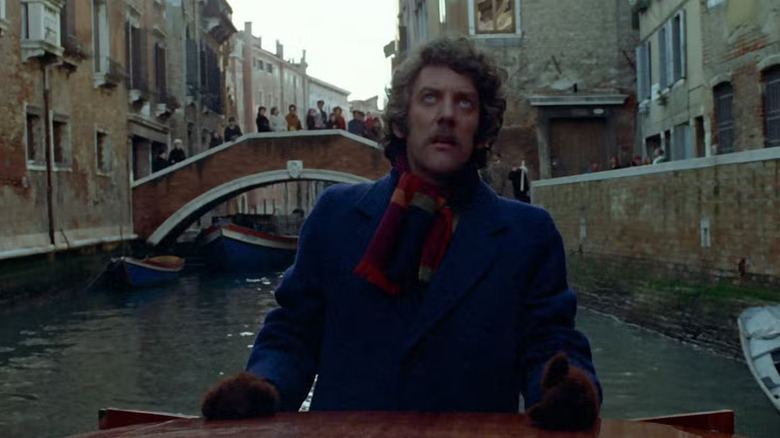
The 1970s were a breakthrough decade for Italy on the global horror scene, with the sleazy giallo genre making waves thanks to bloody thrillers from directors like Dario Argento. The visceral thrills of those couldn't be further removed from the grief-stricken horrors in the most famous Italian-set shocker of the decade, director Nicolas Roeg's psychological chiller "Don't Look Now." Set in Venice, where grieving parents John and Laura (Donald Sutherland and Julie Christie) have moved in the wake of their daughter's death after John accepted a job to renovate a church, the movie charts their sorrow and paranoia after a blind psychic says that she can see their daughter, and that she's telling them to leave the city.
Even to a modern horror audience, who have been inundated with movies that serve as heavy-handed metaphors about grief and trauma in recent years, "Don't Look Now" still feels like an original, twisting the tropes of a ghost story to highlight the different ways the couple remain haunted by family tragedy. Roeg and editor Graeme Clifford utilized experimental editing techniques – with flashbacks and flashforwards uncannily mingling with our perception of the present — to heighten the sense of otherworldly dread, as well as effectively capturing how the raw wounds of grief can leave you feeling unmoored from time and the wider world.
Being set against the backdrop of a serial killer rampaging through the city pushes the theme of grief and disconnection even further, perfectly blending the probing character study with the macabre chills of a gothic ghost story far better than any "elevated" art horror that came after it. You can see its influence all over the modern genre, and you rarely see it equaled.
4. Halloween
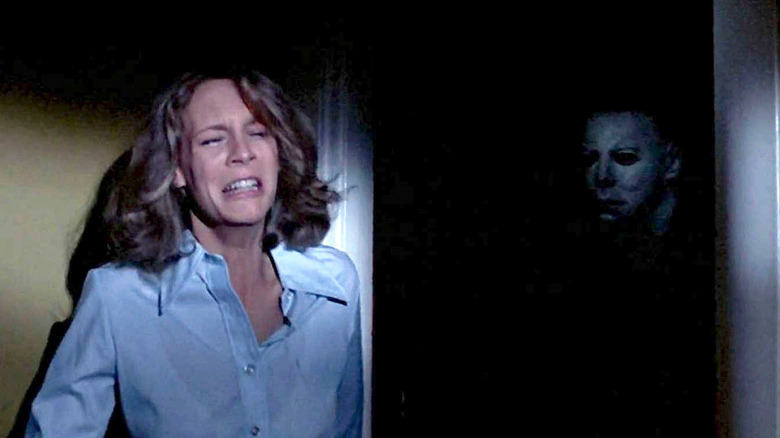
The slasher genre was still finding its feet in the late 1970s, as a new generation of filmmakers inspired by "Psycho" and the Italian giallo genre started delivering their own twisted takes on the serial killer thriller. Arriving a few years after "Black Christmas" served as a proof-of-concept for the genre, John Carpenter's "Halloween" built on its bloody potential in how it distinguished the slasher from what came before. Previously, you'd have to go to remote haunted houses, cabins deep in the woods, or towns way off the beaten path to face your fears; in a slasher, that threat has arrived in the quaint suburbs, stalking your street and breaking into your home.
Michael Myers may be a mental hospital escapee with a personal connection to babysitter Laurie Strode (Jamie Lee Curtis), but the idea that an unremarkable suburb could be the location for a killing spree overshadows the story's specificity: no theme in horror is more effective than the suggestion we're not safe in our own homes. Carpenter's movie is one of the most beloved slashers of all time, its masked killer arguably the genre's most terrifying, and yet it still feels a world apart from the genre it helped create.
In the early 1980s, filmmakers began to incorporate bloodier, more explicit kills, increasing the depiction of sexuality to the point it became crucial to the rules of who survives the longest. "Halloween" is comparatively restrained next to those, and received the critical acclaim the genre never did, with several reviewers likening Carpenter to Alfred Hitchcock – the ultimate compliment for a movie inspired by Norman Bates' reign of terror.
3. The Exorcist
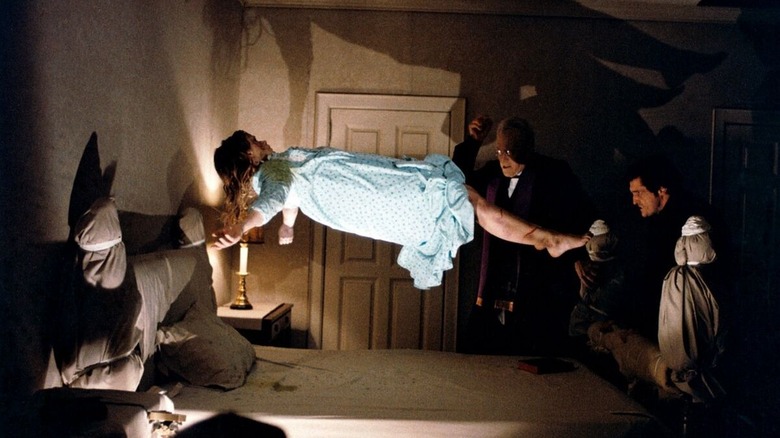
We didn't need the power of Christ to compel us to include "The Exorcist" in our countdown, as director William Friedkin's film already has a spot in history for being the first horror movie to get a best picture nomination at the Oscars, a rare correct call from the Academy. Adapted by screenwriter William Peter Blatty from his 1971 novel of the same name, the supernatural shocker drew in audiences who would usually be repelled by the genre. That's not just thanks to the exploration of religion at the surface, but for the rich social allegories that made it difficult to place on the political spectrum.
To some, the devil arriving in an all-American family home represented the rot of Vietnam and Watergate; to others, the devil taking hold of Regan (Linda Blair) represented how social justice movements were corrupting the nation's youth. It managed to speak to its era due to the way it got under the skin of vastly different audience members.
The other reason "The Exorcist" was such a watershed moment for horror was because it featured gross-out spectacle so intense and explicit, reports of people passing out and throwing up in theaters became common. There's a lot more to Friedkin's film than bright green vomit and unusual uses of a crucifix, but it was those sequences that generated the most controversy. Looking back at it now, the scandalous nature of those scenes on an unprepared audience were likely just cited by viewers left confused and shaken by the more subtle ways an occult horror managed to get under their skin.
2. The Texas Chain Saw Massacre
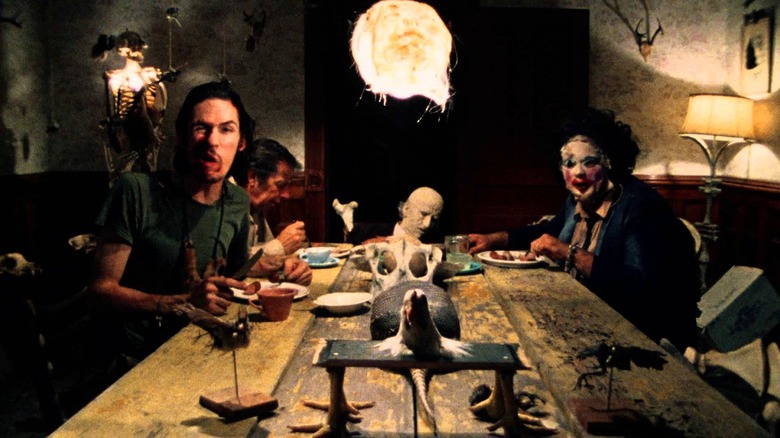
One of the funniest horror facts is director Tobe Hooper deliberately attempting to minimize the gore in "The Texas Chain Saw Massacre" to get a PG rating from the MPAA, only to be granted an X rating, while several other countries banned it outright. When it comes to creating and sustaining an unsettling atmosphere, "The Texas Chain Saw Massacre" hasn't aged a single day, and very few of the slasher movies it went onto inspire have captured the same sense of lingering dread that makes it far more impactful than the typical serial killer bloodbath. Like the most influential genre titles of this era, it's lingered in the cultural consciousness as much for its social allegory as its groundbreaking brutality, with the movie not hiding its satirical intentions every time it depicts Leatherface and the Sawyers as an all-American family unit.
Subsequent movies, including Hooper's own campy sequel in the late 1980s, pushed this in a more comic direction, but here he weaponizes the idea to curdle the very idea of Americana. His movie brought to life the horrors that lived under the surface of the US, even going as far to open the movie with the disclaimer that it was based on a true story to heighten its social commentary on the country's moral corruption. Of course, those themes lay beneath the surface of a movie that was already viscerally effective at face value, but they're crucial to why this low-budget exploitation movie has stood the test of time. It's a vision of American life seen through a cracked mirror, all the rot, decay and brutality brought to the surface — no wonder it's aged perfectly.
1. Jaws
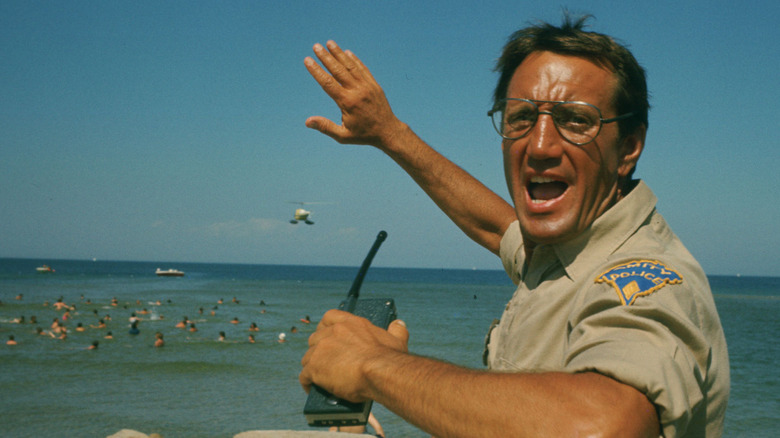
It may be the movie that made millions terrified to go in the water, but it now seems a little odd to refer to Steven Spielberg's mainstream breakthrough as a pure horror movie. Next to the exploits of Leatherface and Michael Myers, this tale of a shark terrorizing the residents of Amity Island seems comparatively quaint, and the fact it spawned the summer blockbuster as we know it puts it in a different league to the hyper-violent, low-budget shockers that dominated the genre in the '70s. But "Jaws" remains a masterclass in horror because of its restraint, keeping its aquatic villain at arm's length even though it remains a consistent threat, becoming even more terrifying due to how sparingly Spielberg shows its fin nearing the coast.
Infamously, this was because of budgetary constraints and a shark prop that wouldn't stop malfunctioning, but the wunderkind director transformed those setbacks into one of his movie's most enduring strengths, especially in the second half. There, the movie grows increasingly tense and paranoid as the three leads are trapped in the claustrophobic confines of the Orca II, edging further into infested territory.
Hot on the heels of "The Exorcist" becoming a box office and Oscar sensation a couple of years earlier, "Jaws" brought in even more viewers that would typically be allergic to the genre's high intensity, and the characters at the core of the story are crucial to why. They're not typical horror heroes, or even archetypal adventure movie leads. Through them, a vintage creature feature story was grounded in the everyday, allowing audiences to believe that a real threat could be lurking under the surface.