

Primetime True Story Explained: What The Movie Changes About To Catch A Predator

This article contains spoilers for "Primetime"
Lance Oppenheim's "Primetime" isn't your usual biographical drama. In the film's press materials, the director himself calls it "more of a fever dream than a conventional biopic," and he's not wrong. Highly stylized and deeply unsettling, the film is more about the cultural imprint of Chris Hansen's "To Catch a Predator" than it is about the true history of the show itself. If you're too young to have caught the NBC series in its day, or your memory is as blurry as those mid-2000s hidden camera feeds, you may not realize just how much of the new movie is altered or directly fictionalized from the true story.
That doesn't mean "Primetime" is lying to you. It truncates the timeline and synthesizes some original characters in the hope of revealing some deeper truths about "To Catch a Predator." In A24's own words, the film is a "media collage," told as a "heightened, hallucinatory portrait of a man attempting to do good while turning justice into entertainment." The film also cites the 2007 Esquire article "Tonight on Dateline This Man Will Die," written by Luke Dittrich, as its primary source, and there are many details shared by both.
There's a lot of truth in the film, and a fair amount of fiction. Let's get into it.
Primetime invents a major new character for dramatic effect

Let's start with one of the biggest inventions for "Primetime" — Andie Bender (Merritt Wever), the lead producer on "To Catch a Predator." Of the many producers and assistant producers for "To Catch a Predator", the two closest to Andie's apparent role are executive producer David Corvo, who worked for many years on "Dateline NBC," and field producer Donna Griffo-Johnson. The character created for the film is more of an amalgam of its themes, channeled through Wever's fantastic performance.
Is it unreasonable to think that similar conversations as those had between Hansen and Bender in the film could have happened in reality? Not at all. As evidenced by its title, "Primetime" is primarily about the inherent tension of "Predator" as a self-proclaimed tool of justice and ratings juggernaut. "There used to be a pillory in every civilized town, and now there's a television in every home," Robert Pattinson's Hansen says at one point, hitting the proverbial nail directly on the head. In the film's press notes, Oppenheim says that he was "very interested in the human drama so many producers behind hit shows experience."
Andie's dramatized role as a more grounded, heartless foil to Hansen's unsettling zeal is one of the film's main pillars, and it works in conveying both the changing landscape of television at the time and the larger cultural implications of the show's success. But was she a real person? Not really. Not in this way, at least.
Skyler Gisondo's Dan Plumb is based on a real person

While Andie Bender is more of a true invention, Dan Plumb (Skyler Gisondo) is based on Dan Schrack, who worked as a "decoy" on "To Catch a Predator." Now a news anchor and comedian, Schrack is credited in seven episodes, including the Fort Myers, Florida and Murphy, Texas installments that make up much of the movie. Schrack was the real decoy used in the sting operation to catch Rockwall County Assistant District Attorney Bill Conradt, whose suicide constitutes the climax of "Primetime."
Luke Dittrich's aforementioned 2007 Esquire article mentions Schrack throughout, including several details used for Gisondo's character. These include certain intonations in his decoy phone calls, his pay rate of $5,000 per shoot, and his biggest prior role being in a Toys "R" Us commercial. In more recent years, Schrack has said that his involvement leading to Conradt's death still weighs on him. "You could offer me $10 million to film that episode in Texas again," he told Entertainment Weekly in 2025. "I wouldn't take it. I would not take it and be happy about that decision."
Schrack is not credited on "Primetime," nor is he mentioned in any press materials. Despite the similarities, there's a reason that the film's "Decoy Dan" has a different last name. Like Andie, this Dan is extrapolated into much more thematic territory. Similarly, Phoebe Bridgers' Del is likely inspired by another real-life actor and decoy from the series, Del Harvey.
Primetime squeezes the timeline for dramatic effect
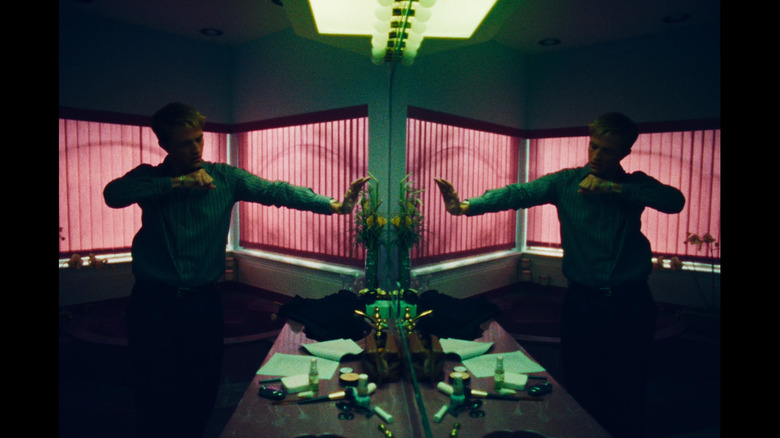
In addition to the liberties it takes with the actual people involved, "Primetime" also truncates the timeline of events covered by the film. "To Catch a Predator" in its original incarnation aired just 20 episodes between 2004 and 2007. The Fort Myers episodes aired in May of 2006, while the Murphy, Texas episodes aired almost a year later in February of 2007. The death of Bill Conradt occurred in the middle in November 2006, six months after the Florida episodes came out on NBC. The film smushes these events against each other for a more dramatic and efficient narrative, but the premise of Hansen subverting the regular shooting schedule to rush to Texas doesn't seem to have any factual basis.
Hansen's cheating scandal is also shifted up in time. The real National Enquirer story broke in 2011, years after "To Catch a Predator" had left the air. The film shows a repentant Hansen trying to end the affair, while the real report claims that the relationship was still ongoing at the time the tabloid made it public.
What really happened to Bill Conradt on To Catch a Predator?
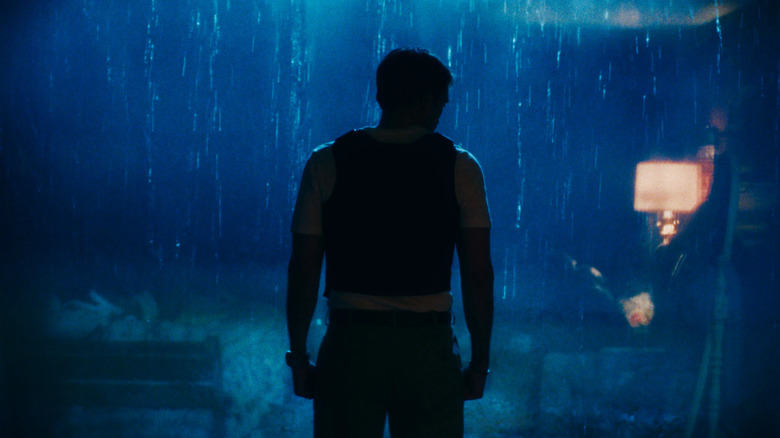
While "Primetime" openly plays fast and loose with details, its depiction of Bill Conradt's suicide is largely consistent with true events, though there are still some changes. According to the aforementioned Esquire story, the confrontation at Conradt's house began in the afternoon, and not in the middle of the night as depicted in the movie. The decision to bring in SWAT also occurred after a much smaller group of police and the NBC team failed to get a response at the front door. The broad strokes, however, are the same — a chaotic rush to Conradt's property after he doesn't show up to the sting house and agents of the show began to see him deleting his online presence, with heavy questioning afterward about the actual police procedure and influence of the "Predator" team.
The violent end result is also the same as well. Conradt's suicide birthed loads of controversy onto the show as its ethics were already being called into question. Conradt's sister sued the network for $105 million and settled out of court.
"Primetime" takes some other liberties in Texas, with invented chief of police Cortland Gunn (Bokeem Woodbine) taking the place of real Murphy County police chief Billy Myrick. While Dan Schrack was involved in the Conradt sting, he certainly wasn't singing "Rent" over the phone when SWAT entered.
How accurate is Robert Pattinson's Chris Hansen?

Robert Pattinson left critics stunned with his "Primetime" performance, but it's arguably more of an original character than a true impression. The real Hansen shared he was considering a lawsuit over the film during an appearance on The Dan Abrams Show, calling the whole thing "very exploitive," "sneaky," and "disingenuous." The film's self-aware blurring of reality and fiction is central to its identity, but it does complicate the truth of the story a bit.
Screenwriter Ajon Singh acknowledges the less-than-true nature of the film's Hansen in the press materials sent out by A24, saying, "We're playing with the depiction of Chris Hansen in modern culture and media — how he's become a meme — which is something Robert plays with in his dramatization and characterization of Hansen in his prime." Pattinson's producing partner Brighton McCloskey echoed the sentiment, claiming that "'Primetime' is derived from the meme trail and the mythology of Chris Hansen and the 20-year cultural legacy of the show."
Regardless of your feelings on it, this tension between myth, entertainment, and severe reality is what "Primetime" is all about. Uninterested in a light touch, and with an eye turned squarely on the audience, it is both demonstrative of the power of fiction and reverent of the very real culture tidal wave it depicts. The response to the balance it strikes will vary widely.