

5 Best Gary Cooper Movies That Aren't Westerns, Ranked
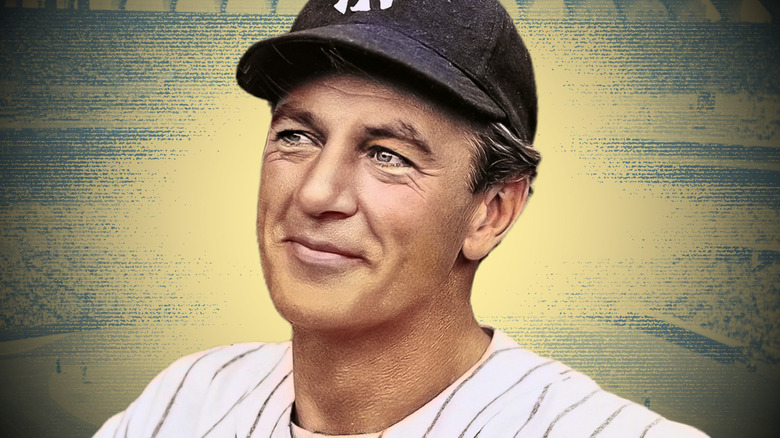
The best Gary Cooper Western movies loom large in pop culture for a reason. They're beloved motion pictures that continue to both influence new cinematic works and garner fans for their immense artistry. However, the only problem is that they sometimes overshadow the many other creative exploits Cooper did across his illustrious career. He didn't just put on spurs and ride horses in period pieces. Gary Cooper's filmography was vast and littered with all kinds of non-Western masterpieces.
Given how many decades Cooper worked as an esteemed actor, it can be overwhelming to know where to start regarding Cooper's non-Western exploits. Luckily, Letterboxd's five highest rated non-Western Gary Cooper movies provides a perfect launchpad to further explore this man's career. These five motion pictures (ranked below from "lowest" to highest average Letterboxd rating) are sublime explorations of what made Cooper so seminal in the eyes of audiences. However, they also demonstrate subtler nuances of his career, like the many genres and revered filmmakers he worked with.
Breaking down the qualities of Cooper's five most acclaimed non-Western films provides a vivid opportunity to savor what made this man such a legend. It isn't just his Westerns that made Gary Cooper unforgettable.
5. Beau Geste
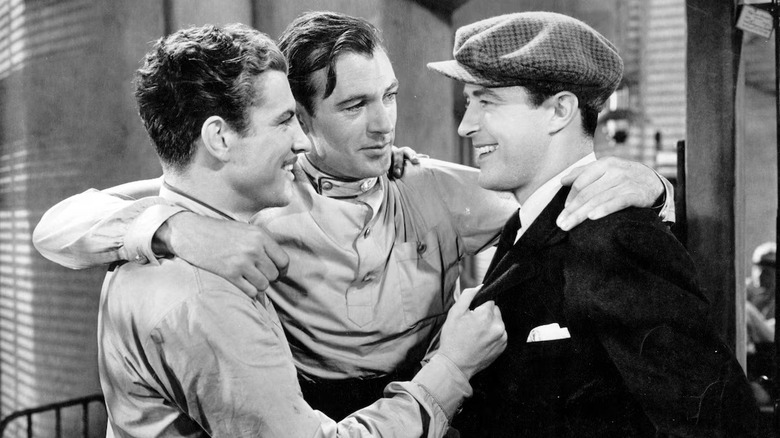
Gary Cooper, one of the actors with the most movies with a 100% Rotten Tomatoes score, has defined many of his most acclaimed movies as an older, experienced soul. This actor imbued titles like "High Noon" with a world-weary ambiance that was immediately believable even in his understated hands. For those used to Cooper's more seasoned roles, it's staggering to think of him under the age of 40, yet he was headlining plenty of films in this chapter of his life. One of these was the 1939 William A. Wellman directorial effort "Beau Geste," based on the 1924 P.C. Wren novel of the same name.
Gary Cooper played the titular lead, who joins up with his two brothers, John (Ray Milland) and Digby (Robert Preston), in the Foreign Legion, where they eventually have to protect a fort from enemy forces. "Beau Geste" has a 3.6 average rating on Letterboxd, a standing informed by positive reviews hailing Cooper's performance and its best pieces of spectacle. Some Letterboxd reviewers, though, do note that "Beau Geste" could've gone beyond being a fine piece of late '30s adventure cinema had it taken more creative risks.
Generally, though, the Letterboxd reviews for "Beau Geste" are a positive collection of write-ups, with special praise often reserved for the sterling execution of its most intense set pieces.
4. Meet John Doe
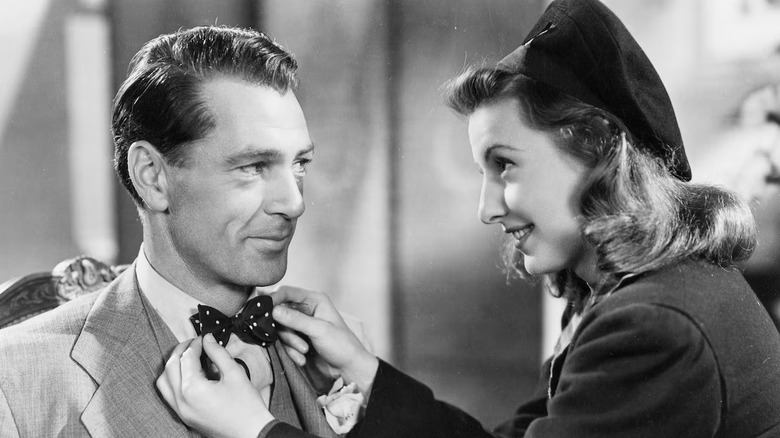
While director Frank Capra is most famous for his trio of Jimmy Stewart movies, the man behind George Bailey isn't the only performer Capra worked with multiple times. Five years after working together on "Mr. Deeds Goes to Town," Capra and Gary Cooper reunited for 1941's "Meet John Doe." Here, Cooper played washed-up baseball player Long John Willoughby, who's coerced by reporter Ann Mitchell (Barbara Stanwyck) to pose as the real-life version of a suicidal "John Doe" she invented for a story. Beyond the two seminal lead performers, "Meet John Doe" also had a killer supporting cast that included Edward Arnold, Walter Brennan, and Gene Lockhart, among others.
Capra's list of acclaimed works is longer than most directors' entire filmographies. Thus, it's no surprise that "Meet John Doe" sports a 3.7 average Letterboxd rating. Some of Letterboxd reviews do concede that "Meet John Doe" treads familiar narrative territory that Capra would better explore in titles like "It's a Wonderful Life," but most assessments simply gush over its effective comedy and strong lead performances. Stanwyck especially gets a deluge of shout-outs on Letterboxd for her commanding work.
The fact that "Meet John Doe" apparently still elicited tears from even some deeply cynical Letterboxd users is a testament to Capra's filmmaking skills. Chalk up another win for the united powers of Capra and Cooper.
3. Mr. Deeds Goes to Town
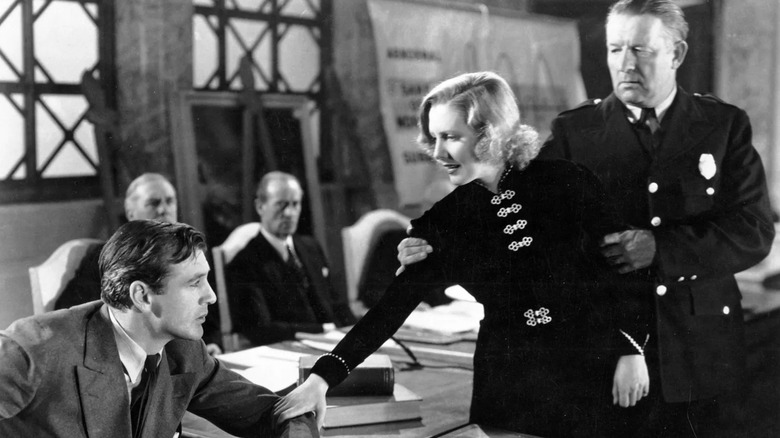
Decades before the Adam Sandler remake tore up the box office in summer 2002, Frank Capra's "Mr. Deeds Goes to Town" strutted onto the big screen, starring Gary Cooper as Longfellow Deeds. Cooper's character is an ordinary small town man who suddenly inherits a massive fortune from a deceased relative. Suddenly, he's living the ritzy life, further complicated when the cunning Babe Bennett (Jean Arthur) walks into his life. No amount of money can prepare Deeds for how she'll turn his world upside down.
One of Cooper's greatest abilities was not consuming an entire movie. He offered plenty of space for other performers to leave their mark. Thus, "Mr. Deeds Goes to Town" excels as a showcase for the effervescent Jean Arthur, one of the greatest actresses of all time. Her riveting work is a staple of the many positive reviews informing the 3.9 average Letterboxd rating for "Mr. Deeds Goes to Town." Many also appreciated the sincere and endearing persona Cooper wove for his character as well as Capra's deftness with executing moments of poignancy.
Both Cooper and Capra were deeply committed to feel-good cinema. That dearth of cynicism always served them well, but especially when it came to crafting "Mr. Deeds Goes to Town."
2. Design for Living
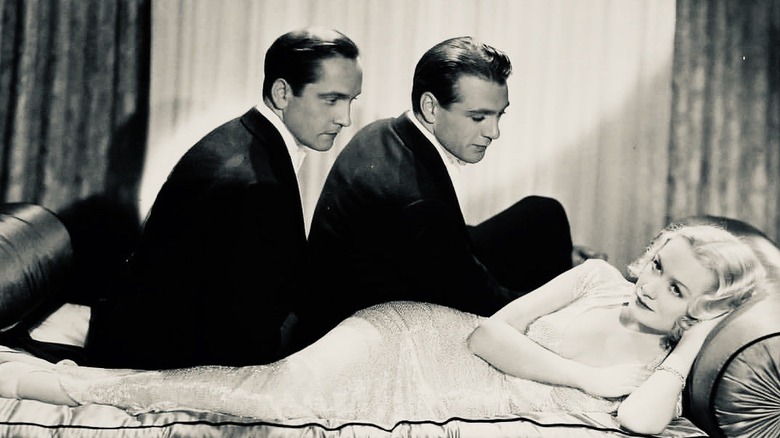
Director Ernst Lubitsch passed away in 1947, yet his films still inspire discussion and adulation to this very day. A master of comedies full of wit, heart, and richly engaging characters, Lubitsch crafted enduring classics like "To Be or Not to Be," "The Shop Around the Corner," and "Ninotchka." In his time behind the camera, Lubitsch worked with a murderer's row of tremendous performers, including Greta Garbo, Betty Grable, Marlene Dietrich, and Merle Oberon. The man responsible for many of the best comedy movies of all time scored a killer trio of lead performers for 1933's "Design for Living:" Gary Cooper, Fredric March, and Miriam Hopkins.
These seminal performers portrayed a classic love triangle, though the twist here is that, eventually, the quarreling between the two male leads results in the trio attempting to live together. One of Lubitsch's last works before the Hays Code swooped in to restrict what could appear in American movies, "Design for Living" had a bold premise that inspired rich laughs and performances.
The 3.9 average Letterboxd rating stems from users praising the central characters as one of the best love triangles in movies. Having actors like Gary Cooper under the direction of Lubitsch inevitably produced some cinema magic.
1. Ball of Fire
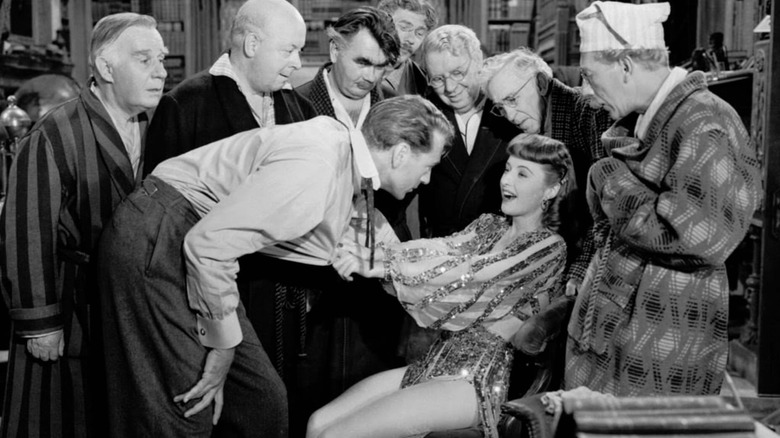
Screwball comedies such as "Bringing Up Baby" often pitted buttoned-up men against larger-than-life gals with externalized personalities. If any vintage leading man was primed for screwball madness, it was Gary Cooper. His subdued but authoritative personality was great for dramas like "High Noon" where he had to portray deeply experienced, tormented characters. However, in the hands of a genius like director Howard Hawks, Cooper was the perfect foil to a comedic leading lady.
Thus, Gary Cooper led "Ball of Fire" as Professor Bertram Potts, an encyclopedia writer seeking to become more knowledgeable about then-modern slang. When he encounters "Sugarpuss" O'Shea (Barbara Stanwyck) and her mastery of hip verbiage, the two develop a connection despite O'Shea being a fugitive, unbeknownst to Potts. Cooper and Stanwyck, fixtures of some of the best movies of all time, are reliably superb in "Ball of Fire," which has a 4.0 average Letterboxd rating. Hawks and company imbued this feature with enough killer gags and performances to win over even the most cynical Letterboxd user.
Many Letterboxd reviews hailed Cooper's skillful navigation of the film's distinctive brand of comedy. He may not be somebody automatically associated with the genre, but Gary Cooper delivered the yuks in "Ball of Fire."