

5 Most Historically Accurate Space Movies, Ranked
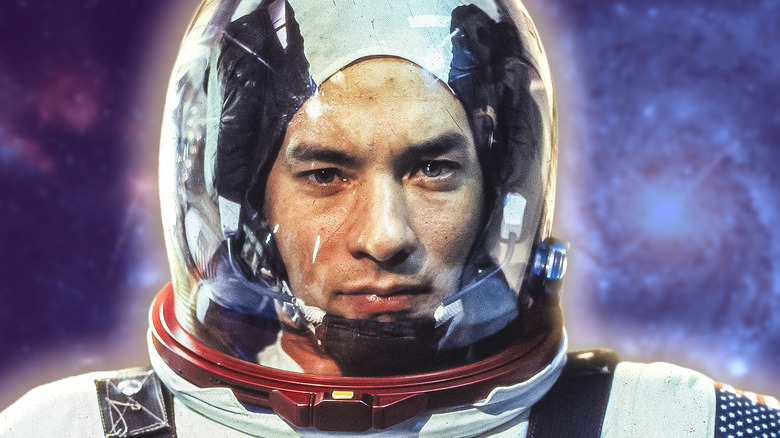
There aren't many space movies which you could describe as historically accurate. Filmmakers operating in the science-fiction genre often collaborate with experts to ensure their concepts have some grounding in fact, but by design, they are more theoretical than realistic — there is so much out there in the universe that we've yet to discover. That's why we're looking back through the history of NASA and the space race to count down the films that are truest to mankind's missions to the stars.
The following five movies spend more time grounded on Earth than on intergalactic missions, but draw heavily from expansive non-fiction books, collaborations with NASA, and a wealth of archival material to paint an accurate depiction of the challenges of sending the first astronauts to space. They all make fascinating time capsules but are too entertaining to be written off as dry history lessons; all the films on this list are as thrilling as they are faithful. Some do deviate from the reality, and we've noted any major liberties taken, but even when they do stretch the truth, they encourage viewers to learn more about the rich stories behind them.
If this has you eager for more space action, you can read our list of the best space movies ever made here -– but first, here are the five most historically accurate.
5. Hidden Figures
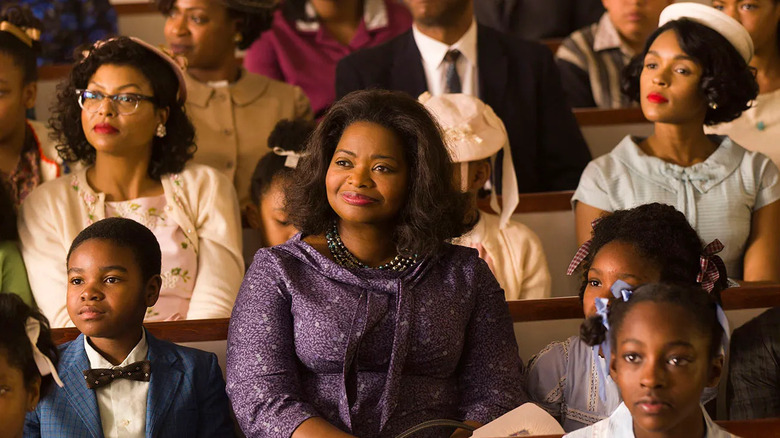
The adaptation of non-fiction author Margot Lee Shetterley's 2016 book "Hidden Figures" was in development before it hit shelves, and naturally, it took plenty of liberties with the factual material. Shetterley had been working on her book about the lesser-known crucial contributions from NASA's Black women to the Space Race since 2010, charting the 1930s to 1960s.
Director Theodore Melfi's movie condensed years of social change and technological breakthroughs into a three year span from 1958 to 1961, which in real life, was long after NASA had abandoned racial segregation. It was also set nearly a full decade after the real Dorothy Vaughn (played here by Octavia Spencer) became the first Black supervisor in the computing section.
However, the inaccuracies in "Hidden Figures" are confined largely to the social context (with wholly invented villain figures), and the utilization of several composite characters, as the movie's depiction of the underappreciated efforts of the human "computers" is true to fact, if not the timeline. Even if it heightens things for drama, "Hidden Figures" still does a great job of enlightening audiences of how these unsung women contributed to the space race.
The job of transforming a story about behind the scenes mathematicians into a populist, crowd pleasing blockbuster was always going to be a tough one, but Melfi manages it with ease -– it's a great introduction to an overlooked aspect of space history that inspires audiences to learn more about it.
4. First Man
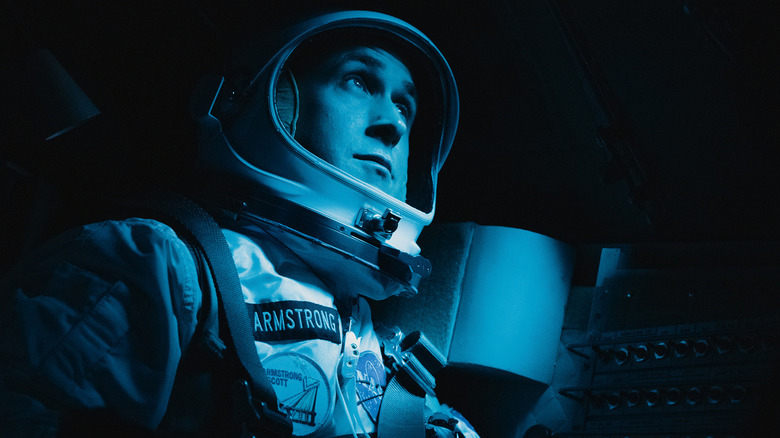
Director Damien Chazelle's follow-up to "La La Land" underperformed box office expectations due to right-wing backlash, with then-Florida senator Marco Rubio and President Donald Trump falling for a false claim that the movie wouldn't depict Neil Armstrong planting the American flag on the moon. Unsurprisingly, the flag was clearly in view during that sequence, but the director's low-key approach to adapting James R. Hansen's 2005 biography of the same name saw him focus more on the astronaut's internal emotions.
"First Man" follows the beats you'd expect from an Armstrong biopic, but at a remove which threatens to come across as cold, with a world-famous protagonist who remains something of an enigma. It's an admirably anti-Oscar baiting approach to what would be a stirring, generically inspirational tale in any other filmmaker's hands.
It nevertheless inspires awe, from the opening failure of the X-15 landing to the famous moon walk; NASA collaborated with screenwriter Josh Singer, allowing him to ride simulations of the era-appropriate spacecraft. In designing the movie, Chazelle was gifted models and blueprints to build accurate replicas of vehicles and machinery that the astronauts would have encountered.
Outside of the science, "First Man" also offers an accurate depiction of Armstrong's home life, with Singer drawing from interviews with his wife and sons to build an authentic domestic portrait. It's a restrained, technically accurate approach that brings it out-of-this-world story back down to Earth.
3. Apollo 13
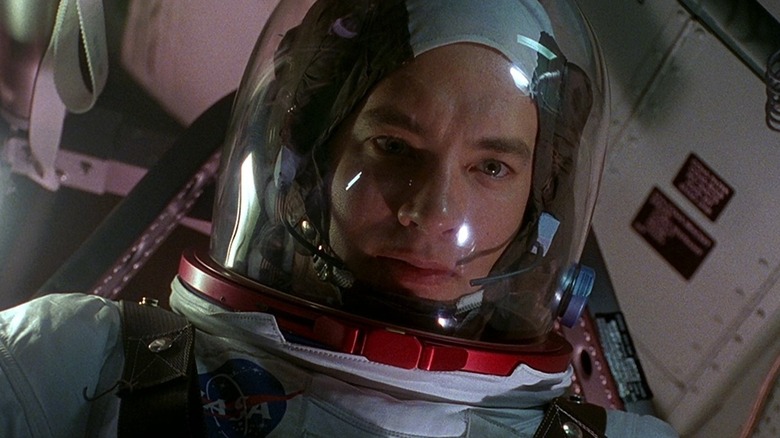
Did you know "Houston, we have a problem" wasn't the real quote? The biggest dramatic license that screenwriters William Broyles Jr. and Al Reinert made for "Apollo 13" was changing the tense of the line commander Jim Lovell (Tom Hanks) said to Mission Control from past to present. It was a slight edit that birthed one of the most iconic lines in movie history. It's also symptomatic of director Ron Howard's mostly accurate approach to dramatizing the failed lunar mission, which pulls heavily from the dialogue transcripts between the astronauts and NASA team, maintaining many of the technical exchanges while heightening the tone to ensure blockbuster entertainment.
In reality, the team never came into conflict, but that wouldn't make for a thrilling movie; even TV networks refused to air the on-board broadcast because it was so boring. Adding to the authenticity is the cast's commitment to in-depth research, with Tom Hanks and his co-stars attending a U.S. space camp and undertaking real training.
Technical advisor and Apollo 15 commander David Scott even had them memorize all 500 spacecraft functions necessary to operate the ship, so their physical performances on board would feel natural and lived-in. According to a DVD commentary, the Mission Control room was so authentic, one NASA employee who served as consultant kept forgetting he wasn't in the real setting. It may be a crowd-pleasing biopic, but even the most melodramatic moments are grounded in credibility.
2. Apollo 11
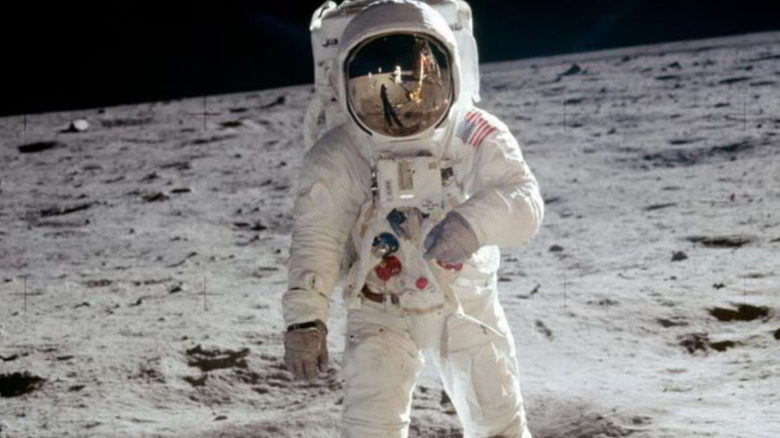
It's almost a cheat to include a documentary among traditional narrative space movies, but director Todd Douglas Miller's glorious archival film is a treasure trove that needs to be acknowledged. There's no voiceover narration or talking head interviews, with Miller drawing entirely from footage of the Apollo 11 mission, including stunning 70mm film not previously released to the public.
Released to mark the 50th anniversary of the mission, "Apollo 11" strictly utilizes only film and audio content from the archives (with the only 'new' footage being animated graphics), with additional context limited to onscreen text. This is a pure experience aiming to inspire awe in a new generation using only authentic material. Released in glorious IMAX, it's one of the most important historical documents ever put to cinema screens.
The movie does take some liberties with the timeline in its attempt to dramatize. While it doesn't sacrifice the central premise, it does bend the order of events for the sake of building greater tension. The main one is Michael Collins' biomedical sensor breaking that happened on the voyage back, which the film depicts occurring on the approach to the moon. This raises ethical questions about the extent to which documentaries bend the truth, but the film is so staggering, it will hardly linger on the mind.
1. The Right Stuff
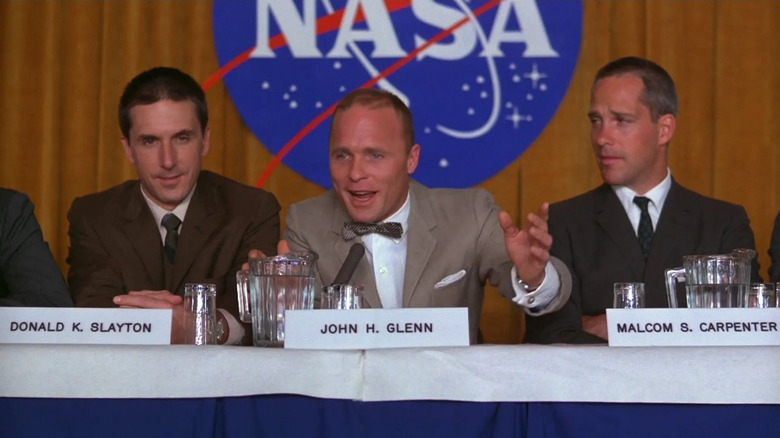
Even if it wasn't based on Tom Wolfe's book of the same name, which charted the careers of the first pilots of NASA's Mercury program, "The Right Stuff" would still be one of the most realistic space movies ever. This is, paradoxically, due to its depiction of the seven military pilots chosen for the initiative on Earth, struggling to cope under prolonged media and government pressure, with the men involved far from archetypal American heroes. They're cynical, often drunk, and engage in extra-marital affairs, with poster boy John Glenn (Ed Harris) appearing like a parody of wholesome Americana when placed next to the rest.
Helmed by Philip Kaufman, director of one of the best alien invasion movies "Invasion of the Body Snatchers," this adaptation was infamously dismissed by both the original author and several of the pilots depicted, although the inspiration for central protagonist Chuck Yeager (Sam Shepard) was a technical consultant. He took the actors flying while overseeing storyboards and special effects to highlight errors, while the filmmakers utilized as many real aircraft as they did replicas to add further realism.
The result may have been controversial, but it struck a chord with critics due to its downbeat commentary on the space race, refusing to overlook some of the uglier aspects of NASA (like its collaborations with former Nazi scientists). Even if it isn't entirely faithful, it paints an otherwise grounded, accurate portrait of the frantic, extensive behind-the-scenes operations behind each space mission.