

5 Most Historically Accurate Mafia Movies, Ranked
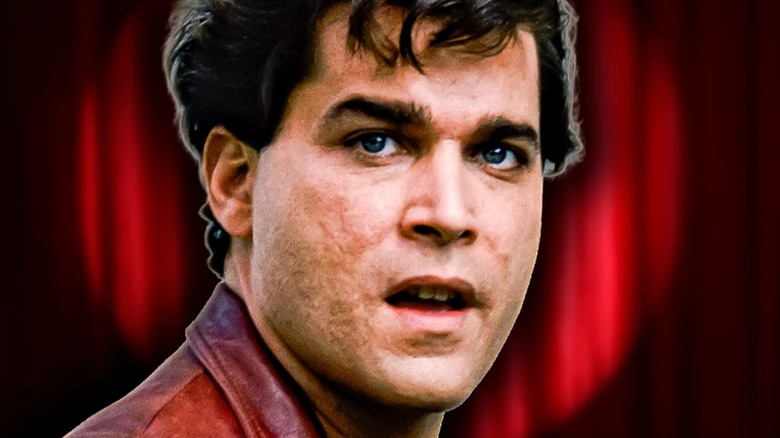
Usually, telling the world what goes on behind the closed doors of the criminal underworld is enough to get you whacked — nobody likes a snitch, after all. That hasn't been the case for many of the filmmakers who have told ripped-from-the-headlines tales that the mob don't want you to hear, though. The five films in this list are all praised for their accuracy, collaborating with journalists, former FBI agents and even members of crime families to bring their true stories to life, warts and all.
For the purposes of this list, we're defining a mafia movie as any depiction of an organized crime operation, which allows us to include some crime dramas from overseas that got their facts right. One movie on this list reportedly only was allowed to get made because the director had to pay a crime family a sizable fee to film on their turf; this is how close to the center of operations some filmmakers have to get in order to bring these stories to the screen. Films in this list which go further back in history relied on research just as extensive, clearing out museums to use authentic props, and heading back to the scenes of real crimes to capture them in show-stopping set pieces.
The following five movies are ranked based on how much we personally enjoy them, but they are all equal when it comes to faithfully capturing the real drama that crime families hoped would never get out in the open.
5. Public Enemies
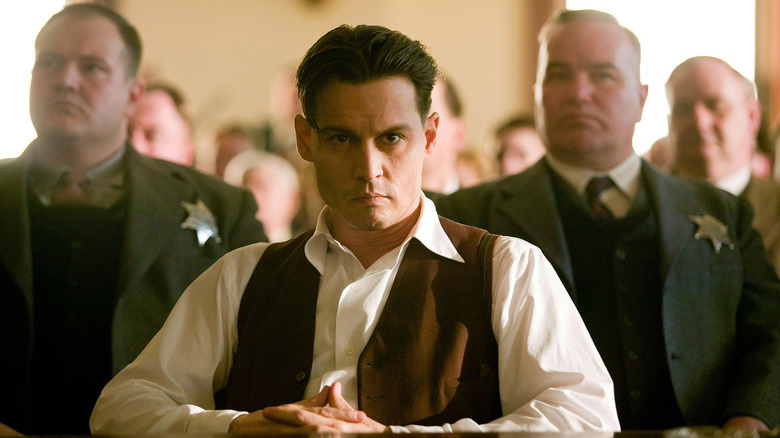
The final year of John Dillinger's life saw his gang pull off a string of deadly bank robberies across the American midwest, a crime spree that directly led to the Bureau of Investigation becoming the modern FBI, with new powers that allowed them to kill him on sight. Adapted from Bryan Burroughs' 2004 non-fiction book, "Public Enemies" does alter some events to put Johnny Depp's antihero at the center of all major action, placing him in prison breaks he only provided weapons for, and showing him outlive gang members who lived long past the day he was shot down. However, with this being a Michael Mann film, these deviations from recorded fact are more than compensated for with the director's commitment to using many of the real locations the true story unfolded at.
One shootout with Dillinger and the FBI takes place at Little Bohemia Lodge in Wisconsin, and the county jail in Crown Point, Indiana, which he escaped from was also used as a filming location. Mann, a well-known car guy, also made sure to use Dillinger's real 1932 Studebaker in several scenes, which was borrowed from a Columbus museum.
These all lend an authenticity to a movie which doesn't stick entirely to the facts, taking narrative license when it comes to the depicting the Dillinger Gang's downfall, once again reinforcing Mann's reputation as an obsessive for the small historical details. "Public Enemies" isn't one of the director's best films — he's often wrongly accused of being emotionally detached, but that charge sticks here — but it is a stunningly realized work of historical fiction on a purely formal level.
4. The General
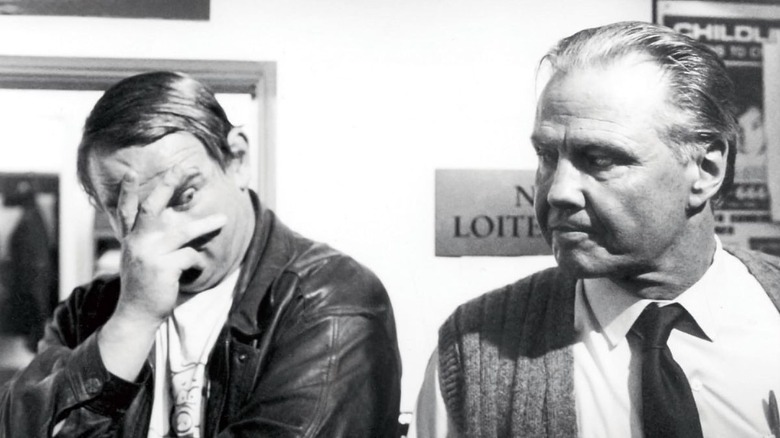
The story of Martin Cahill has personal resonance for director John Boorman; in the early 1980s, a gold record on his wall for the soundtrack of his hit movie "Deliverance" was stolen from his home by the Dublin crime boss. That incident is dramatized in "The General," an adaptation of journalist Paul Williams' 1995 book of the same name, which charts his gang's rise to notoriety in the Irish capital from the late 1970s until the mid 1990s, when he was assassinated by the IRA. It was a deeply controversial movie in its home country, with many of the notorious robber's victims concerned that the movie romanticized Cahill as something of a Robin Hood figure, with the vein of black comedy giving the impression that audiences were supposed to be laughing with him.
Naturally, this false narrative died down once more people had seen it, although the criticism that the movie overly mythologizes Cahill and dilutes his worst crimes can still be heard if you scroll on Irish Reddit forums. Working with Williams' non-fiction tome as his blueprint, Boorman faithfully charts Cahill's reign of terror, with accurate descriptions of his art gallery burglary and church jewel heist, as well as his unconventional home life (he had a wife but also fathered children with her sister).
Brendan Gleeson's lead performance is a large part of why so many criticized it. He makes the character appear charismatic and oddly sympathetic. But when viewed with more distance from the crimes than the movie itself, equal weight is given to the human collateral damage along the way. It's a complex portrait, but far from a rosy one.
3. Gomorrah
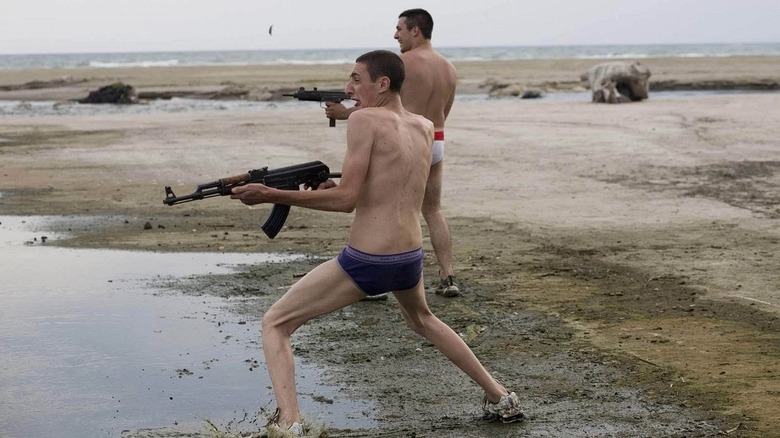
Organized crime is far from glamorous, despite Hollywood's tellings, and director Matteo Garrone's award-winning crime drama — adapted from Roberto Saviano's non-fiction book of the same name — is largely focused on the lower ranked members of Naples' Casalesi clan, themselves a smaller syndicate of the Camorra. Opening with the killing of two rival clan members in a tanning salon, "Gomorrah" weaves together separate narratives that show how most in these low-income neighborhoods have had their lives personally touched by the mob, from people running waste management operations to workers in factories operated by rival firms.
It may be difficult to keep track of the various loyalties and warring syndicates, but that's by design; the movie depicts an operation whose tentacles touch everyone in the area, from young kids and struggling families to migrant workers just looking to get by. It's clear how impossible it is to remain unscathed by it all.
Saviano's book was an exhaustive work of investigative journalism, and he returned to this project as a co-writer on the screenplay, although director Garrone didn't stop there. The movie was shot in real Neapolitan neighborhoods infamous for their high crime rates, utilizing a cast largely consisting of non-professional actors, several of whom would end up in jail months after the movie was released due to their real connection to Camorra clans.
One clan member, Oreste Spagnuolo, later said Garrone could only achieve this realism because he had to pay the mob 20,000 Euros in order to film in their neck of the woods. And while it's unconfirmed whether he did collaborate with the mob to make "Gomorrah," the suggestion that he was extorted to make the movie only underlines its grim realism.
2. Donnie Brasco
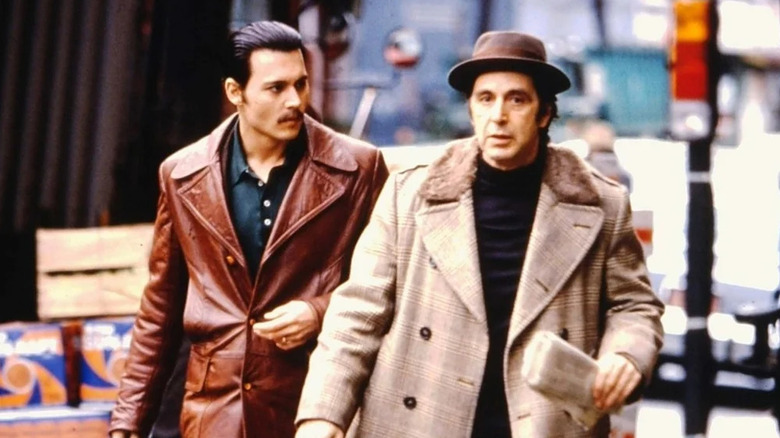
A story of an undercover operation that sounds stranger than fiction, this adaptation of Joseph D. Pistone's 1988 memoir recounts how the undercover FBI agent climbed the Mafia's ranks over six years, refusing to step down until he could be declared a made man.
The long sting operation resulted in 200 indictments and more than 100 convictions, but director Mike Newell's film adaptation "Donnie Brasco" centers itself on the relationship between Pistone's alter ego Donnie (Johnny Depp) and mobster Benjamin "Lefty" Ruggiero (Al Pacino, who should have been nominated for an Oscar), who sponsored Donnie's rise, unaware he was secretly wiretapping for the Bureau and charting their every move. This unlikely friendship was true to life, providing the movie with a weightier anchor than more humdrum mob dramas.
Pistone has said that 85% of the movie is true, with only 15% exaggerated for the screen. Most notably, that includes the depiction of Lefty getting whacked by the mob, when he was actually arrested by the FBI and died of cancer behind bars. The former FBI agent worked with Depp for several months before filming, so the actor could learn the full extent of his undercover experiences and pick up on his mannerisms — his performance would be so faithful, Pistone's own mother mistook Depp's voice for her son's when she visited the set.
The research he undertook to go undercover, convincing others he was a jewel thief, and his wealth of knowledge on those operations made him an invaluable resource. "Donnie Brasco" adds some Hollywood sprinkle, but very little of that was added to the operation itself: it already sounded like a tailor-made movie premise.
1. Goodfellas
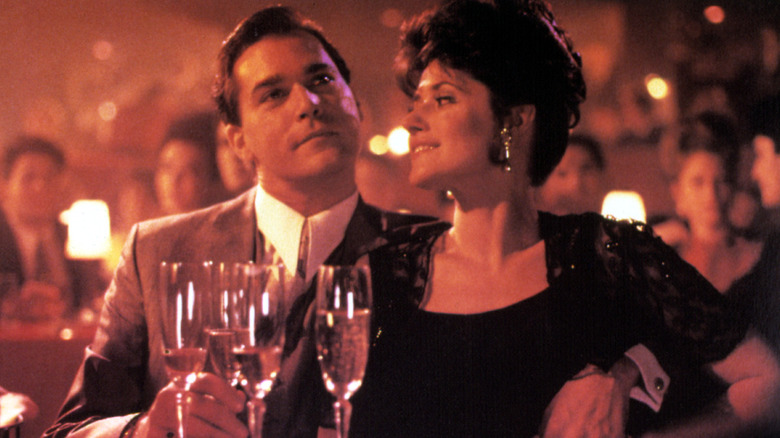
Rivaled only by "The Godfather" when it comes to being considered the ultimate mob movie, Martin Scorsese's "Goodfellas" takes the edge. Many former Mafia associates felt it stripped away the glamour that Francis Ford Coppola's movie added to its depiction. These good fellas also said it was truer to life because it was closer to resembling disorganized crime, authentically capturing the kind of paranoid and hyper-violent tough guy who'd be drawn to joining a low-level organization.
As co-screenwriter Nicholas Pileggi, who wrote the book "Wiseguy" that the movie is adapted from, pointed out, this only increases their affection for the movie. He told GQ's 20th anniversary retrospective that many have told him that they see it as a "home movie", as these lightly fictionalized Mafia archetypes resemble the people they know more than any other Hollywood depiction.
This authenticity was increased by many real members of the criminal underworld being added to the supporting cast, although, as several reports attest, their shady documentation caused Warner Bros. some issues when they were put on the studio payroll. "Goodfellas" naturally plays fast and loose with the timeline and condenses some moments for dramatic effect — nothing unusual for a decades-spanning crime epic — but still gets the seal of approval from those with a connection to this world, due to its well-observed portrayal of the people it attracts.
The biggest change might be that, according to the man himself, Henry Hill was less charismatic and even more chaotic in his addictions than what his actor, Ray Liotta showed. Considering his depiction in the final movie, you'd have a hard time convincing us that Scorsese watered his characterization down to appeal to a mass audience.